
BuddhistCatholicContemplativeEvangelicalGeneral ChristianHinduJewishLatter-day SaintMuslimNew VisionsProgressive Christian
Beliefs
- Buddhist
- Catholic
- Contemplative
- Evangelical
- General Christian
- Hindu
- Jewish
- Latter-day Saint
- More Voices
- Muslim
- New Visions
- Pagan
- Progressive Christian
Topics
- Religion News
- Food and Religion
- Sports and Religion
- Religious Art
- Religious Music and Entertainment
- Religious Events
- History and Religion
- Style and Religion
- Politics and Religion
- Women in Religion
- Recreation Outdoors and Religion
- Business Finance and Religion
- Careers Workplace and Religion
- Education and Religion
- Family Parenting and Religion
- Health Fitness and Religion
- Home and Religion
- Relationships and Religion
- Technology and Religion
- Travel and Religion
Columnists
- Buddhist Columnists
- Business Finance and Religion Columnists
- Careers Workplace and Religion Columnists
- Catholic Columnists
- Contemplative Columnists
- Education and Religion Columnists
- Evangelists Columnists
- Family Parenting and Religion Columnists
- General Christian Columnists
- Health Fitness and Religion Columnists
- Hindu Columnists
- History and Religion Columnists
- Home and Religion Columnists
- Jewish Columnists
- More Voices Columnists
- Latter Day Columnists
- Muslim Columnists
- New Visions Columnists
- Nonreligious Columnists
- Pagan Columnists
- Politics and Religion Columnists
- Progressive Columnists
- Recreation Outdoors and Religion Columnists
- Relationships and Religion Columnists
- Religion News Columnists
- Religious Art Columnists
- Religious Events Columnists
- Religious Music and Entertainment Columnists
- Sports and Religion Columnists
- Style and Religion Columnists
- Technology and Religion Columnists
- Travel and Religion Columnists
- Women in Religion Columnists
Resource Library
- 2026 Calendar
- Library of World Religions
- The 100 Most Holy Places on Earth
- Patheos Answers
- Podcasts
- Videos
- Faith Leaders Database
- Anglican Episcopalian
- Bahai
- Baptist
- Buddhism
- Christianity
- Confucianism
- Eastern Orthodoxy
- Hinduism
- Holiness and Pentecostal
- ISKCON
- Islam
- Judaism
- Lutheran
- Methodist
- The Church of Jesus Christ of Latter-day Saints
- New Age
- Paganism
- Presbytarian and Reformed
- Protestantism
- Religion Behind the Scenes
- Roman Catholic
- Scientology
- Shia Islam
- Sikhism
- Sufism
- Sunni Islam
- Taoism
- Zen
- See all religions
Research Tools
 Ad-Free & Subscriber Log-In Subscription Support
Ad-Free & Subscriber Log-In Subscription Support
Follow Patheos 

- Trending:
- Forgiveness
- |
- Marriage
- |
- Consciousness
- |
- Death Penalty
- |
- Election
- |
- Halloween
 Home Waters
- Home
- Latter-day Saint
- The Question of Wilderness Part III
The Question of Wilderness Part III
Last updated on: July 26, 2012 at 2:28 pm by georgehandley
The Question of Wilderness Part III 2012-07-26T14:28:07-06:00 georgehandley
Patheos Explore the world's faith through different perspectives on religion and spirituality! Patheos has the views of the prevalent religions and spiritualities of the world.
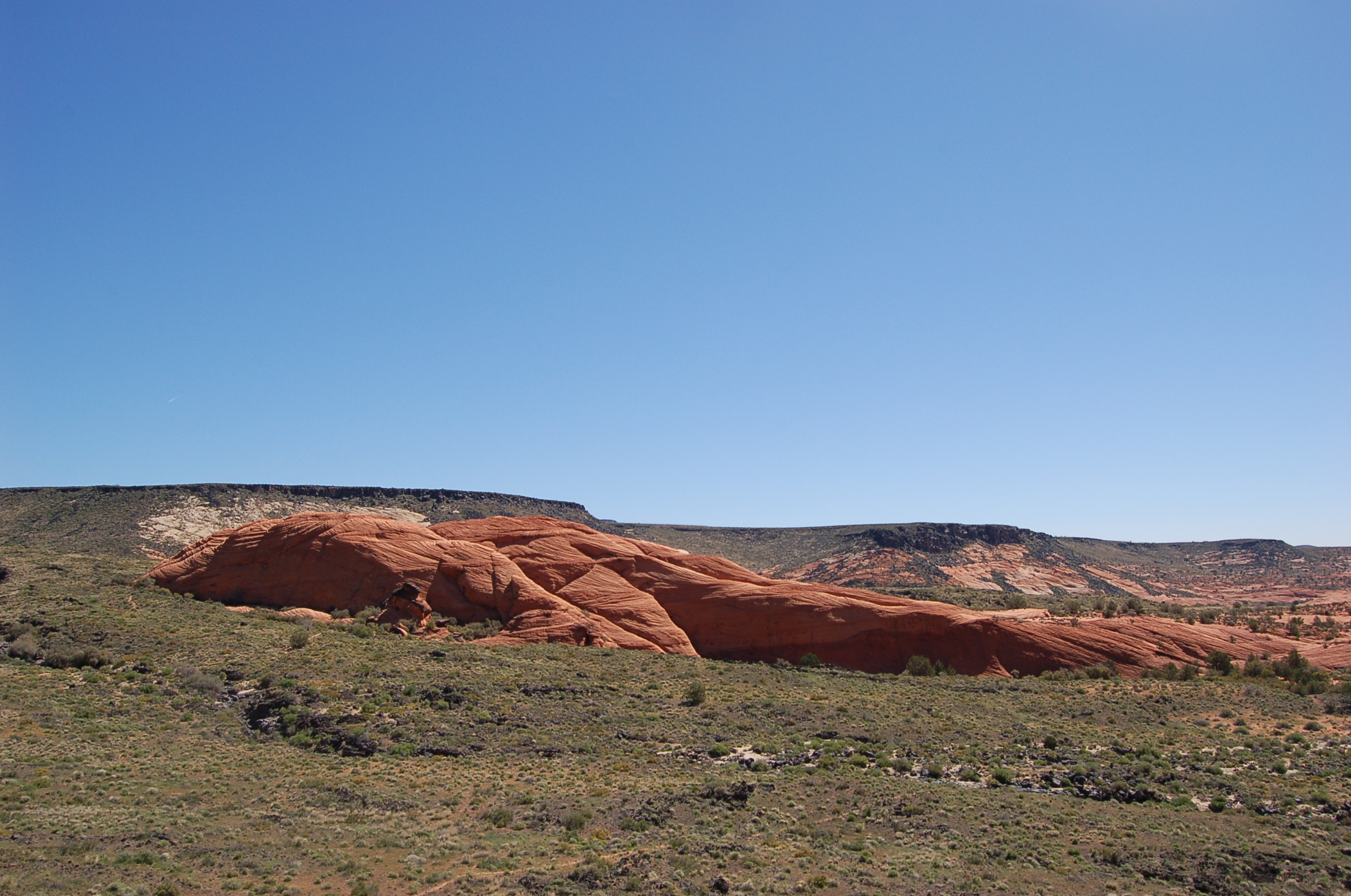 Last summer I participated in an unusual event in southern Utah. A local environmental organization hosted a panel discussion about stewardship and went out of their way to invite an audience of diverse political and religious persuasions. The panel discussion, however, was focused on Mormonism and the environment, with the intent to create a dialogue about the meaning of stewardship. Prior to the discussion, I did a reading from my book Home Waters. I chose selections that treated the story of my ancestor who had helped to settle southern Utah in the hopes that I might stir up affections for the Mormon tradition of being good stewards. There were four of us on the panel, all Mormons, but we represented different professions, interests, and philosophies. In addition to me, there was a rancher, a member of the chamber of commerce, and someone who had been involved in local politics. I was the lone environmentalist and liberal. I have been a part of a great number of discussions on the environment over the years at academic conferences and in public throughout Utah, but this was the first and so far the only chance I have had to find myself engaging in open (and civil) dialogue with staunch anti-environmentalists. It was clear from the beginning to the end that anything associated with environmentalism, for at least two of the panelists, was utterly objectionable.
At one point during the discussion, all the panelists were asked by the moderator to describe one quality about the region that we hoped would be preserved for the future. The rancher, who is a sixth-generation citizen of the region, said bluntly and with a wry grin before a mixed audience of Mormons and non-Mormons, long-time citizens and recent move ins, “What I love about this place are all the Mormons. And what I want for the future is to have more Mormons.” Everyone laughed, albeit somewhat awkwardly, since it was apparent that this was potentially insulting to at least half the audience. Maybe because I felt I needed to rescue Mormonism from his apparent arrogance, I made a point of saying that I had been raised as a Mormon outside of New York City and that my parents often taught me to see other cultures with respect and admiration, that this was, in fact, my Mormon duty. In fact, I said, my mother used to joke that she didn’t want to go to a Mormon heaven because it wouldn’t be as interesting as the varieties of people in this world. I was worried that his comment had done irreparable damage, and I sought the chance to talk about it with others afterwards.
I learned that the woman who had spearheaded the event had specifically worked hard to get this rancher to the table because of his stature in the community. This woman was raised Mormon but had left the church. Even though she had experienced her share of ostracism by virtue of living a different lifestyle than the majority, of raising a child for a time by herself who was of mixed race, and of being an ardent environmentalist, she appeared to have no resentment. She had spent considerable time getting to know the others who were on the panel with me, including the rancher who she said often wonders out loud what she wants from him. While I expressed my dismay at his insensitive and blunt comment, she was absolutely unfazed. She explained to me the long and deep history of connection to the land his family had enjoyed for generations, all without any outside influence or intervention. She described his intensely sentimental love of land, his ability to openly weep about it, his love of family, and the marvelous sense of community he and his family had created. What came out as vitriol toward environmentalism was a symptom of an anxiety that he and others felt that the beauty, simplicity, and innocence of life his family had enjoyed for so long was slipping away. She told me that she asked him once what his greatest fear was. He said that it was that one of his daughters would marry an outsider. Given what I had learned about her own story, I said, “So he must not look too kindly on you.” She brushed off the concern. “I think he is starting to like me.”
Not to make too fine a point of this, but she also had encountered similarly egregious dogmatism on the other side of the aisle. All this time she had been working for an environmental organization that served the land of a predominantly Mormon community but had been determined to never have a practicing Mormon on their Executive Board, until she herself convinced them recently to change the policy. I told her that this seemed like dual insanity to me: “Leave us Mormons alone in our land!” “Leave us the land from the Mormons!” Why, I wondered out loud, did she put up with this?
I don’t know her well enough to say for sure, but she comes from a family that appears to have tolerated different faith choices, different philosophies. But it was her love of land and love of a broad range of people that put her in a position to be a bridge-builder, the glue that bonded differences in the interest of building common ground. This seemed revolutionary to me, bold and courageous. I felt inspired to muster similar courage, forbearance, and honesty. This is what it means to be a pioneer today, I thought.
Attachments to land are important to our identities but in the process we have essentially two choices: we can attach ourselves to land in the interest of rooting an exclusive and proprietary identity or we can attach ourselves, as this friend did, in such a way as to see the various claims and interests on that land as part of the complex web of community we live in today and the complex web of identity that makes us who we are. That complexity is both social and ecological, and includes all citizens of the biosphere. This makes the work of protecting nature more messy and certainly harder, but it is clear to me that until we are willing to take on this responsibility, our love of the land will only hurt it and hurt others.
It might be true that some of us flee from history when we run to the wilderness. We might have little tolerance for the ecology of civilization we have built and no vested interest in its preservation and, for that matter, little or no willingness to accept our complicity in the “sins” of civilization we so readily decry. It is also true that many others resist wilderness designation because it means we have to share land with a greater swath of humanity than we are accustomed to and according to new restraints that are necessary to maximize the land’s health over the long term of this sharing. In other words, there is a common ground of pettiness and misanthropy that sometimes guides both positions, a view that says: leave me alone and let me forget that I live in an increasingly populated and diverse human community that daily compromises my ability to enjoy my slice of paradise in solitude. We want nature, in other words, to provide us with a frictionless identity and life. Nature was never such a place even though this has been the first and perhaps the most persistent temptation of humankind. Again the principle shows itself: the depth of our love of nature is measured by our love for humanity.
Previous Post

July 26, 2012
Panel Discussion of Mormonism and the Environment
Next Post
August 5, 2012 Letter to a student (excerpt #1)
Browse Our Archives
Select a Category Uncategorized
Select a Month May 2016 March 2016 February 2016 December 2015 November 2015 October 2015 August 2015 July 2015 June 2015 March 2015 January 2015 December 2014 November 2014 October 2014 September 2014 August 2014 July 2014 June 2014 May 2014 April 2014 March 2014 February 2014 January 2014 December 2013 November 2013 October 2013 September 2013 August 2013 July 2013 June 2013 May 2013 April 2013 March 2013 February 2013 January 2013 December 2012 November 2012 October 2012 September 2012 August 2012 July 2012 June 2012 May 2012 April 2012 March 2012
Follow Us!
TAKE THE
Religious Wisdom Quiz
What does "Haggai" mean in Hebrew?
Select your answer to see how you score.
God's Messenger The Lord Saves Festive The Rock
Related posts from Home Waters


Literature and the Art of Friendship


TRENDING AT PATHEOS Latter-day Saint

Did Prayer Cure His Cancer? Or Was It...
At 4 AM one morning, Joshua W. Brown’s wife awoke to a...

8 Ways a Near-Death Experience Rewires the Soul
Does Consciousness Survive Physical Death? After 50 Years of Research, Dr. Raymond...

Holy Longing: What Our Restlessness Is Telling Us
“One can find so many pains when the rain is falling.” -John...

What this is NOT about. This blog is definitely not about...

Who said the Israelites were God’s chosen? That’s right, they did. Who...

The Spirit World Is the Real World: God...
A Monk’s Wisdom on Body and Spirit I sit with Brother Martin...
view all Latter-day Saint blogs
Ad-Free & Subscriber Log-In Subscription Support
- About Us
- 2026 Calendar
- Videos
- Podcasts
- Library of World Religions
- Faith In Media Tracker
- Advertise With Us
- Write for Us
- Privacy Policy
- Terms of Service
- Do Not Sell My Data
- Contact Us
- Radiant Digital
- Manage Newsletter Subscriptions
- Unsubscribe From Notifications
- Sitemap
Copyright 2008-2026, Patheos. All rights reserved.
Subscription Support Ad-Free & Subscriber Log-In
Follow Patheos