
BuddhistCatholicContemplativeEvangelicalGeneral ChristianHinduJewishLatter-day SaintMuslimNew VisionsProgressive Christian
Beliefs
- Buddhist
- Catholic
- Contemplative
- Evangelical
- General Christian
- Hindu
- Jewish
- Latter-day Saint
- More Voices
- Muslim
- New Visions
- Pagan
- Progressive Christian
Topics
- Religion News
- Food and Religion
- Sports and Religion
- Religious Art
- Religious Music and Entertainment
- Religious Events
- History and Religion
- Style and Religion
- Politics and Religion
- Women in Religion
- Recreation Outdoors and Religion
- Business Finance and Religion
- Careers Workplace and Religion
- Education and Religion
- Family Parenting and Religion
- Health Fitness and Religion
- Home and Religion
- Relationships and Religion
- Technology and Religion
- Travel and Religion
Columnists
- Buddhist Columnists
- Business Finance and Religion Columnists
- Careers Workplace and Religion Columnists
- Catholic Columnists
- Contemplative Columnists
- Education and Religion Columnists
- Evangelists Columnists
- Family Parenting and Religion Columnists
- General Christian Columnists
- Health Fitness and Religion Columnists
- Hindu Columnists
- History and Religion Columnists
- Home and Religion Columnists
- Jewish Columnists
- More Voices Columnists
- Latter Day Columnists
- Muslim Columnists
- New Visions Columnists
- Nonreligious Columnists
- Pagan Columnists
- Politics and Religion Columnists
- Progressive Columnists
- Recreation Outdoors and Religion Columnists
- Relationships and Religion Columnists
- Religion News Columnists
- Religious Art Columnists
- Religious Events Columnists
- Religious Music and Entertainment Columnists
- Sports and Religion Columnists
- Style and Religion Columnists
- Technology and Religion Columnists
- Travel and Religion Columnists
- Women in Religion Columnists
Resource Library
- 2026 Calendar
- Library of World Religions
- The 100 Most Holy Places on Earth
- Patheos Answers
- Podcasts
- Videos
- Faith Leaders Database
- Anglican Episcopalian
- Bahai
- Baptist
- Buddhism
- Christianity
- Confucianism
- Eastern Orthodoxy
- Hinduism
- Holiness and Pentecostal
- ISKCON
- Islam
- Judaism
- Lutheran
- Methodist
- The Church of Jesus Christ of Latter-day Saints
- New Age
- Paganism
- Presbytarian and Reformed
- Protestantism
- Religion Behind the Scenes
- Roman Catholic
- Scientology
- Shia Islam
- Sikhism
- Sufism
- Sunni Islam
- Taoism
- Zen
- See all religions
Research Tools
 Ad-Free & Subscriber Log-In Subscription Support
Ad-Free & Subscriber Log-In Subscription Support
Follow Patheos 

- Trending:
- Forgiveness
- |
- Marriage
- |
- Consciousness
- |
- Death Penalty
- |
- Election
- |
- Halloween
 The Homeschool Chronicles
-
Curriculum
- Home
- Education and Religion
- Protecting Christmas: An Open Letter To Sarah Palin
Protecting Christmas: An Open Letter To Sarah Palin
Last updated on: December 24, 2013 at 8:05 pm by Tara Edelschick
Protecting Christmas: An Open Letter To Sarah Palin 2013-12-24T20:05:19-07:00 Tara Edelschick
Patheos Explore the world's faith through different perspectives on religion and spirituality! Patheos has the views of the prevalent religions and spiritualities of the world.
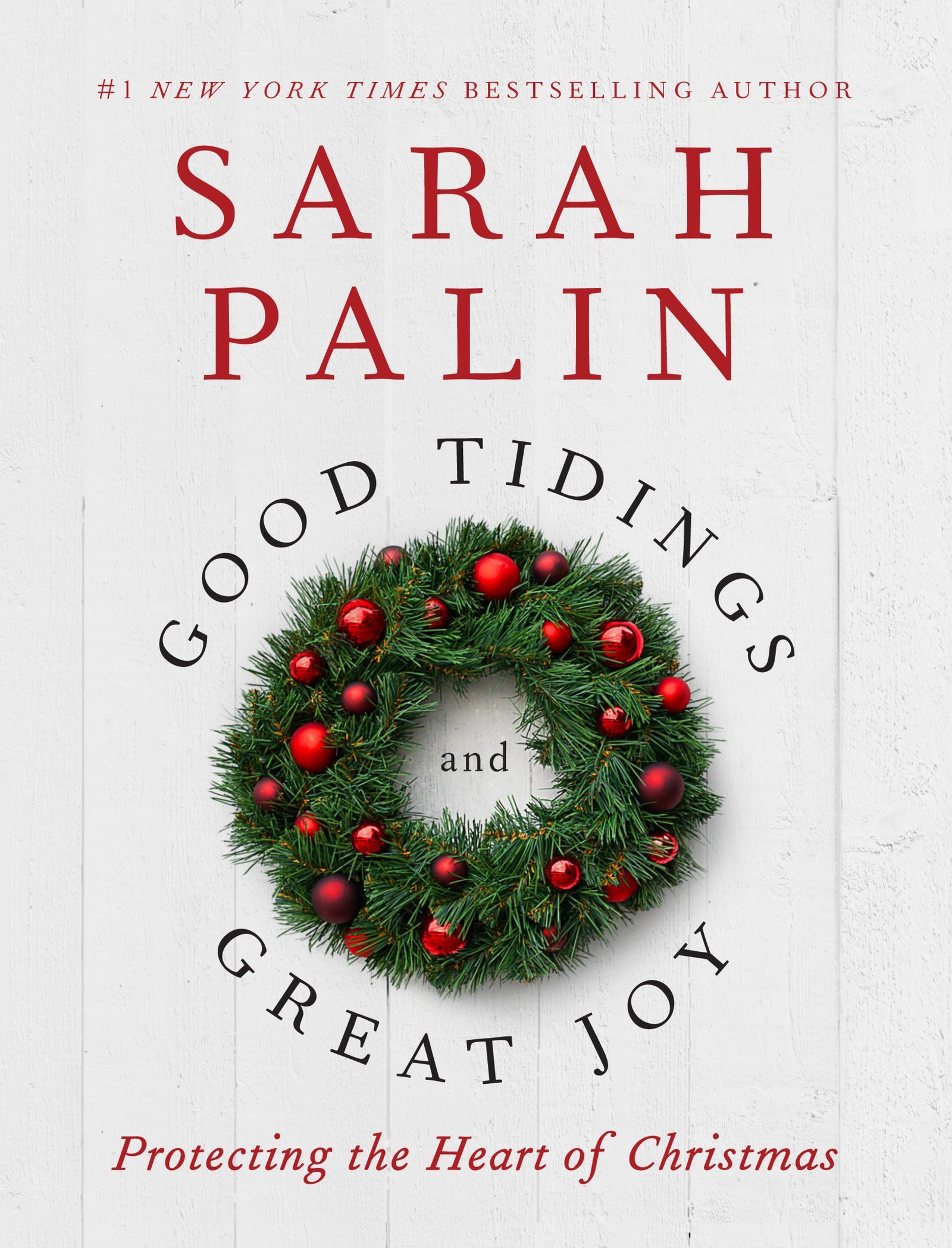 Dear Mrs. Palin,
I finished your book, Good Tidings and Great Joy: Protecting the Heart of Christmas, last week, and I haven’t been able to stop thinking about it ever since. I keep fantasizing about having coffee with you to talk about the book. I want to understand parts of your book I found confusing. I want to tell you how much I appreciated parts of the book. And I want to tell you how disturbing I found some of it. If you find yourself in my neck of the woods – in Cambridge, Massachusetts – I hope you’ll stop by. Our door is always open and the coffee is always on.
But I don’t imagine that will happen in the near future, so I’m gonna try to lay out some of my thoughts here. If nothing else, maybe I’ll be able to stop thinking about your book and start planning Christmas dinner.
Yup, I love Christmas. And, like you, I love Jesus – which is why I’m grateful you wrote a book about how meaningful Christmas is to you. I especially liked your telling of the gospel story, and how that story has sustained you through difficult times. It has me as well.
One of the things that was hard for me as I read the book was that I was never sure to whom it was written. You often used the word we, and I wasn’t clear if that we included me. I’m a Christian, but my family doesn’t buy gifts for Christmas and has always told our children that Santa is not real. I am a patriotic American, but our politics do not often line up. I don’t think that the public square should be scrubbed of all religion, but I have no desire to mix Rudolph in with the nativity scene on city hall plaza.
It often felt to me like the we you refer to in the book are politically conservative, Evangelical Christians. Which I guess makes me a them. But the person you write about in your book, an angry, illogical, sourpuss of an atheist, doesn’t describe me either. In fact, the atheist you describe is so caricatured that it doesn’t describe anyone I know.
And that’s the crux of my critique with the book. There are plenty of angry people who will never be convinced of anything. But most people who disagree with us do so from a place of good faith. I may think their arguments unreasonable, but I rarely find them to be on a mission to destroy my way of life.
Our family home schools now, but before that we attended the local public school, a bi-lingual, Spanish-Engish school that celebrated different Latino holidays from around the world. Two incidents from our time in that school, I think, may help to illustrate my concerns with the arguments in the book.
……………………………..
Scene 1
On my way to celebrate Epiphany with friends six years ago, I told our sons the story of the wise men coming from the East to bring gifts to the young Jesus.
“Oh yeah, I know about that!” five-year-old Zach exclaimed from the back seat.
“Yup. We’ve read this story in the Bible,” I replied.
“No. We got presents from the kings today in school.”
Three Kings Day is a day that many people in Spanish-speaking countries celebrate to remember when the wise men brought their gifts to Jesus. In some ways, the three kings are a Latino version of Santa Clause, where children leave out hay and apples for the camels, and the kings leave gifts behind.
I was surprise that Zach would believe in this story. “You know that the wise men lived two thousand years ago, buddy. How could they have brought you presents today?”
“They didn’t bring them today. We left out hay for the camels yesterday, and the kings came on their camels last night. The camels ate the hay and the kings left us candy and gifts.”
Jeff and I tried, unsuccessfully, to convince Zach that the three kings could not have come and brought him gifts. But he loved and trusted his teacher. And he had the gifts to prove us wrong.
Scene 2
The next year, I tried to head off any surprise by explaining to the teacher that we would like some advance warning when religious topics were going to be discussed or religious holidays celebrated. Two months later, I walked into Zach’s classroom and was startled when I saw the agenda for the day. I went to talk to the teacher.
“I see you’re doing Day of the Dead today.”
Day of the Dead, celebrated on October 31st, is a primarily Mexican holiday where family and friends gather to remember and pray for the deceased. They make altars and offer up sugar skulls, marigolds, and favorite foods. Zach’s teacher assured me that the classroom celebration was nothing that would bother me.
“Oh, don’t worry Tara, it’s nothing religious.”
“Oh. Because I saw that you are going to make altars to your ancestors.”
“Oh yes, but it’s not religious.”
…………………………………………………
You write often in your book that the people who want to remove Christmas scenes from the public square are doing so because they are offended. And perhaps some of them are. But if my experience is anything like theirs, it’s not offense that motivates them.
I loved Zach’s teacher. She was wonderful with both of my boys. And she was bright, and hardworking, and kind. There was nothing about her or her actions that I found offensive. Still, I found it absurd to claim that building an altar to honor one’s ancestor is not religious. What definition of altar is devoid of a religious or spiritual association?
How should I have reacted in that scenario? Should I have pitched a fit and gone to the school board demanding that a school whose predominant culture is Latino not celebrate Latino holidays? Of course not, which is a point you make well in your book.
Still, I can imagine many devout Christians being upset that their children were being asked to make altars for the dead. I can also imagine many devout Christians, the kind who think it unwise to celebrate Christmas with Santa Claus, being upset that their children were being led in a secular charade about the wise men.
Reading your book, I got the sense that you believe that the only people who might have a problem with Christmas trees, and menorahs on the city hall lawn, and holiday pageants at school are spiteful or stupid or both. But maybe they are more like me. They are concerned when public officials and institutions use their platforms to promote a religious perspective with which they disagree.
For every Christian who thinks it’s no big deal to have kids singing Angels We Have Heard On High at the public school’s “Holiday Concert,” imagine how we might feel if our kids were asked to sing a beautiful Wiccan hymn. I understand that most people in the audience of most US schools will be more comfortable with the manger than the coven, just like most people at our local public school were okay with the Three Kings and the altars. But I’m not most people. I’m one person, trying to raise my kids in my faith. If you can imagine my discomfort with the altars, you can imagine the Muslim’s discomfort with the nativity scene at City Hall.
Now, I’m not saying my discomfort means that they shouldn’t have had those celebrations at school. I am saying, though, that I want to be taken seriously. I’m not out to destroy Latino culture; I’m trying to preserve my own. I’m not offended by expressions of Latino culture; I’m concerned about the messages my children receive by people whose authority I teach my children to respect. I’m not interested in waging a “War on Three Kings Day;” I’m interested in finding ways for others to celebrate Three Kings Day in ways that respect my family’s disbelief.
I don’t want them to stop celebrating religious or quasi-religious holidays in school. And I don’t want them to take the menorah down from city hall. The false pluralism where we pretend that everyone is the same, which is really another way of saying that everyone is nothing, does nothing to promote community and democracy. In the case of our school, I just wanted them to send a note home, telling me what they were going to do, and giving me the option of helping my kids process it or opt out of it if we couldn’t make some kind of accommodation. I want a “messy diversity,” where people bring the best of their thinking and traditions and celebrations to the table, where they celebrate what they have in common, and live with the discomfort and even pain of the places where they don’t.
I don’t feel any need to protect Christmas. God doesn’t need my protection. And the truth is that I have more sympathy for the Puritan understanding of Christmas than I do for what most modern Christians do to celebrate the day .
But I do want to protect my ability to celebrate my faith and raise my children as Christians. Often this means I am going against those Christians who have turned Jesus’ birthday into a reason to spend money on themselves. And sometimes it means I have to confront my local school about what they are teaching my children. All of it is hard work. And it’s work best done not in courtrooms. That work should happen in the community – at school board meetings, city council forums, church potlucks, and dinner tables. But it won’t happen if we dismiss those who disagree with us as either stupid or spiteful.
And that’s why I wish you had written your book with well-intentioned dissenters in mind. Your explanation of the Constitutional support for religious displays on public property, for instance, was thoughtful and, to me anyway, convincing. And the absurdity you point out in some of the protests against public displays of Christmas are spot on. I hope that, despite the fact that you didn’t write the book for thoughtful dissenters, some of them will read your book anyway and better understand your perspective.
I pray that you and your beautiful family have a wonderful Christmas tomorrow. And I hope some day to have the honor of meeting you. In the meantime, I pray that our country learns better how to welcome everyone into the public square, the messy, beautiful public square that makes our country special.
Blessings, my sister!
Protecting the Heart of Christmas
Previous Post

October 31, 2013
Boston Strong: Our Family's Halloween Tribute
Next Post
January 2, 2014 A Day In The Life Of Homeschooling: Day 1
Browse Our Archives
Select a Category Reflections on "Mind In The Making" by Ellen Galinsky Uncategorized
Select a Month January 2015 December 2014 November 2014 May 2014 April 2014 March 2014 January 2014 December 2013 October 2013 September 2013 July 2013 June 2013 May 2013 April 2013 March 2013 February 2013 January 2013 December 2012 November 2012 October 2012 September 2012 May 2012 April 2012 March 2012 February 2012 January 2012 December 2011 November 2011 October 2011 September 2011 August 2011 July 2011 June 2011 May 2011 April 2011 March 2011 February 2011 January 2011 December 2010 November 2010 October 2010 September 2010
Follow Us!
TAKE THE
Religious Wisdom Quiz
What does the name "Elijah" mean?
Select your answer to see how you score.
God Provides God is Light God Saves My God is Yahweh
Related posts from The Homeschool Chronicles
Do Homeschoolers Need More Regulation?

Goodie Bags At Jesus' Birthday Party

Washington, Lincoln, and Obama: A Thanksgiving Day Reflection...

Andrew Jackson On The $20 Bill: Let's Not...
TRENDING AT PATHEOS Education and Religion

The Problem with False Prophets
Miller’s Station UMC| 10/18/26| Anchor Verse: Jeremiah 23: 1, 9-23 I...

Emotion in Early Christianity by Andrew Crislip
Andrew Crislip’s Emotion in Early Christianity examines an often overlooked dimension of...

16 Spiritual Touchstones for a More Grounded Life
After decades of spiritual study, here are 16 principles I try...

Catholic Evangelization: Sharing Your Faith Every Day
Welcome back to the Graceful Awakening mini-series called, “From Faith to Mission.” ...

The Pillar of the Boatmen: the Ancient Monument...
The Pillar of the Boatmen is a Romano-Gaulish sculpture that dates from...

In one sense walking into Westminster Abbey is like walking down the...
view all Education and Religion blogs
Ad-Free & Subscriber Log-In Subscription Support
- About Us
- 2026 Calendar
- Videos
- Podcasts
- Library of World Religions
- Faith In Media Tracker
- Advertise With Us
- Write for Us
- Privacy Policy
- Terms of Service
- Do Not Sell My Data
- Contact Us
- Radiant Digital
- Manage Newsletter Subscriptions
- Unsubscribe From Notifications
- Sitemap
Copyright 2008-2026, Patheos. All rights reserved.
Subscription Support Ad-Free & Subscriber Log-In
Follow Patheos