
BuddhistCatholicContemplativeEvangelicalGeneral ChristianHinduJewishLatter-day SaintMuslimNew VisionsProgressive Christian
Beliefs
- Buddhist
- Catholic
- Contemplative
- Evangelical
- General Christian
- Hindu
- Jewish
- Latter-day Saint
- More Voices
- Muslim
- New Visions
- Pagan
- Progressive Christian
Topics
- Religion News
- Food and Religion
- Sports and Religion
- Religious Art
- Religious Music and Entertainment
- Religious Events
- History and Religion
- Style and Religion
- Politics and Religion
- Women in Religion
- Recreation Outdoors and Religion
- Business Finance and Religion
- Careers Workplace and Religion
- Education and Religion
- Family Parenting and Religion
- Health Fitness and Religion
- Home and Religion
- Relationships and Religion
- Technology and Religion
- Travel and Religion
Columnists
- Buddhist Columnists
- Business Finance and Religion Columnists
- Careers Workplace and Religion Columnists
- Catholic Columnists
- Contemplative Columnists
- Education and Religion Columnists
- Evangelists Columnists
- Family Parenting and Religion Columnists
- General Christian Columnists
- Health Fitness and Religion Columnists
- Hindu Columnists
- History and Religion Columnists
- Home and Religion Columnists
- Jewish Columnists
- More Voices Columnists
- Latter Day Columnists
- Muslim Columnists
- New Visions Columnists
- Nonreligious Columnists
- Pagan Columnists
- Politics and Religion Columnists
- Progressive Columnists
- Recreation Outdoors and Religion Columnists
- Relationships and Religion Columnists
- Religion News Columnists
- Religious Art Columnists
- Religious Events Columnists
- Religious Music and Entertainment Columnists
- Sports and Religion Columnists
- Style and Religion Columnists
- Technology and Religion Columnists
- Travel and Religion Columnists
- Women in Religion Columnists
Resource Library
- 2026 Calendar
- Library of World Religions
- The 100 Most Holy Places on Earth
- Patheos Answers
- Podcasts
- Videos
- Faith Leaders Database
- Anglican Episcopalian
- Bahai
- Baptist
- Buddhism
- Christianity
- Confucianism
- Eastern Orthodoxy
- Hinduism
- Holiness and Pentecostal
- ISKCON
- Islam
- Judaism
- Lutheran
- Methodist
- The Church of Jesus Christ of Latter-day Saints
- New Age
- Paganism
- Presbytarian and Reformed
- Protestantism
- Religion Behind the Scenes
- Roman Catholic
- Scientology
- Shia Islam
- Sikhism
- Sufism
- Sunni Islam
- Taoism
- Zen
- See all religions
Research Tools
 Ad-Free & Subscriber Log-In Subscription Support
Ad-Free & Subscriber Log-In Subscription Support
Follow Patheos 

- Trending:
- Forgiveness
- |
- Marriage
- |
- Consciousness
- |
- Death Penalty
- |
- Election
- |
- Halloween
 Holyscapes
- Home
- Contemplative
- Look to the Trees: Homily, Dec. 4, 2018
Look to the Trees: Homily, Dec. 4, 2018
Last updated on: December 4, 2018 at 8:54 am by Jason M. Brown
Look to the Trees: Homily, Dec. 4, 2018 2018-12-04T08:54:12-08:00 Jason M. Brown
Patheos Explore the world's faith through different perspectives on religion and spirituality! Patheos has the views of the prevalent religions and spiritualities of the world.
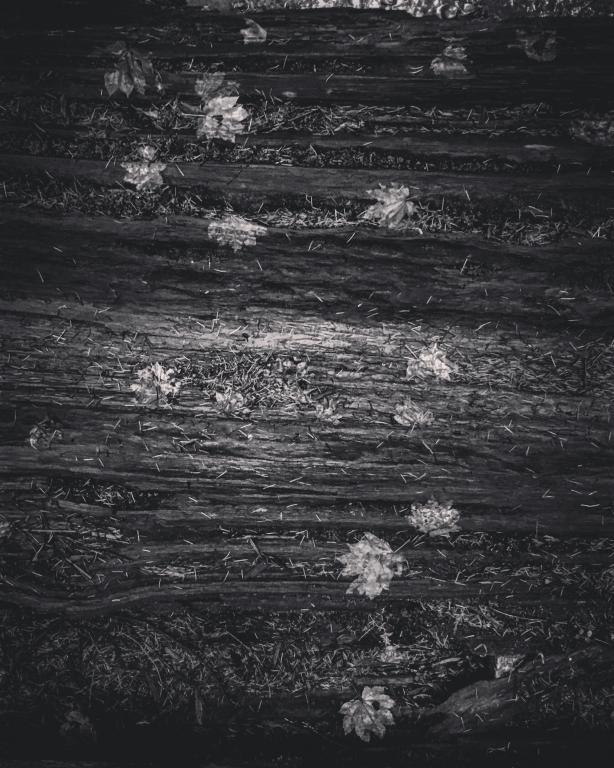 [Today I am preaching the Homily at worship at Vancouver School of Theology]
Gospel Reading
Luke 21:25-36
Homily
In the name of the Father, and of the Son, and of the Holy Spirit, One God, Amen.
There will be signs in the sun, the moon, and the stars, and on the earth distress among nations confused by the roaring of the sea and the waves.
A recent headline: “South Florida scientists say we must act now on sea level rise.” According to the IPCC at warming of 2 degrees Celsius, sea level rise could be expected to reach a global average of 4 meters, affecting millions of people. Is Christ coming soon?
People will faint from fear and foreboding of what is coming upon the world, for the powers of the heavens will be shaken.
Another recent headline: “Ecological grief among mental health effects of climate change in Canada.” There is mounting grief at the loss of habitat and species, the rise in carbon in the heavens, if you will, and ecological refugees. There is anxiety about the future, or, Solastalgia, a neologism coined to describe the mental distress of a rapidly changing environment. Is the Parousia near?
Now when these things begin to take place, stand up and raise your heads, because your redemption is drawing near.
Despite current events, predicting the literal second coming of Christ is a losing enterprise. Many Christians have attempted to do so, and all have been wrong. Even Paul and the early Church were wrong about a literal earthly return. In today’s Gradual Psalm we sense what the Church must have felt after their humiliation at the crucifixion:
1 To you, O Lord, I lift up my soul.
2 O my God, in you I trust;
do not let me be put to shame;
do not let my enemies exult over me.
3 Do not let those who wait for you be put to shame;
let them be ashamed who are wantonly treacherous.
They no doubt believed that Christ’s return was imminent—within a generation it was said. That Christ would humiliate their enemies and carry the faithful up into God’s kingdom perched at the pinnacle of the dome of the flat-earth’s heaven. Things didn’t quite turn out as they expected, but who could deny the sincerity of their hope as they watched the Romans mercilessly massacre and punish the community at Jerusalem. Jewish rebels held the city for nearly five years. And at the end of it, the temple was destroyed and nearly 30,000 zealots and Jewish civilians died in the siege of the city. The tiny Church must have looked to the sky until their necks ached. And yet, Christ did not descend in a cloud in power and glory.
Look at the fig tree and all the trees; as soon as they sprout leaves you can see for yourselves and know that summer is already near. So also, when you see these things taking place, you know that the kingdom of God is near.
What is God’s power anyway? A cross. What is God’s Glory anyhow? Creation. During the season of Advent, we marvel that while God’s power and glory are eventually headed for the throne of the cross, they are first on display in a helpless infant lying in a manger.
When is the kingdom of God near? When there were stars to observe, and trouble in the world. Always. Earth and heaven are always connected. Our current ecological crises and their effects on the earth point to the coming of God’s Kingdom because they reflect our civilization’s brokenness. The kingdom of God is near, because the Kingdom of God is a topsy-turvy kingdom of outcasts and sinners, lilies and sparrows. Jesus said, the Kingdom is like a mustard seed, it is like cooking yeast. The Kingdom of God is within; it fits within the bounds of a single human heart.
And even in a world that is always on the brink, we can find that Kingdom in unlikeliest of places: the bud break of a fig tree. When everything around us seems to be falling to pieces, with Jesus, we look to the trees. Silent givers of life, they announce the Kingdom of God with their own silent liturgy, vested in the colors of the earth. Yet, summer leaves also point to winter branches. In the Kingdom of God there is room for growth and decay, joy and pain. God’s Kingdom, at least here on earth, is always filled with both.
It should not strike us as strange then that at the beginning of Advent, at the beginning of the Church year, we are reading about the end things. Before the story begins, we are reading its conclusion. But in the topsy-turvy Kingdom, the beginning is the end; incarnation is salvation. Growing up, I always found the term “Second Coming” to be curious. Like a sequel to a classic film. But there can be no numeration to the Advent of the Word of God, who is eternally birthed from the Womb of the Father. He is always here, yet always on his way.
Be on guard so that your hearts are not weighed down with dissipation and drunkenness and the worries of this life, and that day does not catch you unexpectedly, like a trap.
The term Holy Waiting is paradoxical, because we are always waiting, and Christ’s Kingdom is always already here. But our liturgical seasons are the life of the Mystical Body of Christ. They are the inhaling and exhaling of the Church. The summer foliage, and the winter branches. Advent is a season of inhaling. A season of pruning. Of letting leaves die. Of waiting for green shoots. Advent is a season of asceticism and spiritual training. A time to refocus. A time for stillness. A time for quiet. A time for sinking into the dark night of the soul. In a world that threatens so much pain, whether or not we win should not be the factor that determines our commitment to right action. We must continue to live lives of beauty and hope even through the dark seasons of civilization. That is why there are dark seasons in the liturgy. We must not look away from the world. We must look to the trees, especially that tree that is both an instrument of torture and a tree of life. A tree whose seed was planted not in power and great glory, but in the humble soil of the Judean countryside.
May the Lord, when he comes, find us watching and waiting. Amen.
Previous Post

November 2, 2018
A Night for All Souls in the Local Cemetery
Next Post
January 3, 2019 Advent and the Dark Night of the Soul
Browse Our Archives
Select a Category Anthropocene Camino de Santiago Catholicism Film Holyscapes Homily Liturgy Monk Nature New Monasticism New Story Pilgrimage Poetry Politics Prayer Religion and Spirituality Silence Spiritual Ecology Spring Spriritual Ecology Theology Uncategorized Walking Writing
Select a Month June 2020 May 2020 April 2020 March 2020 February 2020 January 2020 December 2019 November 2019 August 2019 June 2019 May 2019 April 2019 January 2019 December 2018 November 2018 October 2018 September 2018 August 2018 July 2018 June 2018 May 2018 April 2018 March 2018 February 2018 January 2018 November 2017 October 2017 September 2017 August 2017 July 2017 June 2017 May 2017 April 2017 March 2017 February 2017 January 2017 December 2016 November 2016 October 2016 September 2016 August 2016 July 2016 June 2016 May 2016 April 2016 March 2016 February 2016 January 2016 December 2015 November 2015
Follow Us!
TAKE THE
Religious Wisdom Quiz
What does "Gethsemane" mean?
Select your answer to see how you score.
Garden Spring Oil press Olive tree
Related posts from Holyscapes



The Way of Jesus, Jesus as Way
TRENDING AT PATHEOS Contemplative

Handy Contemplative Practices for Political Spaces
A Spiritually Grounded Presence In order to bring a spiritually grounded presence...

Halloween: The Holiday of Loving Your Neighbor
All Hallows Eve Is Halloween the least Christian holiday in America, or...

Can Love Be Saved? Some Thoughts on the...
Happy Valentine's Day! I recently published a post on Patreon called Can...

"This Loving, Uniting Embrace": the Holy Ordinary
Today's guest post is by Mark Longhurst, author of The Holy Ordinary:...

How Are We Called to Live?: More About...
How Are We Called to Live? Many of us struggle with discerning...

A Spiritual Practice of Reading: Join Us Online
A Spiritual Practice of Reading A healthy spiritual practice of reading is...
view all Contemplative blogs
Ad-Free & Subscriber Log-In Subscription Support
- About Us
- 2026 Calendar
- Videos
- Podcasts
- Library of World Religions
- Faith In Media Tracker
- Advertise With Us
- Write for Us
- Privacy Policy
- Terms of Service
- Do Not Sell My Data
- Contact Us
- Radiant Digital
- Manage Newsletter Subscriptions
- Unsubscribe From Notifications
- Sitemap
Copyright 2008-2026, Patheos. All rights reserved.
Subscription Support Ad-Free & Subscriber Log-In
Follow Patheos