
BuddhistCatholicContemplativeEvangelicalGeneral ChristianHinduJewishLatter-day SaintMuslimNew VisionsProgressive Christian
Beliefs
- Buddhist
- Catholic
- Contemplative
- Evangelical
- General Christian
- Hindu
- Jewish
- Latter-day Saint
- More Voices
- Muslim
- New Visions
- Pagan
- Progressive Christian
Topics
- Religion News
- Food and Religion
- Sports and Religion
- Religious Art
- Religious Music and Entertainment
- Religious Events
- History and Religion
- Style and Religion
- Politics and Religion
- Women in Religion
- Recreation Outdoors and Religion
- Business Finance and Religion
- Careers Workplace and Religion
- Education and Religion
- Family Parenting and Religion
- Health Fitness and Religion
- Home and Religion
- Relationships and Religion
- Technology and Religion
- Travel and Religion
Columnists
- Buddhist Columnists
- Business Finance and Religion Columnists
- Careers Workplace and Religion Columnists
- Catholic Columnists
- Contemplative Columnists
- Education and Religion Columnists
- Evangelists Columnists
- Family Parenting and Religion Columnists
- General Christian Columnists
- Health Fitness and Religion Columnists
- Hindu Columnists
- History and Religion Columnists
- Home and Religion Columnists
- Jewish Columnists
- More Voices Columnists
- Latter Day Columnists
- Muslim Columnists
- New Visions Columnists
- Nonreligious Columnists
- Pagan Columnists
- Politics and Religion Columnists
- Progressive Columnists
- Recreation Outdoors and Religion Columnists
- Relationships and Religion Columnists
- Religion News Columnists
- Religious Art Columnists
- Religious Events Columnists
- Religious Music and Entertainment Columnists
- Sports and Religion Columnists
- Style and Religion Columnists
- Technology and Religion Columnists
- Travel and Religion Columnists
- Women in Religion Columnists
Resource Library
- 2026 Calendar
- Library of World Religions
- The 100 Most Holy Places on Earth
- Patheos Answers
- Podcasts
- Videos
- Faith Leaders Database
- Anglican Episcopalian
- Bahai
- Baptist
- Buddhism
- Christianity
- Confucianism
- Eastern Orthodoxy
- Hinduism
- Holiness and Pentecostal
- ISKCON
- Islam
- Judaism
- Lutheran
- Methodist
- The Church of Jesus Christ of Latter-day Saints
- New Age
- Paganism
- Presbytarian and Reformed
- Protestantism
- Religion Behind the Scenes
- Roman Catholic
- Scientology
- Shia Islam
- Sikhism
- Sufism
- Sunni Islam
- Taoism
- Zen
- See all religions
Research Tools
 Ad-Free & Subscriber Log-In Subscription Support
Ad-Free & Subscriber Log-In Subscription Support
Follow Patheos 

- Trending:
- Forgiveness
- |
- Marriage
- |
- Consciousness
- |
- Death Penalty
- |
- Election
- |
- Halloween
 Holyscapes
- Home
- Contemplative
- Living Reconciliation
Living Reconciliation
Last updated on: October 19, 2017 at 11:58 am by Jason M. Brown
Living Reconciliation 2017-10-19T11:58:20-08:00 Jason M. Brown
Patheos Explore the world's faith through different perspectives on religion and spirituality! Patheos has the views of the prevalent religions and spiritualities of the world.
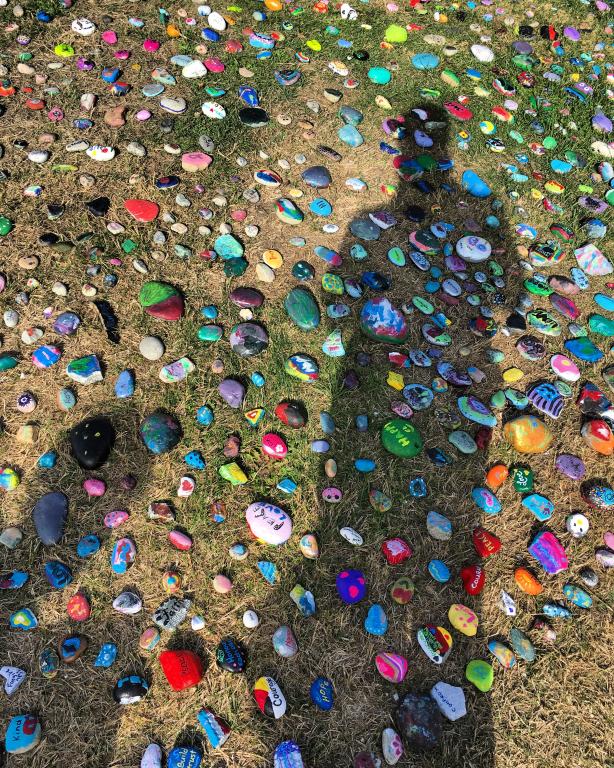
Painted stones at the Reconciliation Expo
On Saturday evening, my Parish, Saint James Anglican Church, hosted a reconciliation dinner for First Nations’ survivors of Canadian residential schools. Much like their counterparts in the US, Canadian residential schools were boarding schools administered by Christian churches mandated to assimilate native peoples to North American culture and language. Over 100 years of existence, more than 150,000 indigenous children were forced to attend. An estimated 6,000 died for various reasons mostly associated with abuse while in the custody of these schools. The schools separated young people from their families and communities and restricted parental visits. As a result of this systematic cultural genocide, and many other factors, indigenous peoples in Canada and the US suffer higher rates of suicide, PTSD, alcoholism, drug addiction, abuse, violent crimes, incarceration, and disease. To hear the stories is chilling, to see the survivors seek to move past their anger and grief toward reconciliation is inspiring.
Saint James Anglican Church is located in the Downtown Eastside of Vancouver, a place where drug use, alcoholism, homelessness and sex work are commonplace. Again, First Nation’s peoples are over-represented among them. In collaboration with the parish, survivors planned a dinner that would sit survivors at the same tables with settlers of a similar age. The hope was that settlers would listen and that survivors would feel listened to.
At the urging of one of the parish members, I signed up as an event volunteer and when I arrived the parish hall was humming with conversation. Coffee, tea, and bannock were being served. There were a lot of volunteers, and I struggled to find useful work to do, and despite the beauty of the cultural presentations, I began to secretly regret coming.
As I stood in the back of the Parish Hall, one of the coordinators waved me over to an elderly First Nation’s man in a wheelchair. She explained that he needed to be wheeled next door, to his nursing home so he could take his pills. I happily obliged, relieved to have a task to carry out. I introduced myself to the man, and carefully wheeled him down the ramp into the back alley behind the church.
I felt a sense of satisfaction, that I was doing a good deed. But as I wheeled him along, and he talked in a raspy whisper, I quickly realized that in addition to taking his pills, the man would also need to take his insulin shot. He was diabetic, and his right foot had been amputated just below the knee. I was humbled by how much he had been through. However, as the chair dipped into the street and then up onto the sidewalk of the other side of the street, the irony of my position hit me suddenly. I was a well-intentioned white person pushing a diabetic indigenous man to take his insulin pills.
My ancestors had not only attempted to eradicate and assimilate his people, they had brought with them a diet that increased native people’s risk of contracting one of a hand full of diseases including diabetes. Though not personally implicated in his suffering, my people’s presence on this landscape has unalterably harmed his people.
My people also invented the medical means to save his life from diabetes. But at what cost? Saved, only to be subjugated.
With a ding, the elevator reached the third floor, and I navigated the wheelchair through a crowded meds counter, staffed by a single Chinese woman. She presented my First Nation’s friend with his insulin kit. He opened it fluently, pricked his finger and dabbed the red blood onto a digital sensor, the size of a wristwatch. He read off the reading which the nurse recorded. He unsheathed his insulin wand and lifted his shirt, inserting the needle without a wince or hesitation. When he was finished he packed up the box, put down his shirt and looked me in the eyes. He was ready to go back to the church. But first, he wanted to go to his room and get a hat made of cedar bark that he had made by hand.
As I wheeled him back into the alley behind the church, an indigenous woman sat on the ground searching for a vein in her bare left foot. It is a common sight in this neighborhood. From behind the wheelchair of a diabetic indigenous man, however, her presence made the reality of indigenous survivorship all the more powerful. I wheeled the man back to his place at the front of the Parish Hall and patted him on the shoulder. There was a dance troupe dressed in regalia performing under a simple crucifix affixed above the stage.
My eyes filled with tears as I glimpsed something of the pain that was being healed through this gathering, pain inflicted by my beloved Christianity. Colonization is not just an event that happened once, its wake continues to swell across the sea of our world. Events like those which took place this weekend, this small dinner followed by the Walk for Reconciliation on the streets of Vancouver where thousands of people participated, are small steps toward our goal of seeking justice for all peoples, and forgiveness from those we have brutalized. Hoping that their children will be better off, and their children’s children will once again thrive here on the shores of the Salish Sea.
Previous Post

September 18, 2017
Antinatalism and Moral Equivalences
Next Post
October 10, 2017 Leaves
Browse Our Archives
Select a Category Anthropocene Camino de Santiago Catholicism Film Holyscapes Homily Liturgy Monk Nature New Monasticism New Story Pilgrimage Poetry Politics Prayer Religion and Spirituality Silence Spiritual Ecology Spring Spriritual Ecology Theology Uncategorized Walking Writing
Select a Month June 2020 May 2020 April 2020 March 2020 February 2020 January 2020 December 2019 November 2019 August 2019 June 2019 May 2019 April 2019 January 2019 December 2018 November 2018 October 2018 September 2018 August 2018 July 2018 June 2018 May 2018 April 2018 March 2018 February 2018 January 2018 November 2017 October 2017 September 2017 August 2017 July 2017 June 2017 May 2017 April 2017 March 2017 February 2017 January 2017 December 2016 November 2016 October 2016 September 2016 August 2016 July 2016 June 2016 May 2016 April 2016 March 2016 February 2016 January 2016 December 2015 November 2015
Follow Us!
TAKE THE
Religious Wisdom Quiz
What does "Apocalypse" mean in Greek?
Select your answer to see how you score.
Judgment Revelation Victory Destruction
Related posts from Holyscapes



On the Spirituality of Light and Dark
TRENDING AT PATHEOS Contemplative

Handy Contemplative Practices for Political Spaces
A Spiritually Grounded Presence In order to bring a spiritually grounded presence...

Halloween: The Holiday of Loving Your Neighbor
All Hallows Eve Is Halloween the least Christian holiday in America, or...

Can Love Be Saved? Some Thoughts on the...
Happy Valentine's Day! I recently published a post on Patreon called Can...

"This Loving, Uniting Embrace": the Holy Ordinary
Today's guest post is by Mark Longhurst, author of The Holy Ordinary:...

How Are We Called to Live?: More About...
How Are We Called to Live? Many of us struggle with discerning...

A Spiritual Practice of Reading: Join Us Online
A Spiritual Practice of Reading A healthy spiritual practice of reading is...
view all Contemplative blogs
Ad-Free & Subscriber Log-In Subscription Support
- About Us
- 2026 Calendar
- Videos
- Podcasts
- Library of World Religions
- Faith In Media Tracker
- Advertise With Us
- Write for Us
- Privacy Policy
- Terms of Service
- Do Not Sell My Data
- Contact Us
- Radiant Digital
- Manage Newsletter Subscriptions
- Unsubscribe From Notifications
- Sitemap
Copyright 2008-2026, Patheos. All rights reserved.
Subscription Support Ad-Free & Subscriber Log-In
Follow Patheos