
BuddhistCatholicContemplativeEvangelicalGeneral ChristianHinduJewishLatter-day SaintMuslimNew VisionsProgressive Christian
Beliefs
- Buddhist
- Catholic
- Contemplative
- Evangelical
- General Christian
- Hindu
- Jewish
- Latter-day Saint
- More Voices
- Muslim
- New Visions
- Pagan
- Progressive Christian
Topics
- Religion News
- Food and Religion
- Sports and Religion
- Religious Art
- Religious Music and Entertainment
- Religious Events
- History and Religion
- Style and Religion
- Politics and Religion
- Women in Religion
- Recreation Outdoors and Religion
- Business Finance and Religion
- Careers Workplace and Religion
- Education and Religion
- Family Parenting and Religion
- Health Fitness and Religion
- Home and Religion
- Relationships and Religion
- Technology and Religion
- Travel and Religion
Columnists
- Buddhist Columnists
- Business Finance and Religion Columnists
- Careers Workplace and Religion Columnists
- Catholic Columnists
- Contemplative Columnists
- Education and Religion Columnists
- Evangelists Columnists
- Family Parenting and Religion Columnists
- General Christian Columnists
- Health Fitness and Religion Columnists
- Hindu Columnists
- History and Religion Columnists
- Home and Religion Columnists
- Jewish Columnists
- More Voices Columnists
- Latter Day Columnists
- Muslim Columnists
- New Visions Columnists
- Nonreligious Columnists
- Pagan Columnists
- Politics and Religion Columnists
- Progressive Columnists
- Recreation Outdoors and Religion Columnists
- Relationships and Religion Columnists
- Religion News Columnists
- Religious Art Columnists
- Religious Events Columnists
- Religious Music and Entertainment Columnists
- Sports and Religion Columnists
- Style and Religion Columnists
- Technology and Religion Columnists
- Travel and Religion Columnists
- Women in Religion Columnists
Resource Library
- 2026 Calendar
- Library of World Religions
- The 100 Most Holy Places on Earth
- Patheos Answers
- Podcasts
- Videos
- Faith Leaders Database
- Anglican Episcopalian
- Bahai
- Baptist
- Buddhism
- Christianity
- Confucianism
- Eastern Orthodoxy
- Hinduism
- Holiness and Pentecostal
- ISKCON
- Islam
- Judaism
- Lutheran
- Methodist
- The Church of Jesus Christ of Latter-day Saints
- New Age
- Paganism
- Presbytarian and Reformed
- Protestantism
- Religion Behind the Scenes
- Roman Catholic
- Scientology
- Shia Islam
- Sikhism
- Sufism
- Sunni Islam
- Taoism
- Zen
- See all religions
Research Tools
 Ad-Free & Subscriber Log-In Subscription Support
Ad-Free & Subscriber Log-In Subscription Support
Follow Patheos 

- Trending:
- Forgiveness
- |
- Marriage
- |
- Consciousness
- |
- Death Penalty
- |
- Election
- |
- Halloween
 Holyscapes
- Home
- Contemplative
- What’s in a Name? Decolonizing Personal Spiritual Ecologies
What’s in a Name? Decolonizing Personal Spiritual Ecologies
Last updated on: May 24, 2017 at 6:33 am by Jason M. Brown
What’s in a Name? Decolonizing Personal Spiritual Ecologies 2017-05-24T06:33:28-08:00 Jason M. Brown
Patheos Explore the world's faith through different perspectives on religion and spirituality! Patheos has the views of the prevalent religions and spiritualities of the world.
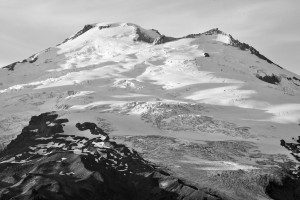 Standing on the creaky porch of Park Butte fire lookout, it felt like I was face to face with the southern slope of Mount Baker. Thirty miles east of Bellingham, Washington, on this 4th of July, the trail had been practically empty. I stayed the night in the lookout, and watched the colorful flicker of fireworks on the coast below mirror the twinkle of the stars above. As I began my hike down the next morning, I wanted somehow to reverence the commanding presence of the mountain in whose close proximity I had slept. I asked myself a simple question: Does it matter if I think of the mountain by its Settler name? Or, should I refer to it by its Lummi name: Kulshan?
I didn’t really know anything Mr. Baker, except that he was English; or much about the word Kulshan, except that it was one of the hip new breweries in town. So, I mustered a hasty sign of the cross, brought my hands close to my heart, and said ‘thank you.’
After my trip, I began to do a little research. Mount Baker is a 10,700 foot, relatively young at 100,000 years, active strato-volcano. Which means it is made up by layers of igneous rock, lava and pumice. It is glaciated, and snow-covered year round and has one of the highest snowfalls in the world.
Coast Salish peoples have dwelt in the area for at least 14,000 years. The Lummi word for the peak is as I already knew Kulshan, but it doesn’t mean White Sentinel, or The Shining One as I had heard. The word means something closer to ‘puncture wound.’ For the nearby Nooksack people, Kulshan actually refers to the area around the peak, used for hunting and gathering. Kweq’ Smánit, which simply means ‘white mountain’, is the name for the summit.
There are at least two stories associated with Kulshan. A 1919 ethnography recorded a retelling of the story of the Thunderbird, a supernatural being who dwells in the tops of mountains. A Lummi man related
“Thunder is caused by a great bird…the thunderbird is many hundreds of times larger than a fish hawk. It is so large that it can carry a large whale in its talons from the ocean to its nest….This huge bird has its home yonder on Mt. Baker, where you see the clouds piling up now. Whenever this bird comes from its nest and flies about the mountain top it thunders and lightnings, and even when it is disturbed in its nest it makes the thunder noise by its moving about even there…. The lightning is caused by the quick opening and shutting of its powerfully bright, snappy eyes and the thunder noise by the rapid flapping of its monstrous wings” (Reagan, 1919, 435).
The Thunderbird is a being in most if not all Coast Salish cosmologies, and it is often both a respected and feared presence in the land that demands respect and sometimes placation through the burning of ceremonial fires. For the Squamish peoples, the rich deposits of obsidian are places where lighting that shoots from thunderbirds eyes hit the earth.
The ethnographer Charles Buchanan in 1916, recorded another story of a man named Kulshan who had two wives; one beautiful, and one kind. Kulshan loved the kinder wife more, and the beautiful wife grew jealous and decided to leave him, hoping he would realize what he lost and come after her. As she walked south, she turned back many times to see if Kulshan was looking, and as she got farther away she had to stretch higher and higher to see Kulshan. Eventually she made camp on a high outcropping and stared back at Kulshan, waiting for him to come. Eventually she turned into the peak we today call Mount Rainier, and he into Mount Kulshan.
During the age of conquest, the mountain was sketched by Gonzalo Lopez de Haro on a Spanish voyage in 1790. He named it ‘La Gran Montaña de Carmelo,’ in reference to both Mount Carmel, but also the Carmelite Order, home of Saint John of the Cross and Teresa of Avila. In 1792, it donned the now familiar name of Englishman Joseph Baker, who was Captain George Vancouver’s Lieutenant.
Over the years, Anglo mountain climbers, ethnographers and history buffs have been in favor of renaming the peak Kulshan. Proof of this are the dozens of local businesses, mountaineering clubs, or botany societies who have taken it on as a namesake. But in doing so are we paying deference to an authentic place-name tradition? Or feeding our own ideas about indigeneity? Perhaps both.
 Personal Spiritual Ecology
Acknowledging indigenous place-names certainly look toward a reconciliatory stance, provided it is accompanied by respect for sacred sites, more resource management autonomy, and Treaty and Title rights if possible. However, phenomenologically, a place-name does not automatically give us admittance to the world the name upholds. For example, Coast Salish place-names are fairly simple descriptives: ‘white mountain’, ‘place for herring fish’, etc. It is rather, the activities of dwelling that accumulate around those place-names that give rise to an experience of the world. This is beautifully illustrated of course by Keith Basso’s Wisdom Sits in Places but unlike Basso’s semiotic approach, Tim Ingold’s insights show us that landscape is not just a cultural layer we project onto the physical world, but the world itself. While I might be able to understand or recall certain Coast Salish place-names or stories, I must admit that I do not dwell in that world, and an attempt to do so for my own academic or spiritual curiosity carries with it the weight and suspicion of the colonialism of the last 200 years. In addition, in retelling these stories, there is the danger not only of losing details in translation, but importing my own world into the telling. And yet, are there any ontologies, especially today, that are not plural? Hybrid?
Learning about the history of the mountain, I confess that Mount Carmel resonated most with me. I am of course aware that to stick with ‘Carmel’, is to return to where we started, to run the risk of perpetuating imperial Christianity; but it is also to connect the place to the rich contemplative spiritual tradition of which I am a practitioner. John of the Cross’s Ascent of Mount Carmel, features the mountain as a symbol for our longing for union with God.
Lastly, regardless of one’s spiritual orientation, the land can speak to us in ways that we cannot always predict. I recall sitting in a discussion group at a Salish Sea conference. I made some point about place names. A Nooksack woman responded patiently that it was not we who named places, but the places themselves that gave people their names as gifts when they are ready. Translated into contemplative spirituality, this is the practice of attention, or, Prosoche (pro-soh-KHAY) in Greek. Being present a person, place, or organism, we listen to what they might say about the world, about ourselves, or about God. Perhaps it is with this practice that new names and thus, new worlds might arise.
This paper was presented at the recent Mountains and Sacred Landscapes Conference at the New School for Social Research in New York City.
References
Buchanan, Charles M. 1909. The Origin of Mounts Baker and Rainier: The Indian Legend, The Mountaineer, Volume 9, pages 32-35, Seattle WA.
Reagan, Albert 1919. Some notes on the Lummi-Nooksack Indians. Transaction of the Kansas Academy of Science, pages 423-437.
Richardson, Allan and Brent Galloway 2011. Nooksack Place Names: Geography, Culture, and Language, UBC Press, Vancouver BC.
Winthrop, Theodore 1862. The Canoe and the Saddle: Adventures Among the Northwestern Rivers and Forests and Isthmiana, John W. Lovell Company, New York NY.
http://arcadianabe.blogspot.ca/2012/12/koma-kulshan-mysterious-mountain-moniker.html
http://www.stumpranchonline.com/skagitjournal/Washington/Whatcom/MtBaker/Baker5-IndianLegend.html
Previous Post
May 4, 2017
The Promise and the Peril of Interfaith Dialogue
Next Post
May 18, 2017 Pale Green
Browse Our Archives
Select a Category Anthropocene Camino de Santiago Catholicism Film Holyscapes Homily Liturgy Monk Nature New Monasticism New Story Pilgrimage Poetry Politics Prayer Religion and Spirituality Silence Spiritual Ecology Spring Spriritual Ecology Theology Uncategorized Walking Writing
Select a Month June 2020 May 2020 April 2020 March 2020 February 2020 January 2020 December 2019 November 2019 August 2019 June 2019 May 2019 April 2019 January 2019 December 2018 November 2018 October 2018 September 2018 August 2018 July 2018 June 2018 May 2018 April 2018 March 2018 February 2018 January 2018 November 2017 October 2017 September 2017 August 2017 July 2017 June 2017 May 2017 April 2017 March 2017 February 2017 January 2017 December 2016 November 2016 October 2016 September 2016 August 2016 July 2016 June 2016 May 2016 April 2016 March 2016 February 2016 January 2016 December 2015 November 2015
Follow Us!
TAKE THE
Religious Wisdom Quiz
What did Solomon famously judge between"two women and what disputed item?
Select your answer to see how you score.
A sheep A house A baby A ring
Related posts from Holyscapes




A Guide Book to America’s Sacred Groves: A...
TRENDING AT PATHEOS Contemplative

Handy Contemplative Practices for Political Spaces
A Spiritually Grounded Presence In order to bring a spiritually grounded presence...

Halloween: The Holiday of Loving Your Neighbor
All Hallows Eve Is Halloween the least Christian holiday in America, or...

Can Love Be Saved? Some Thoughts on the...
Happy Valentine's Day! I recently published a post on Patreon called Can...

"This Loving, Uniting Embrace": the Holy Ordinary
Today's guest post is by Mark Longhurst, author of The Holy Ordinary:...

How Are We Called to Live?: More About...
How Are We Called to Live? Many of us struggle with discerning...

A Spiritual Practice of Reading: Join Us Online
A Spiritual Practice of Reading A healthy spiritual practice of reading is...
view all Contemplative blogs
Ad-Free & Subscriber Log-In Subscription Support
- About Us
- 2026 Calendar
- Videos
- Podcasts
- Library of World Religions
- Faith In Media Tracker
- Advertise With Us
- Write for Us
- Privacy Policy
- Terms of Service
- Do Not Sell My Data
- Contact Us
- Radiant Digital
- Manage Newsletter Subscriptions
- Unsubscribe From Notifications
- Sitemap
Copyright 2008-2026, Patheos. All rights reserved.
Subscription Support Ad-Free & Subscriber Log-In
Follow Patheos