
BuddhistCatholicContemplativeEvangelicalGeneral ChristianHinduJewishLatter-day SaintMuslimNew VisionsProgressive Christian
Beliefs
- Buddhist
- Catholic
- Contemplative
- Evangelical
- General Christian
- Hindu
- Jewish
- Latter-day Saint
- More Voices
- Muslim
- New Visions
- Pagan
- Progressive Christian
Topics
- Religion News
- Food and Religion
- Sports and Religion
- Religious Art
- Religious Music and Entertainment
- Religious Events
- History and Religion
- Style and Religion
- Politics and Religion
- Women in Religion
- Recreation Outdoors and Religion
- Business Finance and Religion
- Careers Workplace and Religion
- Education and Religion
- Family Parenting and Religion
- Health Fitness and Religion
- Home and Religion
- Relationships and Religion
- Technology and Religion
- Travel and Religion
Columnists
- Buddhist Columnists
- Business Finance and Religion Columnists
- Careers Workplace and Religion Columnists
- Catholic Columnists
- Contemplative Columnists
- Education and Religion Columnists
- Evangelists Columnists
- Family Parenting and Religion Columnists
- General Christian Columnists
- Health Fitness and Religion Columnists
- Hindu Columnists
- History and Religion Columnists
- Home and Religion Columnists
- Jewish Columnists
- More Voices Columnists
- Latter Day Columnists
- Muslim Columnists
- New Visions Columnists
- Nonreligious Columnists
- Pagan Columnists
- Politics and Religion Columnists
- Progressive Columnists
- Recreation Outdoors and Religion Columnists
- Relationships and Religion Columnists
- Religion News Columnists
- Religious Art Columnists
- Religious Events Columnists
- Religious Music and Entertainment Columnists
- Sports and Religion Columnists
- Style and Religion Columnists
- Technology and Religion Columnists
- Travel and Religion Columnists
- Women in Religion Columnists
Resource Library
- 2026 Calendar
- Library of World Religions
- The 100 Most Holy Places on Earth
- Patheos Answers
- Podcasts
- Videos
- Faith Leaders Database
- Anglican Episcopalian
- Bahai
- Baptist
- Buddhism
- Christianity
- Confucianism
- Eastern Orthodoxy
- Hinduism
- Holiness and Pentecostal
- ISKCON
- Islam
- Judaism
- Lutheran
- Methodist
- The Church of Jesus Christ of Latter-day Saints
- New Age
- Paganism
- Presbytarian and Reformed
- Protestantism
- Religion Behind the Scenes
- Roman Catholic
- Scientology
- Shia Islam
- Sikhism
- Sufism
- Sunni Islam
- Taoism
- Zen
- See all religions
Research Tools
 Ad-Free & Subscriber Log-In Subscription Support
Ad-Free & Subscriber Log-In Subscription Support
Follow Patheos 

- Trending:
- Forgiveness
- |
- Marriage
- |
- Consciousness
- |
- Death Penalty
- |
- Election
- |
- Halloween
 Holyscapes
- Home
- Contemplative
- Theodicy in ‘The 100’
Theodicy in ‘The 100’
Last updated on: January 3, 2017 at 1:30 pm by Jason M. Brown
Theodicy in ‘The 100’ 2017-01-03T13:30:59-08:00 Jason M. Brown
Patheos Explore the world's faith through different perspectives on religion and spirituality! Patheos has the views of the prevalent religions and spiritualities of the world.
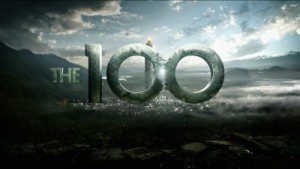
(Source: Wikipedia)
Vancouver has recently seen a very unusual arctic front that has not only dropped several inches of snow, but has plunged temperatures below freezing, turning streets and sidewalks into slick ice skating rinks. and leaving city officials totally unprepared for even a basic response.
In this winter weather, before the holidays, I spent a lot of time inside binge watching a TV series on Netflix called “The 100.” Though the post-apocalyptic sci-fi is set in Northeastern United States, it was filmed right here in Vancouver and our surrounding forestlands. It was strange to watch the characters navigate both real and virtual reality terrain in my own city and the places where I frequently hike.
For those who have not seen it, the show opens in space, where several hundred survivors of an earthly nuclear war are living in an international space station, that is running out of oxygen 97 years after the bombs go off. The martial law of survival means that any serious crime is a capital crime and thus one hundred young prisoners are selected for a secret experiment. They are sent to earth to see if it is survivable. The meat of the show unfolds in what and who they find when they get to the surface. The characters are a bit shallow, and the dialogue is sometimes thin, but the highlights several strong women characters and had some very interesting commentary on religion.
The culminating conflict, which is led up to by the many subplot conflicts between warring “Skycrew,” “Grounders,” “Reapers,” and the radiation sensitive residents of a bunker in Mount Weather, takes place between the central ‘Savior’ figure and the artificial intelligence program named Alie, who set of the initial nuclear holocaust 97 years earlier. The program, which was designed to make life better for human beings, used an ice cold logic to deduce that the way to solve overpopulation was to lower earth’s population. Equally calculating, the program designed a software which is implanted in humans by swallowing a communion-wafer shaped chip and transports human consciousness to a virtual world called “The City of Lights” with no suffering, pain or war. Devotees of the City of Lights are easily controlled by the AI, and they are in the process of “chipping” everyone, when a small group led by the main character, Clarke Griffin, played by Eliza Taylor, conspire to defeat the AI and liberate the people who are chipped. To do so however, Clarke must find the virtual kill switch located in the City of Lights. To do this she must implant in her brain a single copy of the second version of the software which was passed down by the original designer of the AI, and also take the wafer so she can get into the City of Lights.
Confused yet? To get all the details, I would recommend watching, but I wanted to point out what I perceive to be a misrepresentation of religion. The City of Lights, and the genocidal AI, are clearly a swipe at organized religion, which seeks to force a kind of conformity on all of humanity, regardless of the consequences. This fundamentalist focus on the ends over the means, is certainly evident in some strands of militant terror. But on the whole, it confuses what religion is actually “designed” to do in the first place.
Under the influence of the AI, “Chipped” people do not feel pain. In addition, they soon forget all of their traumatic and painful memories. No pain, no suffering. At one point, Abbey (not yet chipped), who is a doctor, asks her “chipped” assistant if he remembers his mother’s name. He can’t remember, because she died in his arms, and that was the reason he became a doctor. In a clear teaching moment, the writers are communicating the importance of at least some suffering, pain and grief in making us who we are.
But what I do not like is that the writers seem to be saying that we have a choice between the myths of religion, and the pain of reality, and that we should chose the, though darker, harsher, at least reality of a world of suffering. Religion peddles in fantasy, and though we may be all alone in the cosmos, at least we are facing this reality head on without some kind of “opiate” to numb the pain. In the final showdown between Clarke and the AI, Clarke is tempted to allow the AI to survive. This “last temptation” moment, seems to pit the almost hopeless situation her people face in the harsh world outside, with the virtual salvation presented by Alie.
Watching the post-apocalyptic cast of The 100 run around the forests where I often hike; being in Vancouver for a historical election upset in the US, and the strange arctic weather, I can’t help thinking of dramatic changes coming to the world. Certainly religion could be seen as an escape from this uncertainty.
But in my view, the makers of The 100 get religion wrong. We do not face a choice between the opiate of religion, or the sting of a harsh reality. Religion is not just that which promises us a life after life itself. Religion, with its root meaning ‘to bind together,’ is precisely that which allows us to be most awake to and most resilient in the face of immediate circumstances that seem insurmountable. As Clarke wisely discerns as she decides whether to throw the kill switch, pain is not something we seek to ease, it is something we endure for our good. In Christianity, the central figure, a man nailed to a cross, writhing in pain, suffering is precisely that which allows us to change.
So while I would certainly recommend The 100 to the Post-Apocalyptic Sci-Fi crowd, it doesn’t make for very good commentary if it insists that religion is only an escape from reality rather than a tool for engaging it.
Previous Post

December 6, 2016
This is What Reconciliation Looks Like
Next Post
January 9, 2017 Unanswered Questions in Scorsese's 'Silence'
Browse Our Archives
Select a Category Anthropocene Camino de Santiago Catholicism Film Holyscapes Homily Liturgy Monk Nature New Monasticism New Story Pilgrimage Poetry Politics Prayer Religion and Spirituality Silence Spiritual Ecology Spring Spriritual Ecology Theology Uncategorized Walking Writing
Select a Month June 2020 May 2020 April 2020 March 2020 February 2020 January 2020 December 2019 November 2019 August 2019 June 2019 May 2019 April 2019 January 2019 December 2018 November 2018 October 2018 September 2018 August 2018 July 2018 June 2018 May 2018 April 2018 March 2018 February 2018 January 2018 November 2017 October 2017 September 2017 August 2017 July 2017 June 2017 May 2017 April 2017 March 2017 February 2017 January 2017 December 2016 November 2016 October 2016 September 2016 August 2016 July 2016 June 2016 May 2016 April 2016 March 2016 February 2016 January 2016 December 2015 November 2015
Follow Us!
TAKE THE
Religious Wisdom Quiz
Who was the oldest person in the Bible?
Select your answer to see how you score.
Noah Abraham Methuselah Adam
Related posts from Holyscapes




A Guide Book to America’s Sacred Groves: A...
TRENDING AT PATHEOS Contemplative

Handy Contemplative Practices for Political Spaces
A Spiritually Grounded Presence In order to bring a spiritually grounded presence...

Halloween: The Holiday of Loving Your Neighbor
All Hallows Eve Is Halloween the least Christian holiday in America, or...

Can Love Be Saved? Some Thoughts on the...
Happy Valentine's Day! I recently published a post on Patreon called Can...

"This Loving, Uniting Embrace": the Holy Ordinary
Today's guest post is by Mark Longhurst, author of The Holy Ordinary:...

How Are We Called to Live?: More About...
How Are We Called to Live? Many of us struggle with discerning...

A Spiritual Practice of Reading: Join Us Online
A Spiritual Practice of Reading A healthy spiritual practice of reading is...
view all Contemplative blogs
Ad-Free & Subscriber Log-In Subscription Support
- About Us
- 2026 Calendar
- Videos
- Podcasts
- Library of World Religions
- Faith In Media Tracker
- Advertise With Us
- Write for Us
- Privacy Policy
- Terms of Service
- Do Not Sell My Data
- Contact Us
- Radiant Digital
- Manage Newsletter Subscriptions
- Unsubscribe From Notifications
- Sitemap
Copyright 2008-2026, Patheos. All rights reserved.
Subscription Support Ad-Free & Subscriber Log-In
Follow Patheos