
BuddhistCatholicContemplativeEvangelicalGeneral ChristianHinduJewishLatter-day SaintMuslimNew VisionsProgressive Christian
Beliefs
- Buddhist
- Catholic
- Contemplative
- Evangelical
- General Christian
- Hindu
- Jewish
- Latter-day Saint
- More Voices
- Muslim
- New Visions
- Pagan
- Progressive Christian
Topics
- Religion News
- Food and Religion
- Sports and Religion
- Religious Art
- Religious Music and Entertainment
- Religious Events
- History and Religion
- Style and Religion
- Politics and Religion
- Women in Religion
- Recreation Outdoors and Religion
- Business Finance and Religion
- Careers Workplace and Religion
- Education and Religion
- Family Parenting and Religion
- Health Fitness and Religion
- Home and Religion
- Relationships and Religion
- Technology and Religion
- Travel and Religion
Columnists
- Buddhist Columnists
- Business Finance and Religion Columnists
- Careers Workplace and Religion Columnists
- Catholic Columnists
- Contemplative Columnists
- Education and Religion Columnists
- Evangelists Columnists
- Family Parenting and Religion Columnists
- General Christian Columnists
- Health Fitness and Religion Columnists
- Hindu Columnists
- History and Religion Columnists
- Home and Religion Columnists
- Jewish Columnists
- More Voices Columnists
- Latter Day Columnists
- Muslim Columnists
- New Visions Columnists
- Nonreligious Columnists
- Pagan Columnists
- Politics and Religion Columnists
- Progressive Columnists
- Recreation Outdoors and Religion Columnists
- Relationships and Religion Columnists
- Religion News Columnists
- Religious Art Columnists
- Religious Events Columnists
- Religious Music and Entertainment Columnists
- Sports and Religion Columnists
- Style and Religion Columnists
- Technology and Religion Columnists
- Travel and Religion Columnists
- Women in Religion Columnists
Resource Library
- 2026 Calendar
- Library of World Religions
- The 100 Most Holy Places on Earth
- Patheos Answers
- Podcasts
- Videos
- Faith Leaders Database
- Anglican Episcopalian
- Bahai
- Baptist
- Buddhism
- Christianity
- Confucianism
- Eastern Orthodoxy
- Hinduism
- Holiness and Pentecostal
- ISKCON
- Islam
- Judaism
- Lutheran
- Methodist
- The Church of Jesus Christ of Latter-day Saints
- New Age
- Paganism
- Presbytarian and Reformed
- Protestantism
- Religion Behind the Scenes
- Roman Catholic
- Scientology
- Shia Islam
- Sikhism
- Sufism
- Sunni Islam
- Taoism
- Zen
- See all religions
Research Tools
 Ad-Free & Subscriber Log-In Subscription Support
Ad-Free & Subscriber Log-In Subscription Support
Follow Patheos 

- Trending:
- Forgiveness
- |
- Marriage
- |
- Consciousness
- |
- Death Penalty
- |
- Election
- |
- Halloween
 Holyscapes
- Home
- Contemplative
- Sandstones of the Soul: From Forest to Desert and Back Again
Sandstones of the Soul: From Forest to Desert and Back Again
Last updated on: May 24, 2016 at 11:00 am by Jason M. Brown
Sandstones of the Soul: From Forest to Desert and Back Again 2016-05-24T11:00:09-08:00 Jason M. Brown
Patheos Explore the world's faith through different perspectives on religion and spirituality! Patheos has the views of the prevalent religions and spiritualities of the world.
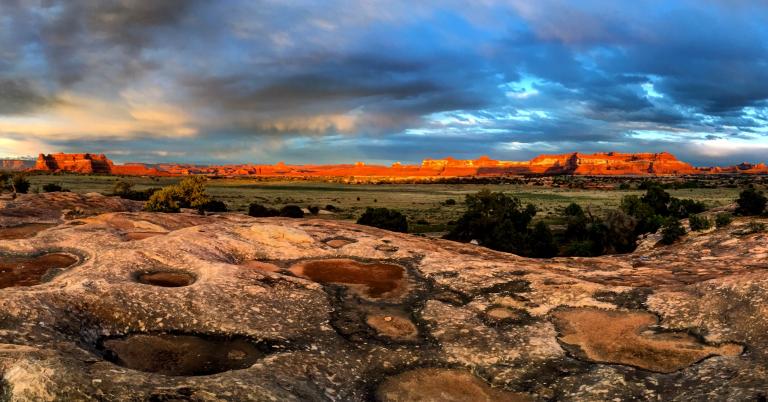
Canyonlands National Park
Following the tinkling creek up to Whyte Lake, in West Vancouver, BC, I was surrounded by second growth Douglas fir forest once again. The chaos of greens and the enclosed canopy view felt familiar of course, but the naked expanse of red-tan desert cliffs still felt present in my muscle memory. To go from desert to temperate rainforest in such a short time not only captures something of the miracle of modern technology in our lives, and the privilege I carry as a white male graduate student, but also symbolizes much of the spiritual journey I have taken over the last several years.
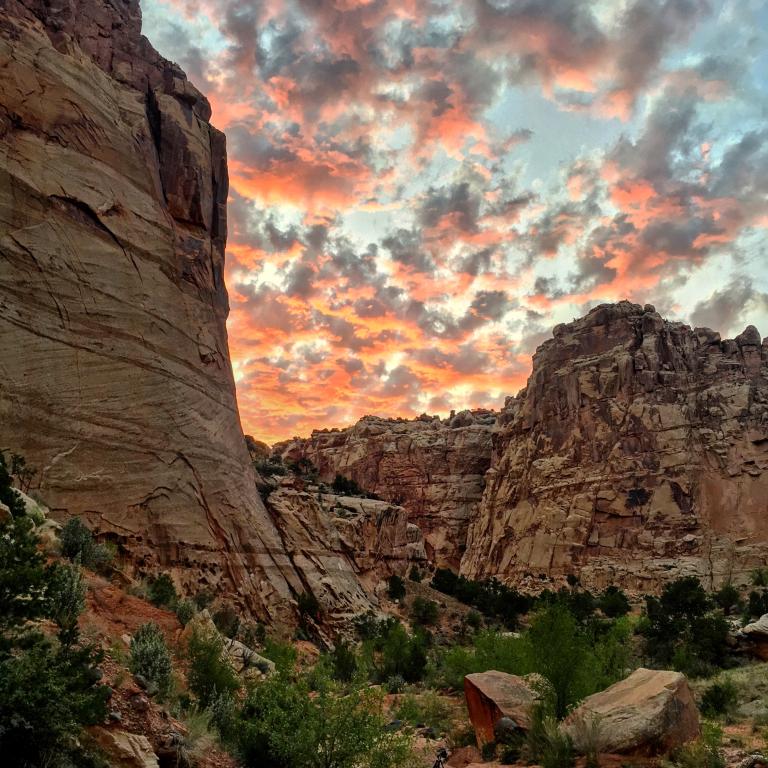
Canyonlands National Park
As a convert to Catholicism I was captivated by the rich use of symbol, icon, element, metaphor, stained glass, and incense. The Eucharist, which is experienced as the Real Presence of Christ in a small piece of bread and wine, came alive for me as a constant reminder that God, if present in these simple objects, is also present in the entire universe, and in me. In Christian spirituality this approach is called Cataphatic, or, according to the image. It is spirituality rich in symbolism and archetypally embodied spiritual practice. For my first year as a Catholic, spirituality was a kind of tonic for the soul, it nourished and succored. Meditation was a way of feeling at peace, and close to God as loving presence. Cataphatic spirituality in many ways resembles the richness of the temperate rainforest with its cacophony of sights, sounds, smells and textures.
Yet spending time in the desert during the second half of my field work, reading Belden Lane’s The Solace of Fierce Landscapes, and being confronted with my own patterns of self-loathing, helped me enter the danger, the emptiness and wildness of both God and the desert. This approach, opposite to Cataphatic, is called Apophatic, or, beyond the image. Apophatic spirituality is suspicious of images, icons, metaphor, even language itself. The Christian desert Fathers and Mothers entered the desert as the worldly embodiment of this spiritual orientation, and stripped of all metaphor except the soul’s ascent into the desert mountain, sought to dwell in God’s presence without metaphor, language, or even positive spiritual experiences.
Today’s deserts have become domesticated by a Nature-hungry world. The desert was the last of the New World ecologies to be romanticized. Water reclamation projects and uranium exploration carved roads into the vast deserts of the Intermountain and Southwest, which were then incorporated into the cannon of Nature Writing most famously by Edward Abbey and Terre Tempest Williams. In some National Parks like Arches, the desert has become nothing more than a drive-thru outdoor museum. Abbey would balk at the state of his wild Sacred Grove converted into paved tourist detour. RVs, tour buses, and passenger vehicles pull off into bustling parking lots, pour onto narrow walking paths, snap pictures, selfies, and group photos and move on to the next site.
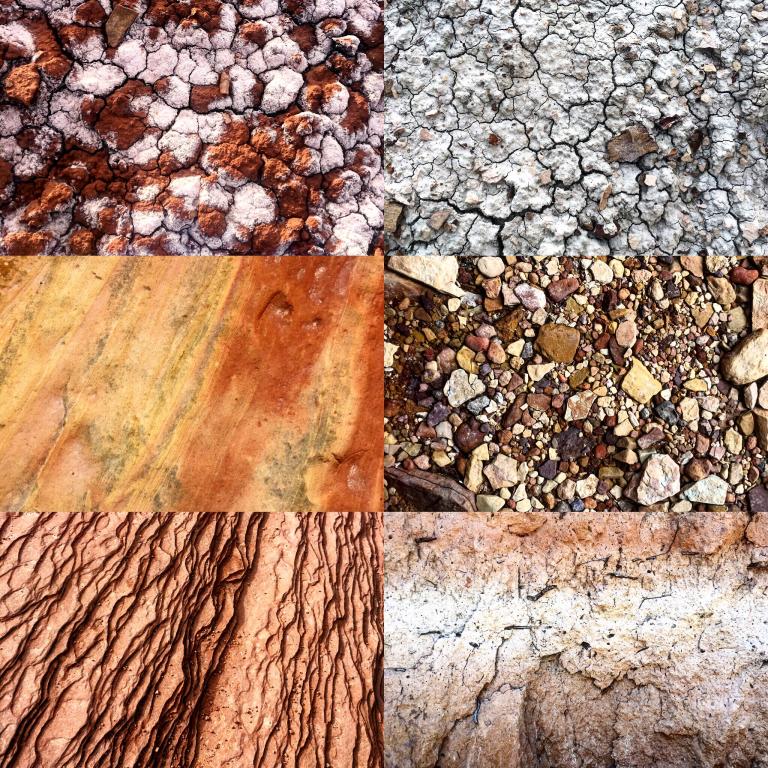
Various soil textures in Utah National Parks
I too came to the desert to see the iconic arches, and walk the trails carved through millions of years of earth’s tumultuous adolescence. As I writer, I am also eager to extract meaning from my experiences, or the tune in to any spiritual insights I might glean from my travels. I was in the desert at the best possible time, the grasses were still green, the sky blue with puffy clouds, the air still cool with the recent rains and snow. The trails dry, the creeks running but not flooding; the banditos and savages long since exterminated.
Yet the desert, like God, hates her chains. When I was young I had a recurring dream that I was in a vast open expanse that felt like it was rushing past me. As a boy growing up in Orange County, California, I associated it with a mall parking lot, the largest expanse of desert I knew. But looking back, I think it was possible that I was having a kind of Apophatic experience of God, not as loving Father, or comforter, but as terrifying darkness and void. Though the desert had been made safe by well-marked trails, maps, and pleasant weather, I could still feel the bare walls and rock in infinite variety and texture drawing me outward into the open, exposed and vulnerable. This is the original encounter with the desert, and God. What enabled me to enter into this space more fully than I may have, was not reading about it, but passing through a time of tremendous self-doubt. I was able to see the desert as more than just a beautiful place but as the naked rock which mirrored the rawness I was feeling in my soul.
These rocks and walls, which were formed in other places, eroded and then deposited here, and then compressed, uplifted and eroded once more, reminded me of the constant flux in my own life. Returning to the Pacific Northwest, I am again ready to cross back into Cataphatic spiritual practice, with a deeper awareness of what lies below the surface of even the most fecund forests.
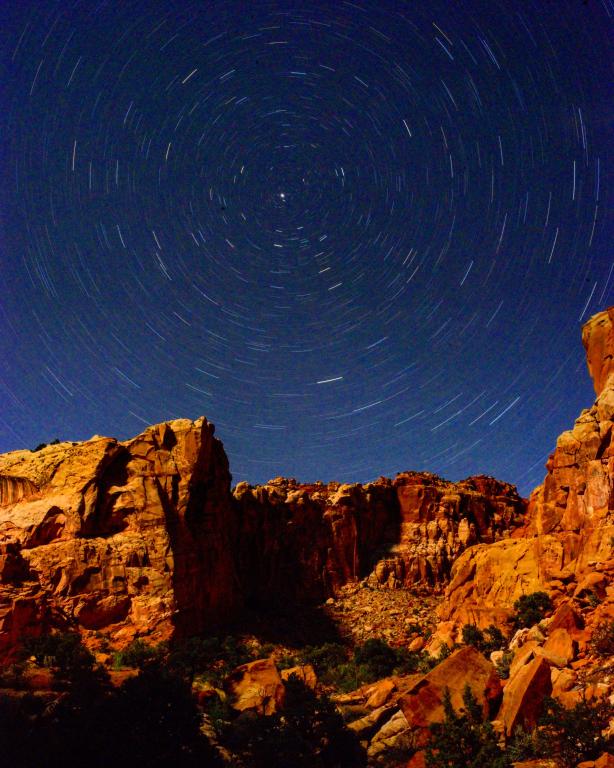
Upper Spring Canyon. Capital Reef National Park
Next Post
May 30, 2016 On What Religion Is Not
Browse Our Archives
Select a Category Anthropocene Camino de Santiago Catholicism Film Holyscapes Homily Liturgy Monk Nature New Monasticism New Story Pilgrimage Poetry Politics Prayer Religion and Spirituality Silence Spiritual Ecology Spring Spriritual Ecology Theology Uncategorized Walking Writing
Select a Month June 2020 May 2020 April 2020 March 2020 February 2020 January 2020 December 2019 November 2019 August 2019 June 2019 May 2019 April 2019 January 2019 December 2018 November 2018 October 2018 September 2018 August 2018 July 2018 June 2018 May 2018 April 2018 March 2018 February 2018 January 2018 November 2017 October 2017 September 2017 August 2017 July 2017 June 2017 May 2017 April 2017 March 2017 February 2017 January 2017 December 2016 November 2016 October 2016 September 2016 August 2016 July 2016 June 2016 May 2016 April 2016 March 2016 February 2016 January 2016 December 2015 November 2015
Follow Us!
TAKE THE
Religious Wisdom Quiz
Which Christian group believes in "baptism of the Holy Spirit" with evidence of speaking in tongues?
Select your answer to see how you score.
Pentecostals Lutherans Presbyterians Methodists
Related posts from Holyscapes




A Guide Book to America’s Sacred Groves: A...
TRENDING AT PATHEOS Contemplative

Handy Contemplative Practices for Political Spaces
A Spiritually Grounded Presence In order to bring a spiritually grounded presence...

Halloween: The Holiday of Loving Your Neighbor
All Hallows Eve Is Halloween the least Christian holiday in America, or...

Can Love Be Saved? Some Thoughts on the...
Happy Valentine's Day! I recently published a post on Patreon called Can...

"This Loving, Uniting Embrace": the Holy Ordinary
Today's guest post is by Mark Longhurst, author of The Holy Ordinary:...

How Are We Called to Live?: More About...
How Are We Called to Live? Many of us struggle with discerning...

A Spiritual Practice of Reading: Join Us Online
A Spiritual Practice of Reading A healthy spiritual practice of reading is...
view all Contemplative blogs
Ad-Free & Subscriber Log-In Subscription Support
- About Us
- 2026 Calendar
- Videos
- Podcasts
- Library of World Religions
- Faith In Media Tracker
- Advertise With Us
- Write for Us
- Privacy Policy
- Terms of Service
- Do Not Sell My Data
- Contact Us
- Radiant Digital
- Manage Newsletter Subscriptions
- Unsubscribe From Notifications
- Sitemap
Copyright 2008-2026, Patheos. All rights reserved.
Subscription Support Ad-Free & Subscriber Log-In
Follow Patheos