
BuddhistCatholicContemplativeEvangelicalGeneral ChristianHinduJewishLatter-day SaintMuslimNew VisionsProgressive Christian
Beliefs
- Buddhist
- Catholic
- Contemplative
- Evangelical
- General Christian
- Hindu
- Jewish
- Latter-day Saint
- More Voices
- Muslim
- New Visions
- Pagan
- Progressive Christian
Topics
- Religion News
- Food and Religion
- Sports and Religion
- Religious Art
- Religious Music and Entertainment
- Religious Events
- History and Religion
- Style and Religion
- Politics and Religion
- Women in Religion
- Recreation Outdoors and Religion
- Business Finance and Religion
- Careers Workplace and Religion
- Education and Religion
- Family Parenting and Religion
- Health Fitness and Religion
- Home and Religion
- Relationships and Religion
- Technology and Religion
- Travel and Religion
Columnists
- Buddhist Columnists
- Business Finance and Religion Columnists
- Careers Workplace and Religion Columnists
- Catholic Columnists
- Contemplative Columnists
- Education and Religion Columnists
- Evangelists Columnists
- Family Parenting and Religion Columnists
- General Christian Columnists
- Health Fitness and Religion Columnists
- Hindu Columnists
- History and Religion Columnists
- Home and Religion Columnists
- Jewish Columnists
- More Voices Columnists
- Latter Day Columnists
- Muslim Columnists
- New Visions Columnists
- Nonreligious Columnists
- Pagan Columnists
- Politics and Religion Columnists
- Progressive Columnists
- Recreation Outdoors and Religion Columnists
- Relationships and Religion Columnists
- Religion News Columnists
- Religious Art Columnists
- Religious Events Columnists
- Religious Music and Entertainment Columnists
- Sports and Religion Columnists
- Style and Religion Columnists
- Technology and Religion Columnists
- Travel and Religion Columnists
- Women in Religion Columnists
Resource Library
- 2026 Calendar
- Library of World Religions
- The 100 Most Holy Places on Earth
- Patheos Answers
- Podcasts
- Videos
- Faith Leaders Database
- Anglican Episcopalian
- Bahai
- Baptist
- Buddhism
- Christianity
- Confucianism
- Eastern Orthodoxy
- Hinduism
- Holiness and Pentecostal
- ISKCON
- Islam
- Judaism
- Lutheran
- Methodist
- The Church of Jesus Christ of Latter-day Saints
- New Age
- Paganism
- Presbytarian and Reformed
- Protestantism
- Religion Behind the Scenes
- Roman Catholic
- Scientology
- Shia Islam
- Sikhism
- Sufism
- Sunni Islam
- Taoism
- Zen
- See all religions
Research Tools
 Ad-Free & Subscriber Log-In Subscription Support
Ad-Free & Subscriber Log-In Subscription Support
Follow Patheos 

- Trending:
- Forgiveness
- |
- Marriage
- |
- Consciousness
- |
- Death Penalty
- |
- Election
- |
- Halloween
 Holyscapes
- Home
- Contemplative
- Wrestling God on the Chama River
Wrestling God on the Chama River
Last updated on: April 23, 2016 at 2:40 pm by Jason M. Brown
Wrestling God on the Chama River 2016-04-23T14:40:51-08:00 Jason M. Brown
Patheos Explore the world's faith through different perspectives on religion and spirituality! Patheos has the views of the prevalent religions and spiritualities of the world.

The moon over the Chama River
It is near sunset at Christ in the Desert Benedictine monastery in Abiquiu, New Mexico. This is the last of four monastic communities I am visiting as part of my PhD dissertation research. I have found a beautiful bend in the Chama River to watch another day pass into silence. A mostly full Sister Moon slowly peaks her face over the eastern yellow mesas to watch in silence as Brother Sun sets beyond the red mesas in the west.
I am fatigued from so many miles on the road; moreover, for about a week before arriving I had spiraled into a strange, dark place that had triggered intense fear and feelings of unworthiness and that old demon-friend, anxiety. My heart still feels tender from the emotional self-flagellation of the imagined emotional distance of someone I love very much. Yet, I am grateful to be in such a beautiful place and my feet feel heavy with a longing to root into the very banks of the river and to cast my lot with the ebb and flow of the Chama for the rest of my days; or to wade in and float down the river for as far as it will take me.
I kneel down and squish fine clay between my fingers from the tea-with-cream colored river. She whispers rumors of summer, and the buds of the willow and the cottonwood and the scrub oak whisper back. My heart pounds with nervous thoughts, and then I slowly return to the present lapping of water against muddy shore, only to be lifted up again into stories of loss, loneliness, jealousy and unworthiness.
I stand up and shake my head back into the present, fingers throbbing from the cold water. Tree swallows appear out of nowhere and begin to flit and warble around me like the water that caresses the unseen thousands of stones. Two dozen or so fly upstream, pause, and then work their way back down. I pray that the tiny birds could, in an instant, make my own rough crags smoother, bit by precious bit.
A single bat appears, fluttering awkwardly against the acrobatics of the swallows and a pang of sympathy fills my tired heart and a smile comes to my lips. Some of us move slower than others I reassure myself. Brother Wind blows pink and tin colored clouds up and over the striped cliffs that wall in the canyon, whose brick and mortar are made up of layer upon layer of ancient tropical soils and primordial sandy seas. My heart sinks again with a pang of absence and loneliness. Standing still I mutter ‘Holy One’, over and over again. The sun disappears behind me, the blue sky fades to grey, the moon shines fluorescent and I walk back to my cell in silence. My heart aches, but is somehow stronger, deeper, more open and receptive, ready to be filled.
***
The next day, as I am gathering my few effects after a wonderful interview, the Brother I was speaking with recalls a story about two Tibetan monks who had once visited the monastery. They loved the community so much that they stayed for over two months. “They fit right in,” said the Brother. During a conversation he had with them, one of the Tibetan monks asked what the river was called that ran through the monastery. “Chama,” the Brother had said, which he explained was a Spanish pronunciation for Tzama, which means a place of contest, or wrestling. He told them that the eastern confluence of the river had been a center for Puebloan competitions and games before Europeans arrived. The Tibetans nodded and said that in Tibetan Chama (which they must have heard as Tara) was the name for the Goddess of Mercy, the feminine aspect of Buddha. The Brother looked at me, smiled and paused, “So,” he said, “mercy flows through the monastery.”
***
I thank the Brother for his time and leave the small office. His story tugs at the memory of the night before on banks of the Chama. I recall the mysterious passage from the Book of Genesis, where after his family has crossed the Jordan River, the Hebrew Patriarch Jacob remains behind alone. That night he is visited by a mysterious figure who wrestles with him until dawn. The assailant knocks Jacob’s hip joint out of the socket, but Jacob is able to extract a blessing just before dawn. He is renamed Israel: the one who strives (or wrestles) with God. Jacob calls the place Penuel, he saw God (sometimes rendered as Angel) face to face and lived.
The spiritual life is often allegorized through this imagery of wresting or struggling with God. Many thousands of people come to places like Christ in the Desert each year to wrestle with their complicated lives, emotional demons, their health problems, relationships, or to seek the presence of the Divine. Though I am here for academic research, my monastery visits have been deeply soul nurturing, and part of an ongoing vocational discernment in my life. And though a lot of my time during these visits involves working, chanting, interviewing the monks, or writing notes, I still have time to reflect or take long walks.
I am used to wrestling with anxiety, fear and self-worth, I have for most of my life. Contemplative prayer has taught me however that there is an important dimension to wrestling with God: mercy. In the past, I have been tempted to see contemplative prayer as a kind of medicine for anxiety, a means to the end of not feeling anxious. If I am feeling sad, I should pray so I do not feel sad. This view of the spiritual life is common enough, but it misses the point. In Radical Acceptance by Tara Brach, the author blends Western psychology with Buddhist mindfulness to help readers see that our pain can be a tool for transformation. Radical Acceptance involves learning to be radically present to whatever we are experiencing without judging or by allowing it to feed the stories we tell ourselves about why we are sad, anxious or fearful. Rather than a means of suppressing or alleviating our suffering, contemplative prayer is a tool for harnessing it in the service of personal transformation and growth. Franciscan Friar Richard Rohr often says that “if we do not transform our pain, we will most assuredly transmit it.” I have certainly transmitted my share of pain by hurting people I love, but most of my pain is directed at myself.
For so long I have seen my pain as a symptom of my own failings: I am anxious because there is something wrong with me, fear is a defect, I am lonely because no one likes me, etc. Yet in addition to being aware of our suffering, Radical Acceptance teaches us to begin to look on our suffering with compassionate eyes, or in Christian language, with mercy. Mercy is that undeserved, ever-present grace that is at the core of our being. In Christian language it is the Holy Spirit, for Buddhists it is Buddha-Nature, for Hindus it might be an aspect of the Atman. Over the past several months, and again on the Chama River, my own pain and anxiety, the stories of unworthiness and fear of rejection that I continually tell myself are still there, but their power over me is decreasing. The pain is real, but I am getting better at not avoiding it or channeling into self-destructive narratives. It is in this wrestling to face my pain, fears and doubts with mindful awareness that I am finding deeper and deeper wells of mercy. But paradoxically, when I stop wrestling against my pain and allow it to teach me, I feel like I am more able to change. There is a River of mercy running through all of us, it is wild and beautiful, and once we realize we are already in its flow, it will take us as far as we are willing to let it.
Previous Post

April 15, 2016
New Wine in Old Winskins? Questions for the New Monastics
Next Post
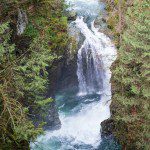
May 5, 2016 What's in a Name: 'We do not Name Places, Places Name Themselves'
Browse Our Archives
Select a Category Anthropocene Camino de Santiago Catholicism Film Holyscapes Homily Liturgy Monk Nature New Monasticism New Story Pilgrimage Poetry Politics Prayer Religion and Spirituality Silence Spiritual Ecology Spring Spriritual Ecology Theology Uncategorized Walking Writing
Select a Month June 2020 May 2020 April 2020 March 2020 February 2020 January 2020 December 2019 November 2019 August 2019 June 2019 May 2019 April 2019 January 2019 December 2018 November 2018 October 2018 September 2018 August 2018 July 2018 June 2018 May 2018 April 2018 March 2018 February 2018 January 2018 November 2017 October 2017 September 2017 August 2017 July 2017 June 2017 May 2017 April 2017 March 2017 February 2017 January 2017 December 2016 November 2016 October 2016 September 2016 August 2016 July 2016 June 2016 May 2016 April 2016 March 2016 February 2016 January 2016 December 2015 November 2015
Follow Us!
TAKE THE
Religious Wisdom Quiz
What does the Parable of the Workers in the Vineyard teach about God?
Select your answer to see how you score.
His grace is generous He is strict Only the first are blessed He loves some more than others
Related posts from Holyscapes




A Guide Book to America’s Sacred Groves: A...
TRENDING AT PATHEOS Contemplative

Handy Contemplative Practices for Political Spaces
A Spiritually Grounded Presence In order to bring a spiritually grounded presence...

Halloween: The Holiday of Loving Your Neighbor
All Hallows Eve Is Halloween the least Christian holiday in America, or...

Can Love Be Saved? Some Thoughts on the...
Happy Valentine's Day! I recently published a post on Patreon called Can...

"This Loving, Uniting Embrace": the Holy Ordinary
Today's guest post is by Mark Longhurst, author of The Holy Ordinary:...

How Are We Called to Live?: More About...
How Are We Called to Live? Many of us struggle with discerning...

A Spiritual Practice of Reading: Join Us Online
A Spiritual Practice of Reading A healthy spiritual practice of reading is...
view all Contemplative blogs
Ad-Free & Subscriber Log-In Subscription Support
- About Us
- 2026 Calendar
- Videos
- Podcasts
- Library of World Religions
- Faith In Media Tracker
- Advertise With Us
- Write for Us
- Privacy Policy
- Terms of Service
- Do Not Sell My Data
- Contact Us
- Radiant Digital
- Manage Newsletter Subscriptions
- Unsubscribe From Notifications
- Sitemap
Copyright 2008-2026, Patheos. All rights reserved.
Subscription Support Ad-Free & Subscriber Log-In
Follow Patheos