
BuddhistCatholicContemplativeEvangelicalGeneral ChristianHinduJewishLatter-day SaintMuslimNew VisionsProgressive Christian
Beliefs
- Buddhist
- Catholic
- Contemplative
- Evangelical
- General Christian
- Hindu
- Jewish
- Latter-day Saint
- More Voices
- Muslim
- New Visions
- Pagan
- Progressive Christian
Topics
- Religion News
- Food and Religion
- Sports and Religion
- Religious Art
- Religious Music and Entertainment
- Religious Events
- History and Religion
- Style and Religion
- Politics and Religion
- Women in Religion
- Recreation Outdoors and Religion
- Business Finance and Religion
- Careers Workplace and Religion
- Education and Religion
- Family Parenting and Religion
- Health Fitness and Religion
- Home and Religion
- Relationships and Religion
- Technology and Religion
- Travel and Religion
Columnists
- Buddhist Columnists
- Business Finance and Religion Columnists
- Careers Workplace and Religion Columnists
- Catholic Columnists
- Contemplative Columnists
- Education and Religion Columnists
- Evangelists Columnists
- Family Parenting and Religion Columnists
- General Christian Columnists
- Health Fitness and Religion Columnists
- Hindu Columnists
- History and Religion Columnists
- Home and Religion Columnists
- Jewish Columnists
- More Voices Columnists
- Latter Day Columnists
- Muslim Columnists
- New Visions Columnists
- Nonreligious Columnists
- Pagan Columnists
- Politics and Religion Columnists
- Progressive Columnists
- Recreation Outdoors and Religion Columnists
- Relationships and Religion Columnists
- Religion News Columnists
- Religious Art Columnists
- Religious Events Columnists
- Religious Music and Entertainment Columnists
- Sports and Religion Columnists
- Style and Religion Columnists
- Technology and Religion Columnists
- Travel and Religion Columnists
- Women in Religion Columnists
Resource Library
- 2026 Calendar
- Library of World Religions
- The 100 Most Holy Places on Earth
- Patheos Answers
- Podcasts
- Videos
- Faith Leaders Database
- Anglican Episcopalian
- Bahai
- Baptist
- Buddhism
- Christianity
- Confucianism
- Eastern Orthodoxy
- Hinduism
- Holiness and Pentecostal
- ISKCON
- Islam
- Judaism
- Lutheran
- Methodist
- The Church of Jesus Christ of Latter-day Saints
- New Age
- Paganism
- Presbytarian and Reformed
- Protestantism
- Religion Behind the Scenes
- Roman Catholic
- Scientology
- Shia Islam
- Sikhism
- Sufism
- Sunni Islam
- Taoism
- Zen
- See all religions
Research Tools
 Ad-Free & Subscriber Log-In Subscription Support
Ad-Free & Subscriber Log-In Subscription Support
Follow Patheos 

- Trending:
- Forgiveness
- |
- Marriage
- |
- Consciousness
- |
- Death Penalty
- |
- Election
- |
- Halloween
 Holy Rover
- Home
- New Visions
- The Buddha in My Phone
The Buddha in My Phone
Last updated on: March 15, 2017 at 5:04 am by Lori Erickson
The Buddha in My Phone 2017-03-15T05:04:45-06:00 Lori Erickson
Patheos Explore the world's faith through different perspectives on religion and spirituality! Patheos has the views of the prevalent religions and spiritualities of the world.
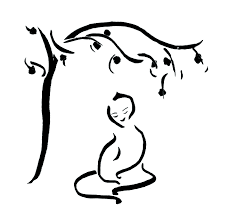
(Wikimedia Commons image)
For much of my adult life I’ve been a wannabe meditator. But even with good intentions and periodic resolutions that this-time-it’s-going-to-be-different, I could never keep a practice going for more than a few days. It all sounded so good in theory, but when it actually came time to sit with my eyes closed, trying to clear my mind of thoughts, I instead thought about an endless stream of thoughts that needed to be thought about right now.
And then Andy came into my life.
Andy lives inside my smart phone. He has another existence as well, I realize, but for my purposes he lives inside that little handheld device, ready for me whenever I need him. And I’ve come to rely on his gentle guidance given through a humble phone app (if you want to try it yourself, go to Headspace). Perhaps it’s the combination of the technology (“you’ve meditated for 10 days in a row—good job!”) and my over-50 stage of life that have finally given me some commitment to the practice of meditation.
To my embarrassment, after a few months I’ve become one of those people who keep bringing up meditation in conversation, extolling its benefits and urging people to try it. I take some comfort in the fact that this is more socially acceptable than being a born-again Christian (at least in my social circle), but born-again meditators can have a similar sense of evangelical zeal. I’ve discovered this amazing thing—don’t you want to hear about it?

Where my meditation guru lives (Bob Sessions photo)
The problem is that the insights that seem so significant when my eyes are closed don’t attract much interest from anyone else. “In my meditation this morning I was obsessing about something and then I had this great moment when I just let it go,” I told Bob.
“And?” Bob asked. “What happened next?”
“I just let it go,” I repeated, a little peeved that he didn’t recognize what a breakthrough this was.
“Good for you,” he replied, and then asked what else needed to be put on the grocery list.
Andy often gives me metaphors to help explain a concept, including one that says thoughts are like boats passing by on a river. You’re supposed to look at them pass by, but not catch a ride on them.
Sometimes, I must admit, I ride one of those boats for quite some time, and my meditation time is just an excuse for daydreaming. But sometimes-—often enough that it keeps me meditating—-I experience something else: Stillness-with-a-capital-S. There’s a kind of weightlessness about this state, a clarity of heart and mind that almost shimmers.
And more and more when Andy’s soothing voice tells me my session was over, I’m surprised, as it feels like I’d been mediating for only a few minutes. It gives me a glimpse of what it would mean to have that internal, ceaseless dialogue turned off, or at least toned down.
My budding meditation practice gives me glimpses of the architecture of my mind. It isn’t a grand cathedral, alas—more like an attic with lots of nooks and crannies, piled high with boxes in one corner, a few broken picture frames in another, and occasionally a forgotten treasure. In walking through it, in witnessing it, I’m beginning to have a sense both for its reality and for its unreality.
I’m finding intriguing new connections between what I’m experiencing and Christian teachings I’ve heard many times before. Author and spiritual teacher Cynthia Bourgeault, for example, links Centering Prayer (a Christian form of meditation) with the often-quoted line of Jesus, “He who would save his life must lose it.” Meditation is one way this can happen, she believes. “There comes a moment when the ego is no longer able to hold us together, and our identity is cast to the mercy of Being itself,” she writes. “This is the existential experience of ‘losing one’s life.’”
I’m beginning to see how this dying-to-self phenomenon can happen in a meditative practice, which requires letting go of our sense of self-importance and our relentless focus on the I. Instead, these techniques can create space for God to lead us to another way of being. Christian theologians have a fancy term for this process: kenosis, a Greek word meaning self-emptying. Jesus provided the model for how to do this: he was a master of the art of clinging to nothing and instead giving himself over entirely to God. He was reckless in his love for others, even at the cost of his own life.
Where did he get this ability to transcend the pettiness of ordinary existence? It’s clear from the Gospels that he sought solitude again and again in his life, retreating often to pray. He advised his followers to do the same, directing them to pray in secret behind closed doors. “Then your Father, who sees what is done in secret, will reward you,” he said.
And the more I think about it, his promise isn’t all that different from what the Buddha taught. The Buddha spoke of inner awakening; Jesus about salvation. Both encourage us to build a bridge between the small self and something greater, truer, deeper—-and both teachers say that the most important part of our practice happens not when we’re on our cushion or praying in secret, but after we open our eyes and re-enter the world in a new way.
Jesus called this place the Kingdom of Heaven, and it’s open to everyone, anytime. But sometimes an app helps.
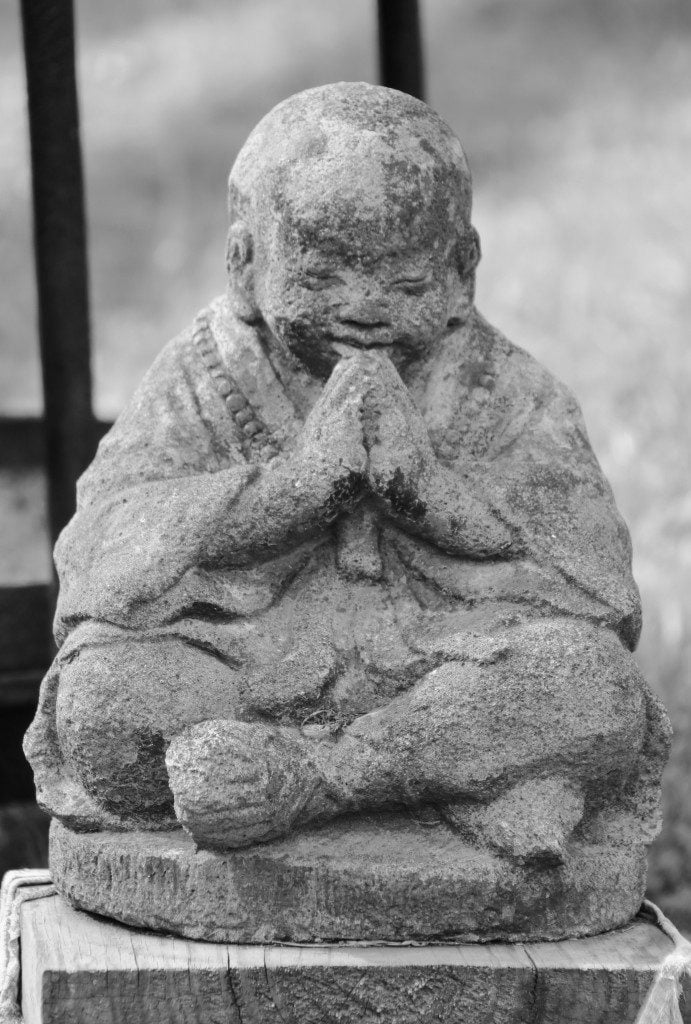
(photo by Bob Sessions)
Stay in touch! Like Holy Rover on Facebook:
Previous Post

March 8, 2017
The Splendor of Tikal
Next Post
April 4, 2017 The Aztecs: The Worst Neighbors in the World
Browse Our Archives
Select a Category Aging & Spirituality Amish Anabaptists Animals Apocalypse Archeological sites Art and Spirituality Awards Belgian Holy Sites birds Blessings Books Buddhism Business & Spirituality Callings Cats Celtic Cemeteries Children Christianity church Colorado Creation Death Desert Spirituality Easter Economics Education & Spirituality Egypt Episcopal Church Faith Fear Films First Nations Food Forgiveness Germany God Good & Evil Good Friday Grace Gratitude Happiness Healing Hildegard of Bingen Hinduism History Holy Rover blog Holy Sites Holy Week Horses Iceland Illness Images of God Indigenous Spiritualilty Interfaith Interfaith Dialogue Iowa Islam Israel Japan Judaism LDS Church Lent Machu Picchu Martin Luther Media Meditation Monasteries Museums Music Music and Spirituality Musings Mysticism Native American Nature New Age New Zealand Norse History/Culture/Spirituality Orthodox Paradox Paranormal Peru Philosophy Pilgrimage Poetry Politics Pop Culture Pilgrimage Sites Prayers sermons Silence Social Media Spiritual writers Spirituality and Food Spirituality and Social Media Stone Circles Thomas Merton Turkey Uncategorized Unconventional Holy Sites Utopian communities Videos Virgin Mary Wicca Work World War I Writing Zen
Select a Month August 2017 July 2017 June 2017 May 2017 April 2017 March 2017 February 2017 December 2016 November 2016 October 2016 September 2016 August 2016 July 2016 June 2016 May 2016 April 2016 March 2016 February 2016 January 2016 December 2015 July 2015 June 2015 May 2015 April 2015 March 2015 February 2015 January 2015 December 2014 November 2014 October 2014 September 2014 August 2014 July 2014 June 2014 May 2014 April 2014 March 2014 February 2014 January 2014 December 2013 October 2013 September 2013 August 2013 July 2013 June 2013 May 2013 April 2013 March 2013 February 2013 January 2013 December 2012 November 2012 October 2012 September 2012 August 2012 July 2012 June 2012 May 2012 April 2012 March 2012 February 2012 January 2012 December 2011 November 2011 October 2011 September 2011 August 2011 July 2011 June 2011 May 2011 April 2011 March 2011 February 2011 January 2011 December 2010 November 2010
Follow Us!
TAKE THE
Religious Wisdom Quiz
To whom did God give the commandments, engraved on stone tablets?
Select your answer to see how you score.
Peter Adam Moses Noah
Related posts from Holy Rover

Scrolling and Linking Our Way to Superficiality

Announcing Holy-Rover-the-Book

Bay View: A Chautauqua on Lake Michigan
TRENDING AT PATHEOS New Visions

Did Prayer Cure His Cancer? Or Was It...
At 4 AM one morning, Joshua W. Brown’s wife awoke to a...

8 Ways a Near-Death Experience Rewires the Soul
Does Consciousness Survive Physical Death? After 50 Years of Research, Dr. Raymond...

Holy Longing: What Our Restlessness Is Telling Us
“One can find so many pains when the rain is falling.” -John...

What this is NOT about. This blog is definitely not about...

Who said the Israelites were God’s chosen? That’s right, they did. Who...

The Spirit World Is the Real World: God...
A Monk’s Wisdom on Body and Spirit I sit with Brother Martin...
view all New Visions blogs
Ad-Free & Subscriber Log-In Subscription Support
- About Us
- 2026 Calendar
- Videos
- Podcasts
- Library of World Religions
- Faith In Media Tracker
- Advertise With Us
- Write for Us
- Privacy Policy
- Terms of Service
- Do Not Sell My Data
- Contact Us
- Radiant Digital
- Manage Newsletter Subscriptions
- Unsubscribe From Notifications
- Sitemap
Copyright 2008-2026, Patheos. All rights reserved.
Subscription Support Ad-Free & Subscriber Log-In
Follow Patheos