
BuddhistCatholicContemplativeEvangelicalGeneral ChristianHinduJewishLatter-day SaintMuslimNew VisionsProgressive Christian
Beliefs
- Buddhist
- Catholic
- Contemplative
- Evangelical
- General Christian
- Hindu
- Jewish
- Latter-day Saint
- More Voices
- Muslim
- New Visions
- Pagan
- Progressive Christian
Topics
- Religion News
- Food and Religion
- Sports and Religion
- Religious Art
- Religious Music and Entertainment
- Religious Events
- History and Religion
- Style and Religion
- Politics and Religion
- Women in Religion
- Recreation Outdoors and Religion
- Business Finance and Religion
- Careers Workplace and Religion
- Education and Religion
- Family Parenting and Religion
- Health Fitness and Religion
- Home and Religion
- Relationships and Religion
- Technology and Religion
- Travel and Religion
Columnists
- Buddhist Columnists
- Business Finance and Religion Columnists
- Careers Workplace and Religion Columnists
- Catholic Columnists
- Contemplative Columnists
- Education and Religion Columnists
- Evangelists Columnists
- Family Parenting and Religion Columnists
- General Christian Columnists
- Health Fitness and Religion Columnists
- Hindu Columnists
- History and Religion Columnists
- Home and Religion Columnists
- Jewish Columnists
- More Voices Columnists
- Latter Day Columnists
- Muslim Columnists
- New Visions Columnists
- Nonreligious Columnists
- Pagan Columnists
- Politics and Religion Columnists
- Progressive Columnists
- Recreation Outdoors and Religion Columnists
- Relationships and Religion Columnists
- Religion News Columnists
- Religious Art Columnists
- Religious Events Columnists
- Religious Music and Entertainment Columnists
- Sports and Religion Columnists
- Style and Religion Columnists
- Technology and Religion Columnists
- Travel and Religion Columnists
- Women in Religion Columnists
Resource Library
- 2026 Calendar
- Library of World Religions
- The 100 Most Holy Places on Earth
- Patheos Answers
- Podcasts
- Videos
- Faith Leaders Database
- Anglican Episcopalian
- Bahai
- Baptist
- Buddhism
- Christianity
- Confucianism
- Eastern Orthodoxy
- Hinduism
- Holiness and Pentecostal
- ISKCON
- Islam
- Judaism
- Lutheran
- Methodist
- The Church of Jesus Christ of Latter-day Saints
- New Age
- Paganism
- Presbytarian and Reformed
- Protestantism
- Religion Behind the Scenes
- Roman Catholic
- Scientology
- Shia Islam
- Sikhism
- Sufism
- Sunni Islam
- Taoism
- Zen
- See all religions
Research Tools
 Ad-Free & Subscriber Log-In Subscription Support
Ad-Free & Subscriber Log-In Subscription Support
Follow Patheos 

- Trending:
- Forgiveness
- |
- Marriage
- |
- Consciousness
- |
- Death Penalty
- |
- Election
- |
- Halloween
 Holy Rover
- Home
- New Visions
- At Machu Picchu, Where the Veil is Thin
At Machu Picchu, Where the Veil is Thin
Last updated on: March 22, 2015 at 1:15 pm by Lori Erickson
At Machu Picchu, Where the Veil is Thin 2015-03-22T13:15:51-06:00 Lori Erickson
Patheos Explore the world's faith through different perspectives on religion and spirituality! Patheos has the views of the prevalent religions and spiritualities of the world.
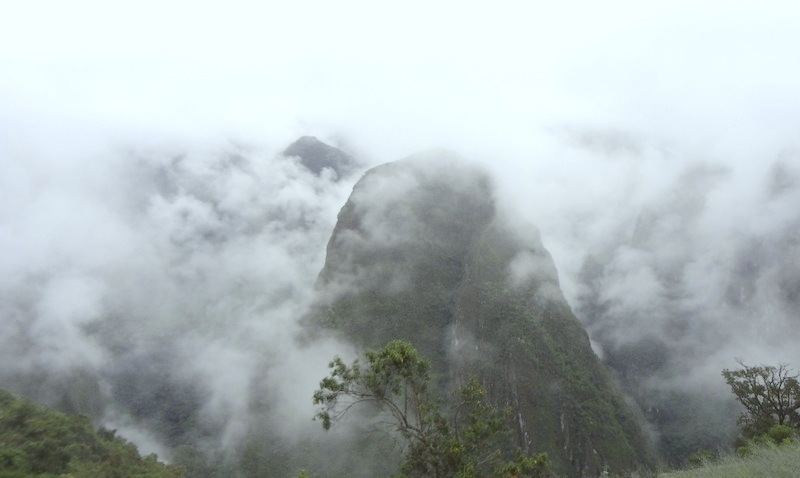
The mountains surrounding Machu Picchu are often wreathed in clouds. (Lori Erickson photo)
The ancient Celts of Ireland described holy sites as “thin places” where the veil between heaven and earth is transparent. In exploring spiritual destinations around the world, I’ve never come across a better description for why certain places simply feel different from other sites.
I think that’s why Machu Picchu, despite its exotic setting, seemed familiar to me in some ways. I felt something there that I’ve experienced at other holy sites, from Lourdes and Ephesus to Kyoto—a kind of frisson, that wonderful French word that describes a blend of physical and emotional responses, a sensation that sends a shiver of recognition through one’s soul.
Part of my reaction came from Machu Picchu itself, because this outpost in the clouds was likely created in part for spiritual purposes. But I had another reason for experiencing the thinness of the veil at Machu Picchu. I hope my experiences there may relate to your own journeys of the heart.
Shortly before I left for Peru, a dear friend of mine died after a nine-year battle with a rare form of sinus cancer. Rich Oberfoell was 46 and had been in the peak of health prior to his diagnosis. He was gregarious, full of life, and adventuresome, a person who laughed often and made friends easily.
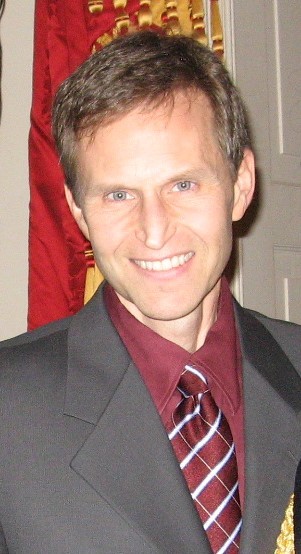
Rich Oberfoell
I got to know Rich just as he was starting his battle with cancer. During those years, he endured more surgeries, medical procedures and cancer treatments than anyone I’ve ever known. His determination to live was especially fierce because of his love for his young son, Xavier, and wife, Sun Hee. But in the end even his iron will wasn’t enough to sustain him.
A couple of weeks before he died, I visited Rich in the hospital. “Where are you going next?” he asked me. When he learned that I was making plans to visit Machu Picchu, his gaunt face lit up.
“I loved Machu Picchu!” he said, and proceeded to tell me of his visit there when he was teaching in Venezuela in his 20s. He described the rigors of hiking the Inca Trail and how moved he was when he finally came through the Sun Gate to see Machu Picchu for the first time. Then he said this: “When you go there, take me with you.”
I remember how his words hung in the air of the hospital room, for clearly there were no more trips in Rich’s future. But I told him that I would, and we both knew without saying that it would be in spirit only.
When I traveled in Peru, I kept in my backpack the card from Rich’s funeral. Its pictures showed a different Rich than the one battered by cancer. He was young, handsome, athletic. As I journeyed, I thought often of his travels in South America and how he had seen many of the sites in Cusco and Lima that I was enjoying.
Have you ever taken a trip with someone who was not present in body? It’s a curious thing, this intertwining of past and present, self and other. I think it’s a more common journey than many realize. There’s a kind of bifurcation of awareness that happens, as your travels evoke thoughts of their experiences. “I bet Rich loved this place,” I remember thinking as I walked the aisles of the market in Cusco, a dizzying blend of sights, smells, and sounds, from pig’s heads hanging from hooks to baskets overflowing with spices and fruits.
When I got to Machu Picchu, memories of Rich were especially strong. At first I did the standard tourist routine, listening to a guide, taking pictures, and exploring its twists and turns on my own. But I was looking for something all the while, a quiet spot where I could sit undisturbed. By the time I found it the rain had ended and sun was peeking out from behind the clouds. I settled into the out-of-the-way place overlooking the mountains, and I sat there for almost an hour, just looking, feeling the sun on my face, watching as the clouds swirled around the peaks and birds glided past, buoyed by updrafts from the valley below.
Sitting there, I came to suspect that the reason the Inca rulers had chosen this spot for a settlement was not because of its beauty alone. It was, perhaps, because the mountains demanded it. Something about them kept drawing my gaze. Maybe Machu Picchu was built at this spot simply to make it easy for people to sit as I was doing and gaze upon those mountains, mesmerized.
In Chinese Taoism, there’s a long tradition of painting such landscapes, for it is believed that contemplating mountains, both in nature and in art, nurtures the spirit. I love the ways in which humans are included in these paintings only as tiny figures at the base of the peaks. They provide a sense of scale, showing the vastness of the mountains in relation to humans, but there is also a kind of alchemy that is created between the high elevations and the traveler, as if the two need each other to fully express their true natures. Perhaps that was why the mountains here had demanded that Machu Picchu be built.
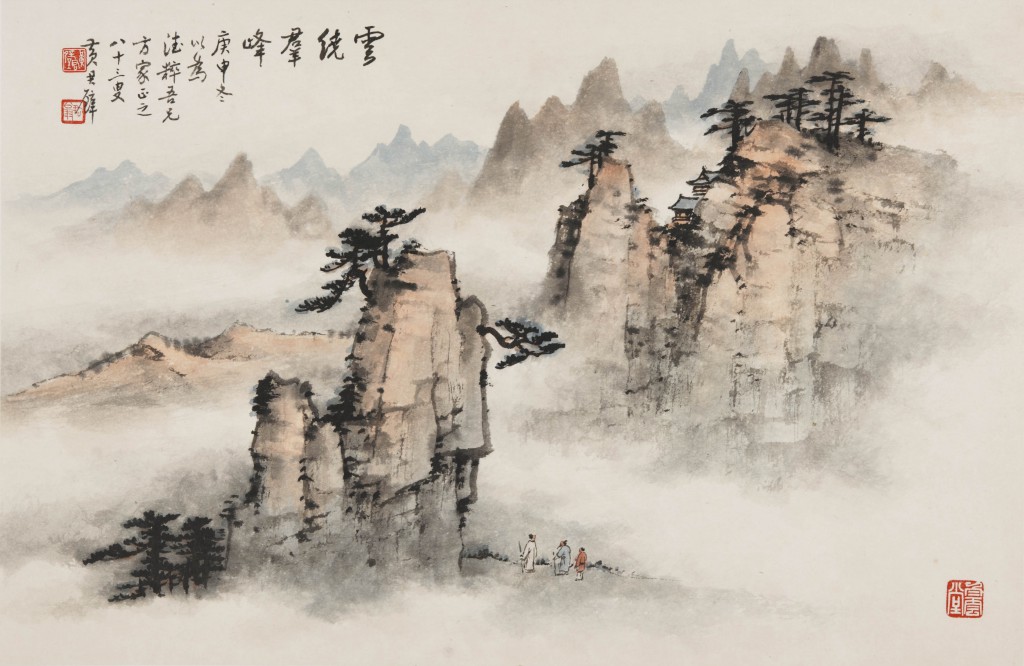
At Machu Picchu, I was reminded of traditional Chinese landscape paintings. (Wikimedia Commons image)
As I sat on the side of the mountain with Rich’s picture in my hand, I found myself thinking of one of the last walks we had taken through the palliative care unit of the hospital. I remembered how each step was a struggle for Rich and the laboriousness of his breathing. I realized that probably that short walk had required as much determination and strength as the entire Inca Trail had for him years before.
I had a visceral sense, sitting there, of how my own travels will cease one day. They may end swiftly through an accident, or slowly, as a result of illness or advanced age. It was now my turn to sit and bask in the sunlight at Machu Picchu, but eventually I would yield my spot at such places to other travelers.
While this probably sounds depressing, the overwhelming emotion I experienced was gratitude. For Rich’s life and all he had experienced. For the fact that when he was near death, he could still take great joy in his memories of places like this. And for my own experiences of beauty around the world.
And I realized that I had been present with Rich in another thin place: the palliative care unit in the hospital as he was dying. At birth and death we stand on holy ground as sacred as Jerusalem or Machu Picchu, peering into another world, yearning to see more clearly through the veil, humbled and awed by what we glimpse.
Before I left that spot, I took a photo of Rich and wedged it into a crack in the wall (which was hard to do, because those Inca masons were exceedingly good at their jobs). Then I stood for a long time with my hand over the opening, saying one last goodbye to my friend, bidding him to keep watch over those holy mountains. I think that part of Rich is there at Machu Picchu, gliding with those birds, released at last from the prison of his broken body.
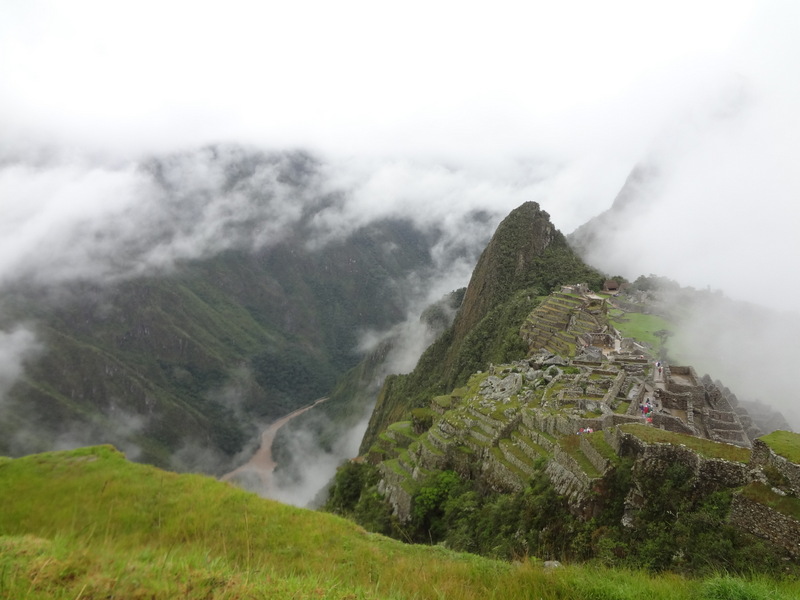
Machu Picchu, a thin place (Lori Erickson photo)
Previous Post

March 16, 2015
On Top of the World at Machu Picchu
Next Post
April 26, 2015 Of Good Shepherds and Sheep
Browse Our Archives
Select a Category Aging & Spirituality Amish Anabaptists Animals Apocalypse Archeological sites Art and Spirituality Awards Belgian Holy Sites birds Blessings Books Buddhism Business & Spirituality Callings Cats Celtic Cemeteries Children Christianity church Colorado Creation Death Desert Spirituality Easter Economics Education & Spirituality Egypt Episcopal Church Faith Fear Films First Nations Food Forgiveness Germany God Good & Evil Good Friday Grace Gratitude Happiness Healing Hildegard of Bingen Hinduism History Holy Rover blog Holy Sites Holy Week Horses Iceland Illness Images of God Indigenous Spiritualilty Interfaith Interfaith Dialogue Iowa Islam Israel Japan Judaism LDS Church Lent Machu Picchu Martin Luther Media Meditation Monasteries Museums Music Music and Spirituality Musings Mysticism Native American Nature New Age New Zealand Norse History/Culture/Spirituality Orthodox Paradox Paranormal Peru Philosophy Pilgrimage Poetry Politics Pop Culture Pilgrimage Sites Prayers sermons Silence Social Media Spiritual writers Spirituality and Food Spirituality and Social Media Stone Circles Thomas Merton Turkey Uncategorized Unconventional Holy Sites Utopian communities Videos Virgin Mary Wicca Work World War I Writing Zen
Select a Month August 2017 July 2017 June 2017 May 2017 April 2017 March 2017 February 2017 December 2016 November 2016 October 2016 September 2016 August 2016 July 2016 June 2016 May 2016 April 2016 March 2016 February 2016 January 2016 December 2015 July 2015 June 2015 May 2015 April 2015 March 2015 February 2015 January 2015 December 2014 November 2014 October 2014 September 2014 August 2014 July 2014 June 2014 May 2014 April 2014 March 2014 February 2014 January 2014 December 2013 October 2013 September 2013 August 2013 July 2013 June 2013 May 2013 April 2013 March 2013 February 2013 January 2013 December 2012 November 2012 October 2012 September 2012 August 2012 July 2012 June 2012 May 2012 April 2012 March 2012 February 2012 January 2012 December 2011 November 2011 October 2011 September 2011 August 2011 July 2011 June 2011 May 2011 April 2011 March 2011 February 2011 January 2011 December 2010 November 2010
Follow Us!
TAKE THE
Religious Wisdom Quiz
How many books are in the New Testament?
Select your answer to see how you score.
13 21 27 30
Related posts from Holy Rover
Announcing Holy-Rover-the-Book

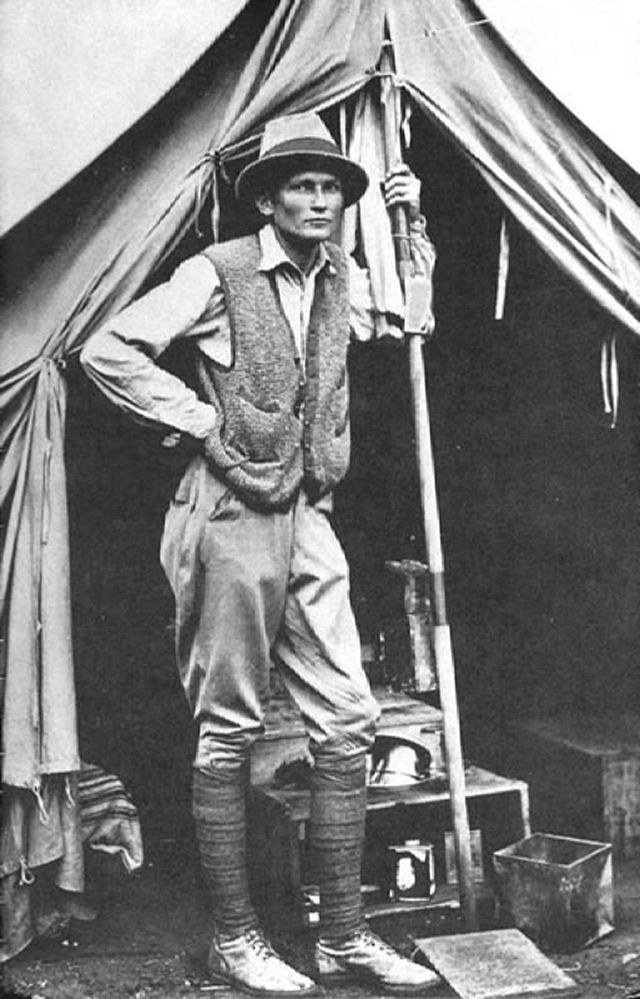
On Top of the World at Machu Picchu
TRENDING AT PATHEOS New Visions

Did Prayer Cure His Cancer? Or Was It...
At 4 AM one morning, Joshua W. Brown’s wife awoke to a...

8 Ways a Near-Death Experience Rewires the Soul
Does Consciousness Survive Physical Death? After 50 Years of Research, Dr. Raymond...

Holy Longing: What Our Restlessness Is Telling Us
“One can find so many pains when the rain is falling.” -John...

What this is NOT about. This blog is definitely not about...

Who said the Israelites were God’s chosen? That’s right, they did. Who...

The Spirit World Is the Real World: God...
A Monk’s Wisdom on Body and Spirit I sit with Brother Martin...
view all New Visions blogs
Ad-Free & Subscriber Log-In Subscription Support
- About Us
- 2026 Calendar
- Videos
- Podcasts
- Library of World Religions
- Faith In Media Tracker
- Advertise With Us
- Write for Us
- Privacy Policy
- Terms of Service
- Do Not Sell My Data
- Contact Us
- Radiant Digital
- Manage Newsletter Subscriptions
- Unsubscribe From Notifications
- Sitemap
Copyright 2008-2026, Patheos. All rights reserved.
Subscription Support Ad-Free & Subscriber Log-In
Follow Patheos