
BuddhistCatholicContemplativeEvangelicalGeneral ChristianHinduJewishLatter-day SaintMuslimNew VisionsProgressive Christian
Beliefs
- Buddhist
- Catholic
- Contemplative
- Evangelical
- General Christian
- Hindu
- Jewish
- Latter-day Saint
- More Voices
- Muslim
- New Visions
- Pagan
- Progressive Christian
Topics
- Religion News
- Food and Religion
- Sports and Religion
- Religious Art
- Religious Music and Entertainment
- Religious Events
- History and Religion
- Style and Religion
- Politics and Religion
- Women in Religion
- Recreation Outdoors and Religion
- Business Finance and Religion
- Careers Workplace and Religion
- Education and Religion
- Family Parenting and Religion
- Health Fitness and Religion
- Home and Religion
- Relationships and Religion
- Technology and Religion
- Travel and Religion
Columnists
- Buddhist Columnists
- Business Finance and Religion Columnists
- Careers Workplace and Religion Columnists
- Catholic Columnists
- Contemplative Columnists
- Education and Religion Columnists
- Evangelists Columnists
- Family Parenting and Religion Columnists
- General Christian Columnists
- Health Fitness and Religion Columnists
- Hindu Columnists
- History and Religion Columnists
- Home and Religion Columnists
- Jewish Columnists
- More Voices Columnists
- Latter Day Columnists
- Muslim Columnists
- New Visions Columnists
- Nonreligious Columnists
- Pagan Columnists
- Politics and Religion Columnists
- Progressive Columnists
- Recreation Outdoors and Religion Columnists
- Relationships and Religion Columnists
- Religion News Columnists
- Religious Art Columnists
- Religious Events Columnists
- Religious Music and Entertainment Columnists
- Sports and Religion Columnists
- Style and Religion Columnists
- Technology and Religion Columnists
- Travel and Religion Columnists
- Women in Religion Columnists
Resource Library
- 2026 Calendar
- Library of World Religions
- The 100 Most Holy Places on Earth
- Patheos Answers
- Podcasts
- Videos
- Faith Leaders Database
- Anglican Episcopalian
- Bahai
- Baptist
- Buddhism
- Christianity
- Confucianism
- Eastern Orthodoxy
- Hinduism
- Holiness and Pentecostal
- ISKCON
- Islam
- Judaism
- Lutheran
- Methodist
- The Church of Jesus Christ of Latter-day Saints
- New Age
- Paganism
- Presbytarian and Reformed
- Protestantism
- Religion Behind the Scenes
- Roman Catholic
- Scientology
- Shia Islam
- Sikhism
- Sufism
- Sunni Islam
- Taoism
- Zen
- See all religions
Research Tools
 Ad-Free & Subscriber Log-In Subscription Support
Ad-Free & Subscriber Log-In Subscription Support
Follow Patheos 

- Trending:
- Forgiveness
- |
- Marriage
- |
- Consciousness
- |
- Death Penalty
- |
- Election
- |
- Halloween
 Holy Rover
- Home
- New Visions
- The Happiness Curve
The Happiness Curve
Last updated on: November 23, 2014 at 12:27 pm by Lori Erickson
The Happiness Curve 2014-11-23T12:27:35-06:00 Lori Erickson
Patheos Explore the world's faith through different perspectives on religion and spirituality! Patheos has the views of the prevalent religions and spiritualities of the world.
Today marks the beginning of Thanksgiving week here in the U.S. It’s hard to think of a more wonderful holiday, for the only things you need to do are eat a lot of delicious food and give thanks for your blessings.
I’ve been looking for something to post about gratitude and came across this article in the Atlantic, one that at first might seem like a bad fit: Jonathan Rauch’s The Real Roots of Midlife Crisis. But the more I reflect on it, the more I realize it’s quite appropriate for the holiday.
At the heart of the article is a conundrum: why is it that life satisfaction typically declines after the first couple of decades of adulthoood, bottoms out sometime during the 40s and early 50s, and then increases with age, often (though not always) reaching a higher level than in young adulthood? The pattern, which has been observed across many cultures, is called the Happiness U-curve.
Author Jonathan Rauch writes about his own adventures on the happiness rollercoaster. Despite enjoying considerable professional, personal and financial well-being while in his 40s, he was plagued by a sense of disappointment and frustration. He couldn’t help dwelling on his discontents, both real and imaginary, and tried to resign himself to the fact that he was unlikely ever to be much happier.
He writes: “[Then] as I moved into my early 50s, I hit some real setbacks. Both of my parents died, one of them after suffering a terrible illness while I watched helplessly. My job disappeared when the magazine I worked for was restructured. An entrepreneurial effort—to create a new online marketplace that would match journalists who had story ideas with editors looking for them—ran into problems. My shoulders, elbows, and knees all started aching. And yet the fog of disappointment and self-censure began to lift, at first almost imperceptibly, then more distinctly. By now, at 54, I feel as if I have emerged from a passage through something. But what? … Long ago, when I was 30 and he was 66, the late Donald Richie, the greatest writer I have known, told me: “Midlife crisis begins sometime in your 40s, when you look at your life and think, Is this all? And it ends about 10 years later, when you look at your life again and think, Actually, this is pretty good.” In my 50s, thinking back, his words strike me as exactly right. To no one’s surprise as much as my own, I have begun to feel again the sense of adventure that I recall from my 20s and 30s. I wake up thinking about the day ahead rather than the five decades past. Gratitude has returned.”
The rest of the article explores the reasons why Rauch’s experience is common. Many studies show that the peak of emotional life may not occur until well into our seventh decade or later. What typically happens is that people become more accepting of their limitations. As people age they realize their future is increasingly constrained, and so they set goals that are more realistic and easier to pursue. (Out: winning the Nobel Prize in Literature. In: finishing up that essay for the local newspaper.)
To me one of the most fascinating parts of the article is its description of the “science of wisdom.” Writes Rauch:
There is no evidence … that people get wiser as a result of aging per se (as opposed to learning from experience over time—also, of course, an element of wisdom). And there is no “wisdom organ” in the brain. Wisdom is an inherently multifarious trait, an emergent property of many other functions. . . But it does look likely that some elements of aging are conducive to wisdom, and to greater life satisfaction. In a 2012 paper evocatively titled “Don’t Look Back in Anger! Responsiveness to Missed Chances in Successful and Nonsuccessful Aging,” a group of German neuroscientists, using brain scans and other physical tests of mental and emotional activity, found that healthy older people (average age: 66) have “a reduced regret responsiveness” compared with younger people (average age: 25). That is, older people are less prone to feel unhappy about things they can’t change—an attitude consistent, of course, with ancient traditions that see stoicism and calm as part of wisdom. In fact, it is well established that older people’s brains react less strongly to negative stimuli than younger people’s brains do. “Young people just have more negative feelings,” Elaine Wethington, the Cornell professor, told me. Older brains may thus be less susceptible to the furies that buffet us earlier in life. Also, as Laura Carstensen, the Stanford psychologist, told me (summarizing a good deal of evidence), “Young people are miserable at regulating their emotions.” Years ago, my father made much the same point when I asked him why in his 50s he stopped having rages, which had shadowed his younger years and disrupted our family: “I realized I didn’t need to have five-dollar reactions to nickel provocations.”
All of this brings to mind a family treasure that I discovered in my files not long ago: a 15-page transcript of an interview done by my Aunt Vernelle with my grandfather, Carl Erickson, when he was 82. In it he describes his hardscrabble life as an Iowa farmer with remarkable equanimity. My favorite line is this: “Oh, the first 25 years we was married it was really rough going. But after that it started to get better all the time.”
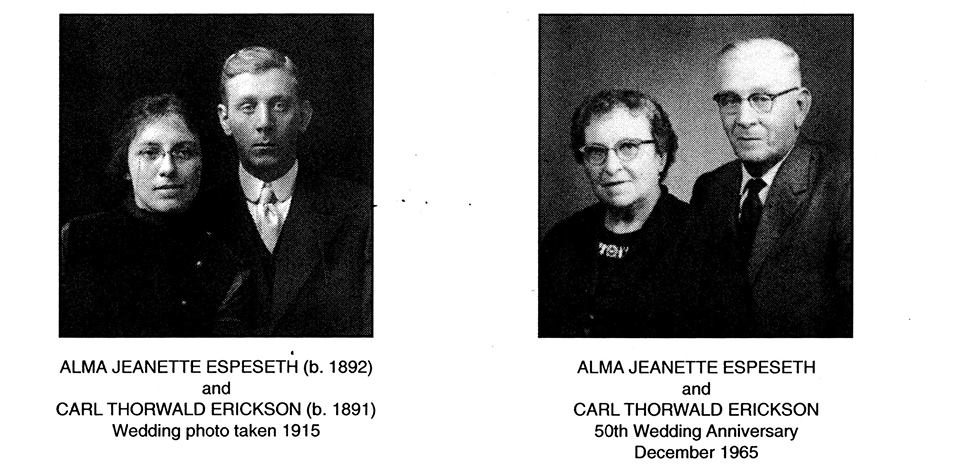
They got older–and happier.
So here’s to riding the Happiness Curve into our future, surfing along the crest of midlife dissatisfaction until we can land on the Caribbean beach of our 50s, 60s, 70s, and beyond. It’s not that everything is perfect there—but the view is good, the pina coladas are delicious and the sand between our toes is warm.
Previous Post

November 10, 2014
Thanking Veterans, One Rock at a Time
Next Post
December 5, 2014 After the Fire, a Rebirth in Stuart
Browse Our Archives
Select a Category Aging & Spirituality Amish Anabaptists Animals Apocalypse Archeological sites Art and Spirituality Awards Belgian Holy Sites birds Blessings Books Buddhism Business & Spirituality Callings Cats Celtic Cemeteries Children Christianity church Colorado Creation Death Desert Spirituality Easter Economics Education & Spirituality Egypt Episcopal Church Faith Fear Films First Nations Food Forgiveness Germany God Good & Evil Good Friday Grace Gratitude Happiness Healing Hildegard of Bingen Hinduism History Holy Rover blog Holy Sites Holy Week Horses Iceland Illness Images of God Indigenous Spiritualilty Interfaith Interfaith Dialogue Iowa Islam Israel Japan Judaism LDS Church Lent Machu Picchu Martin Luther Media Meditation Monasteries Museums Music Music and Spirituality Musings Mysticism Native American Nature New Age New Zealand Norse History/Culture/Spirituality Orthodox Paradox Paranormal Peru Philosophy Pilgrimage Poetry Politics Pop Culture Pilgrimage Sites Prayers sermons Silence Social Media Spiritual writers Spirituality and Food Spirituality and Social Media Stone Circles Thomas Merton Turkey Uncategorized Unconventional Holy Sites Utopian communities Videos Virgin Mary Wicca Work World War I Writing Zen
Select a Month August 2017 July 2017 June 2017 May 2017 April 2017 March 2017 February 2017 December 2016 November 2016 October 2016 September 2016 August 2016 July 2016 June 2016 May 2016 April 2016 March 2016 February 2016 January 2016 December 2015 July 2015 June 2015 May 2015 April 2015 March 2015 February 2015 January 2015 December 2014 November 2014 October 2014 September 2014 August 2014 July 2014 June 2014 May 2014 April 2014 March 2014 February 2014 January 2014 December 2013 October 2013 September 2013 August 2013 July 2013 June 2013 May 2013 April 2013 March 2013 February 2013 January 2013 December 2012 November 2012 October 2012 September 2012 August 2012 July 2012 June 2012 May 2012 April 2012 March 2012 February 2012 January 2012 December 2011 November 2011 October 2011 September 2011 August 2011 July 2011 June 2011 May 2011 April 2011 March 2011 February 2011 January 2011 December 2010 November 2010
Follow Us!
TAKE THE
Religious Wisdom Quiz
What city was Job from?
Select your answer to see how you score.
Uz Shiloh Edom Susa
Related posts from Holy Rover

Announcing Holy-Rover-the-Book

Bay View: A Chautauqua on Lake Michigan

The Spiritual Side of Michigan's Mackinac Island
TRENDING AT PATHEOS New Visions

Did Prayer Cure His Cancer? Or Was It...
At 4 AM one morning, Joshua W. Brown’s wife awoke to a...

8 Ways a Near-Death Experience Rewires the Soul
Does Consciousness Survive Physical Death? After 50 Years of Research, Dr. Raymond...

Holy Longing: What Our Restlessness Is Telling Us
“One can find so many pains when the rain is falling.” -John...

What this is NOT about. This blog is definitely not about...

Who said the Israelites were God’s chosen? That’s right, they did. Who...

The Spirit World Is the Real World: God...
A Monk’s Wisdom on Body and Spirit I sit with Brother Martin...
view all New Visions blogs
Ad-Free & Subscriber Log-In Subscription Support
- About Us
- 2026 Calendar
- Videos
- Podcasts
- Library of World Religions
- Faith In Media Tracker
- Advertise With Us
- Write for Us
- Privacy Policy
- Terms of Service
- Do Not Sell My Data
- Contact Us
- Radiant Digital
- Manage Newsletter Subscriptions
- Unsubscribe From Notifications
- Sitemap
Copyright 2008-2026, Patheos. All rights reserved.
Subscription Support Ad-Free & Subscriber Log-In
Follow Patheos