
BuddhistCatholicContemplativeEvangelicalGeneral ChristianHinduJewishLatter-day SaintMuslimNew VisionsProgressive Christian
Beliefs
- Buddhist
- Catholic
- Contemplative
- Evangelical
- General Christian
- Hindu
- Jewish
- Latter-day Saint
- More Voices
- Muslim
- New Visions
- Pagan
- Progressive Christian
Topics
- Religion News
- Food and Religion
- Sports and Religion
- Religious Art
- Religious Music and Entertainment
- Religious Events
- History and Religion
- Style and Religion
- Politics and Religion
- Women in Religion
- Recreation Outdoors and Religion
- Business Finance and Religion
- Careers Workplace and Religion
- Education and Religion
- Family Parenting and Religion
- Health Fitness and Religion
- Home and Religion
- Relationships and Religion
- Technology and Religion
- Travel and Religion
Columnists
- Buddhist Columnists
- Business Finance and Religion Columnists
- Careers Workplace and Religion Columnists
- Catholic Columnists
- Contemplative Columnists
- Education and Religion Columnists
- Evangelists Columnists
- Family Parenting and Religion Columnists
- General Christian Columnists
- Health Fitness and Religion Columnists
- Hindu Columnists
- History and Religion Columnists
- Home and Religion Columnists
- Jewish Columnists
- More Voices Columnists
- Latter Day Columnists
- Muslim Columnists
- New Visions Columnists
- Nonreligious Columnists
- Pagan Columnists
- Politics and Religion Columnists
- Progressive Columnists
- Recreation Outdoors and Religion Columnists
- Relationships and Religion Columnists
- Religion News Columnists
- Religious Art Columnists
- Religious Events Columnists
- Religious Music and Entertainment Columnists
- Sports and Religion Columnists
- Style and Religion Columnists
- Technology and Religion Columnists
- Travel and Religion Columnists
- Women in Religion Columnists
Resource Library
- 2026 Calendar
- Library of World Religions
- The 100 Most Holy Places on Earth
- Patheos Answers
- Podcasts
- Videos
- Faith Leaders Database
- Anglican Episcopalian
- Bahai
- Baptist
- Buddhism
- Christianity
- Confucianism
- Eastern Orthodoxy
- Hinduism
- Holiness and Pentecostal
- ISKCON
- Islam
- Judaism
- Lutheran
- Methodist
- The Church of Jesus Christ of Latter-day Saints
- New Age
- Paganism
- Presbytarian and Reformed
- Protestantism
- Religion Behind the Scenes
- Roman Catholic
- Scientology
- Shia Islam
- Sikhism
- Sufism
- Sunni Islam
- Taoism
- Zen
- See all religions
Research Tools
 Ad-Free & Subscriber Log-In Subscription Support
Ad-Free & Subscriber Log-In Subscription Support
Follow Patheos 

- Trending:
- Forgiveness
- |
- Marriage
- |
- Consciousness
- |
- Death Penalty
- |
- Election
- |
- Halloween
 Holy Rover
- Home
- New Visions
- In the Kivas of Mesa Verde
In the Kivas of Mesa Verde
Last updated on: July 30, 2014 at 2:01 pm by Lori Erickson
In the Kivas of Mesa Verde 2014-07-30T14:01:38-06:00 Lori Erickson
Patheos Explore the world's faith through different perspectives on religion and spirituality! Patheos has the views of the prevalent religions and spiritualities of the world.
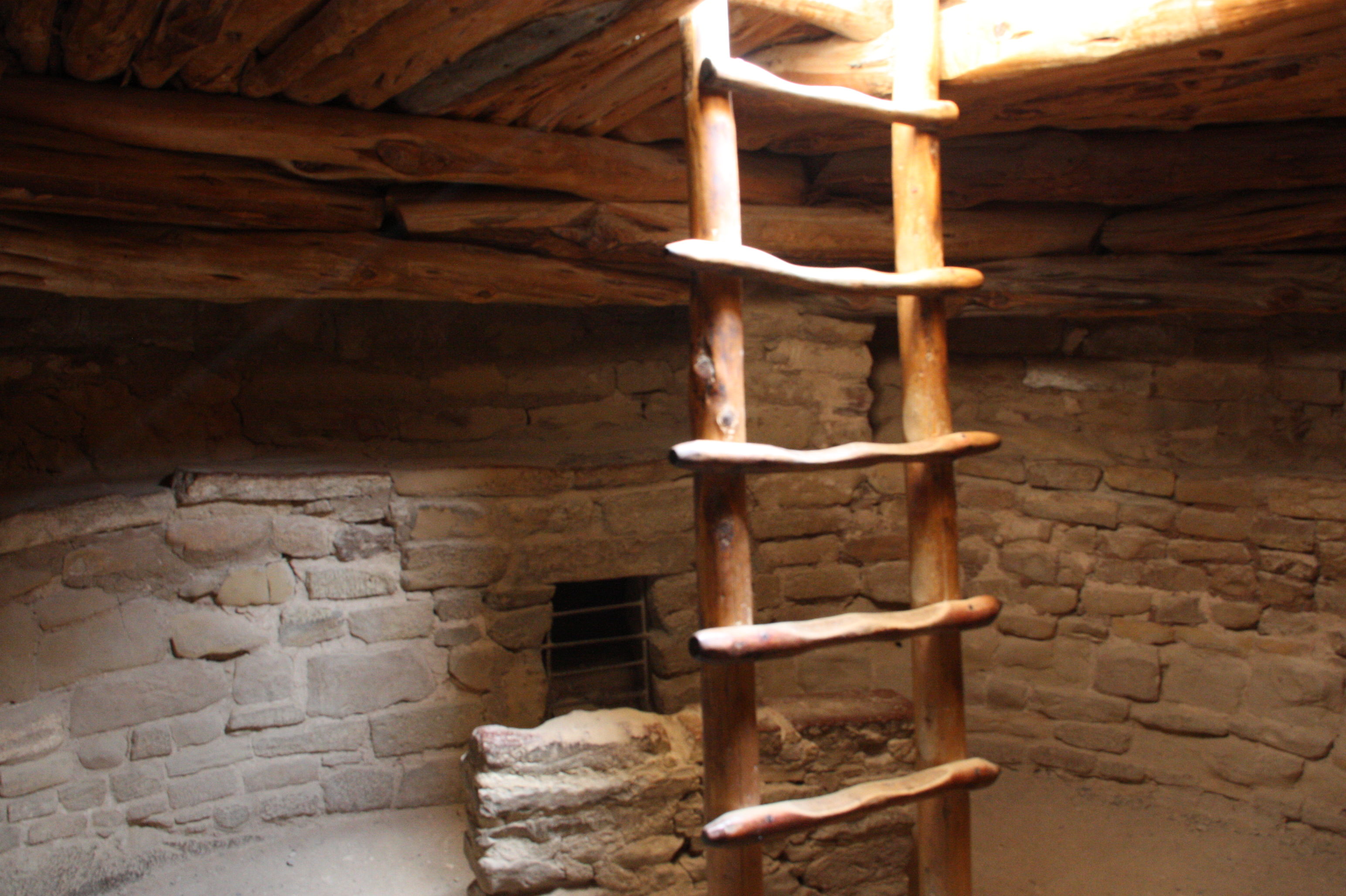
At Mesa Verde National Park, a ceremonial kiva has been reconstructed at Spruce Tree House (Bob Sessions photo).
(Below is Part 2 of my Mesa Verde reflections; Part 1 is here)
My recent trip to Mesa Verde National Park was actually my second visit. I had toured there about 30 years ago, but with the passage of time I had forgotten almost everything about the experience except for this: being in a kiva (a ceremonial underground room) looking up at the light coming through a small opening in the roof.
Something about the luminous quality of that light made a deep impression on me. Sunlight can be brutally intense in the Southwest, but in the kiva it warmed but did not overwhelm. I remember the encircling walls of the structure, the wooden logs that formed the ceiling, and the intriguing sense of mystery about the place.
And that, dear readers, was my reaction long before I discovered my love for holy sites. You can just imagine how intrigued I am now by kivas.
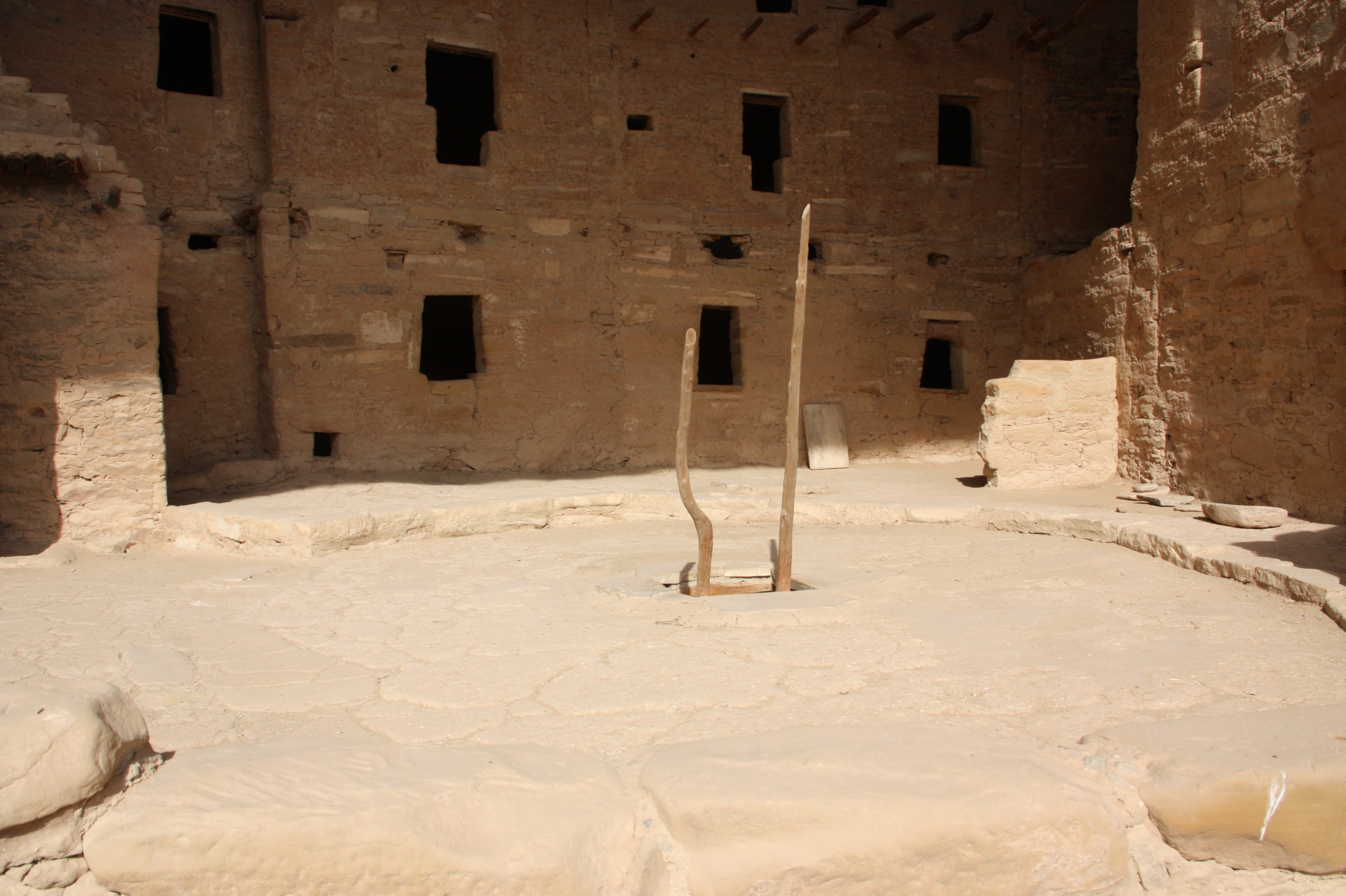
The kiva is entered through a ladder placed in a small opening in the roof (Bob Sessions photo).
If you have to choose one take-away from a visit to Mesa Verde, that memory from inside a kiva is a pretty good choice. Kivas were the symbolic heart of the civilization that once flourished here. In trying to explain their importance, the national park guides compare them to churches, mosques and temples. But that analogy only partially conveys their importance.
Kivas (the word comes from the Hopi language) are found in or near virtually every living area at Mesa Verde as well as in other sites of the Ancient Puebloans. Archeologists say that each extended family likely had their own kiva, which were excavated out of either sandstone or soil with considerable effort. Because space was so precious in the cliff dwellings, these subterranean rooms likely served a mixture of social, storage and—most importantly—religious purposes. They would have provided a cool shelter from the relentless sun of summer and a warm sanctuary from winter’s cold. They were entered through a hole in their roofs, which were sturdy enough to be used as living space on top. At Mesa Verde kivas are typically round in shape, with a central fire pit and a ventilator shaft that allowed fresh air to flow through. An air deflector stood in front of the fire to keep the flames from being blown out by the fresh air. The kiva’s sides contained a banquette (similar to a bench) around its perimeter and usually had six pilasters, or pillars.
Perhaps the most important part of a kiva was deceptively small: the sipapu, a round opening in the floor that served as the entrance into another world. Sipapu is Hopi for “place of emergence.” Like many cultures (think of the story of Noah’s ark) the Hopi believed that this was not the first world to be created. Hopi oral tradition says that far in the past humans emerged from their former home into this one, passing through a liminal place now symbolically marked by the sipapu.
Modern-day Pueblo elders have given some insights into what may have gone on in these kivas. Craig Childs writes in House of Rain: Tracking a Vanished Civilization Across the American Southwest
Some modern Pueblo people in the Southwest still use the kiva as their holy chamber, and among those who speak the language of Tewa, the kiva is called te’i, “the place of the cottonwood tree.” The kiva is thought to be a bridge between the underworld and the world above, and the hole traditionally placed in the kiva floor, just beyond the deflector stone and in front of the ladder, represents a place of emergence. In Tewa this hole is called p’okwi koji, the “lake roof hole,” which leads up from a mysterious underground lake. The kiva is where a radiant green tree grows in the spareness of the desert, as if it were a flag raised on barren ground announcing the presence of water below, a sign of hope and fertility.
Childs’ book (which I highly recommend) provides a fascinating look at what is known of this Ancestral Puebloan civilization, including the many ways in which it was shaped by water. In the semi-arid land of the Southwest, drought was an ever-present danger. The difference between a year of plenty and a year of famine often depended upon a single big rainstorm. Water was hoarded and conserved, carefully trapped in small dams on the tops of mesas and harvested from underground springs. When weather patterns shifted and an area became too dry for farming, its residents had to move. The history of the pre-Columbian Southwest can be viewed as a series of back-and-forth migrations chasing the rain.
It’s no wonder that the mysterious hole in a kiva would lead to a metaphorical lake.
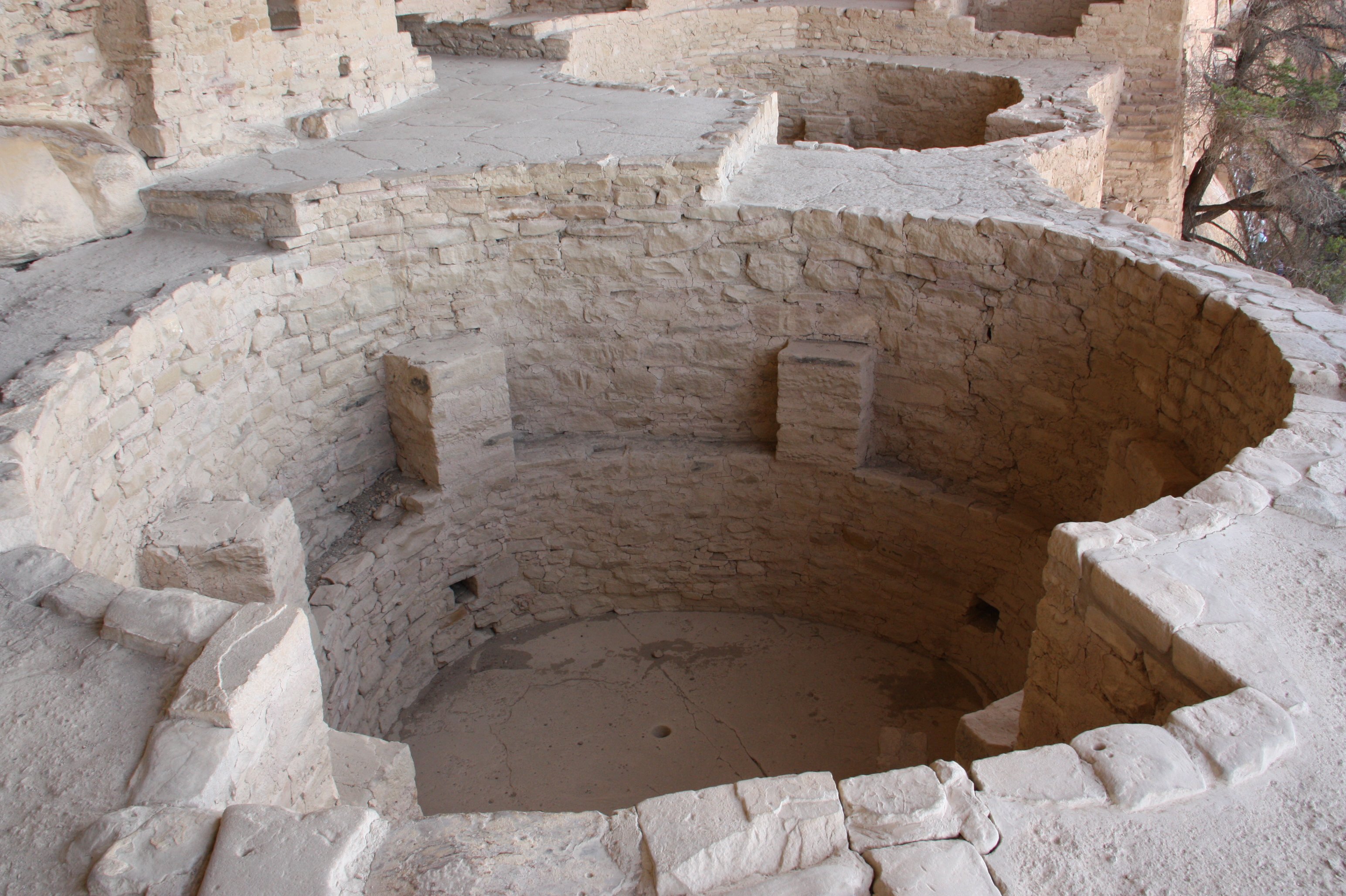
At Balcony House, two kivas exist side by side—note the small sipapu hole in the floor. (Bob Sessions photo)
Bob and I got the chance to view dozens of kivas, both at Mesa Verde and on a day-long tour in the Ute Mountain Tribal Park, which is adjacent to the national park. The Utes are not descended from the people who once lived at Mesa Verde, but for many years they have been caretakers of some of their ruins. The Ute Mountain Tribal Park offers tours of remote sites that are not the tidied-up, restored dwellings one sees at Mesa Verde. While some have been documented by archeologists, most have been left in the same state as they have existed for many centuries.
What a day that was! The entire tour had an Indiana Jones flavor to it. We bounced along on dirt roads, hiked on narrow paths that snaked along the sides of canyons, and climbed steep ladders to peer into cliff dwelling sites. In some, we could see the colored plaster that had once covered the walls, the designs faded but still recognizable. Pieces of broken pottery and other artifacts could be picked up and examined without a park ranger getting upset. I remember at one point holding a piece of rope in my hand. I could see how it had been constructed of different types of fibers, the pieces twined carefully around each other, and it seemed impossible to believe that nearly a thousand years had passed since it was made.
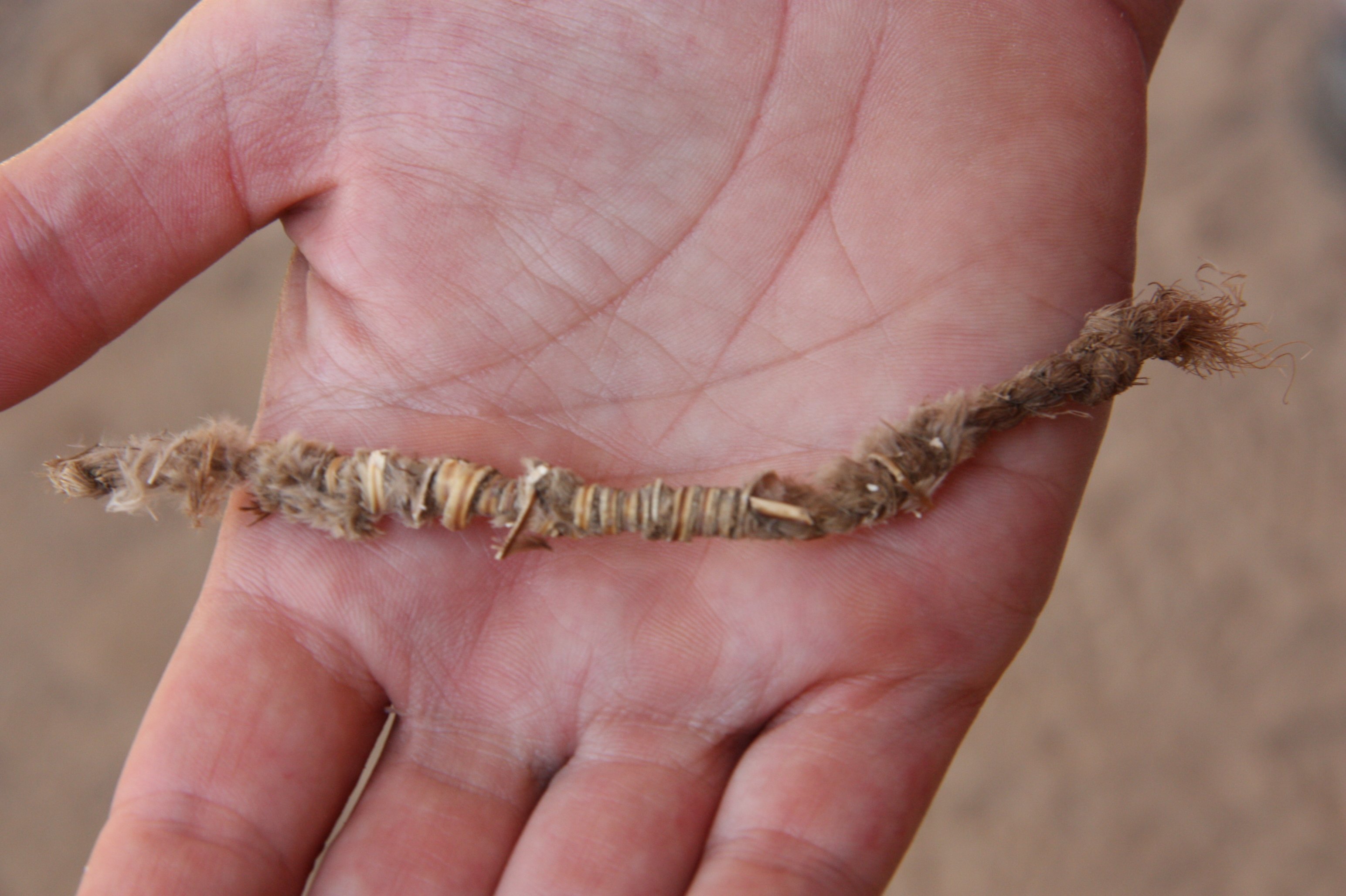
A braided rope from a cliff dwelling (Bob Sessions photo)
But once again it was the kivas that most fascinated me. Unlike at Mesa Verde, these kivas were often collapsed in on themselves, with their original roof beams lying in disarray. Our guide told us that before a group left an area, they commonly burned the roofs, as if to ensure that no one else would have access to the power contained within.
What would it have been like to live above one of these kivas? To know that underneath your living space was the entry into a place of mystery and wonder? There are so many possible symbolic meanings of a kiva that one hardly knows where to begin. They recall the darkness of the womb and the safety of the cave. They were betwixt-and-between places, pregnant with possibility. In emerging from them, perhaps the people felt they were reborn anew, following in the footsteps of their ancestors.
At Mesa Verde, I learned that the descendants of the Ancestral Puebloans come back on a regular basis to use the kivas for religious ceremonies. It pleases me to think of how that busy national park is full of tourists during the day, but after hours it once again becomes the property of those who are spiritually tied to it. The rangers depart, and the sacred spaces come to life, like a heart that beats once again. Perhaps this is the reason why the cliff dwellings seem surprisingly alive, with spirits that shift and move among the ruins.
Previous Post

July 24, 2014
Amid the Cliff Dwellings of Mesa Verde
Next Post
August 6, 2014 With the Ancient Astronomers on Chimney Rock
Browse Our Archives
Select a Category Aging & Spirituality Amish Anabaptists Animals Apocalypse Archeological sites Art and Spirituality Awards Belgian Holy Sites birds Blessings Books Buddhism Business & Spirituality Callings Cats Celtic Cemeteries Children Christianity church Colorado Creation Death Desert Spirituality Easter Economics Education & Spirituality Egypt Episcopal Church Faith Fear Films First Nations Food Forgiveness Germany God Good & Evil Good Friday Grace Gratitude Happiness Healing Hildegard of Bingen Hinduism History Holy Rover blog Holy Sites Holy Week Horses Iceland Illness Images of God Indigenous Spiritualilty Interfaith Interfaith Dialogue Iowa Islam Israel Japan Judaism LDS Church Lent Machu Picchu Martin Luther Media Meditation Monasteries Museums Music Music and Spirituality Musings Mysticism Native American Nature New Age New Zealand Norse History/Culture/Spirituality Orthodox Paradox Paranormal Peru Philosophy Pilgrimage Poetry Politics Pop Culture Pilgrimage Sites Prayers sermons Silence Social Media Spiritual writers Spirituality and Food Spirituality and Social Media Stone Circles Thomas Merton Turkey Uncategorized Unconventional Holy Sites Utopian communities Videos Virgin Mary Wicca Work World War I Writing Zen
Select a Month August 2017 July 2017 June 2017 May 2017 April 2017 March 2017 February 2017 December 2016 November 2016 October 2016 September 2016 August 2016 July 2016 June 2016 May 2016 April 2016 March 2016 February 2016 January 2016 December 2015 July 2015 June 2015 May 2015 April 2015 March 2015 February 2015 January 2015 December 2014 November 2014 October 2014 September 2014 August 2014 July 2014 June 2014 May 2014 April 2014 March 2014 February 2014 January 2014 December 2013 October 2013 September 2013 August 2013 July 2013 June 2013 May 2013 April 2013 March 2013 February 2013 January 2013 December 2012 November 2012 October 2012 September 2012 August 2012 July 2012 June 2012 May 2012 April 2012 March 2012 February 2012 January 2012 December 2011 November 2011 October 2011 September 2011 August 2011 July 2011 June 2011 May 2011 April 2011 March 2011 February 2011 January 2011 December 2010 November 2010
Follow Us!
TAKE THE
Religious Wisdom Quiz
Who was swallowed by a great fish for three days?
Select your answer to see how you score.
Daniel Noah Jonah Solomon
Related posts from Holy Rover
The Spiritual Side of Michigan's Mackinac Island
Learning from the Pueblo Indians of New Mexico

With the Bear Woman at the Gathering of...
In Search of the Holy at Wyoming's Medicine...
TRENDING AT PATHEOS New Visions

Did Prayer Cure His Cancer? Or Was It...
At 4 AM one morning, Joshua W. Brown’s wife awoke to a...

8 Ways a Near-Death Experience Rewires the Soul
Does Consciousness Survive Physical Death? After 50 Years of Research, Dr. Raymond...

Holy Longing: What Our Restlessness Is Telling Us
“One can find so many pains when the rain is falling.” -John...

What this is NOT about. This blog is definitely not about...

Who said the Israelites were God’s chosen? That’s right, they did. Who...

The Spirit World Is the Real World: God...
A Monk’s Wisdom on Body and Spirit I sit with Brother Martin...
view all New Visions blogs
Ad-Free & Subscriber Log-In Subscription Support
- About Us
- 2026 Calendar
- Videos
- Podcasts
- Library of World Religions
- Faith In Media Tracker
- Advertise With Us
- Write for Us
- Privacy Policy
- Terms of Service
- Do Not Sell My Data
- Contact Us
- Radiant Digital
- Manage Newsletter Subscriptions
- Unsubscribe From Notifications
- Sitemap
Copyright 2008-2026, Patheos. All rights reserved.
Subscription Support Ad-Free & Subscriber Log-In
Follow Patheos