
BuddhistCatholicContemplativeEvangelicalGeneral ChristianHinduJewishLatter-day SaintMuslimNew VisionsProgressive Christian
Beliefs
- Buddhist
- Catholic
- Contemplative
- Evangelical
- General Christian
- Hindu
- Jewish
- Latter-day Saint
- More Voices
- Muslim
- New Visions
- Pagan
- Progressive Christian
Topics
- Religion News
- Food and Religion
- Sports and Religion
- Religious Art
- Religious Music and Entertainment
- Religious Events
- History and Religion
- Style and Religion
- Politics and Religion
- Women in Religion
- Recreation Outdoors and Religion
- Business Finance and Religion
- Careers Workplace and Religion
- Education and Religion
- Family Parenting and Religion
- Health Fitness and Religion
- Home and Religion
- Relationships and Religion
- Technology and Religion
- Travel and Religion
Columnists
- Buddhist Columnists
- Business Finance and Religion Columnists
- Careers Workplace and Religion Columnists
- Catholic Columnists
- Contemplative Columnists
- Education and Religion Columnists
- Evangelists Columnists
- Family Parenting and Religion Columnists
- General Christian Columnists
- Health Fitness and Religion Columnists
- Hindu Columnists
- History and Religion Columnists
- Home and Religion Columnists
- Jewish Columnists
- More Voices Columnists
- Latter Day Columnists
- Muslim Columnists
- New Visions Columnists
- Nonreligious Columnists
- Pagan Columnists
- Politics and Religion Columnists
- Progressive Columnists
- Recreation Outdoors and Religion Columnists
- Relationships and Religion Columnists
- Religion News Columnists
- Religious Art Columnists
- Religious Events Columnists
- Religious Music and Entertainment Columnists
- Sports and Religion Columnists
- Style and Religion Columnists
- Technology and Religion Columnists
- Travel and Religion Columnists
- Women in Religion Columnists
Resource Library
- 2026 Calendar
- Library of World Religions
- The 100 Most Holy Places on Earth
- Patheos Answers
- Podcasts
- Videos
- Faith Leaders Database
- Anglican Episcopalian
- Bahai
- Baptist
- Buddhism
- Christianity
- Confucianism
- Eastern Orthodoxy
- Hinduism
- Holiness and Pentecostal
- ISKCON
- Islam
- Judaism
- Lutheran
- Methodist
- The Church of Jesus Christ of Latter-day Saints
- New Age
- Paganism
- Presbytarian and Reformed
- Protestantism
- Religion Behind the Scenes
- Roman Catholic
- Scientology
- Shia Islam
- Sikhism
- Sufism
- Sunni Islam
- Taoism
- Zen
- See all religions
Research Tools
 Ad-Free & Subscriber Log-In Subscription Support
Ad-Free & Subscriber Log-In Subscription Support
Follow Patheos 

- Trending:
- Forgiveness
- |
- Marriage
- |
- Consciousness
- |
- Death Penalty
- |
- Election
- |
- Halloween
 Holy Rover
- Home
- New Visions
- What Good Is Philosophy?
What Good Is Philosophy?
Last updated on: April 15, 2014 at 11:09 pm by Lori Erickson
What Good Is Philosophy? 2014-04-15T23:09:24-06:00 Lori Erickson
Patheos Explore the world's faith through different perspectives on religion and spirituality! Patheos has the views of the prevalent religions and spiritualities of the world.
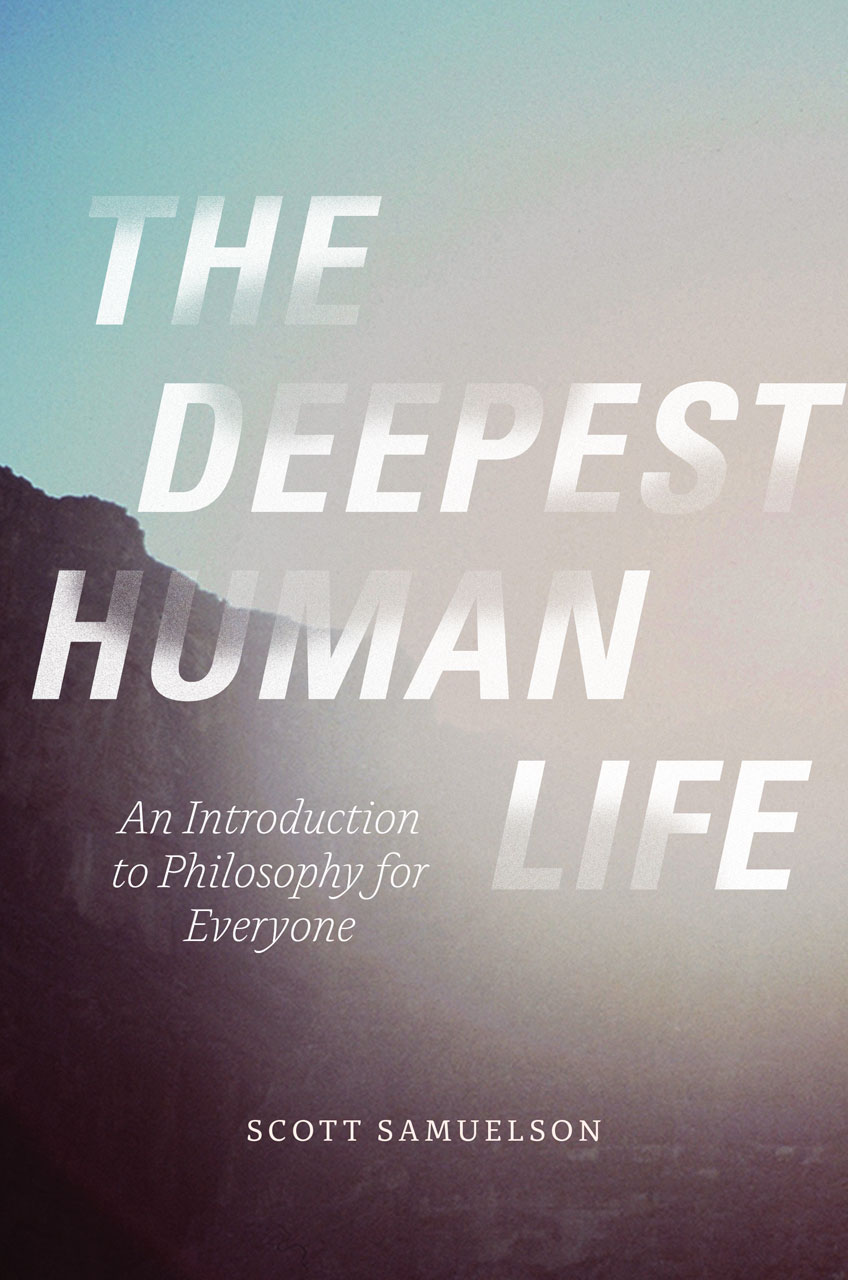 Scott Samuelson teaches philosophy at Kirkwood Community College in Iowa. I’ve long known him as a friend, but with the publication of his new book I’m delighted to discover that he is also a wonderful writer. I’m working my way through his The Deepest Human Life: An Introduction to Philosophy for Everyone
Towards the end of the 5th century B.C., Chaerophon went to the Temple at Delphi to ask the Oracle if his friend Socrates was the wisest of all people. The answer came back, “No one is wiser.” When Socrates got wind of the god’s pronouncement, he was puzzled. How could he be the wisest when he’s completely devoid of wisdom? He set out to prove Apollo and his priestess wrong. His strategy was simple: find one person with even a little bit of positive wisdom, which would clearly beat him whose wisdom level was at zero. As the story goes, Socrates wandered around Athens questioning its citizens—politicians, poets, craftsmen—about the special truths they claimed to possess and eventually came to the conclusion that the god had spoken the truth. Socrates really was the wisest of all. He did have a little bit of positive wisdom: he knew that he knew nothing.
Like all good parables, this story generates deep puzzles. How can it be that experts don’t know about their respective crafts? Is Socrates’s questioning a blessing or a curse to his fellow citizens? What good, if any, is philosophy to a world that seems to hum along fine without it?
It took a student of mine who had never read Plato to bring home the real meaning of this parable—and remind me of the liberating power of the humanities.
Her name was Jillian Kramer, a nurse’s aide at the University of Iowa Hospitals and Clinics, and she was in Biomedical Ethics, a night class filled mostly with nursing students, lab techs, and a few souls with distant dreams of being doctors. One of our most lively discussions was sparked when I casually asked the drooping class, “What’s a hospital for, anyway?” I challenged the expected answers as they came out. To fix people. But what about those who have a terminal case? To ease people’s pain. But what about those whose pain can’t be eased? To help people whose pain can be eased. What about those who don’t want their pain eased? To help sick people who want to be helped. Is there no obligation to healthy people? Though Jillian was bright, serious, and open-minded, academic philosophy wasn’t her thing. But our discussion sparked something in her, and she asked me if she could write on the purpose of hospitals.
A couple of weeks later, as students were handing in their papers and filing out, I pulled her aside and asked how the project had gone. Our conversation in class, she explained, had perplexed her; at first she thought my question silly, but after the discussion, she realized that she didn’t have a very clear idea of the overarching point of a hospital, which struck her as exceedingly weird. To help her formulate a thesis, she lit on the idea of asking everyone and anyone at the hospital about the institution’s true purpose: doctors, nurses, patients, administrators. What she found perplexed her. When they could come up with an answer at all, they gave the same pat responses as the students in class, which she was able to prove inadequate. The best answer, she said, was given by some doctor, who, after having his first couple attempts shot down by a nurse’s aide, said, “Maybe we’re supposed to do all of the above.” But she soon figured out that that too was inadequate. How are they to know when to cure, when to ease pain, when to help patients transition back to normalcy? Should they always give patients what they want? Should they always give them what they need? How do you know when to do one rather than the other? What should govern the variety of services that they provided? Why were they there?
The problem, Jillian argued to me, is that the hospital can subordinate its whole purpose to mending broken people. Too often pregnant women are treated like they’re sick, mourners are dealt with like they’re psychological cases, folks clearly dying are pointlessly “fixed.” If the hospital is merely a mechanical body shop, then we live in a less than fully human world. “Imagine,” she said, “doctors who’d spent decades studying and practicing medicine, who had never much thought of why they were really doing it!” Imagine, I thought, poets, politicians, craftsmen, and citizens generally not understanding the ultimate point of their respective endeavors.
Many of her co-workers, she figured, did good jobs—just going on their feel for what they ought to be doing. (After Socrates discovers that the poets can’t explain their poems, he concludes, “I decided that it was not wisdom that enabled them to write their poetry, but a kind of instinct or inspiration.”) But she wondered if they wouldn’t be better off opening their minds to the full truth of it. (“If,” Socrates famously says, “I tell you that to let no day pass without discussing goodness and all the other subjects about which you hear me talking and examining both myself and others is really the very best thing that a man can do, and that life without this sort of examination is not worth living, you will be even less inclined to believe me.”) She had to get going and handed her paper to a rapt professor.
I sat down and read her essay then and there. She wrote of how Stanley Hauerwas, a theologian I had assigned, helped her to see the problem more clearly. People who are sick grow alienated from those around them: their pain exiles them from the human community. The closest she could come to formulating the goal of a hospital was: to be there for people. To be there when they’re sick. To be there when they’re dying. To be there for the families who just lost loved ones. To aid people when you could, and when they wanted. But most of all to be there for them, human to human. To be there especially when they’re suffering and to help them, as far as possible, to transition from the lonely realms of pain to the regular world again. The point of medicine is care. Doctors are there, she marvelously concluded, to help the nurses. But doctors, she feared, overrate their wisdom based on how much they know about science. (Socrates on the craftsmen: “On the strength of their technical proficiency they claimed a perfect understanding of every other subject, however important; and I felt that this error eclipsed their positive wisdom.”)
Jillian admitted at the end that she didn’t feel complete confidence in her conclusions: they were simply the best way she had of putting what she had discovered deep-down. She concluded by saying that her inquiry had opened her to the significance of what she was training to do. She was more inclined to value the work she’d always intuitively known was valuable. Had she read Plato’s Phaedo, she might have called her conclusions about the hospital “beliefs worth risking.”
Previous Post

April 7, 2014
Scrolling and Linking Our Way to Superficiality
Next Post
April 20, 2014 Deep in the Mountains of Iowa
Browse Our Archives
Select a Category Aging & Spirituality Amish Anabaptists Animals Apocalypse Archeological sites Art and Spirituality Awards Belgian Holy Sites birds Blessings Books Buddhism Business & Spirituality Callings Cats Celtic Cemeteries Children Christianity church Colorado Creation Death Desert Spirituality Easter Economics Education & Spirituality Egypt Episcopal Church Faith Fear Films First Nations Food Forgiveness Germany God Good & Evil Good Friday Grace Gratitude Happiness Healing Hildegard of Bingen Hinduism History Holy Rover blog Holy Sites Holy Week Horses Iceland Illness Images of God Indigenous Spiritualilty Interfaith Interfaith Dialogue Iowa Islam Israel Japan Judaism LDS Church Lent Machu Picchu Martin Luther Media Meditation Monasteries Museums Music Music and Spirituality Musings Mysticism Native American Nature New Age New Zealand Norse History/Culture/Spirituality Orthodox Paradox Paranormal Peru Philosophy Pilgrimage Poetry Politics Pop Culture Pilgrimage Sites Prayers sermons Silence Social Media Spiritual writers Spirituality and Food Spirituality and Social Media Stone Circles Thomas Merton Turkey Uncategorized Unconventional Holy Sites Utopian communities Videos Virgin Mary Wicca Work World War I Writing Zen
Select a Month August 2017 July 2017 June 2017 May 2017 April 2017 March 2017 February 2017 December 2016 November 2016 October 2016 September 2016 August 2016 July 2016 June 2016 May 2016 April 2016 March 2016 February 2016 January 2016 December 2015 July 2015 June 2015 May 2015 April 2015 March 2015 February 2015 January 2015 December 2014 November 2014 October 2014 September 2014 August 2014 July 2014 June 2014 May 2014 April 2014 March 2014 February 2014 January 2014 December 2013 October 2013 September 2013 August 2013 July 2013 June 2013 May 2013 April 2013 March 2013 February 2013 January 2013 December 2012 November 2012 October 2012 September 2012 August 2012 July 2012 June 2012 May 2012 April 2012 March 2012 February 2012 January 2012 December 2011 November 2011 October 2011 September 2011 August 2011 July 2011 June 2011 May 2011 April 2011 March 2011 February 2011 January 2011 December 2010 November 2010
Follow Us!
TAKE THE
Religious Wisdom Quiz
What city was Job from?
Select your answer to see how you score.
Uz Shiloh Edom Susa
Related posts from Holy Rover

The Holy Dirt of Chimayo, New Mexico

Seeking Miracles, Near and Far
TRENDING AT PATHEOS New Visions

Did Prayer Cure His Cancer? Or Was It...
At 4 AM one morning, Joshua W. Brown’s wife awoke to a...

8 Ways a Near-Death Experience Rewires the Soul
Does Consciousness Survive Physical Death? After 50 Years of Research, Dr. Raymond...

Holy Longing: What Our Restlessness Is Telling Us
“One can find so many pains when the rain is falling.” -John...

What this is NOT about. This blog is definitely not about...

Who said the Israelites were God’s chosen? That’s right, they did. Who...

The Spirit World Is the Real World: God...
A Monk’s Wisdom on Body and Spirit I sit with Brother Martin...
view all New Visions blogs
Ad-Free & Subscriber Log-In Subscription Support
- About Us
- 2026 Calendar
- Videos
- Podcasts
- Library of World Religions
- Faith In Media Tracker
- Advertise With Us
- Write for Us
- Privacy Policy
- Terms of Service
- Do Not Sell My Data
- Contact Us
- Radiant Digital
- Manage Newsletter Subscriptions
- Unsubscribe From Notifications
- Sitemap
Copyright 2008-2026, Patheos. All rights reserved.
Subscription Support Ad-Free & Subscriber Log-In
Follow Patheos