
BuddhistCatholicContemplativeEvangelicalGeneral ChristianHinduJewishLatter-day SaintMuslimNew VisionsProgressive Christian
Beliefs
- Buddhist
- Catholic
- Contemplative
- Evangelical
- General Christian
- Hindu
- Jewish
- Latter-day Saint
- More Voices
- Muslim
- New Visions
- Pagan
- Progressive Christian
Topics
- Religion News
- Food and Religion
- Sports and Religion
- Religious Art
- Religious Music and Entertainment
- Religious Events
- History and Religion
- Style and Religion
- Politics and Religion
- Women in Religion
- Recreation Outdoors and Religion
- Business Finance and Religion
- Careers Workplace and Religion
- Education and Religion
- Family Parenting and Religion
- Health Fitness and Religion
- Home and Religion
- Relationships and Religion
- Technology and Religion
- Travel and Religion
Columnists
- Buddhist Columnists
- Business Finance and Religion Columnists
- Careers Workplace and Religion Columnists
- Catholic Columnists
- Contemplative Columnists
- Education and Religion Columnists
- Evangelists Columnists
- Family Parenting and Religion Columnists
- General Christian Columnists
- Health Fitness and Religion Columnists
- Hindu Columnists
- History and Religion Columnists
- Home and Religion Columnists
- Jewish Columnists
- More Voices Columnists
- Latter Day Columnists
- Muslim Columnists
- New Visions Columnists
- Nonreligious Columnists
- Pagan Columnists
- Politics and Religion Columnists
- Progressive Columnists
- Recreation Outdoors and Religion Columnists
- Relationships and Religion Columnists
- Religion News Columnists
- Religious Art Columnists
- Religious Events Columnists
- Religious Music and Entertainment Columnists
- Sports and Religion Columnists
- Style and Religion Columnists
- Technology and Religion Columnists
- Travel and Religion Columnists
- Women in Religion Columnists
Resource Library
- 2026 Calendar
- Library of World Religions
- The 100 Most Holy Places on Earth
- Patheos Answers
- Podcasts
- Videos
- Faith Leaders Database
- Anglican Episcopalian
- Bahai
- Baptist
- Buddhism
- Christianity
- Confucianism
- Eastern Orthodoxy
- Hinduism
- Holiness and Pentecostal
- ISKCON
- Islam
- Judaism
- Lutheran
- Methodist
- The Church of Jesus Christ of Latter-day Saints
- New Age
- Paganism
- Presbytarian and Reformed
- Protestantism
- Religion Behind the Scenes
- Roman Catholic
- Scientology
- Shia Islam
- Sikhism
- Sufism
- Sunni Islam
- Taoism
- Zen
- See all religions
Research Tools
 Ad-Free & Subscriber Log-In Subscription Support
Ad-Free & Subscriber Log-In Subscription Support
Follow Patheos 

- Trending:
- Forgiveness
- |
- Marriage
- |
- Consciousness
- |
- Death Penalty
- |
- Election
- |
- Halloween
 Holy Rover
- Home
- New Visions
- Windows into Heaven
Windows into Heaven
Last updated on: July 29, 2013 at 11:34 pm by Lori Erickson
Windows into Heaven 2013-07-29T23:34:58-06:00 Lori Erickson
Patheos Explore the world's faith through different perspectives on religion and spirituality! Patheos has the views of the prevalent religions and spiritualities of the world.
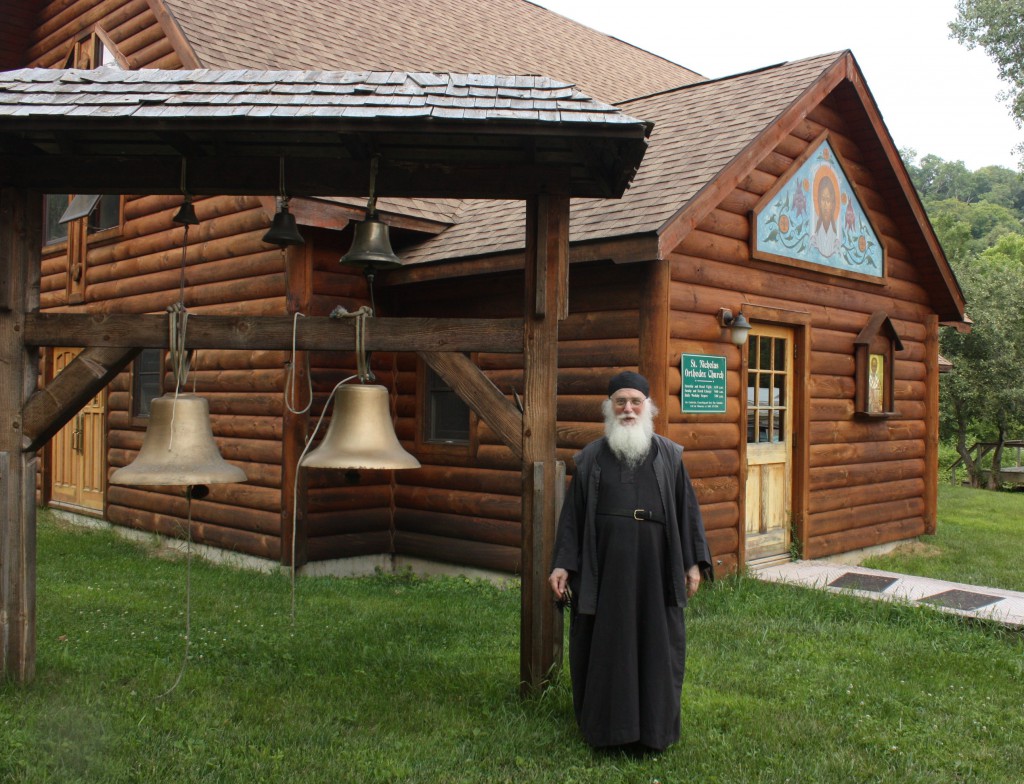
Father Simeon at St. Isaac of Syria Skete, one of the largest producers of icons in the U.S. (Lori Erickson photo).
Today I’m going to tell you about a holy site, but unlike most of the destinations on Spiritual Travels, it’s not one that you can visit. The monastery’s senior monastic, Father Simeon, said to me: “Tell people what we do, not where we are.”
So that’s just what I’ve going to do.
Actually, I’m not sure if I could find St. Isaac of Syria Skete again even if I tried. The place has a bit of a Brigadoon quality to it, as if it slips in and out of this plane of existence on its own sacred time table. Tucked away in remote, wooded valley in a sparsely populated part of Wisconsin, this small Eastern Orthodox monastic community is a skete, meaning that the monks have their own individual cells but work and worship in community.
The monastery is named in honor of St. Isaac of Syria, a seventh-century saint and theologian. It includes a private set of buildings accessible only to the community and a public area with a small but beautifully designed wooden church that looks like it has been magically transported from the steppes of Russia.
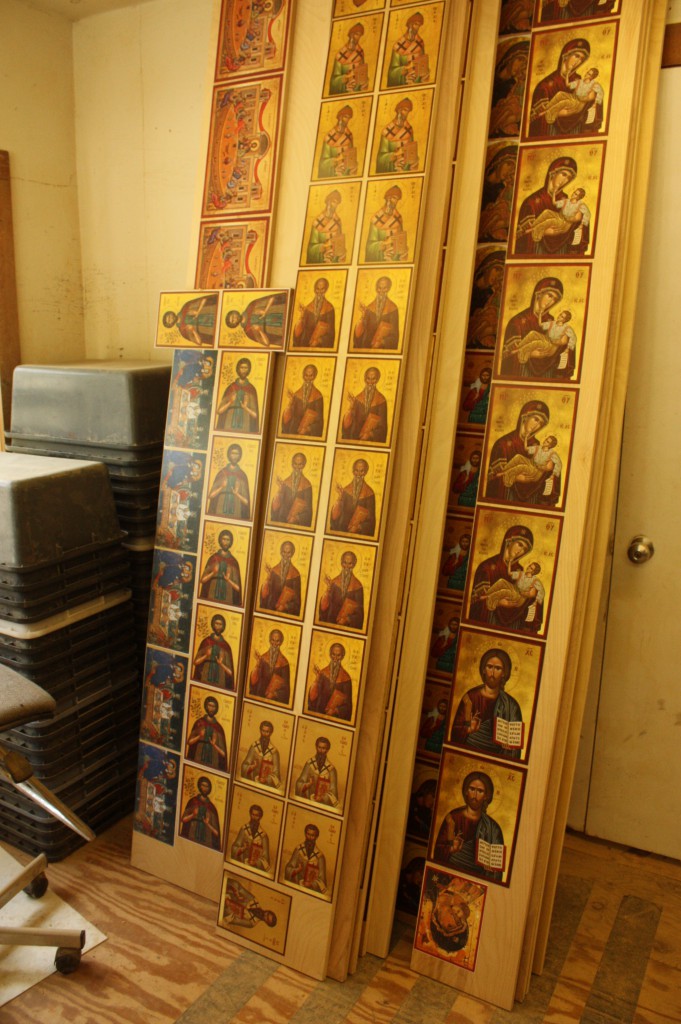
Icons in production at St. Isaac of Syria Skete (Lori Erickson photo).
If you’re a regular reader of The Holy Rover, you know that religious communities like this typically operate some sort of business to support themselves. St. Isaac is no exception: their business is making windows into heaven.
Or, to put it another way, they make icons.
You might know icons only as the little boxes on your computer screen, but religious icons have a far richer history and meaning. In a broad sense an icon is a picture of a holy person (the word, in fact, comes from the Greek eikon, meaning image). But in the Eastern Orthodox branch of Christianity, icons are considered actual windows into heaven.
“If you want to see heaven, look into an icon,” Father Simeon told me. “And as we look at the figures in the icon, the holy ones look out at us. Icons provide a meeting point for heaven and earth.”
St. Isaac’s business was launched in 1989 with a vague plan to make a little money by selling icons church-door-to-church-door. But the monastery eventually realized that there was a wide market for its products. Hand-painted icons are exquisite but expensive, so the monastery decided it wanted to make these devotional works accessible to everyone at a reasonable price.
“Our mission is to find the greatest Christian icons in the world and reproduce them,” said Father Simeon. “We know that icons change people’s lives, and this is our way of both supporting ourselves and being of service to the larger world.”
Today St. Isaac of Syria Skete is one of the country’s largest producers of icons, with more than 2100 images in its inventory. The monastery sells to individuals, churches, bookstores and distributors, with a steady stream of boxes and packages shipped out of its rural Wisconsin home each weekday. While the majority of its customers are Orthodox, many come from other denominations, particularly Roman Catholic and Episcopalian/Anglican.
Members of the St. Isaac community have traveled around the world to take digital images of icons, from Jerusalem and Greece’s Mt. Athos to the Egyptian desert and Russia. (Because most icons are very old, they are not covered by copyright laws.) The monastery also has a large collection of books from which additional designs have been reproduced.
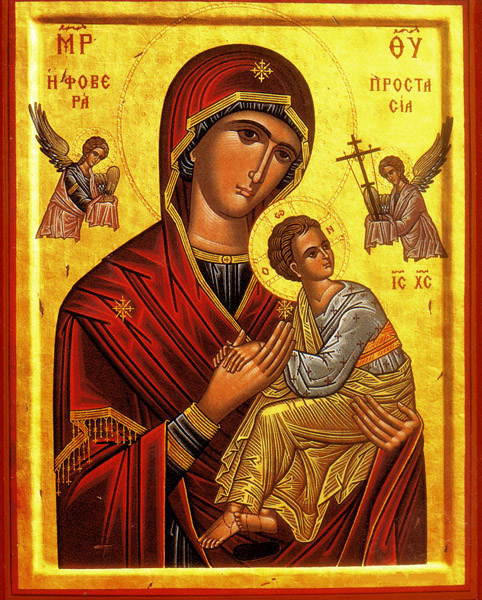
This icon of the Virgin Mary and Jesus is one of thousands produced by St. Isaac of Syria Skete.
At the monastery I learned that choosing an icon is a bit like speed dating–you need to go with your gut instinct. Some images seem to have an immediate attraction for us, Father Simeon told me, which is a sign you’re supposed to pay attention to them. “Don’t over-intellectualize your choice,” he advised. “And don’t limit yourself to just one. The more icons the better. Just like you want to have a lot of windows in your house, you should have a lot of icons in your life.”
The Orthodox relationship to icons is intimate and intense. During liturgies, for example, icons are frequently kissed by the faithful. And at home, they are to be related to like a person. “You can talk to them as well as pray to them,” says Father Simeon. “They’re a way to relate to God as if He’s standing right there with you—which, of course, He is.”
Because of the large size of their business, the St. Isaac community has about a dozen locals who help with the many tasks that go into the making of an icon, including the printing of the images, the cutting and sanding of the wood plaques to which they are glued, and varnishing. During a typical week, between 400 and 800 icons are shipped from St. Isaac, ranging in size from a few inches to several feet across (the most popular are the Pantocrator image of Christ and Rublev’s Holy Trinity). The monastery also sells other religious items such as CDs, jewelry, medallions and imported items, but icons make up the majority of their business.
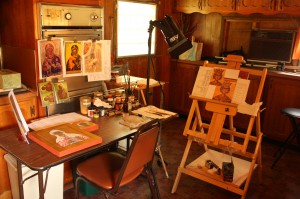
Icon-painting studio at St. Isaac of Syria Skete (Lori Erickson photo)
The community produces a much smaller number of hand-painted icons, each a marvel of gold leaf and luminous, rich colors. In the Orthodox tradition, the process is called “writing” an icon and is only done after long study and intense prayer. Father Anthony, who trained for years under a master Russian iconographer, is the community’s chief icon painter.
I came away from St. Isaac of Syria Skete amazed at what they have been able to accomplish. It’s curious to me how most monasteries are located in remote, out-of-the-way places and yet somehow they manage to have a surprisingly large influence on the larger world. They are like grains of yeast in the baking of bread, small in size but essential.
If you want to browse St. Isaac’s selection of icons, go to St. Isaac of Syria Skete. Don’t you want to have a few windows into heaven in your house?
Orthodox monasteries in Wisconsin
Previous Post

July 23, 2013
Two Great Mysteries
Next Post
August 8, 2013 Top 10 Spiritual Blogs
Browse Our Archives
Select a Category Aging & Spirituality Amish Anabaptists Animals Apocalypse Archeological sites Art and Spirituality Awards Belgian Holy Sites birds Blessings Books Buddhism Business & Spirituality Callings Cats Celtic Cemeteries Children Christianity church Colorado Creation Death Desert Spirituality Easter Economics Education & Spirituality Egypt Episcopal Church Faith Fear Films First Nations Food Forgiveness Germany God Good & Evil Good Friday Grace Gratitude Happiness Healing Hildegard of Bingen Hinduism History Holy Rover blog Holy Sites Holy Week Horses Iceland Illness Images of God Indigenous Spiritualilty Interfaith Interfaith Dialogue Iowa Islam Israel Japan Judaism LDS Church Lent Machu Picchu Martin Luther Media Meditation Monasteries Museums Music Music and Spirituality Musings Mysticism Native American Nature New Age New Zealand Norse History/Culture/Spirituality Orthodox Paradox Paranormal Peru Philosophy Pilgrimage Poetry Politics Pop Culture Pilgrimage Sites Prayers sermons Silence Social Media Spiritual writers Spirituality and Food Spirituality and Social Media Stone Circles Thomas Merton Turkey Uncategorized Unconventional Holy Sites Utopian communities Videos Virgin Mary Wicca Work World War I Writing Zen
Select a Month August 2017 July 2017 June 2017 May 2017 April 2017 March 2017 February 2017 December 2016 November 2016 October 2016 September 2016 August 2016 July 2016 June 2016 May 2016 April 2016 March 2016 February 2016 January 2016 December 2015 July 2015 June 2015 May 2015 April 2015 March 2015 February 2015 January 2015 December 2014 November 2014 October 2014 September 2014 August 2014 July 2014 June 2014 May 2014 April 2014 March 2014 February 2014 January 2014 December 2013 October 2013 September 2013 August 2013 July 2013 June 2013 May 2013 April 2013 March 2013 February 2013 January 2013 December 2012 November 2012 October 2012 September 2012 August 2012 July 2012 June 2012 May 2012 April 2012 March 2012 February 2012 January 2012 December 2011 November 2011 October 2011 September 2011 August 2011 July 2011 June 2011 May 2011 April 2011 March 2011 February 2011 January 2011 December 2010 November 2010
Follow Us!
TAKE THE
Religious Wisdom Quiz
What does the name "Jesus" mean?
Select your answer to see how you score.
The Lord saves Prince of peace Shepherd God is love
Related posts from Holy Rover
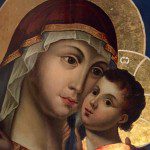
In Vienna, A Tale of Two Churches
Announcing Holy-Rover-the-Book
Bay View: A Chautauqua on Lake Michigan
TRENDING AT PATHEOS New Visions

Did Prayer Cure His Cancer? Or Was It...
At 4 AM one morning, Joshua W. Brown’s wife awoke to a...

8 Ways a Near-Death Experience Rewires the Soul
Does Consciousness Survive Physical Death? After 50 Years of Research, Dr. Raymond...

Holy Longing: What Our Restlessness Is Telling Us
“One can find so many pains when the rain is falling.” -John...

What this is NOT about. This blog is definitely not about...

Who said the Israelites were God’s chosen? That’s right, they did. Who...

The Spirit World Is the Real World: God...
A Monk’s Wisdom on Body and Spirit I sit with Brother Martin...
view all New Visions blogs
Ad-Free & Subscriber Log-In Subscription Support
- About Us
- 2026 Calendar
- Videos
- Podcasts
- Library of World Religions
- Faith In Media Tracker
- Advertise With Us
- Write for Us
- Privacy Policy
- Terms of Service
- Do Not Sell My Data
- Contact Us
- Radiant Digital
- Manage Newsletter Subscriptions
- Unsubscribe From Notifications
- Sitemap
Copyright 2008-2026, Patheos. All rights reserved.
Subscription Support Ad-Free & Subscriber Log-In
Follow Patheos