
BuddhistCatholicContemplativeEvangelicalGeneral ChristianHinduJewishLatter-day SaintMuslimNew VisionsProgressive Christian
Beliefs
- Buddhist
- Catholic
- Contemplative
- Evangelical
- General Christian
- Hindu
- Jewish
- Latter-day Saint
- More Voices
- Muslim
- New Visions
- Pagan
- Progressive Christian
Topics
- Religion News
- Food and Religion
- Sports and Religion
- Religious Art
- Religious Music and Entertainment
- Religious Events
- History and Religion
- Style and Religion
- Politics and Religion
- Women in Religion
- Recreation Outdoors and Religion
- Business Finance and Religion
- Careers Workplace and Religion
- Education and Religion
- Family Parenting and Religion
- Health Fitness and Religion
- Home and Religion
- Relationships and Religion
- Technology and Religion
- Travel and Religion
Columnists
- Buddhist Columnists
- Business Finance and Religion Columnists
- Careers Workplace and Religion Columnists
- Catholic Columnists
- Contemplative Columnists
- Education and Religion Columnists
- Evangelists Columnists
- Family Parenting and Religion Columnists
- General Christian Columnists
- Health Fitness and Religion Columnists
- Hindu Columnists
- History and Religion Columnists
- Home and Religion Columnists
- Jewish Columnists
- More Voices Columnists
- Latter Day Columnists
- Muslim Columnists
- New Visions Columnists
- Nonreligious Columnists
- Pagan Columnists
- Politics and Religion Columnists
- Progressive Columnists
- Recreation Outdoors and Religion Columnists
- Relationships and Religion Columnists
- Religion News Columnists
- Religious Art Columnists
- Religious Events Columnists
- Religious Music and Entertainment Columnists
- Sports and Religion Columnists
- Style and Religion Columnists
- Technology and Religion Columnists
- Travel and Religion Columnists
- Women in Religion Columnists
Resource Library
- 2026 Calendar
- Library of World Religions
- The 100 Most Holy Places on Earth
- Patheos Answers
- Podcasts
- Videos
- Faith Leaders Database
- Anglican Episcopalian
- Bahai
- Baptist
- Buddhism
- Christianity
- Confucianism
- Eastern Orthodoxy
- Hinduism
- Holiness and Pentecostal
- ISKCON
- Islam
- Judaism
- Lutheran
- Methodist
- The Church of Jesus Christ of Latter-day Saints
- New Age
- Paganism
- Presbytarian and Reformed
- Protestantism
- Religion Behind the Scenes
- Roman Catholic
- Scientology
- Shia Islam
- Sikhism
- Sufism
- Sunni Islam
- Taoism
- Zen
- See all religions
Research Tools
 Ad-Free & Subscriber Log-In Subscription Support
Ad-Free & Subscriber Log-In Subscription Support
Follow Patheos 

- Trending:
- Forgiveness
- |
- Marriage
- |
- Consciousness
- |
- Death Penalty
- |
- Election
- |
- Halloween
 Holistic Spirituality
- Home
- Pagan
- Review of “Secrets of Greek Mysticism” by George Lizos
Review of “Secrets of Greek Mysticism” by George Lizos
Last updated on: March 14, 2024 at 11:19 pm by Tony Mierzwicki
Review of “Secrets of Greek Mysticism” by George Lizos 2024-03-14T23:19:22-08:00 Tony Mierzwicki
Patheos Explore the world's faith through different perspectives on religion and spirituality! Patheos has the views of the prevalent religions and spiritualities of the world.
Review of “Secrets of Greek Mysticism: A Modern Guide to Daily Practice with the Greek Gods and Goddesses” by George Lizos
Mr George Lizos’ work has always revolved around helping lightworkers and spiritual seekers to find, follow, and fulfill their life purpose. Secrets of Greek Mysticism presents a complete system with step-by-step practices, rituals, meditations, and activations to help readers tap into the earth-based spirituality of his ancestors. Mr Lizos wants his readers to succeed in their quest for developing a relationship with the Greek deities and makes himself available in a support capacity on Facebook, Instagram and has resources available for download on his website.
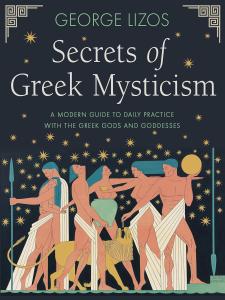
It should be noted, that Mr Lizos completed his official priesthood training in Hellenic Polytheism organized by the Supreme Council of Ethnic Hellenes (YSEE) in Athens following the religion’s legal recognition by the Greek government in 2017. Building on this training, Secrets of Greek Mysticism has a solid curriculum divided into three parts.
Part I: The Nature of the Gods provides a solid foundation in spirituality, cosmology, theology, and the journey of the soul. This part ends with an analysis of the four planes of existence:
- The physical plane primarily consists of physical matter and energy.
- The mental plane is subdivided into the mineral, plant, elemental, animal, and human minds.
- The spiritual plane consists of spiritual beings, such as minor deities, demons, Ascended Masters, and other spirit guides.
- The Olympian plane is where the Olympian deities and other high-dimensional beings exist.
The beauty of this analysis is that it puts the work that Mr Lizos’ target audience of lightworkers and spiritual seekers are already engaging in on the third plane with Ascended Masters and other spirit guides, as well as on the fourth plane with high-dimensional beings, into proper perspective. The value of working with the Olympian deities becomes immediately apparent – it will facilitate enhanced access to Ascended Masters, spirit guides, and high-dimensional beings.
Part II: Getting to Know the Gods introduces a technique for deep meditation journeys so as to meet the deities, perform rituals, and receive intuitive guidance. While the ancient Greeks had hundreds of deities, the most important were the 12 Olympian deities. A number of Hellenic reconstructionists as well as Mr Lizos limit themselves to these, as they encompass most of the essential aspects of human life.
Each of the 12 Olympians has their own chapter which “has a set structure, discussing the god’s essence and virtues, while providing an ascension toolkit with a mantra, journal prompts, symbols, hymns, practices, and activations to help you connect with the gods.” Mr Lizos provides a lot of information on just how to work with each of the Olympians and what readers can expect.
Mr Lizos concludes this part with a meditation to meet your guardian god or goddess, which may or may not be one of the 12 Olympians. “Remember, there are as many gods and goddesses as there are Universal laws and functions. Therefore, your guardian god or goddess may be a secondary god, such as Asclepius, Dionysus, Pan, Eros, Hecate, one of the muses, or any one of the other minor gods.”
Part III: Living with the Gods shares ways of working with the gods and goddesses on a daily, monthly, and yearly basis.
Mr Lizos uses YSEE’s contemporary Greek Wheel of the Year which is centered around the cycle of the sun to correspond with the Celtic Wheel of the Year. Each month features a deity, an ancient festival, the month’s zodiac sign, and the virtues of the venerated deity.
“Starting in January and ending in December, the Greek Wheel of the Year also provides a guided framework for aligning our manifestation efforts, life purpose, and spiritual journeys to the cyclic nature of the Earth.”
The Greek Wheel of the Year is not traditional, however, it is very easy to use as it is based on the calendar which everyone is familiar with. It will definitely appeal to those readers who want to experience Greek deities and festivals, but don’t want to bother with a lunar calendar.
Mr Lizos typically performs a public monthly ritual celebrating the month’s festival (usually on the last Sunday of the month).
He also performs a private monthly new moon ritual at home as “it helps me refocus my intentions, set the tone of the month, and bring fresh energy into the house.” This ritual was known as Noumenia and is “the first day of each lunar month marked by the appearance of the first silver of the moon. It was held in honor of Apollo Noumenios and the household gods, Hestia, Zeus, Hermes, and Hekate.”
Mr Lizos points out that “Full moon festivals in ancient Greece consisted of all-night festivities reserved almost exclusively for women, and were in honor of the moon goddesses Selene, Artemis, and Hecate.” While little is known about these, he has used what is known to design a full moon ritual.
He offers guidance on creating sacred space, setting up altars, and even provides a simple ritual for animating a statue to be placed on the altar. He outlines various divination systems.
Mr Lizos provides training on asking for, and receiving, clear signs and intuitive communication from the deities. The whole point is to open up lines of communication with the deities. He explains:
“The most common block people face when receiving intuitive guidance is doubt. … your ego will do whatever it takes to sabotage the process and keep you from communicating with the gods. Once you know the ego’s ways, you can learn to distinguish between real intuitive messages and the ego’s interference.”
Mr Lizos then outlines three ways to distinguish between ego and intuitive guidance, so as to ensure that readers are on track.
All in all, Secrets of Greek Mysticism is a wonderful introduction for readers (especially those from a lightworker background) wanting a fresh, modern approach to working with the ancient Greek deities. I was very impressed with Mr Lizos’ obvious dedication to helping his readers succeed by providing downloads and making himself available on social media.
Tony Mierzwicki
Author of Hellenismos: Practicing Greek Polytheism Today and Graeco-Egyptian Magick: Everyday Empowerment.
Previous Post
March 2, 2024
Review of Liber Khthonia by Jeff Cullen
Next Post
April 26, 2024 Searching for the Divine Spark by Darren Lorente-Bull
Browse Our Archives
Select a Category Uncategorized
Select a Month July 2026 December 2025 November 2025 September 2025 March 2025 February 2025 January 2025 August 2024 July 2024 June 2024 April 2024 March 2024 February 2024 January 2024 December 2023 September 2023 June 2023 May 2023 April 2023 February 2023 January 2023 December 2022 November 2022 October 2022 September 2022 August 2022 July 2022 June 2022 March 2022 January 2022 December 2021 October 2021 September 2021 August 2021 July 2021 June 2021 May 2021 April 2021 March 2021 February 2021 January 2021 December 2020 November 2020 September 2020 August 2020 July 2020 June 2020 March 2020 March 2019 February 2019
Follow Us!
TAKE THE
Religious Wisdom Quiz
What destroyed Pharaoh's army as they pursued the Israelites?
Select your answer to see how you score.
The sea Fire from heaven Earthquake Plague of locusts
Related posts from Holistic Spirituality


The Intuitive’s Oracle by Angela Orora Medway-Smith, et...

TRENDING AT PATHEOS Pagan

I was recently chatting with someone on Instagram. She asked me what...

While there are many people who share their results, the end of...

On July 23, I saw Christopher Nolan's The Odyssey which is Homer’s...

As I write this two big events have just finished up. One...

Restoring the Watershed of Divine Love
Perhaps cooperation is not something we manufacture through legislation, ideology, or moral...

Many UUs don’t pray because of bad experiences in a previous religion,...
view all Pagan blogs
Ad-Free & Subscriber Log-In Subscription Support
- About Us
- 2026 Calendar
- Videos
- Podcasts
- Library of World Religions
- Faith In Media Tracker
- Advertise With Us
- Write for Us
- Privacy Policy
- Terms of Service
- Do Not Sell My Data
- Contact Us
- Radiant Digital
- Manage Newsletter Subscriptions
- Unsubscribe From Notifications
- Sitemap
Copyright 2008-2026, Patheos. All rights reserved.
Subscription Support Ad-Free & Subscriber Log-In
Follow Patheos