
BuddhistCatholicContemplativeEvangelicalGeneral ChristianHinduJewishLatter-day SaintMuslimNew VisionsProgressive Christian
Beliefs
- Buddhist
- Catholic
- Contemplative
- Evangelical
- General Christian
- Hindu
- Jewish
- Latter-day Saint
- More Voices
- Muslim
- New Visions
- Pagan
- Progressive Christian
Topics
- Religion News
- Food and Religion
- Sports and Religion
- Religious Art
- Religious Music and Entertainment
- Religious Events
- History and Religion
- Style and Religion
- Politics and Religion
- Women in Religion
- Recreation Outdoors and Religion
- Business Finance and Religion
- Careers Workplace and Religion
- Education and Religion
- Family Parenting and Religion
- Health Fitness and Religion
- Home and Religion
- Relationships and Religion
- Technology and Religion
- Travel and Religion
Columnists
- Buddhist Columnists
- Business Finance and Religion Columnists
- Careers Workplace and Religion Columnists
- Catholic Columnists
- Contemplative Columnists
- Education and Religion Columnists
- Evangelists Columnists
- Family Parenting and Religion Columnists
- General Christian Columnists
- Health Fitness and Religion Columnists
- Hindu Columnists
- History and Religion Columnists
- Home and Religion Columnists
- Jewish Columnists
- More Voices Columnists
- Latter Day Columnists
- Muslim Columnists
- New Visions Columnists
- Nonreligious Columnists
- Pagan Columnists
- Politics and Religion Columnists
- Progressive Columnists
- Recreation Outdoors and Religion Columnists
- Relationships and Religion Columnists
- Religion News Columnists
- Religious Art Columnists
- Religious Events Columnists
- Religious Music and Entertainment Columnists
- Sports and Religion Columnists
- Style and Religion Columnists
- Technology and Religion Columnists
- Travel and Religion Columnists
- Women in Religion Columnists
Resource Library
- 2026 Calendar
- Library of World Religions
- The 100 Most Holy Places on Earth
- Patheos Answers
- Podcasts
- Videos
- Faith Leaders Database
- Anglican Episcopalian
- Bahai
- Baptist
- Buddhism
- Christianity
- Confucianism
- Eastern Orthodoxy
- Hinduism
- Holiness and Pentecostal
- ISKCON
- Islam
- Judaism
- Lutheran
- Methodist
- The Church of Jesus Christ of Latter-day Saints
- New Age
- Paganism
- Presbytarian and Reformed
- Protestantism
- Religion Behind the Scenes
- Roman Catholic
- Scientology
- Shia Islam
- Sikhism
- Sufism
- Sunni Islam
- Taoism
- Zen
- See all religions
Research Tools
 Ad-Free & Subscriber Log-In Subscription Support
Ad-Free & Subscriber Log-In Subscription Support
Follow Patheos 

- Trending:
- Forgiveness
- |
- Marriage
- |
- Consciousness
- |
- Death Penalty
- |
- Election
- |
- Halloween
 Hippie Heretic
- Home
- Progressive Christian
- Rethinking Petitionary Prayer with Mark Karris (Review of Divine Echoes)
Rethinking Petitionary Prayer with Mark Karris (Review of Divine Echoes)
Last updated on: July 3, 2018 at 1:23 pm by Chuck McKnight
Rethinking Petitionary Prayer with Mark Karris (Review of Divine Echoes) 2018-07-03T13:23:34-07:00 Chuck McKnight
Patheos Explore the world's faith through different perspectives on religion and spirituality! Patheos has the views of the prevalent religions and spiritualities of the world.
One of the most influential books for my own theology has been Thomas Jay Oord’s The Uncontrolling Love of God. His view of essential kenosis—the idea that God’s essence is noncoercive love—is nothing short of earth shattering for how we understand God and God’s work in the world. I can’t do justice to it here, but please read his book if you haven’t already.
But the thing with a paradigm-shifting view like the one Oord has proposed is that it throws everything else into question as well. If he’s on to something, and I think he is, then we need to rethink all manner of other theological concepts we may have previously taken for granted. Once such concept is prayer—petitionary prayer to be precise.
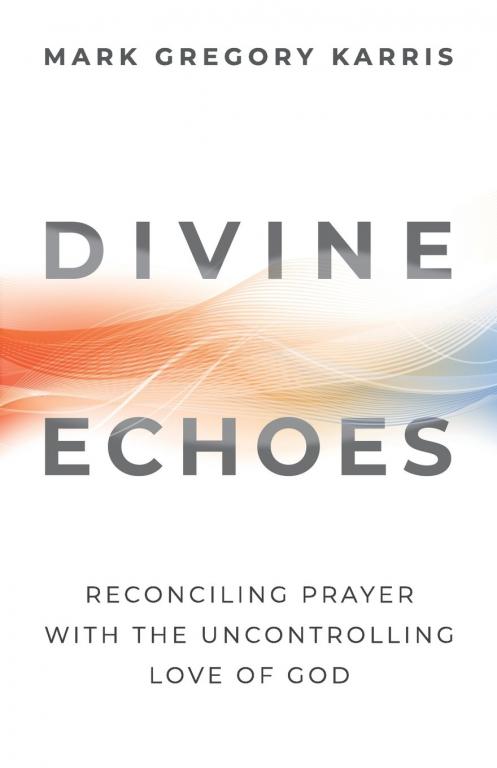
And that’s where Mark Karris comes in with his new book, Divine Echoes: Reconciling Prayer with the Uncontrolling Love of God. Divine Echoes is in some ways a follow-up to The Uncontrolling Love of God, and readers will probably get the most out of it if they have read Oord’s book first, but I do think it stands well on its own.
Karris pinpoints some pretty severe problems with the way we have traditionally understood petitionary prayer. If God truly is love, then God is already acting in the most loving manner possible at any given moment. What then is the purpose for our prayers? Are we to ask God to be more loving than God already is? No, that cannot be. Then are we to ask for a change from God’s already perfectly loving plan to something that would inevitably be lesser? Well, we certainly don’t want that either. These are the kind of questions asked, and he tackles them brilliantly. But I won’t spoil his conclusions, as you’d be better off reading them for yourself.
The final portion of the book includes a selection of written prayers from a number of different people who hold to similar views. Full disclosure: Mark asked me to contribute a written prayer as well. I enjoyed reading the contributions from others, and I found them to be a helpful way to get into this kind of praying.
I substantially agree with what Mark has written here, especially inasmuch as he critiques our existing paradigms for prayer, and as he calls for a form of prayer that brings us into cooperation with God in the world. As it stands, his book is well worth a read, and I’d recommend it without hesitation. There was really just one element I was hoping to see touched on that didn’t appear. So, for the sake of expanding this conversation, I’d like to bring that up briefly here.
When addressing matters like praying for healing, Mark acknowledges how such prayer, when done in the presence of the person, can indeed have an impact. Even though God was already doing all that God could do, and even though the prayer does not cause God to act any differently, the person about whom the prayer was given still hears the prayer. That person then has an increased awareness of the love and concern shown for them by those praying. And this can have a positive impact on the individual’s openness to receiving God’s love and healing. However, Mark is doubtful as to whether such prayers would have any effect when the person being prayed for is not present and is not aware of the prayers being offered on their behalf.
In response, I would like to bring the concept of the communion of saints into this conversation. This concept isn’t something Protestants tend to talk about very much, but every orthodox Christian who agrees with the Apostles’ Creed must at least formally acknowledge it, even if they may not really understand what it is they’re agreeing to. The communion of saints is the idea that all who are in Christ are mystically joined together by the Holy Spirit in a way that transcends space and time.
If this is true, then could it not be that when we pray for those who are not physically present, they are still able—in a mystical, spiritual manner—to sense the prayers being offered on their behalf, even if not consciously? And could this not perhaps influence their own openness to God’s love and healing? For myself, I think that it can. And so I am less willing to let go of private prayers for even those who may be unaware of my praying for them. But I’m hoping that Mark will jump in here with more thoughts of his own.
In the meantime, what do you think? Should we be rethinking petitionary prayer? What might it look like to pray with God’s essential kenosis in mind?
Thanks to Quoir Publishing for sending me a copy of Divine Echoes to read and review. Pick up your own copy as paperback or a Kindle ebook.
Previous Post

June 19, 2018
In the Beginning Was Love
Next Post

August 3, 2018 Why I Value Christian “Orthodoxy”
Browse Our Archives
Select a Category Church Personal Reviews Scripture Social Justice Theology
Select a Month August 2021 September 2020 August 2020 July 2019 March 2019 December 2018 November 2018 October 2018 September 2018 August 2018 July 2018 June 2018 May 2018 April 2018 March 2018 January 2018 December 2017 November 2017 October 2017 September 2017 August 2017 July 2017 June 2017 May 2017 April 2017 March 2017 February 2017 January 2017 December 2016 November 2016 October 2016 July 2016 June 2016 April 2016 March 2016 February 2016 January 2016 December 2015 November 2015
Follow Us!
TAKE THE
Religious Wisdom Quiz
What was the name of the first murderer in the Bible?
Select your answer to see how you score.
Esau Lamech Cain Ishmael
Related posts from Hippie Heretic


Yes, Metaxas, Racism Is Still Wrong without God

The Big Book of Hippie Heretics (Daneen Akers'...

Progressives Need to Start Preaching Hell Again
TRENDING AT PATHEOS Progressive Christian

What Being a Modern-Day Apostle Means to Me
In my last column, I discussed the ins and outs of modern-day...

Did Ancient China Once Worship the God of...
Across human history, a common thread weaves through the origins of the...

Love Your Neighbor – Including Earth-Kin: Lev. 19,...
God’s command to love your neighbor means acting in an ethical and...

Lead a Church Study of “Jesus and Lao...
Guest writer Jack Thomas (The Irreverent Reverend) reflects on leading his church...

Pastoral Wisdom for Responding to Sermon Pushback
Getting sermon pushback on your social justice sermon? Learn practical, Proverbs-based strategies...

Principles for Understanding the Apostolic Ministry Today
Whenever people discover that my formal ministry title is "apostle," as in...
view all Progressive Christian blogs
Ad-Free & Subscriber Log-In Subscription Support
- About Us
- 2026 Calendar
- Videos
- Podcasts
- Library of World Religions
- Faith In Media Tracker
- Advertise With Us
- Write for Us
- Privacy Policy
- Terms of Service
- Do Not Sell My Data
- Contact Us
- Radiant Digital
- Manage Newsletter Subscriptions
- Unsubscribe From Notifications
- Sitemap
Copyright 2008-2026, Patheos. All rights reserved.
Subscription Support Ad-Free & Subscriber Log-In
Follow Patheos