
BuddhistCatholicContemplativeEvangelicalGeneral ChristianHinduJewishLatter-day SaintMuslimNew VisionsProgressive Christian
Beliefs
- Buddhist
- Catholic
- Contemplative
- Evangelical
- General Christian
- Hindu
- Jewish
- Latter-day Saint
- More Voices
- Muslim
- New Visions
- Pagan
- Progressive Christian
Topics
- Religion News
- Food and Religion
- Sports and Religion
- Religious Art
- Religious Music and Entertainment
- Religious Events
- History and Religion
- Style and Religion
- Politics and Religion
- Women in Religion
- Recreation Outdoors and Religion
- Business Finance and Religion
- Careers Workplace and Religion
- Education and Religion
- Family Parenting and Religion
- Health Fitness and Religion
- Home and Religion
- Relationships and Religion
- Technology and Religion
- Travel and Religion
Columnists
- Buddhist Columnists
- Business Finance and Religion Columnists
- Careers Workplace and Religion Columnists
- Catholic Columnists
- Contemplative Columnists
- Education and Religion Columnists
- Evangelists Columnists
- Family Parenting and Religion Columnists
- General Christian Columnists
- Health Fitness and Religion Columnists
- Hindu Columnists
- History and Religion Columnists
- Home and Religion Columnists
- Jewish Columnists
- More Voices Columnists
- Latter Day Columnists
- Muslim Columnists
- New Visions Columnists
- Nonreligious Columnists
- Pagan Columnists
- Politics and Religion Columnists
- Progressive Columnists
- Recreation Outdoors and Religion Columnists
- Relationships and Religion Columnists
- Religion News Columnists
- Religious Art Columnists
- Religious Events Columnists
- Religious Music and Entertainment Columnists
- Sports and Religion Columnists
- Style and Religion Columnists
- Technology and Religion Columnists
- Travel and Religion Columnists
- Women in Religion Columnists
Resource Library
- 2026 Calendar
- Library of World Religions
- The 100 Most Holy Places on Earth
- Patheos Answers
- Podcasts
- Videos
- Faith Leaders Database
- Anglican Episcopalian
- Bahai
- Baptist
- Buddhism
- Christianity
- Confucianism
- Eastern Orthodoxy
- Hinduism
- Holiness and Pentecostal
- ISKCON
- Islam
- Judaism
- Lutheran
- Methodist
- The Church of Jesus Christ of Latter-day Saints
- New Age
- Paganism
- Presbytarian and Reformed
- Protestantism
- Religion Behind the Scenes
- Roman Catholic
- Scientology
- Shia Islam
- Sikhism
- Sufism
- Sunni Islam
- Taoism
- Zen
- See all religions
Research Tools
 Ad-Free & Subscriber Log-In Subscription Support
Ad-Free & Subscriber Log-In Subscription Support
Follow Patheos 

- Trending:
- Forgiveness
- |
- Marriage
- |
- Consciousness
- |
- Death Penalty
- |
- Election
- |
- Halloween
 Hippie Heretic
- Home
- Progressive Christian
- Polygamy and the Problem of Patriarchy
Polygamy and the Problem of Patriarchy
Last updated on: January 8, 2018 at 9:46 am by Chuck McKnight
Polygamy and the Problem of Patriarchy 2018-01-08T09:46:30-07:00 Chuck McKnight
Patheos Explore the world's faith through different perspectives on religion and spirituality! Patheos has the views of the prevalent religions and spiritualities of the world.
The Old Testament is chock-full of polygamy. I’ve pointed to this fact many times, as I truly believe it to be a crippling refutation of the idea that “the biblical view of marriage” equals one man with one woman. That simply isn’t true. There is no single biblical view of marriage. And polygamy is one particularly prominent view to be found within scripture.
Some of the most notable biblical heroes of the faith were polygamous, and the Old Testament never once condemns them for it. (We’ll consider New Testament texts in another post.) Polygamy is simply there throughout the text, accepted without question as a legitimate model for marriage. Without polygamy, we wouldn’t have the twelve tribes of Israel. The law of levirate marriage (found in Deuteronomy 25:5–6) actually commands polygamy in cases where the oldest surviving brother is already married. And parts of the Old Testament even portray God as polygamous, specifically describing his multiple wives.
But as soon as I point all this out, without fail, the defenders of the so-called “biblical view of marriage” resort to the only comeback available in the face of such overwhelming scriptural evidence—they appeal to the problems apparent in the Bible’s examples of polygamous marriages. Surely, they argue, there is an implicit critique to be found if we read between the lines. Even though the Bible may not condemn polygamy outright, they claim, it nonetheless demonstrates how unworkable this model actually is.

Image credit: “The Expulsion of Adam and Eve from Paradise,” Benjamin West, 1791.
I won’t deny that many of these marriages had their fair share of problems. But correlation does not equal causation. And we would be jumping to conclusions to say that polygamy itself was the source of contention.
Let’s not forget that monogamous marriages in the Bible had their fair share of problems as well. For example, it would be equally baseless to claim that monogamy was the reason for Adam and Eve’s problems in their marriage and with their children.1 Yes, they are depicted as monogamous, and yes, they had problems, but it does not logically follow that monogamy was the source of their problems.
Likewise, yes, many of the polygamous marriages in the Bible had problems, but it does not logically follow that polygamy was the source of their problems. Rather, as I will demonstrate in detail, the most likely culprit behind the problems in these marriages is not polygamy, but patriarchy.
Patriarchy in the Bible
Biblical scholar Michael Coogan, in his book, God and Sex: What the Bible Really Says, explains, “In the biblical world, as in antiquity more generally (and in some respects today as well), society was overwhelmingly patriarchal. The basic unit was the ‘house of the father,’ an extended nuclear family over which the patriarch presided.”
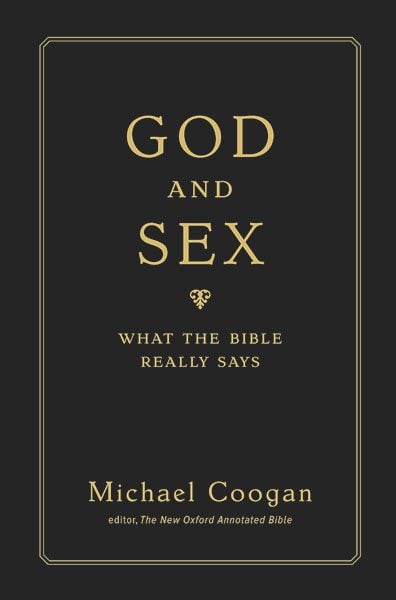
He goes on describe some of what this meant.
Within this patriarchal framework, women—daughters, wives, mothers, sisters—were subordinates, … Not only were women subordinates in the family structure, they were also considered essentially inferior. …
Husbands and fathers had virtually absolute control over their wives and daughters. Sarah refers to her husband as her “lord,” and later Abraham is referred to as her “master.” Both of these terms are indicative of the status of the wife: she was under her husband’s rule, she was his property, like the donkey that knows its master’s feeding trough; the word “master” is frequently used for ownership in the laws concerning property. …
As subordinates, women were subject to their fathers and husbands in all sorts of ways. For example, a religious vow made by a woman was null and void when either her father (if she was unmarried) or her husband disapproved of the vow. (pp. 22–25, Kindle edition)
The control of the patriarch was so absolute that he even had the biblically sanctioned option to sell his daughter into slavery, as Exodus 21:7–11 teaches.
This woman was sold by her father as a slave wife. She was her father’s property; now she belongs to her new owner, who may, if he chooses, give her instead to his son. There are restrictions on what the new owner may do, and if he does not treat her fairly, she is free to return to her father’s house, without her father having to return the buyer’s payment. But essentially the woman is entirely subject to the men in her life, who have the legal right to dispose of her as they wish. (pp. 25–26)
Furthermore, Koogan argues, it wasn’t much better for women who weren’t slaves.
For a woman, marriage was not all that different from being sold as a slave wife. A daughter was given to a prospective husband in return for a bride-price paid to her father. … Until she was married, the daughter was her father’s property—her reproductive role was under his control. A man who seduced her had to marry her—or, if the father was unwilling to have her marry such a scoundrel, he still had to pay the father the full bride-price for virgins as restitution for his damaged property, his daughter now no longer a virgin. (pp. 26)
Polygamy under patriarchy
It is firmly within this patriarchal framework that we must understand the polygamy of the Bible. More precisely, it is polygyny (the marriage of one man to multiple women) but never polyandry (the marriage of one woman to multiple men) that is to be found within scripture. So even my using the broader umbrella term of polygamy risks making these scriptural examples sound less oppressive than they really were.
Lest there be any confusion, I want to be crystal clear about what I am not saying. I am not saying that we should affirm such patriarchy because it is in the Bible. Quite the contrary, I’m pointing out the fact that the Bible cannot always be taken as a reliable guide for Christian morality. Many of the Bible’s endorsements and commands are so heavily influenced by the patriarchy of its day that our only legitimate response as faithful Christians must be to reject them entirely.
That said, for those Christians who are committed to the idea of forming their view of marriage from the pages of scripture, they are forced to grapple with the fact of scripture’s implicit endorsement of polygamy. And while they may try to point to the problems of polygamy, I’m going to demonstrate that patriarchy is the problem here, not polygamy itself.
Polyamorous polygamy vs. patriarchal polygamy
I’ve previously explained that polygamy, if it is carried out in love and mutuality, can be a legitimate form of polyamory. However, without such love and mutuality, it cannot be described as polyamorous. We need to distinguish, then, between what I’ll refer to simply as polyamorous polygamy and patriarchal polygamy.
Here are five key distinctions between the two:
- Polyamorous polygamy is based on the love one person has for multiple partners.
However, patriarchal polygamy is often based on pragmatism or cultural expectations; one or more of the multiple wives may be merely means to an end, such as to produce a male heir, to establish one’s social standing, or to maintain ties with another nation or family. - Polyamorous polygamy is based on the equality of all people.
However, patriarchal polygamy is based on the hierarchical ranking of men over women. - Polyamorous polygamy treats all partners as their own distinct persons.
However, patriarchal polygamy often treats wives as little more than property. - Polyamorous polygamy can be polygynous or polyandrous (or it can, for that matter, be same-sex or bisexually oriented).
However, patriarchal polygamy will almost always be polygynous. - Polyamorous polygamy is entered into with the full knowledge and free consent of every partner involved.
However, patriarchal polygamy is entered into primarily at the discretion of the husband; wives may or may not have any say about what additional wives the husband may take.
While scripture offers no rebuke to the idea of polygamy in general, the specific examples found therein are cases of patriarchal polygamy. And I contend that this patriarchal treatment of women was the primary source of their marital problems. To demonstrate this, we will take a closer look at some of scripture’s most prominent polygamous families and the problems they experienced.
Over the next few posts, I’ll examine the marriages of Abram, Jacob, David, and Solomon.
Footnotes
1For the sake of this discussion, when I speak of Adam and Eve or of any other biblical people, I am considering their characters in the canon of scripture as we have it today. I am not claiming that their canonical depictions are historically accurate.
Posts on polyamory
-
Southern Baptist Preacher Affirms Polyamory (Interview with Rev. Dr. Jeff Hood)
-
5 Reasons for Writing about Polyamorous Families (Guest Post by Mark Kille)
-
Polyamory and the Kingdom of God (by Christian Chiakulas on Radical Christian Millennial)
-
What Are Polyamorous Christians to Make of Karl Barth? (Guest Post)
-
Polygamy and the Problem of Patriarchy
-
Forthcoming…
Previous Post

October 30, 2017
What Are Polyamorous Christians to Make of Karl Barth? (Guest Post)
Next Post

November 10, 2017 Abram’s Marriage to Sarai, Hagar, Keturah & Others
Browse Our Archives
Select a Category Church Personal Reviews Scripture Social Justice Theology
Select a Month August 2021 September 2020 August 2020 July 2019 March 2019 December 2018 November 2018 October 2018 September 2018 August 2018 July 2018 June 2018 May 2018 April 2018 March 2018 January 2018 December 2017 November 2017 October 2017 September 2017 August 2017 July 2017 June 2017 May 2017 April 2017 March 2017 February 2017 January 2017 December 2016 November 2016 October 2016 July 2016 June 2016 April 2016 March 2016 February 2016 January 2016 December 2015 November 2015
Follow Us!
TAKE THE
Religious Wisdom Quiz
Who said: "The reason the Son of God appeared was to destroy the devil's work"?
Select your answer to see how you score.
Jesus Paul Peter John
Related posts from Hippie Heretic

It Isn't Scapegoating if You're Guilty


Yes, Metaxas, Racism Is Still Wrong without God

The Big Book of Hippie Heretics (Daneen Akers'...
TRENDING AT PATHEOS Progressive Christian

What Being a Modern-Day Apostle Means to Me
In my last column, I discussed the ins and outs of modern-day...

Did Ancient China Once Worship the God of...
Across human history, a common thread weaves through the origins of the...

Love Your Neighbor – Including Earth-Kin: Lev. 19,...
God’s command to love your neighbor means acting in an ethical and...

Lead a Church Study of “Jesus and Lao...
Guest writer Jack Thomas (The Irreverent Reverend) reflects on leading his church...

Pastoral Wisdom for Responding to Sermon Pushback
Getting sermon pushback on your social justice sermon? Learn practical, Proverbs-based strategies...

Principles for Understanding the Apostolic Ministry Today
Whenever people discover that my formal ministry title is "apostle," as in...
view all Progressive Christian blogs
Ad-Free & Subscriber Log-In Subscription Support
- About Us
- 2026 Calendar
- Videos
- Podcasts
- Library of World Religions
- Faith In Media Tracker
- Advertise With Us
- Write for Us
- Privacy Policy
- Terms of Service
- Do Not Sell My Data
- Contact Us
- Radiant Digital
- Manage Newsletter Subscriptions
- Unsubscribe From Notifications
- Sitemap
Copyright 2008-2026, Patheos. All rights reserved.
Subscription Support Ad-Free & Subscriber Log-In
Follow Patheos