
BuddhistCatholicContemplativeEvangelicalGeneral ChristianHinduJewishLatter-day SaintMuslimNew VisionsProgressive Christian
Beliefs
- Buddhist
- Catholic
- Contemplative
- Evangelical
- General Christian
- Hindu
- Jewish
- Latter-day Saint
- More Voices
- Muslim
- New Visions
- Pagan
- Progressive Christian
Topics
- Religion News
- Food and Religion
- Sports and Religion
- Religious Art
- Religious Music and Entertainment
- Religious Events
- History and Religion
- Style and Religion
- Politics and Religion
- Women in Religion
- Recreation Outdoors and Religion
- Business Finance and Religion
- Careers Workplace and Religion
- Education and Religion
- Family Parenting and Religion
- Health Fitness and Religion
- Home and Religion
- Relationships and Religion
- Technology and Religion
- Travel and Religion
Columnists
- Buddhist Columnists
- Business Finance and Religion Columnists
- Careers Workplace and Religion Columnists
- Catholic Columnists
- Contemplative Columnists
- Education and Religion Columnists
- Evangelists Columnists
- Family Parenting and Religion Columnists
- General Christian Columnists
- Health Fitness and Religion Columnists
- Hindu Columnists
- History and Religion Columnists
- Home and Religion Columnists
- Jewish Columnists
- More Voices Columnists
- Latter Day Columnists
- Muslim Columnists
- New Visions Columnists
- Nonreligious Columnists
- Pagan Columnists
- Politics and Religion Columnists
- Progressive Columnists
- Recreation Outdoors and Religion Columnists
- Relationships and Religion Columnists
- Religion News Columnists
- Religious Art Columnists
- Religious Events Columnists
- Religious Music and Entertainment Columnists
- Sports and Religion Columnists
- Style and Religion Columnists
- Technology and Religion Columnists
- Travel and Religion Columnists
- Women in Religion Columnists
Resource Library
- 2026 Calendar
- Library of World Religions
- The 100 Most Holy Places on Earth
- Patheos Answers
- Podcasts
- Videos
- Faith Leaders Database
- Anglican Episcopalian
- Bahai
- Baptist
- Buddhism
- Christianity
- Confucianism
- Eastern Orthodoxy
- Hinduism
- Holiness and Pentecostal
- ISKCON
- Islam
- Judaism
- Lutheran
- Methodist
- The Church of Jesus Christ of Latter-day Saints
- New Age
- Paganism
- Presbytarian and Reformed
- Protestantism
- Religion Behind the Scenes
- Roman Catholic
- Scientology
- Shia Islam
- Sikhism
- Sufism
- Sunni Islam
- Taoism
- Zen
- See all religions
Research Tools
 Ad-Free & Subscriber Log-In Subscription Support
Ad-Free & Subscriber Log-In Subscription Support
Follow Patheos 

- Trending:
- Forgiveness
- |
- Marriage
- |
- Consciousness
- |
- Death Penalty
- |
- Election
- |
- Halloween
 Hippie Heretic
- Home
- Progressive Christian
- Top 10 Books That Most Impacted My Spiritual Journey
Top 10 Books That Most Impacted My Spiritual Journey
Last updated on: August 29, 2017 at 8:52 am by Chuck McKnight
Top 10 Books That Most Impacted My Spiritual Journey 2017-08-29T08:52:39-07:00 Chuck McKnight
Patheos Explore the world's faith through different perspectives on religion and spirituality! Patheos has the views of the prevalent religions and spiritualities of the world.
I read a lot of books. And every book I read influences me in one way or another. But a handful of books have particularly shaped or solidified my way of thinking. Some of them, though helpful to me at one time, are no longer books I would recommend. Others have remained my favorites to this day. I’m presenting this list in roughly the order that I first read them.
How many of these have you read? Have they impacted your journey similarly?
The Bible
It may be cliché to claim the Bible as one’s favorite book, but for me, it really always has been true. In my fundamentalist days, I looked to it as the inerrant source of all truth. Over time, my understanding of such things has shifted. I now look to the Bible as a library of books that chronicle a nation’s wrestling with God. They frequently disagree with each other (and I with them), but they ultimately bear witness to the inerrant source of all truth—the Word of God himself, Jesus Christ. Though my interpretation of the Bible has changed, my love for it has never wavered. As Anabaptist leader Hans Denck said, “I value the Holy Scripture above all human treasures but not as high as the Word of God, which is living, powerful and eternal, and which is free and unencumbered by all of the elements of this world.”
Mere Christianity by C.S. Lewis
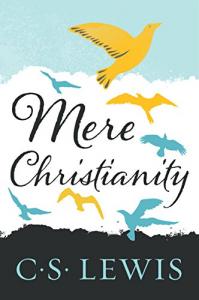
I could have chosen any number of books by C.S. Lewis here, but his Mere Christianity serves as a good representative. Lewis taught me that Christian theology, far from being a dull science, can be a breathtaking form of art. He captivated me with the idea of learning more about our heavenly Father. He gave me some of my first glimpses into the riches of God’s revelation to us. He stretched me with ideas that I rejected at first, only to embrace much later in life. And he pushed me outside the confines of my fundamentalist upbringing, allowing me to embrace the beautiful whole of Jesus’ universal church.
Pagan Christianity?: Exploring the Roots of Our Church Practices by Frank Viola & George Barna
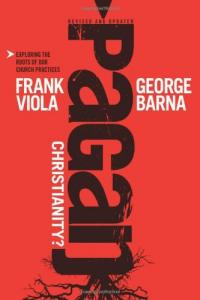
This book represents a simultaneous step forward and step backward in my Christian journey. On the one hand, I had always felt that there was something wrong with the way we “do church,” and Pagan Christianity? showed me what I had been missing. Church is supposed to be a community, not a building or a service. We are the church. When we gather as the church, we should all have a chance to participate in mutual edification. Frank Viola introduced me to the idea of “organic church,” and I’ve been in love with it ever since. My subsequent church experience has confirmed that, for me at least, simple gatherings in homes offer the best environment for discipleship to take place.
On the other hand, Pagan Christianity? instilled in me a certain mistrust and even animosity toward “institutional churches” (even though Viola himself would repudiate such a notion). It took me a while to embrace the truth that God can and does work through every format for church gatherings. It took me even longer to accept the possibility that there may be something to the liturgy of “high churches.”
Crazy Love: Overwhelmed by a Relentless God by Francis Chan

I should say up front that I no longer recommend this book. However, Crazy Love was what I needed when I read it. At a point where my faith was primarily intellectual, Francis Chan reminded me that I needed to actually live God’s love, not just learn about it. He urged me dedicate every moment of life to loving God and loving others. The main problem with this book is the fear and guilt it uses as motivating factors. While a push toward love is good, fear of punishment is not the right way to produce it. Nonetheless, Crazy Love and all the other books by Francis Chan were hugely influential for me at this stage of development. And I’m still inspired by many of his personal life decisions (donating all proceeds from his books, stepping down from his megachurch to follow God’s leading, etc.), even though I’ve come to reject much of his theology.
Fight: A Christian Case for Non-Violence by Preston Sprinkle

Perhaps the most important shift in my spiritual growth has been the realization that Jesus calls his followers to complete non-violence. This was a long time coming for me. My blogger friends Keith Giles, Jeremy Myers, and Kurt Willems, along with Pastor Greg Boyd, all served to influence me in this direction. But it was Fight by Preston Sprinkle that finally sealed the deal for me. At that point, I was still very much a conservative Evangelical, determined to read the Bible as if it had no internal contradictions or differing perspectives. This book offered me a paradigm for understanding Old Testament violence that my inerrantist persuasion could accept, while simultaneously allowing me to take seriously the non-violent teachings of Jesus and the Apostles. Though I now have a very different way of interpreting the Bible and its violence, I remain immensely grateful to Preston Sprinkle for this crucial step in my journey.
Benefit of the Doubt: Breaking the Idol of Certainty by Greg Boyd
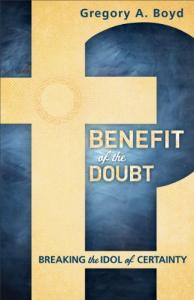
I don’t think any single theologian has been more formative for me than Greg Boyd. That’s not to say we don’t have our points of disagreement, but I owe him an eternal debt of gratitude for how he has helped me understand what God is like. Most importantly, he convinced me that God is fully and perfectly revealed in Jesus Christ, and that we must interpret everything else in light of his revelation. Additionally, I have Boyd to thank for my introduction to Anabaptism—the tradition of Christianity I’ve come to embrace. As with C.S. Lewis, I could have chosen any number of books by Greg Boyd here, but Benefit of the Doubt sums up many of the key principles I’ve learned from him. It exposes the danger of making an idol out of theological certitude, and it was an important step on my path toward rejecting biblical inerrancy.
Disarming Scripture: Cherry-Picking Liberals, Violence-Loving Conservatives, and Why We All Need to Learn to Read the Bible Like Jesus Did by Derek Flood
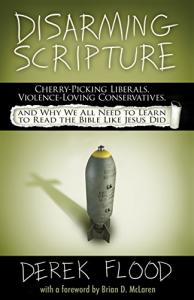
The next big shift that needed to happen for me was my understanding of scripture. As I’ve mentioned already, I believed that the Bible was fully without error in everything it teaches. But I was having a really hard time reconciling the violence of the Old Testament with the non-violent God revealed in Jesus. Derek Flood’s Disarming Scripture was the book that helped me finally discard inerrancy once and for all. Rather than simply pointing out the myriad problems in the Bible, Flood examines the way that Jesus and the Apostles actually read the Old Testament themselves. And it turns out they were far from inerrantists. Flood then goes on to prescribe the much-more-helpful “trajectory approach” to reading and applying scripture. Additionally, this book played a huge part in my eventual affirmation of the LGBTQ community.
A More Christlike God: A More Beautiful Gospel by Brad Jersak
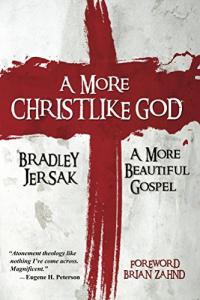
With all the various pieces in place that I’ve thus-far discussed, what I needed was a way to bring them all together into a coherent theology—one built on the foundation of a God revealed in Jesus. And this is what I found in Brad Jersak’s A More Christlike God. This book made everything click into place, and it provided me with a robust way of explaining all the views I had been coming to. Additionally, it was one of my first introductions to the richness of Eastern Orthodox theology.
I’ve since recommended this book to more people than I can count. If you’re going to pick up any one book from this list of mine, it should be A More Christlike God.
The Uncontrolling Love of God: An Open and Relational Account of Providence by Thomas Jay Oord
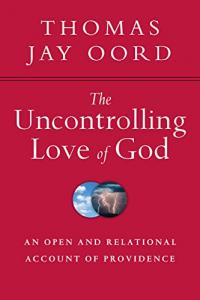
Perhaps the biggest problem God has to account for is that of the existence of suffering and evil. If God were both good and in control, then such things should not exist. But they do. “Theodicy,” then, is the attempt to explain why this is the case. Around the time I started reading and listening to Greg Boyd, I decided that the “in control” portion was the problem. God exists, and God is good, but God doesn’t do control. Still, that leaves an awful lot of questions still to be answered. Boyd’s version of open theism, combined with his warfare worldview, had for some time provided the most satisfying answers for me. But certain elements of it never sat right. And other elements started falling apart around the time I lost my faith in inerrancy (though Boyd is no inerrantist himself).
When I finally read Thomas Jay Oord’s The Uncontrolling Love of God, it was like a breath of fresh air. He incorporates the strongest points of open theism, while avoiding the elements I found most troubling in Boyd’s model. And it’s the first theodicy I’ve ever come across that gives a truly satisfying answer (for me anyway) to why miracles don’t always occur. Additionally, this book affected me in a unique manner. It had only a little impact on me at first, but then it continually came back to me after the fact, winning me over to its premise well after I finished reading it.
Unspoken Sermons by George MacDonald
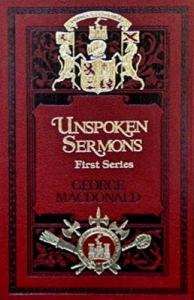
I had heard mentions of George MacDonald ever since I started reading C.S. Lewis. But I’m ashamed to say that I never started reading him in any depth until around the beginning of this year. I’m making up for lost time, however, having now read 14 of his books so far. (The fact that they’re all public domain and available free has helped with this.) All of his books are wonderful, but my favorite has been his three-volume Unspoken Sermons, in which his theological views come out most clearly.
George MacDonald was a theologian well ahead of his time. Or perhaps he was behind his time, as so much of his writings seem to reflect those of the Early Church Fathers. His focus was on Jesus as the Word of God. He insisted on learning directly from God, rather than caving to the teachings of others. He viewed God first and foremost as a good Father, and he would admit no charge against God that would be unworthy of a human father. He thus rejected offhand such ideas as penal substitutionary atonement and eternal conscious torment in hell, replacing them with theologies based on restorative justice, rather than retribution. In everything, he pointed to Jesus as our image of God and our model for imitation.
It’s too bad I took so long to get to George MacDonald. But I can’t get enough of him now. It’s hard to pinpoint exactly what it is that makes me resonate so strongly with his writings, but they have left a mark and will forever be a part of me.
Previous Post
August 16, 2017
What I’ve Learned from Dead Guys (Podcast Interview)
Next Post

August 30, 2017 The Nashville Statement—A Point-by-Point Response
Browse Our Archives
Select a Category Church Personal Reviews Scripture Social Justice Theology
Select a Month August 2021 September 2020 August 2020 July 2019 March 2019 December 2018 November 2018 October 2018 September 2018 August 2018 July 2018 June 2018 May 2018 April 2018 March 2018 January 2018 December 2017 November 2017 October 2017 September 2017 August 2017 July 2017 June 2017 May 2017 April 2017 March 2017 February 2017 January 2017 December 2016 November 2016 October 2016 July 2016 June 2016 April 2016 March 2016 February 2016 January 2016 December 2015 November 2015
Follow Us!
TAKE THE
Religious Wisdom Quiz
According to Paul, what is the "root of all kinds of evil"?
Select your answer to see how you score.
Worry Love of learning Fear of God The love of money
Related posts from Hippie Heretic

It Isn't Scapegoating if You're Guilty


Yes, Metaxas, Racism Is Still Wrong without God

The Big Book of Hippie Heretics (Daneen Akers'...
TRENDING AT PATHEOS Progressive Christian

What Being a Modern-Day Apostle Means to Me
In my last column, I discussed the ins and outs of modern-day...

Did Ancient China Once Worship the God of...
Across human history, a common thread weaves through the origins of the...

Love Your Neighbor – Including Earth-Kin: Lev. 19,...
God’s command to love your neighbor means acting in an ethical and...

Lead a Church Study of “Jesus and Lao...
Guest writer Jack Thomas (The Irreverent Reverend) reflects on leading his church...

Pastoral Wisdom for Responding to Sermon Pushback
Getting sermon pushback on your social justice sermon? Learn practical, Proverbs-based strategies...

Principles for Understanding the Apostolic Ministry Today
Whenever people discover that my formal ministry title is "apostle," as in...
view all Progressive Christian blogs
Ad-Free & Subscriber Log-In Subscription Support
- About Us
- 2026 Calendar
- Videos
- Podcasts
- Library of World Religions
- Faith In Media Tracker
- Advertise With Us
- Write for Us
- Privacy Policy
- Terms of Service
- Do Not Sell My Data
- Contact Us
- Radiant Digital
- Manage Newsletter Subscriptions
- Unsubscribe From Notifications
- Sitemap
Copyright 2008-2026, Patheos. All rights reserved.
Subscription Support Ad-Free & Subscriber Log-In
Follow Patheos