
BuddhistCatholicContemplativeEvangelicalGeneral ChristianHinduJewishLatter-day SaintMuslimNew VisionsProgressive Christian
Beliefs
- Buddhist
- Catholic
- Contemplative
- Evangelical
- General Christian
- Hindu
- Jewish
- Latter-day Saint
- More Voices
- Muslim
- New Visions
- Pagan
- Progressive Christian
Topics
- Religion News
- Food and Religion
- Sports and Religion
- Religious Art
- Religious Music and Entertainment
- Religious Events
- History and Religion
- Style and Religion
- Politics and Religion
- Women in Religion
- Recreation Outdoors and Religion
- Business Finance and Religion
- Careers Workplace and Religion
- Education and Religion
- Family Parenting and Religion
- Health Fitness and Religion
- Home and Religion
- Relationships and Religion
- Technology and Religion
- Travel and Religion
Columnists
- Buddhist Columnists
- Business Finance and Religion Columnists
- Careers Workplace and Religion Columnists
- Catholic Columnists
- Contemplative Columnists
- Education and Religion Columnists
- Evangelists Columnists
- Family Parenting and Religion Columnists
- General Christian Columnists
- Health Fitness and Religion Columnists
- Hindu Columnists
- History and Religion Columnists
- Home and Religion Columnists
- Jewish Columnists
- More Voices Columnists
- Latter Day Columnists
- Muslim Columnists
- New Visions Columnists
- Nonreligious Columnists
- Pagan Columnists
- Politics and Religion Columnists
- Progressive Columnists
- Recreation Outdoors and Religion Columnists
- Relationships and Religion Columnists
- Religion News Columnists
- Religious Art Columnists
- Religious Events Columnists
- Religious Music and Entertainment Columnists
- Sports and Religion Columnists
- Style and Religion Columnists
- Technology and Religion Columnists
- Travel and Religion Columnists
- Women in Religion Columnists
Resource Library
- 2026 Calendar
- Library of World Religions
- The 100 Most Holy Places on Earth
- Patheos Answers
- Podcasts
- Videos
- Faith Leaders Database
- Anglican Episcopalian
- Bahai
- Baptist
- Buddhism
- Christianity
- Confucianism
- Eastern Orthodoxy
- Hinduism
- Holiness and Pentecostal
- ISKCON
- Islam
- Judaism
- Lutheran
- Methodist
- The Church of Jesus Christ of Latter-day Saints
- New Age
- Paganism
- Presbytarian and Reformed
- Protestantism
- Religion Behind the Scenes
- Roman Catholic
- Scientology
- Shia Islam
- Sikhism
- Sufism
- Sunni Islam
- Taoism
- Zen
- See all religions
Research Tools
 Ad-Free & Subscriber Log-In Subscription Support
Ad-Free & Subscriber Log-In Subscription Support
Follow Patheos 

- Trending:
- Forgiveness
- |
- Marriage
- |
- Consciousness
- |
- Death Penalty
- |
- Election
- |
- Halloween
 Hippie Heretic
- Home
- Progressive Christian
- Was George MacDonald an Open Theist?
Was George MacDonald an Open Theist?
Last updated on: June 22, 2017 at 9:32 am by Chuck McKnight
Was George MacDonald an Open Theist? 2017-06-22T09:32:29-07:00 Chuck McKnight
Patheos Explore the world's faith through different perspectives on religion and spirituality! Patheos has the views of the prevalent religions and spiritualities of the world.
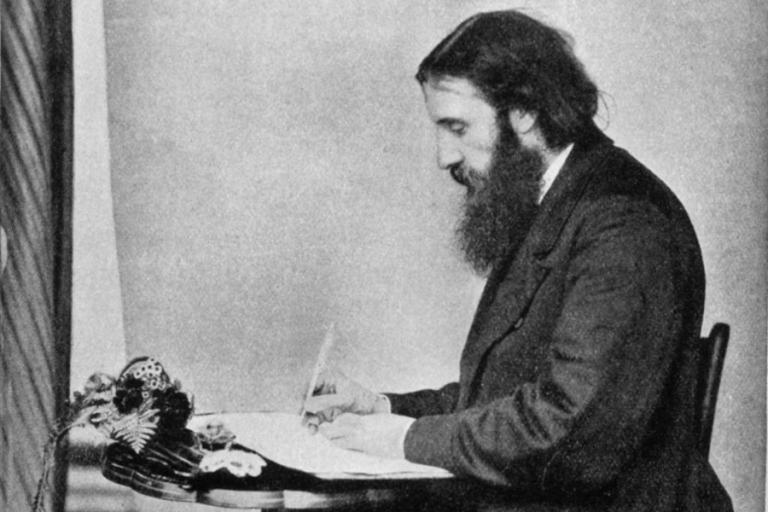
I’ve been reading through the works of George MacDonald this year, and I’m amazed by how ahead of his time this nineteenth-century preacher was. The majority of what he wrote would not sound out of place if it came from a fairly progressive Christian today. It’s little wonder that G.K. Chesterton, C.S. Lewis, J.R.R. Tolkien, Madeleine L’Engle, and so many others have pointed to him as a major influence on their own lives and writing.
That said, his progressive views have garnered no shortage of controversy. Conservative pastor Tim Keller has gone so far as to say that he’s not sure whether George MacDonald was even a Christian. However, despite all the accusations brought against him, I’ve never heard anyone call George MacDonald an open theist. Of course that would technically be anachronistic, as the term open theism didn’t come into use until the late twentieth century, but my point is that I’ve not heard his beliefs compared to what open theists believe about God and the settledness of the future.
In brief, open theists believe that that the future has not been determined. The free-will choices we make truly do do affect the course of the future. While open theists affirm that God is omniscient—knowing all that can be known, including all possible choices that could be made—God logically cannot know what has not yet been decided. And so, while God is also immutable—never changing in nature or essence—God does change and adapt his plans in relation with human decisions.
With that in mind, check out the following statements I found in George MacDonald’s sermon, “Man’s Difficulty Concerning Prayer” from his Unspoken Sermons (bold formatting added for emphasis):
How will the child go on to pray if he knows the Father cannot answer him? Will not may be for love, but how with a self-imposed cannot? How could he be Father, who creating, would not make provision, would not keep room for the babbled prayers of his children? Is his perfection a mechanical one? Has he himself no room for choice—therefore can give none? There must be a Godlike region of choice as there is a human, however little we may be able to conceive it. …
What stupidity of perfection would that be which left no margin about God’s work, no room for change of plan upon change of fact—yea, even the mighty change that, behold now at length, his child is praying! See the freedom of God in his sunsets—never a second like one of the foregone!—in his moons and skies—in the ever-changing solid earth!—all moving by no dead law, but in the harmony of the vital law of liberty, God’s creative perfection—all ordered from within. A divine perfection that were indeed, where was no liberty! Where there could be but one way of a thing! I may move my arm as I please: shall God be unable so to move his? If but for himself, God might well desire no change, but he is God for the sake of his growing creatures; all his making and doing is for them, and change is the necessity of their very existence. They need a mighty law of liberty, into which shall never intrude one atom of chance. Is the one idea of creation the begetting of a free, grand, divine will in us? And shall that will, praying with the will of the Father, find itself cramped, fettered, manacled by foregone laws? Will it not rather be a new-born law itself, working new things? No man is so tied by divine law that he can nowise modify his work: shall God not modify his? …
If you say There can be but one perfect way, I answer, Yet the perfect way to bring a thing so far, to a certain crisis, can ill be the perfect way to carry it on after that crisis: the plan will have to change then. And as this crisis depends on a will, all cannot be in exact, though in live preparation for it. …
That God cannot interfere to modify his plans, interfere without the change of a single law of his world, is to me absurd. If we can change, God can change, else is he less free than we—his plans, I say, not principles, not ends: God himself forbid!—change them after divine fashion, above our fashions as the heavens are higher than the earth.
What do you think? Does this sound like open theism to you? Are you aware of anything else George MacDonald has written to either confirm this view or cast doubt on it? Let me know in the comments below!
Previous Post
May 2, 2017
In Due Time God Revealed His Word (RTT)
Next Post
May 9, 2017 The Beautiful Gospel of WHEAT (Not TULIP, DAISY, or ROSES)
Browse Our Archives
Select a Category Church Personal Reviews Scripture Social Justice Theology
Select a Month August 2021 September 2020 August 2020 July 2019 March 2019 December 2018 November 2018 October 2018 September 2018 August 2018 July 2018 June 2018 May 2018 April 2018 March 2018 January 2018 December 2017 November 2017 October 2017 September 2017 August 2017 July 2017 June 2017 May 2017 April 2017 March 2017 February 2017 January 2017 December 2016 November 2016 October 2016 July 2016 June 2016 April 2016 March 2016 February 2016 January 2016 December 2015 November 2015
Follow Us!
TAKE THE
Religious Wisdom Quiz
What does the name "Jesus" mean?
Select your answer to see how you score.
The Lord Saves Prince of Peace Chosen One Son of Man
Related posts from Hippie Heretic


Yes, Metaxas, Racism Is Still Wrong without God

The Big Book of Hippie Heretics (Daneen Akers'...

Progressives Need to Start Preaching Hell Again
TRENDING AT PATHEOS Progressive Christian

What Being a Modern-Day Apostle Means to Me
In my last column, I discussed the ins and outs of modern-day...

Did Ancient China Once Worship the God of...
Across human history, a common thread weaves through the origins of the...

Love Your Neighbor – Including Earth-Kin: Lev. 19,...
God’s command to love your neighbor means acting in an ethical and...

Lead a Church Study of “Jesus and Lao...
Guest writer Jack Thomas (The Irreverent Reverend) reflects on leading his church...

Pastoral Wisdom for Responding to Sermon Pushback
Getting sermon pushback on your social justice sermon? Learn practical, Proverbs-based strategies...

Principles for Understanding the Apostolic Ministry Today
Whenever people discover that my formal ministry title is "apostle," as in...
view all Progressive Christian blogs
Ad-Free & Subscriber Log-In Subscription Support
- About Us
- 2026 Calendar
- Videos
- Podcasts
- Library of World Religions
- Faith In Media Tracker
- Advertise With Us
- Write for Us
- Privacy Policy
- Terms of Service
- Do Not Sell My Data
- Contact Us
- Radiant Digital
- Manage Newsletter Subscriptions
- Unsubscribe From Notifications
- Sitemap
Copyright 2008-2026, Patheos. All rights reserved.
Subscription Support Ad-Free & Subscriber Log-In
Follow Patheos