
BuddhistCatholicContemplativeEvangelicalGeneral ChristianHinduJewishLatter-day SaintMuslimNew VisionsProgressive Christian
Beliefs
- Buddhist
- Catholic
- Contemplative
- Evangelical
- General Christian
- Hindu
- Jewish
- Latter-day Saint
- More Voices
- Muslim
- New Visions
- Pagan
- Progressive Christian
Topics
- Religion News
- Food and Religion
- Sports and Religion
- Religious Art
- Religious Music and Entertainment
- Religious Events
- History and Religion
- Style and Religion
- Politics and Religion
- Women in Religion
- Recreation Outdoors and Religion
- Business Finance and Religion
- Careers Workplace and Religion
- Education and Religion
- Family Parenting and Religion
- Health Fitness and Religion
- Home and Religion
- Relationships and Religion
- Technology and Religion
- Travel and Religion
Columnists
- Buddhist Columnists
- Business Finance and Religion Columnists
- Careers Workplace and Religion Columnists
- Catholic Columnists
- Contemplative Columnists
- Education and Religion Columnists
- Evangelists Columnists
- Family Parenting and Religion Columnists
- General Christian Columnists
- Health Fitness and Religion Columnists
- Hindu Columnists
- History and Religion Columnists
- Home and Religion Columnists
- Jewish Columnists
- More Voices Columnists
- Latter Day Columnists
- Muslim Columnists
- New Visions Columnists
- Nonreligious Columnists
- Pagan Columnists
- Politics and Religion Columnists
- Progressive Columnists
- Recreation Outdoors and Religion Columnists
- Relationships and Religion Columnists
- Religion News Columnists
- Religious Art Columnists
- Religious Events Columnists
- Religious Music and Entertainment Columnists
- Sports and Religion Columnists
- Style and Religion Columnists
- Technology and Religion Columnists
- Travel and Religion Columnists
- Women in Religion Columnists
Resource Library
- 2026 Calendar
- Library of World Religions
- The 100 Most Holy Places on Earth
- Patheos Answers
- Podcasts
- Videos
- Faith Leaders Database
- Anglican Episcopalian
- Bahai
- Baptist
- Buddhism
- Christianity
- Confucianism
- Eastern Orthodoxy
- Hinduism
- Holiness and Pentecostal
- ISKCON
- Islam
- Judaism
- Lutheran
- Methodist
- The Church of Jesus Christ of Latter-day Saints
- New Age
- Paganism
- Presbytarian and Reformed
- Protestantism
- Religion Behind the Scenes
- Roman Catholic
- Scientology
- Shia Islam
- Sikhism
- Sufism
- Sunni Islam
- Taoism
- Zen
- See all religions
Research Tools
 Ad-Free & Subscriber Log-In Subscription Support
Ad-Free & Subscriber Log-In Subscription Support
Follow Patheos 

- Trending:
- Forgiveness
- |
- Marriage
- |
- Consciousness
- |
- Death Penalty
- |
- Election
- |
- Halloween
 Hippie Heretic
- Home
- Progressive Christian
- The Violence of Scripture by Eric A. Seibert (Book Review)
The Violence of Scripture by Eric A. Seibert (Book Review)
Last updated on: April 20, 2017 at 8:53 am by Chuck McKnight
The Violence of Scripture by Eric A. Seibert (Book Review) 2017-04-20T08:53:59-07:00 Chuck McKnight
Patheos Explore the world's faith through different perspectives on religion and spirituality! Patheos has the views of the prevalent religions and spiritualities of the world.
This is part three of a three-part review of Eric Seibert’s books. See my introductory remarks and review of Disturbing Divine Behavior if you haven’t already.
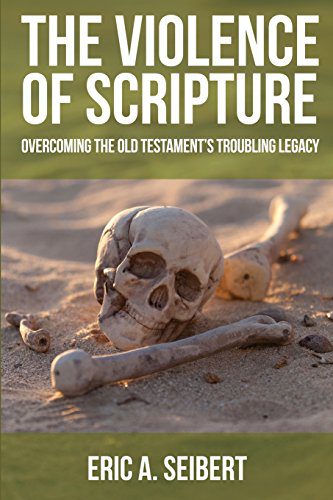
In his previous book Eric Seibert lays the groundwork for a responsible reading of scripture—distinguishing the textual God from the actual God, and using the life and teaching of Jesus as the criteria by which we do so. Then in The Violence of Scripture, he adjusts his focus to the so-called “virtuous violence” found throughout the Old Testament. While the main concern in Disturbing Divine Behavior has to do with the character of God, the main concern in The Violence of Scripture has to do with the behavior of humans.
For far too long, the violence found within the pages of scripture has been used to justify all manner of other evils. Seibert identifies a few of these (p. 16ff.):
- “Justifying War”
- “Legitimating Colonialism”
- “Supporting Slavery”
- “Encouraging Violence against Women”
- “Harming Children”
- “Condemning Gays and Lesbians”
- “Distorting the Character of God”
To bring such justifications to an end, we must first stop justifying the violence in the Bible itself. Seibert distinguishes between two different kinds of violence in the Old Testament:
I will refer to violence that is portrayed positively and approved of in some way as “virtuous” violence. This violence is portrayed as being appropriate, justified, and perhaps even praiseworthy. It is sanctioned and sometimes celebrated in the text. Those who engage in acts of “virtuous” violence enjoy God’s blessing and are understood to be acting in ways that are congruent with God’s intentions. “Wrongful” violence, on the other hand, is violence that is portrayed negatively and disapproved of in the text. Wrongful violence includes violent acts the text portrays as being inappropriate, unjustified, and condemnable. It is unsanctioned and unacceptable, and those who engage in such behavior do so without divine approval. (p. 28)
While both kinds of violence are prevalent, it is the supposedly “virtuous violence” that creates the biggest problem for readers of scripture. For if we are to believe that God at times condoned or even commanded violence, then by what standard can we claim that he would not do so today? Seibert suggests that we change the way we read:
If we are committed to overcoming the Old Testament’s troubling legacy and stopping the harmful effects of violent texts, we need to read differently. For many, this will involve developing some new reading habits, including a willingness (1) to read actively, (2) to question the text, and (3) to engage in an ethical critique of violent ideologies. (p. 62)
After explaining what these habits entail, he provides “Three Guidelines for Engaging in an Ethical Critique” (p. 67ff.):
- “The Rule of Love: Reading for the Love of God and Others”
- “A Commitment to Justice: Setting Things Right”
- “A Consistent Ethic of Life: Valuing All People”
To read this way is an act of loyalty, not treachery. In fact, if the Old Testament is to speak a liberating word for our day, one that is truly transformative and life-giving, we must be willing to engage in an ethical critique of its most violent texts. Such a critique is indispensable for reading the Old Testament nonviolently, which, in turn, is crucial to overcoming the Old Testament’s troubling legacy. (p. 72)
Seibert then offer a five-step process to do so, including some specific points for the critique (p. 73ff.):
-
“Naming the Violence”
-
“Analyzing the Violence”
-
“Critiquing the Violence”
- “Look for Internal Critiques of Violence within Violent Texts”
- “Use Dissonant (Nonviolent) Voices to Undermine Dominant (Violent) Ones”
- “Read with the Victims in the Text”
- “Read from the Margins”
- “Appeal to Commonly Accepted Standards of Morality”
-
“Use Textual Violence Constructively”
-
“Transcend the Violence”
With such strategies in place, Seibert tackles the infamous Canaanite genocide of Joshua 6–11, questioning its historicity, examining the internal critique, deconstructing the divinely sanctioned violence, and finding constructive ways to redeem this portion of scripture. He then spends a chapter each on how to prevent the Old Testament from being used to justify war and from being used to perpetuate violence against women.
The book concludes by considering the urgency of adopting a nonviolent approach to reading scripture.
As discussed earlier, while there is obviously a great deal we can embrace and celebrate when reading the Old Testament, not everything we encounter there is good for us. The Old (and New) Testament sometimes endorses values and viewpoints most people of faith today find objectionable. This is certainly the case when it sanctions genocide, promotes intolerance, legitimates killing, and endorses all sorts of violence against women, children, and others. One of the real advantages of reading nonviolently is that it allows us to be completely honest about these morally problematic parts of the Bible. We can freely acknowledge these difficulties without feeling pressure to pretend the Bible is something it is not.
For all the profound wisdom, spiritual insight, and moral guidance it offers, the Old Testament is not—and was never intended to be—a perfect guide for ethics, morality, or theology. This is difficult for many people of faith to acknowledge. Many Christians are disinclined to recognize the Bible’s limitations. Fewer still are willing to admit there are serious problems with it or to acknowledge that the Bible might contain ideas that are not only wrong, but downright dangerous. In many Christian contexts, the clear expectation is to say only “nice” things about the Bible: how wonderful it is, how useful it is to draw us closer to God, how helpful it is for our spiritual growth, and so forth. While all this is certainly true—and I do not for a moment wish to minimize the significance of these things—it does not give us the full picture.
My thoughts on this book are much the same as my thoughts on Disturbing Divine Behavior. These are fantastic books, and I give them both my wholehearted endorsement. Do yourself a favor and read them.
Pick up your own copy of Disturbing Divine Behavior as a paperback and The Violence of Scripture as a paperback or a Kindle eBook.
Disclosure: I received a free copy of each book from Eric Seibert and Fortress Press in exchange for an honest review.
Previous Post

April 17, 2017
The Least of All Nations (RTT)

Browse Our Archives
Select a Category Church Personal Reviews Scripture Social Justice Theology
Select a Month August 2021 September 2020 August 2020 July 2019 March 2019 December 2018 November 2018 October 2018 September 2018 August 2018 July 2018 June 2018 May 2018 April 2018 March 2018 January 2018 December 2017 November 2017 October 2017 September 2017 August 2017 July 2017 June 2017 May 2017 April 2017 March 2017 February 2017 January 2017 December 2016 November 2016 October 2016 July 2016 June 2016 April 2016 March 2016 February 2016 January 2016 December 2015 November 2015
Follow Us!
TAKE THE
Religious Wisdom Quiz
How many times does the word "Christian" appear in the Bible?
Select your answer to see how you score.
7 3 12 10
Related posts from Hippie Heretic

It Isn't Scapegoating if You're Guilty


Yes, Metaxas, Racism Is Still Wrong without God

The Big Book of Hippie Heretics (Daneen Akers'...
TRENDING AT PATHEOS Progressive Christian

Why Christians Have a Sacred Duty to Vote:...
The Bible offers strong support for the sacred duty to vote. Here...

What Being a Modern-Day Apostle Means to Me
In my last column, I discussed the ins and outs of modern-day...

Did Ancient China Once Worship the God of...
Across human history, a common thread weaves through the origins of the...

Love Your Neighbor – Including Earth-Kin: Lev. 19,...
God’s command to love your neighbor means acting in an ethical and...

Lead a Church Study of “Jesus and Lao...
Guest writer Jack Thomas (The Irreverent Reverend) reflects on leading his church...

Principles for Understanding the Apostolic Ministry Today
Whenever people discover that my formal ministry title is "apostle," as in...
view all Progressive Christian blogs
Ad-Free & Subscriber Log-In Subscription Support
- About Us
- 2026 Calendar
- Videos
- Podcasts
- Library of World Religions
- Faith In Media Tracker
- Advertise With Us
- Write for Us
- Privacy Policy
- Terms of Service
- Do Not Sell My Data
- Contact Us
- Radiant Digital
- Manage Newsletter Subscriptions
- Unsubscribe From Notifications
- Sitemap
Copyright 2008-2026, Patheos. All rights reserved.
Subscription Support Ad-Free & Subscriber Log-In
Follow Patheos