
BuddhistCatholicContemplativeEvangelicalGeneral ChristianHinduJewishLatter-day SaintMuslimNew VisionsProgressive Christian
Beliefs
- Buddhist
- Catholic
- Contemplative
- Evangelical
- General Christian
- Hindu
- Jewish
- Latter-day Saint
- More Voices
- Muslim
- New Visions
- Pagan
- Progressive Christian
Topics
- Religion News
- Food and Religion
- Sports and Religion
- Religious Art
- Religious Music and Entertainment
- Religious Events
- History and Religion
- Style and Religion
- Politics and Religion
- Women in Religion
- Recreation Outdoors and Religion
- Business Finance and Religion
- Careers Workplace and Religion
- Education and Religion
- Family Parenting and Religion
- Health Fitness and Religion
- Home and Religion
- Relationships and Religion
- Technology and Religion
- Travel and Religion
Columnists
- Buddhist Columnists
- Business Finance and Religion Columnists
- Careers Workplace and Religion Columnists
- Catholic Columnists
- Contemplative Columnists
- Education and Religion Columnists
- Evangelists Columnists
- Family Parenting and Religion Columnists
- General Christian Columnists
- Health Fitness and Religion Columnists
- Hindu Columnists
- History and Religion Columnists
- Home and Religion Columnists
- Jewish Columnists
- More Voices Columnists
- Latter Day Columnists
- Muslim Columnists
- New Visions Columnists
- Nonreligious Columnists
- Pagan Columnists
- Politics and Religion Columnists
- Progressive Columnists
- Recreation Outdoors and Religion Columnists
- Relationships and Religion Columnists
- Religion News Columnists
- Religious Art Columnists
- Religious Events Columnists
- Religious Music and Entertainment Columnists
- Sports and Religion Columnists
- Style and Religion Columnists
- Technology and Religion Columnists
- Travel and Religion Columnists
- Women in Religion Columnists
Resource Library
- 2026 Calendar
- Library of World Religions
- The 100 Most Holy Places on Earth
- Patheos Answers
- Podcasts
- Videos
- Faith Leaders Database
- Anglican Episcopalian
- Bahai
- Baptist
- Buddhism
- Christianity
- Confucianism
- Eastern Orthodoxy
- Hinduism
- Holiness and Pentecostal
- ISKCON
- Islam
- Judaism
- Lutheran
- Methodist
- The Church of Jesus Christ of Latter-day Saints
- New Age
- Paganism
- Presbytarian and Reformed
- Protestantism
- Religion Behind the Scenes
- Roman Catholic
- Scientology
- Shia Islam
- Sikhism
- Sufism
- Sunni Islam
- Taoism
- Zen
- See all religions
Research Tools
 Ad-Free & Subscriber Log-In Subscription Support
Ad-Free & Subscriber Log-In Subscription Support
Follow Patheos 

- Trending:
- Forgiveness
- |
- Marriage
- |
- Consciousness
- |
- Death Penalty
- |
- Election
- |
- Halloween
 Hippie Heretic
- Home
- Progressive Christian
- The Importance of Jesus as Our Only Foundation
The Importance of Jesus as Our Only Foundation
Last updated on: April 1, 2017 at 7:37 am by Chuck McKnight
The Importance of Jesus as Our Only Foundation 2017-04-01T07:37:04-07:00 Chuck McKnight
Patheos Explore the world's faith through different perspectives on religion and spirituality! Patheos has the views of the prevalent religions and spiritualities of the world.
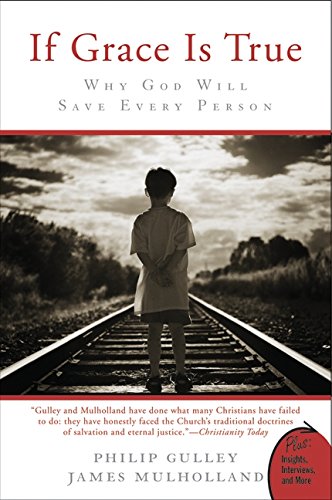
This past Friday, I visited a thrift store and picked up a book called If Grace Is True: Why God Will Save Every Person, which I then devoured over the next day and a half. It’s coauthored by two Quaker pastors, and as the subtitle implies, it seeks to defend the view of universal reconciliation or universalism—the idea that God never rescinds his offer of forgiveness, that he continues seeking the lost even after death, and that all will eventually repent and accept God’s grace.
I won’t spend much time either defending or refuting this view right now. I consider myself a hopeful universalist—meaning that I believe in the possibility of eventual reconciliation for all, and that I hope (in the strong sense of the word) for this to be the case, but that I am not fully confident in every individual’s desire to receive God’s grace. I therefore consider it also a possibility (though I hope this will not be the case) for some to so strongly reject their source of life that they will eventually cease to exist.
My caveat to the book’s premise aside, I really was loving the first four chapters. Nearly every point the authors raised was resonating with me. They demolished the petty view of God so common in modern Western Christianity. This “god” may offer forgiveness to some, but he’s just as ready to damn others to eternal hell for simply not getting the formula right. He may be a god of love in some respects, but his version of love is tempered by a holiness that cannot look on sin, and by a form of justice that demands retribution before reconciliation can occur.
In short, this god looks nothing like Jesus.
I was enjoying the book so much that near the end of the fourth chapter, I took a break from reading it and looked up the authors online to see what else they had done or written since. While Philip Gulley is still a Quaker pastor, and has written quite a few more books I’d like to check out, I was surprised to learn that his coauthor James Mulholland has recently left Christianity altogether.
Such discoveries sadden me, but even more so, they perplex me. I’m not surprised when I see fundamentalists walk away from their monstrous image of God. If I still thought their view of God was accurate, I would walk away from him too. But how could it be that this man, who had gained such a beautiful picture of God, would then still walk away from him?
A bit disconcerted, I continued reading the book. A few lines into chapter five, it started to make sense. Everything leading up to this chapter had been well within the realm of Christian orthodoxy—a minority view in recent times perhaps, but a distinctly Christian view nonetheless. But in chapter five, it seems to me that the authors began throwing out the orthodox baby along with the soiled bathwater.
They express doubts as to Jesus’ divinity, and they reject the idea that Jesus is the only name by which we must be saved (p. 125). They reject the idea that Jesus died for our sins (p. 135). They claim that Jesus doesn’t really save us himself, but that he simply reveals God as Savior (pp. 143–144). They say that Jesus was not fully God and fully man (pp. 145). Throughout the whole chapter, it seems the authors do everything they can to deemphasize Jesus.
So here’s what I’m seeing in retrospect. In the first four chapters of their book, Gulley and Mulholland do an excellent job of deconstructing a horrible picture of God. This false picture of God was built, in large part, on the foundations of sola scriptura and biblical inerrancy. But the Bible was never meant to be the foundation of our faith, and so the authors rightly reject it as such. Yet its removal left a gap to be filled. Sadly, it seems they were only able to fill that gap with ethics and morality. These morals are good—in large part based on the teachings of Christ himself—but morals are not our foundation either. Jesus is the one and only foundation for our faith.
There can be no other foundation than the one already laid: I mean Jesus Christ himself. (1 Corinthians 3:11, REB)
In opposing the monstrous image of God that plagues much of modern Christianity, our solution cannot be to deemphasize Jesus. We must rather to point to him with every ounce of our strength. We must read every page of Scripture through the lens of Jesus. We must weigh every philosophy by the revelation of Jesus. We must always and in every circumstance ask, “Does this look like Jesus?”
The authors of If Grace Is True have rejected a false foundation, but they have failed to replace that foundation with Jesus. With this understanding, I can’t really say I’m surprised to hear that one of them has walked away from Christianity.
Why stay if not for Jesus?
That’s not to say that I think Philip Gulley, the other author, must be teetering on the edge of faith himself. I’m sure that his reasons for being a Christian are far more complex than this book can summarize; I have no idea what changes might have taken place for him since this book; and from what I can see of him online, he appears to be thriving in his faith today. I’m truly glad for this. But I do fear for those who may follow this brand of Christianity that so deemphasizes Christ.
There is another way. We can reject the all-too-common monster view of God, and still remain true to orthodox Christianity. We do this by affirming that God is fully and perfectly revealed in Christ alone. “The Son is the radiance of God’s glory and the exact representation of his being” (Hebrews 1:3, NIV). “He is the image of the invisible God; his is the primacy over all creation” (Colossians 1:15, REB).
No matter how beautiful our view of God may be, it is certain to fall short if it is not based on Jesus.
For an even more beautiful view of God—one soundly rooted in orthodox Christianity and firmly grounded on the foundation of Jesus Christ—I cannot recommend highly enough A More Christlike God: A More Beautiful Gospel by Brad Jersak.
Previous Post

December 9, 2015
Blogging through Matthew: Introduction
Next Post

December 14, 2015 Matthew’s Subversive Genealogy of Jesus
Browse Our Archives
Select a Category Church Personal Reviews Scripture Social Justice Theology
Select a Month August 2021 September 2020 August 2020 July 2019 March 2019 December 2018 November 2018 October 2018 September 2018 August 2018 July 2018 June 2018 May 2018 April 2018 March 2018 January 2018 December 2017 November 2017 October 2017 September 2017 August 2017 July 2017 June 2017 May 2017 April 2017 March 2017 February 2017 January 2017 December 2016 November 2016 October 2016 July 2016 June 2016 April 2016 March 2016 February 2016 January 2016 December 2015 November 2015
Follow Us!
TAKE THE
Religious Wisdom Quiz
Which town did Jesus grow up in?
Select your answer to see how you score.
Bethlehem Capernaum Nazareth Jericho
Related posts from Hippie Heretic


The Big Book of Hippie Heretics (Daneen Akers'...
“Christmas Heresy” by Andrew Robinson (Guest Poem)
The 4 Jesuses I Love (And I Don‘t...
TRENDING AT PATHEOS Progressive Christian

Why Christians Have a Sacred Duty to Vote:...
The Bible offers strong support for the sacred duty to vote. Here...

What Being a Modern-Day Apostle Means to Me
In my last column, I discussed the ins and outs of modern-day...

Did Ancient China Once Worship the God of...
Across human history, a common thread weaves through the origins of the...

Love Your Neighbor – Including Earth-Kin: Lev. 19,...
God’s command to love your neighbor means acting in an ethical and...

Lead a Church Study of “Jesus and Lao...
Guest writer Jack Thomas (The Irreverent Reverend) reflects on leading his church...

Principles for Understanding the Apostolic Ministry Today
Whenever people discover that my formal ministry title is "apostle," as in...
view all Progressive Christian blogs
Ad-Free & Subscriber Log-In Subscription Support
- About Us
- 2026 Calendar
- Videos
- Podcasts
- Library of World Religions
- Faith In Media Tracker
- Advertise With Us
- Write for Us
- Privacy Policy
- Terms of Service
- Do Not Sell My Data
- Contact Us
- Radiant Digital
- Manage Newsletter Subscriptions
- Unsubscribe From Notifications
- Sitemap
Copyright 2008-2026, Patheos. All rights reserved.
Subscription Support Ad-Free & Subscriber Log-In
Follow Patheos