
BuddhistCatholicContemplativeEvangelicalGeneral ChristianHinduJewishLatter-day SaintMuslimNew VisionsProgressive Christian
Beliefs
- Buddhist
- Catholic
- Contemplative
- Evangelical
- General Christian
- Hindu
- Jewish
- Latter-day Saint
- More Voices
- Muslim
- New Visions
- Pagan
- Progressive Christian
Topics
- Religion News
- Food and Religion
- Sports and Religion
- Religious Art
- Religious Music and Entertainment
- Religious Events
- History and Religion
- Style and Religion
- Politics and Religion
- Women in Religion
- Recreation Outdoors and Religion
- Business Finance and Religion
- Careers Workplace and Religion
- Education and Religion
- Family Parenting and Religion
- Health Fitness and Religion
- Home and Religion
- Relationships and Religion
- Technology and Religion
- Travel and Religion
Columnists
- Buddhist Columnists
- Business Finance and Religion Columnists
- Careers Workplace and Religion Columnists
- Catholic Columnists
- Contemplative Columnists
- Education and Religion Columnists
- Evangelists Columnists
- Family Parenting and Religion Columnists
- General Christian Columnists
- Health Fitness and Religion Columnists
- Hindu Columnists
- History and Religion Columnists
- Home and Religion Columnists
- Jewish Columnists
- More Voices Columnists
- Latter Day Columnists
- Muslim Columnists
- New Visions Columnists
- Nonreligious Columnists
- Pagan Columnists
- Politics and Religion Columnists
- Progressive Columnists
- Recreation Outdoors and Religion Columnists
- Relationships and Religion Columnists
- Religion News Columnists
- Religious Art Columnists
- Religious Events Columnists
- Religious Music and Entertainment Columnists
- Sports and Religion Columnists
- Style and Religion Columnists
- Technology and Religion Columnists
- Travel and Religion Columnists
- Women in Religion Columnists
Resource Library
- 2026 Calendar
- Library of World Religions
- The 100 Most Holy Places on Earth
- Patheos Answers
- Podcasts
- Videos
- Faith Leaders Database
- Anglican Episcopalian
- Bahai
- Baptist
- Buddhism
- Christianity
- Confucianism
- Eastern Orthodoxy
- Hinduism
- Holiness and Pentecostal
- ISKCON
- Islam
- Judaism
- Lutheran
- Methodist
- The Church of Jesus Christ of Latter-day Saints
- New Age
- Paganism
- Presbytarian and Reformed
- Protestantism
- Religion Behind the Scenes
- Roman Catholic
- Scientology
- Shia Islam
- Sikhism
- Sufism
- Sunni Islam
- Taoism
- Zen
- See all religions
Research Tools
 Ad-Free & Subscriber Log-In Subscription Support
Ad-Free & Subscriber Log-In Subscription Support
Follow Patheos 

- Trending:
- Forgiveness
- |
- Marriage
- |
- Consciousness
- |
- Death Penalty
- |
- Election
- |
- Halloween
 Hindu 2.0
- Home
- Hindu
- Babri Masjid & Ayodhya Dispute – Dummies Guide – Part 2
Babri Masjid & Ayodhya Dispute – Dummies Guide – Part 2
Last updated on: October 15, 2019 at 11:17 pm by Sunil Daman
Babri Masjid & Ayodhya Dispute – Dummies Guide – Part 2 2019-10-12T23:20:22+05:30 Sunil Daman
Patheos Explore the world's faith through different perspectives on religion and spirituality! Patheos has the views of the prevalent religions and spiritualities of the world.
In the previous post, I presented the historical context to Babri Masjid. This post is more about the current situation.
Archaeology of Babri Masjid
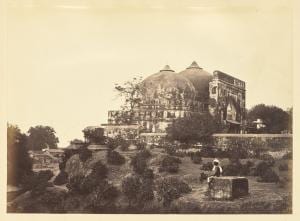
Babri Masjid in the lat 19th Century.
The Babri Masjid structure itself seems to have incorporated many Hindu sculptures etc. from a pre-existing structure. Photographs of such sculptures were submitted in the court in August 2019.
One famous example is an inscription of a Vishnu temple from the twelfth century which was found after the Babri demolition. Arguments were made that this inscription was highly unlikely to have been found in Babri Masjid and that it was probably stolen from a museum and placed there by kar sevaks. The paper said that this was in fact an inscription from Lucknow State Museum and had been missing since the 1980s. This was however denied by the museum, which displayed the piece in a press conference.
In 2003, the Archaeological Survey of India on the direction of the Allahabad High Court, conducted an excavation. The excavation followed a radar survey which showed that there were structural anomalies underground. This radar surveyed was done by the same company that had been involved in similar operations for the construction of the Delhi Metro.
The Supreme Court was approached with a plea asking that excavations not be allowed at the site. This plea was however rejected by the court. The excavation revealed several sculptures, such as that of a yaksha, a cross-legged figure, walls in the east-west and north-south direction, pillars etc. This site in fact had structures dating back to the Gupta and Kushan period, when there were religious structures here. It even found evidence of objects from 1300 BC.
The Sunni Wakf board and many newspapers initially reported that the ASI had found no evidence of a structure below the mosque, and on the same day reported that the ASI was fabricating evidence of a temple. Experts hired by the Sunni Waqf board were also present at the excavation, and criticized the ASI’s methods, claiming that what they had found was not reliable or was tampered with.
Earlier, in 1977, a limited excavation was carried out, which found existence of pillar bases below the area, indicating that another structure had existed there. KK Muhammed, former regional director, North, Archaeological Survey of India was part of the team of archaeologists which had carried out the first excavation at the site in 1976-77. He maintains that there is enough archaeological proof of a grand temple below the Babri Mosque. 12 pillars of the then still standing mosque were made of the temple ruins, according to him.
He says that specific designs were carved on these symbols, such as what is known as the Purna Kalasha, a pot from which leaves and grains are coming out. This is considered one of the 8 auspicious symbols of Indian sculpture.
During excavations, many terracotta figures of humans and animals were found. These cannot be from a mosque because it is ‘haraam’ to depict such things.
Possible British Tampering at Ayodhya
It is claimed by some people that Ibrahim Lodhi built this mosque and not Babur. It is said that there was an inscription on the mosque that explicitly stated this. After the 1857 rebellion, the British decided to create more conflict between Hindus and Muslims. Since a riot had broken out at Ayodhya in 1855 over the worship, they decided to fan the flames of the mosque-Ram Janmabhoomi conflict.
They then removed the Lodhi inscription (and defaced it. It is no longer readable today), and spread the tale that the mosque was built by Babur after demolishing the temple. This would help create a split between Hindus and the last Mughal emperor, Bahadur Shah Zafar.
Evidence would be hard to come by for such tampering, but this is unlikely to be the truth since the British could have just as well fanned the flames with a Lodhi mosque than a Babur mosque. Bahadur Shah Zafar was largely a non-entity by 1857, and most Hindus in Hindustan did not care about him.
Babur’s Atrocities
His name is actually Zahir-ud-din Muhammad, which means Defender of the Faith.
Babur raised towers of skulls when he defeated Rana Sanga in 1527 and later he repeated the same horrors after capturing the fort of Chanderi and Agra. This is recorded in his memoir. This was a common practice among later Mughals, included Akbar.
In his memoir, babur describes his campaigns against the Hindus as Jihad, punctuated with verse and references from the Quran. In his attack of the small principality of Bajaur in present-day Pakistan’s North-West Frontier Province, records Babur: ‘They were put to general massacre and their wives and children made captives. At a guess, more than 3,000 men went to their death.” He ordered that a tower of heads should be set up on the rising ground.
The violence of his conquest can be gauged from his memoir: “neither grain for ourselves nor corn for our horses was to be had. The villagers, out of hostility and hatred to us, had taken to thieving and highway robbery; there was no moving on the roads… All the inhabitants had run away (to jungles) in terror.”
Babur Nama also mentions that there were two major trade-marts near Hindustan at Kabul and Qandahar, where caravans came from India carrying slaves and other commodities to sell at great profits.
He is known to have defaced several sculptures at temples while travelling, for eg. at Siddhachal caves near Gwalior where Jain sculptures were defaced and destroyed, some of which had been created in the 7th Century. He ordered their destruction because the statues were naked.
Guru Nanak was a contemporary of Babur and called him a “messenger of death”. He noted that “the order was given to the soldiers, who dishonored them [women], and carried them away.”
Nanak wrote Babur Vani, in which he gave an account of the atrocities, saying: “Having lifted Islam to the head, You have engulfed Hindustan in dread… Such cruelties have they inflicted… O’ Lord, these dogs have destroyed this diamond-like Hindustan, so great is their terror that no one asks after those who have been killed and yet You do not pay heed…”
Previous Post
October 12, 2019
Babri Masjid & Ayodhya Dispute - Dummies Guide - Part 1
Next Post
October 20, 2019 A Short Post Post-COVID
Browse Our Archives
Select a Category books Devi worship India jk videos Master's Talks quotes Sadhguru Videos sanatana dharma travel Uncategorized Videos Yoga and meditation
Select a Month June 2021 May 2021 April 2021 November 2019 October 2019 May 2019 April 2019 February 2019 January 2019 December 2018 November 2018 October 2018 September 2018 August 2018 July 2018 June 2018 October 2017 September 2017 August 2017 July 2017 June 2017 May 2017 April 2017 March 2017 February 2017 January 2017 September 2016 August 2016 July 2016 March 2016 February 2016 June 2015 May 2015 April 2015 March 2015 February 2015 January 2015 December 2014 November 2014 October 2014 September 2014
TAKE THE
Religious Wisdom Quiz
What does "Jericho" mean in Hebrew?
Select your answer to see how you score.
Mount of olives Place of fragrance Place of salt Dry ground
Related posts from Hindu 2.0

10 Interesting Facts About the Ganga
Babri Masjid & Ayodhya Dispute - Dummies Guide...


Kasturba Gandhi: The Mahatma's Shadow
TRENDING AT PATHEOS Hindu

Indian Hindu pilot’s valor in line of duty...
There is a hoary maritime tradition that the captain of the...

Movie on Neem Karoli Baba’s life is a...
Neem Karoli Baba’s life (1900-1973) is associated with miracles he made in...

20 Questions to Ask Before an Interfaith Marriage,...
Four questions every interfaith couple should discuss before marriage: Conversion. Will either...

Avadhānam: The Art of Concentration and Intellectual Mastery
What is Avadhānam? In the summer of 2015, during a three-day Sanskrit...

Jesus in the Dharma: Where Christ Fits in...
Where Does Jesus Fit in Hinduism? That’s a question I get often...

Hormuz: A Shared Hindu and Zoroastrian Heritage
Every evening, somewhere in the world, a newsreader utters the words: "The...
view all Hindu blogs
Ad-Free & Subscriber Log-In Subscription Support
- About Us
- 2026 Calendar
- Videos
- Podcasts
- Library of World Religions
- Faith In Media Tracker
- Advertise With Us
- Write for Us
- Privacy Policy
- Terms of Service
- Do Not Sell My Data
- Contact Us
- Radiant Digital
- Manage Newsletter Subscriptions
- Unsubscribe From Notifications
- Sitemap
Copyright 2008-2026, Patheos. All rights reserved.
Subscription Support Ad-Free & Subscriber Log-In
Follow Patheos