
BuddhistCatholicContemplativeEvangelicalGeneral ChristianHinduJewishLatter-day SaintMuslimNew VisionsProgressive Christian
Beliefs
- Buddhist
- Catholic
- Contemplative
- Evangelical
- General Christian
- Hindu
- Jewish
- Latter-day Saint
- More Voices
- Muslim
- New Visions
- Pagan
- Progressive Christian
Topics
- Religion News
- Food and Religion
- Sports and Religion
- Religious Art
- Religious Music and Entertainment
- Religious Events
- History and Religion
- Style and Religion
- Politics and Religion
- Women in Religion
- Recreation Outdoors and Religion
- Business Finance and Religion
- Careers Workplace and Religion
- Education and Religion
- Family Parenting and Religion
- Health Fitness and Religion
- Home and Religion
- Relationships and Religion
- Technology and Religion
- Travel and Religion
Columnists
- Buddhist Columnists
- Business Finance and Religion Columnists
- Careers Workplace and Religion Columnists
- Catholic Columnists
- Contemplative Columnists
- Education and Religion Columnists
- Evangelists Columnists
- Family Parenting and Religion Columnists
- General Christian Columnists
- Health Fitness and Religion Columnists
- Hindu Columnists
- History and Religion Columnists
- Home and Religion Columnists
- Jewish Columnists
- More Voices Columnists
- Latter Day Columnists
- Muslim Columnists
- New Visions Columnists
- Nonreligious Columnists
- Pagan Columnists
- Politics and Religion Columnists
- Progressive Columnists
- Recreation Outdoors and Religion Columnists
- Relationships and Religion Columnists
- Religion News Columnists
- Religious Art Columnists
- Religious Events Columnists
- Religious Music and Entertainment Columnists
- Sports and Religion Columnists
- Style and Religion Columnists
- Technology and Religion Columnists
- Travel and Religion Columnists
- Women in Religion Columnists
Resource Library
- 2026 Calendar
- Library of World Religions
- The 100 Most Holy Places on Earth
- Patheos Answers
- Podcasts
- Videos
- Faith Leaders Database
- Anglican Episcopalian
- Bahai
- Baptist
- Buddhism
- Christianity
- Confucianism
- Eastern Orthodoxy
- Hinduism
- Holiness and Pentecostal
- ISKCON
- Islam
- Judaism
- Lutheran
- Methodist
- The Church of Jesus Christ of Latter-day Saints
- New Age
- Paganism
- Presbytarian and Reformed
- Protestantism
- Religion Behind the Scenes
- Roman Catholic
- Scientology
- Shia Islam
- Sikhism
- Sufism
- Sunni Islam
- Taoism
- Zen
- See all religions
Research Tools
 Ad-Free & Subscriber Log-In Subscription Support
Follow Patheos 

- Trending:
- Advent
- |
- Forgiveness
- |
- Thanksgiving
- |
- Election
- |
- Seasonal Holidays
- |
- Marriage
 Hindu 2.0
- Home
- Hindu
- Vishnu Sahasranamam PDF & Lyrics – Telugu, English, Hindi, Tamil
Vishnu Sahasranamam PDF & Lyrics – Telugu, English, Hindi, Tamil
Last updated on: July 20, 2018 at 11:32 am by Sunil Daman
Vishnu Sahasranamam PDF & Lyrics – Telugu, English, Hindi, Tamil 2018-07-20T11:32:31+05:30 Sunil Daman
Patheos Explore the world's faith through different perspectives on religion and spirituality! Patheos has the views of the prevalent religions and spiritualities of the world.
You can download pdfs of the Vishnu Sahasranamam below. These books are currently out of copyright in India as per the Indian Copyright Act 1957. Please check copyright law within your country before downloading the books.
Vishnu Sahasranamam Lyrics PDF
The books are available for free. However, since it takes quite an effort to scan and create them as ebooks, please consider making a small donation. You can enter the amount once you click on the books below.
English
Sanskrit & Hindi
Telugu
Tamil
Malayalam
Vishnu Sahasranamam Lyrics & PDF Details
English
Translated by R. Ananthakrishna Sastry
Theosophical Publishing House, 1927
Telugu
Translated by Pandu Ranga Rao
T.T.D. Tirupati
Tamil, Malayalam & Hindi are generic pdfs and are not published by anyone in particular.
The Most Important Names in Vishnu Sahasranamam
The Vishnu Sahasranamam elucidate the qualities of the Lord Himself. Lord Vishnu is one of the Lords of the Holy Trinity viz. Brahma, Vishnu and Siva – the creator, the preserver and the destroyer representing Saulabhya (easy accessibility), Sauhitya (benign condescension) and Vaatsalya (tender solicitude). Vishnu finds mention in all the four Vedas viz., Rig Veda, Yajur Veda, Sama Veda and Atharvana Veda. He represents Sattvaguna and is the centripetal force responsible for sustenance, protection and maintenance of the universe. ‘Vishnu’ means ’one who pervades’ i.e. one who is to be seen in everything. He is therefore Immanent and Transcendent.
Among the myriad names of Vishnu – Hari, Narayana, Ranganatha are very popular. There is a verse in the purana which says that the name of Hari has such power to wipe’ out sins, that even the most sinful man cannot commit enough sins which cannot be wiped out by the mere utterance of the word Hari! The said verse runs as follows: “namnosti yavati saktih papanirharane hareh, tavat-kartum na saknoti patakatn pataki janah.”
In Brihannaradiya Purana (I, xli, 15) there is a verse which reads as follows:
“Harer-namaiva namaiva namaiva mama jivanam,
kalau nastyeva nastyeva
nastyeva gatir-anyatha.”
Translated this means The Name of Hari, the Name, verily the Name, is my life; in Kali there is no other means, no other, indeed no other”.
Vishnu Sahasranamam also says that Hari alone is stotram (681). He is the act of chanting (stuti – 682) as also the one who chants (sloka 683) and the one who is praised in the chant (stavyah 679) and is also said to be fond of the praise/chant (stava-priyah 680). It means that Hari is everything and that the sure solace in this world is to chant His holy name.
Narayana in the Vishnu Sahasranamam
Vishnu is also popularly known as Narayana. The word is a combination of the words, Nara and Ayana. It means one who has made the causal waters, ‘His abode’ and one who is the abode of all human beings-and one who is the final goal of all human beings. Vishnu is described as Nilameghasyama i.e. of dark blue hue like that of a rain bearing cloud. Also, the infinite space appears as deep blue in colour. It is therefore apt that the Lord who is the cosmic power is also depicted as blue in colour.
Lord Vishnu is also known as Ranganatha. ‘Ranga’ refers to the arena, the stage, the .theatre. ‘Natha’ means the Lord, the master, the controller. Thus, the word Ranganatha conveys beautifully the meaning that the Lord is the Sutradhari, who controls this world. Shakespeare says that the world is but a stage through^ which all living beings pass. The Lord is the universe which He has Himself created and which He manipulates as per His pre-ordained decisions. Thus, the word Ranganatha conveys the cosmic reality as personified by the Lord.
Sriman Narayana, i.e. Vishnu, the Supreme Lord, is said to be all pervading, omniscient, omnipotent and omnipresent. He is all powerful and at the same time all merciful. Usually, He has five different aspects. They are Paratva (or supreme), Vyuha (or emanation), Vibhava (or incarnation), Archa (or icon) and Antaryami (or in-dweller). Paratva refers to Sri Vaikuntham where the Lord is present as Para Vasudeva with His inseparable consort, Sri Maha- lakshmi and nityasuris like Ananta, Garuda, Visvaksena, etc. In the Vyuha, He manifests Himself in four forms for the well-being of mankind. These four forms are known as Vasudeva, Sankarshana, Pradyumna and Aniruddha. Sri Krishna is of course, Vasudeva, the famed lord of the Mahabharata. Stories of Krishna’s greatness are innumerable. His brother Balarama is Sankarshana and Pradyumna and Aniruddha are His son and grandson respectively. Later on these vyuhas went up to 24. Iconographically all these vyuhas are identical except for the manner in which the four emblems/weapons i.e. sankha, chakra, gada and padma are arranged. The table below shows the different arrangements of these weapons in the four hands of the 24 vyuha images of Vishnu as per the description found in the patala khanda of the Padma purana.
Other Names in the Vishnu Sahasranamam
Kesava, Narayapa, Madhava, Govinda, Vishnu, Madhusudana, Trivikrama, Vamana, Sridhara, Hrishikesa, Padmanabha, Damodara, Samkarshana, Vasudeva, Pradyumna, Aniruddha, Purushottama, Adhokshaja, Nrisimha, Achyuta, Janardana, Upendra, Hari, Sri Krishna.
Vaibhava form refers to the divine descent of the Lord into this world in different avataras as Sri Narasimha, Sri Rama, Sri Krishna etc. The archavatara refers to His deification in the temples where He is worshipped in the idol form. As for example, at the Peria koil at Sri- rangam, Tirumalai in Tirupati, and Penrmal at Kanchi, as Sri Ranganatha, Sri Srinivasa and Sri Varadaraja respectively. When He is referred to as Antaryamin, it connotes His presence in our heart as the inner controller or conscience. God is within us. We do not have to go seeking Him elsewhere. Is he so near yet so far? It only needs true bhakti and sincere unswerving devotion to attain His lotus feet.
Vishnu Sahasranamam in the Bhagavata
Bhagavata refers to nine types of devotion. They are:
(i) Sravana i.e. listening to the expositions of the Glory of God and hearing His divine names mentioned by others.
(ii) Kirtana, where the God is praised through hymns and chants.
(iii) Smarana – in this the greatness of the Lord is enjoyed by remembering Him, thinking of Him and contemplating His effulgence and divine grace through our mind’s-eye.
(iv) Padaseva – here we worship His lotus feet and cling on to it as the only salvation to swim through this samsara sagara.
(v) Archana – in this method, flowers are offered to the Lord along with the chanting of His name.
(vi) Vandana – in this we offer obeisance to the divinity.
(vii) Dasya – this refers to the unquestioning attitude of servitude like that of the slave to the master.
(viii) Sakhya – here the devotee claims friendship with the Lord and wants to enjoy and command all the rights that one can exercise with a true friend.
(ix) Atma-nivedana – This is the ultimate in bhakti when one offers one’s own self to the Lord.
Any offering can be bought and given to the Lord. But the most precious gift is to offer oneself i.e. unconditionally surrender to the Lord. Thus, bhakti as described in Bhagavata (VII v 23) covers different types of devotion and it is left to the individual to follow any or all the above said methods. But the goal remains one viz. to attain moksha. Vaishnavism says that the Lord is both the goal and the way. He is the redeemer and the saviour.
Vishnu purana (VI ii 17) says that to attain moksha in Kritayuga people took to meditation, in Tretayuga it was achieved through performing sacrificial rites and through ritual worship in Dvapara yuga. But in Kali yuga i.e. the yuga in which we are now living, moksha can be attained even by the mere chanting of the names of God. The relevant verse reads as follows:
“dhyayan krte yajan yajnaih
tretayam dvapare’rcayan,
yad-apnoti tad-apnoti
kalau samkirtya kesavam.”
Vishnu Sahasranamam as mentioned in Mahabharata
This efficacy of mere mention of the manifold names of Lord Narayana (Vishnu) is also reflected in the Vishnu Sahasranamam. Towards the end of Mahabharata war, Bhishma was also vanquished. The Pandavas respected him as their Guru and Pitamaha. Yudhisthira and the Pan- dus therefore went and met Bhishma who was lying on a bed of arrows set up by Arjuna. Bhishma was waiting for uttarayana to dawn so as to give up his mortal coils. At that time, Yudhisthira requested his master Bhishma Pitamaha to instruct him on the principles of dharma. He put the following six questions to Bhishma :
(i) What is that one Godhead that is declared in all the knowledge- disciplines?
(ii) What is the sole supreme goal?
(iii) Worshipping whom, do men attain the one and final goal?
(iv) Worshipping whom, do they gain the highest bliss?
(v) Among all the dharmas, which is the supreme dharma?
(vi) By reciting which is a living being liberated from the bondage of the cycle of births and deaths?
Bhishma replied as follows :
(i) That by reciting the myriad epithets of Vishnu one can get liberated from the human bondage.
(ii) By worshipping Vishnu with devotion one can gain the supreme good.
(iii) By praising for ever that all-pervading Vishnu who is undiminished, unborn, endless, immanent supreme Lord only, one can get beyond all sorrow.
(iv) Of all the dharmas, the greatest dharnia is to incessantly and devoutly worship the lotus eyed Vishnu. Man’s only duty should be to sing His hymns and worship the Lord.
(v) The Supreme good is the Lord who is the final end of all beings. He is the supreme light, the supreme tapas and the supreme Brahman. In Him is contained existence, consciousness and bliss.
(vi) That supreme God (Narayana) is the purest of the pure, the most auspicious of all that is auspicious, the imperishable Father of all beings. He destroys the cause of bondage in samsara. He removes all ignorance. He is the creator of all beings yet Himself remains unchanged.
Thus, Bhishma replied that Vishnu was the victorious, the great expanse, the established power, the great overlord with multiform, the destroyer of evil.
Vishnu Sahasranamam Describes the Lord’s Qualities
The Vishnu Sahasranamam with its myriad epithets describes the different aspects and facets of the Lord. The Almighty is depicted in terms of space and time as Immanent. He is said to have created the Universe and enshrined Himself in it, thus unifying the Creator and created. This concept is brought out in Taittiriya upanishad (III ii 6) in the following lines: “Tat srishtva tad evanupravisat”
To describe this state of immanence the Vishnu Sahasranamam has epithets like: Effulgent and Lustrous; Supreme destroyer of sin; Purest of pure; most auspicious of the auspicious; most divine among the divines; the Eternal Father of all from whom emanate all beings at the commencement of the initial aeon and again into whom dissolve all, at the end of the aeon immanent; universe; the all; intangible; liberally equipped in great qualities; source of the universe; the immeasurable; soul of the universe, the immanent; never ending; the whole; the one whose form” is the universe; the soul of the three worlds;
The Sahasranamam Stotram also refers to His glory transcending time. This is reflected by epithets like the following. The following words in the Sahasranamam refer to Him as the source of all lustre and effulgence: resplendent; glowing; immaculate and calm in mind; He turns or controls the world’s luminaries; sun; light; sun; having eyes like the sun; light of lights.
Previous Post

July 7, 2018
India’s Yogis Can Help India Become a Superpower
Next Post
July 15, 2018 Vishnu Sahasranamam Telugu PDF
Browse Our Archives
Select a Category books Devi worship India jk videos Master's Talks quotes Sadhguru Videos sanatana dharma travel Uncategorized Videos Yoga and meditation
Select a Month June 2021 May 2021 April 2021 November 2019 October 2019 May 2019 April 2019 February 2019 January 2019 December 2018 November 2018 October 2018 September 2018 August 2018 July 2018 June 2018 October 2017 September 2017 August 2017 July 2017 June 2017 May 2017 April 2017 March 2017 February 2017 January 2017 September 2016 August 2016 July 2016 March 2016 February 2016 June 2015 May 2015 April 2015 March 2015 February 2015 January 2015 December 2014 November 2014 October 2014 September 2014
TAKE THE
Religious Wisdom Quiz
Which parable teaches about praying persistently, like a widow before a judge?
Select your answer to see how you score.
The Talents The Persistent Widow The Sower The Mustard Seed
Related posts from Hindu 2.0

Vishnu Sahasranamam Hindi & Sanskrit PDF


Vishnu Sahasranamam Malayalam PDF

Vishnu Sahasranamam Telugu PDF
TRENDING AT PATHEOS Hindu
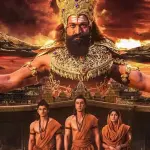
‘Ramayana’ Gives India’s Epic a Hollywood-Scale Makeover
For centuries, the Ramayana has been far more than an ancient...

Does One of Us Have to Change Religions...
Twenty Years of Listening to Interfaith Couples A couple can spend years...

10% or 38%? Counting Hindu - American Interfaith...
Are 10% or 38% of American Hindus Marrying Outside Faith? What two...

Indian Hindu pilot’s valor in line of duty...
There is a hoary maritime tradition that the captain of the...

Movie on Neem Karoli Baba’s life is a...
Neem Karoli Baba’s life (1900-1973) is associated with miracles he made in...

20 Questions to Ask Before an Interfaith Marriage,...
Four questions every interfaith couple should discuss before marriage: Conversion. Will either...
view all Hindu blogs
Ad-Free & Subscriber Log-In Subscription Support
- About Us
- 2026 Calendar
- Videos
- Podcasts
- Library of World Religions
- Faith In Media Tracker
- Advertise With Us
- Write for Us
- Privacy Policy
- Terms of Service
- Do Not Sell My Data
- Contact Us
- Radiant Digital
- Manage Newsletter Subscriptions
- Unsubscribe From Notifications
- Sitemap
Copyright 2008-2026, Patheos, part of the Radiant Digital network of media brands. All rights reserved.
Subscription Support Ad-Free & Subscriber Log-In
Follow Patheos