
BuddhistCatholicContemplativeEvangelicalGeneral ChristianHinduJewishLatter-day SaintMuslimNew VisionsProgressive Christian
Beliefs
- Buddhist
- Catholic
- Contemplative
- Evangelical
- General Christian
- Hindu
- Jewish
- Latter-day Saint
- More Voices
- Muslim
- New Visions
- Pagan
- Progressive Christian
Topics
- Religion News
- Food and Religion
- Sports and Religion
- Religious Art
- Religious Music and Entertainment
- Religious Events
- History and Religion
- Style and Religion
- Politics and Religion
- Women in Religion
- Recreation Outdoors and Religion
- Business Finance and Religion
- Careers Workplace and Religion
- Education and Religion
- Family Parenting and Religion
- Health Fitness and Religion
- Home and Religion
- Relationships and Religion
- Technology and Religion
- Travel and Religion
Columnists
- Buddhist Columnists
- Business Finance and Religion Columnists
- Careers Workplace and Religion Columnists
- Catholic Columnists
- Contemplative Columnists
- Education and Religion Columnists
- Evangelists Columnists
- Family Parenting and Religion Columnists
- General Christian Columnists
- Health Fitness and Religion Columnists
- Hindu Columnists
- History and Religion Columnists
- Home and Religion Columnists
- Jewish Columnists
- More Voices Columnists
- Latter Day Columnists
- Muslim Columnists
- New Visions Columnists
- Nonreligious Columnists
- Pagan Columnists
- Politics and Religion Columnists
- Progressive Columnists
- Recreation Outdoors and Religion Columnists
- Relationships and Religion Columnists
- Religion News Columnists
- Religious Art Columnists
- Religious Events Columnists
- Religious Music and Entertainment Columnists
- Sports and Religion Columnists
- Style and Religion Columnists
- Technology and Religion Columnists
- Travel and Religion Columnists
- Women in Religion Columnists
Resource Library
- 2026 Calendar
- Library of World Religions
- The 100 Most Holy Places on Earth
- Patheos Answers
- Podcasts
- Videos
- Faith Leaders Database
- Anglican Episcopalian
- Bahai
- Baptist
- Buddhism
- Christianity
- Confucianism
- Eastern Orthodoxy
- Hinduism
- Holiness and Pentecostal
- ISKCON
- Islam
- Judaism
- Lutheran
- Methodist
- The Church of Jesus Christ of Latter-day Saints
- New Age
- Paganism
- Presbytarian and Reformed
- Protestantism
- Religion Behind the Scenes
- Roman Catholic
- Scientology
- Shia Islam
- Sikhism
- Sufism
- Sunni Islam
- Taoism
- Zen
- See all religions
Research Tools
 Ad-Free & Subscriber Log-In Subscription Support
Ad-Free & Subscriber Log-In Subscription Support
Follow Patheos 

- Trending:
- Forgiveness
- |
- Marriage
- |
- Consciousness
- |
- Death Penalty
- |
- Election
- |
- Halloween
 Hindtrospectives
- Home
- Muslim
- Ethnicity, Skin, and Language: My Sudanese Identity
Ethnicity, Skin, and Language: My Sudanese Identity
Last updated on: February 27, 2017 at 8:18 pm by Hind Makki
Ethnicity, Skin, and Language: My Sudanese Identity 2017-02-27T20:18:17-07:00 Hind Makki
Patheos Explore the world's faith through different perspectives on religion and spirituality! Patheos has the views of the prevalent religions and spiritualities of the world.
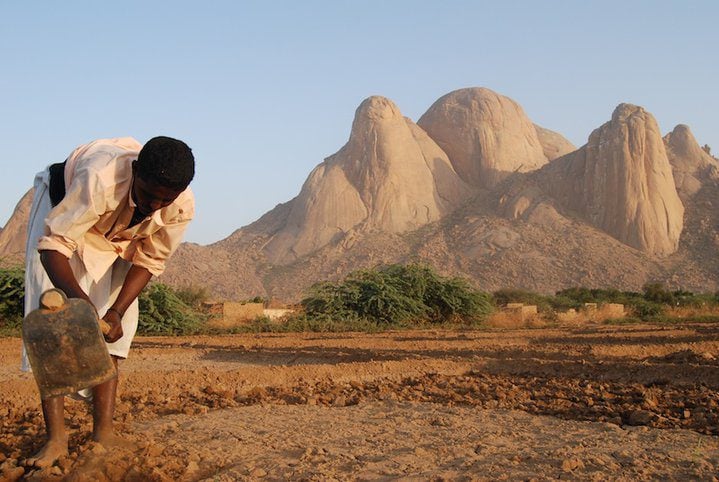
A farmer in front of Kassala’s Taka Mountains. Credit: Mohamed Siddig
Exploring faith, race, and Sudanese identities in Black History Month
By Guest Author Mariam Babiker, Ph.D.
Growing up in Eastern Sudan, I was never really aware of my identity in respect to the larger diaspora of Sudan and the world as a whole. The perception of a Sudanese or black African identity is unique to those in the east. Historically, the word Sudanese is related to the concept of slavery and subjugation, and many of the elders of east Sudan did not link themselves to those labels and did not consider themselves ‘Sudanese’. This was possible because the east has its own Beja language and culture, and was seldom assimilated with other Sudanese tribes and peoples. On the other hand, people of eastern Sudan did not regard Arabs favorably either and perceived the Arabism of other tribes in Sudan as foreigners calling them “Balawiat“.
Growing up in such a climate, in addition to being female with very little interaction with the outside world, I never realized the disparity of these thoughts. I was proud of my eastern roots that placed me as a member of a deeply cultural tribe that speaks the Beja language. However, this belief was thrown into disarray when I started college in Khartoum, the capital city of Sudan. There I found that the ethnicity debate was much larger than me and that it was a constant conversation between students. Here everyone was proud of their own background and defined the social structure their own way. Coming from my background, I initially favored Arabs to other Africans due to the dominant exposure to Arabic language and the Islamic religion, and this bias increased with my study of the Arabic language, which I majored in. Throughout this time, I never considered or realized the contradiction between my Arab bias and my own dark African skin color!
The first and direct conflict I faced regarding my personal identity was when I went to North Africa. In Libya, the boundaries between Arabs and black Africans were clear to a large degree. To begin with, the Africans who were living there in large numbers all spoke English as their main language of communication, while the Arabs from Libya and Tunisia all spoke Arabic. In addition, there was the obvious disparity between the white skin color of the Arabs and the dark skin color of the Africans. These obvious differences clearly marked the divide in the society and the tiers each group belonged to, and many of the North African Arabs did not try to hide their arrogance over the black Africans. Perhaps they assumed this superiority because of the economic struggle faced by many Africans, which forced them to seek work with Arabs in order to earn a living, or perhaps to the historical engagement of black Africans to slavery and subjugation. It was at this time that I truly saw the difference between the two.
It’s ironic that at the time there was no choice in front of me and other Sudanese except to be classified as Africans because of our skin color. Although we speak Arabic, it was not enough to get Sudanese people out of this classification. What’s even funnier is that I was an Arabic language teacher in a high school in Libya, and many Libyans would still ask if I speak Arabic before starting a conversation with me! This was my experience in the land of the Arabs in North Africa, and when I came to the US back in 2000, I was again classified as an African because of my continent of origin, but this time it was in comparison to the white Caucasians of this country.
In my early days in the US, I was reluctant to mark myself as African American in official documents because I did not think I belonged to that category. However, I started to realize that the long struggle of African Americans for freedom and equality in the US resulted in pride of their identity, and whether I liked it or not I am part of that struggle. All these influences, from eastern Sudan, to the college days in Khartoum, and now Africanism in the US have all contributed to the construction of a stable identity that originated from a diverse and rich cultural source but has since added multiple influences. This has only served to make me more confident, self-aware, and appreciative of my experiences. I can also feel this development of my identity in the upbringing of my children, who are proud of their unique Sudanese identity that belongs to Africa, with Arab and American influences in harmony with no denial of any.
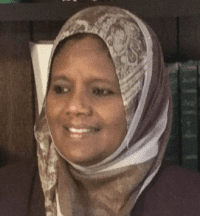 Mariam Babiker holds a Ph.D. in Education (Curricula & Methodology of Teaching) and a Master in Teaching Arabic to non-Arabic speakers. She is currently a Lecturer of Arabic Language in the department of Classics and Mediterranean Studies at the University of Illinois at Chicago.
Previous Post

February 22, 2017
Boxes - A Spoken Word
Next Post
December 1, 2017 Mawlid 2017: Muslim Praise-Songs from around the World
Browse Our Archives
Select a Category #BlackLivesMatter #MyMosqueMyStory #ZoulSoul American Hijabi in Europe Black History Month Ertugrul Hindtrospectives Linksies Mawlid Pop Culture Trans Atlantic Relations Uncategorized
Select a Month February 2018 December 2017 February 2017 January 2017 December 2016 November 2016 September 2016 August 2016 July 2016 February 2016 January 2016 December 2015 November 2015 September 2015 August 2015 July 2015 June 2015 April 2015 February 2015 January 2015 December 2014 November 2014 August 2014 June 2014 May 2014 April 2014 March 2014 February 2014 January 2014 December 2013 November 2013 September 2013 August 2013 July 2013 June 2013 May 2013 April 2013 March 2013 December 2012 November 2012 August 2012 July 2012 June 2012 May 2012 April 2012 March 2012 February 2012 October 2010 September 2010
Follow Us!
TAKE THE
Religious Wisdom Quiz
What was the primary trade route in Biblical times?
Select your answer to see how you score.
Mediterranean Route Royal Road Silk Road Spice Route
Related posts from Hindtrospectives
Safia Elhillo on Art, Identity, and Belonging
TRENDING AT PATHEOS Muslim

25 Years Later: How Much Has Changed for...
As we approach the 25th anniversary of September 11th, I’ve found myself...

Podcast: Third Spaces & The Rise of Yemeni...
In the latest episode of The Artistic Foodies Podcast, hosts Abbas...

HalalFest Picks: Best 60 Halal Spots for Super...
Back in 2016, I came up with a list of 29...

Unity Is America’s Strength — Division Is Its...
by Hidayatullah Ahsan When Valentina Gomez, a Republican candidate for Congress in...

Zohran Mamdani and New York’s Fight Against Islamophobia
This past June, against all odds, Zohran Mamdani won the Democratic primary...

What the Fourth of July Means to a...
As we mark another Fourth of July, millions of Americans will celebrate...
view all Muslim blogs
Ad-Free & Subscriber Log-In Subscription Support
- About Us
- 2026 Calendar
- Videos
- Podcasts
- Library of World Religions
- Faith In Media Tracker
- Advertise With Us
- Write for Us
- Privacy Policy
- Terms of Service
- Do Not Sell My Data
- Contact Us
- Radiant Digital
- Manage Newsletter Subscriptions
- Unsubscribe From Notifications
- Sitemap
Copyright 2008-2026, Patheos. All rights reserved.
Subscription Support Ad-Free & Subscriber Log-In
Follow Patheos