
BuddhistCatholicContemplativeEvangelicalGeneral ChristianHinduJewishLatter-day SaintMuslimNew VisionsProgressive Christian
Beliefs
- Buddhist
- Catholic
- Contemplative
- Evangelical
- General Christian
- Hindu
- Jewish
- Latter-day Saint
- More Voices
- Muslim
- New Visions
- Pagan
- Progressive Christian
Topics
- Religion News
- Food and Religion
- Sports and Religion
- Religious Art
- Religious Music and Entertainment
- Religious Events
- History and Religion
- Style and Religion
- Politics and Religion
- Women in Religion
- Recreation Outdoors and Religion
- Business Finance and Religion
- Careers Workplace and Religion
- Education and Religion
- Family Parenting and Religion
- Health Fitness and Religion
- Home and Religion
- Relationships and Religion
- Technology and Religion
- Travel and Religion
Columnists
- Buddhist Columnists
- Business Finance and Religion Columnists
- Careers Workplace and Religion Columnists
- Catholic Columnists
- Contemplative Columnists
- Education and Religion Columnists
- Evangelists Columnists
- Family Parenting and Religion Columnists
- General Christian Columnists
- Health Fitness and Religion Columnists
- Hindu Columnists
- History and Religion Columnists
- Home and Religion Columnists
- Jewish Columnists
- More Voices Columnists
- Latter Day Columnists
- Muslim Columnists
- New Visions Columnists
- Nonreligious Columnists
- Pagan Columnists
- Politics and Religion Columnists
- Progressive Columnists
- Recreation Outdoors and Religion Columnists
- Relationships and Religion Columnists
- Religion News Columnists
- Religious Art Columnists
- Religious Events Columnists
- Religious Music and Entertainment Columnists
- Sports and Religion Columnists
- Style and Religion Columnists
- Technology and Religion Columnists
- Travel and Religion Columnists
- Women in Religion Columnists
Resource Library
- 2026 Calendar
- Library of World Religions
- The 100 Most Holy Places on Earth
- Patheos Answers
- Podcasts
- Videos
- Faith Leaders Database
- Anglican Episcopalian
- Bahai
- Baptist
- Buddhism
- Christianity
- Confucianism
- Eastern Orthodoxy
- Hinduism
- Holiness and Pentecostal
- ISKCON
- Islam
- Judaism
- Lutheran
- Methodist
- The Church of Jesus Christ of Latter-day Saints
- New Age
- Paganism
- Presbytarian and Reformed
- Protestantism
- Religion Behind the Scenes
- Roman Catholic
- Scientology
- Shia Islam
- Sikhism
- Sufism
- Sunni Islam
- Taoism
- Zen
- See all religions
Research Tools
 Ad-Free & Subscriber Log-In Subscription Support
Ad-Free & Subscriber Log-In Subscription Support
Follow Patheos 

- Trending:
- Forgiveness
- |
- Marriage
- |
- Consciousness
- |
- Death Penalty
- |
- Election
- |
- Halloween
 Hindtrospectives
- Home
- Muslim
- Religion and Culture in a Caribbean Mosque
Religion and Culture in a Caribbean Mosque
Last updated on: January 8, 2016 at 12:15 pm by Hind Makki
Religion and Culture in a Caribbean Mosque 2016-01-08T12:15:52-07:00 Hind Makki
Patheos Explore the world's faith through different perspectives on religion and spirituality! Patheos has the views of the prevalent religions and spiritualities of the world.
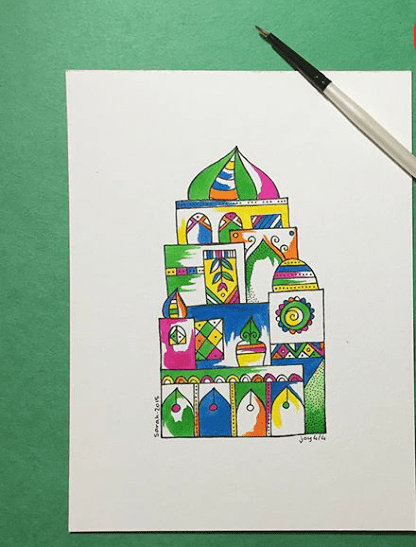
This essay is part of the #MyMosqueMyStory series
By Saffiyya Mohammed
I started attending my mosque in my mid-teens during Ramadan. I had heard my friends sharing their mosque stories about the Hafiz who recited Quran too quickly to finish before a certain day in Ramadan or too slowly and made the Taraweeh prayer hours long, and having never heard the entire Quran recited, it was an experience I wanted to have. So, I went to a mosque where I would feel comfortable. It had taken me about 9 years for that to happen.
I remember being mesmerised by the wooden dome ceiling, a solitary panelled glass chandelier hanging from its centre, a soft yellow light emitting from it. Along its base were framed, golden-lettered Arabic calligraphy set against a black background. I could read a few of them. The 99 names of Allah. The dark coloured carpet between my toes meant to offer comfort was worn, reminding me of the many others who stood where I now was offering prayers.
Before this, I would attend Eid prayers with my grandmother at a mosque nearby and that was the extent of my mosque experience. I do recall wearing new, colourful shalwars and the excitement that accompanied us counting coins to give as charity on the morning of Eid before the prayer started. I remember her giving handfuls of rice to those who sat propped against the mosque walls, with sacks lying flat on the ground in front of them collecting small mounds of rice. I had to be careful when I added my tiny handful not to spill any on the ground. It’s not something I ever saw again being done after her.
Last year something changed. Maybe it was me coming into my own; the settling that your twenties does, trying to find my place. I connected with Muslim women, who I may never meet, from varied backgrounds through Twitter. I also felt a deeper connection to those I was accustomed seeing at the mosque. Seeing pictures from Side Entrance, reading tweets about fellow believing women owning their space, speaking for themselves, reading articles about women’s spaces with children in them and the unfair expectations placed on those mothers to control them, made me ponder.
What was culture and what was religion?
So I began observing my mosque environment and taking mental notes of things I disagreed on, casting them aside in my head. On everything from the prayer space,s to inclusion in meetings, and even the conversations that I had, the religion vs. culture debate was at play.
Then there was the partition. I choose to not call it a barrier because I don’t think women are barred at my mosque. I’d say the same for other mosques with partitions which I’ve visited because I’d been invited by the women, who have an active role in their mosques. Are these roles limited to cultural practices? I’d say so. I don’t know of any mosque that prohibits women from entering; rather the women’s space is about the same as men’s, but mindsets with regards to women’s contributions are limited.
Voice is not something that is completely given to women. When Malala Yousefzai attended a mosque here she was prevented from speaking. An alarming part of that incident was a woman who was at the mosque said that, religiously, women weren’t allowed to be leaders. That mindset is problematic and needs to change. I am fed up of men saying that women should be like Aisha r.a. and others, yet deny us that space. It is two faced. That’s saying we’re less worthy when we are denied leadership opportunities.
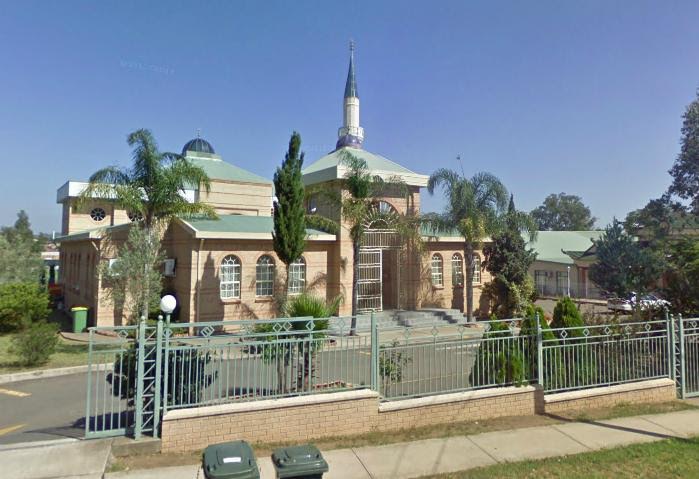
I don’t claim to know the struggles that it took to establish a mosque in my community or others in Trinidad. I do not know how difficult it was to hold onto religion in the face of oppression. But it can’t be “it’s the way our elders did it,” and “that’s just the way it is here” is not a valid reason, especially when Sunnah proves otherwise.
When I read Akeela Ahmad’s piece for this year’s Ramadan #MyMosqueMyStory series, it was relatable on so many levels; not for the exclusion of women which is not something I know to be done here, but on the restrictions women face in their ability to fully engage in the mosque community on the same footing as men.
I don’t live in an Islamophobic society even though I live in the West (Indies), but the society is a patriarchal one. Trinidad and Tobago has a colonial history, the last of which is the British. Because many things that we’ve accepted as cultural quirks are steeped in Patriarchy, we have to take a critical look at the way things are. Muslims are not perfect and we are affected by the society in which we live.
With the emancipation of African slaves, Indian indentured labourers were brought to work the plantations. They were able to hold on to religious and cultural practices, which is why the majority of mosque attendants here are of East Indian descent. The food we eat for iftar, the clothing we wear, and some of our cultural mindsets are similar, but not exact, to those in India. The African Muslim Trinidadian community is a minority in the minority of the Muslim community in our predominantly Christian country.
I would have liked to have given a narrative that was as beautiful as the paradise on Earth the Caribbean is claimed to be. However, there is, I think, a silver lining to this dark cloud of being unmosqued or not being fully included in our mosque community. It is the commonality of the struggle; as though we sisters in Islam from varied backgrounds are standing side by side behind the partition (or barrier) and pushing against it, reclaiming our space.
We need our mosques to be sanctuaries, to be a hub for community activities, to be a place we can go to for help. A place we can go to for healing, a place where do don’t have to appear perfect. We need meaningful participation in the mosque. Our mosques need to function on a broader scale, adapting and becoming more relevant to meet the needs of all its members – which include women.
Saffiyya Mohammed is a twenty something year old blogger living in the West you don’t hear much about, telling about what life is really like on the islands. Feminist, both East and West Indian, finding my niche. I blog at Blue Jeans and Hijab and tweet @saffiyyam.
Previous Post

December 18, 2015
A Woman's Place
Next Post
February 7, 2016 Mr. Obama Goes To A Mosque
Browse Our Archives
Select a Category #BlackLivesMatter #MyMosqueMyStory #ZoulSoul American Hijabi in Europe Black History Month Ertugrul Hindtrospectives Linksies Mawlid Pop Culture Trans Atlantic Relations Uncategorized
Select a Month February 2018 December 2017 February 2017 January 2017 December 2016 November 2016 September 2016 August 2016 July 2016 February 2016 January 2016 December 2015 November 2015 September 2015 August 2015 July 2015 June 2015 April 2015 February 2015 January 2015 December 2014 November 2014 August 2014 June 2014 May 2014 April 2014 March 2014 February 2014 January 2014 December 2013 November 2013 September 2013 August 2013 July 2013 June 2013 May 2013 April 2013 March 2013 December 2012 November 2012 August 2012 July 2012 June 2012 May 2012 April 2012 March 2012 February 2012 October 2010 September 2010
Follow Us!
TAKE THE
Religious Wisdom Quiz
Who said, "You intended to harm me, but God intended it for good"?
Select your answer to see how you score.
Joseph David Job Solomon
Related posts from Hindtrospectives
A Mosque The Prophet Would Recognize
TRENDING AT PATHEOS Muslim

25 Years Later: How Much Has Changed for...
As we approach the 25th anniversary of September 11th, I’ve found myself...

Podcast: Third Spaces & The Rise of Yemeni...
In the latest episode of The Artistic Foodies Podcast, hosts Abbas...

HalalFest Picks: Best 60 Halal Spots for Super...
Back in 2016, I came up with a list of 29...

Unity Is America’s Strength — Division Is Its...
by Hidayatullah Ahsan When Valentina Gomez, a Republican candidate for Congress in...

Zohran Mamdani and New York’s Fight Against Islamophobia
This past June, against all odds, Zohran Mamdani won the Democratic primary...

What the Fourth of July Means to a...
As we mark another Fourth of July, millions of Americans will celebrate...
view all Muslim blogs
Ad-Free & Subscriber Log-In Subscription Support
- About Us
- 2026 Calendar
- Videos
- Podcasts
- Library of World Religions
- Faith In Media Tracker
- Advertise With Us
- Write for Us
- Privacy Policy
- Terms of Service
- Do Not Sell My Data
- Contact Us
- Radiant Digital
- Manage Newsletter Subscriptions
- Unsubscribe From Notifications
- Sitemap
Copyright 2008-2026, Patheos. All rights reserved.
Subscription Support Ad-Free & Subscriber Log-In
Follow Patheos