
BuddhistCatholicContemplativeEvangelicalGeneral ChristianHinduJewishLatter-day SaintMuslimNew VisionsProgressive Christian
Beliefs
- Buddhist
- Catholic
- Contemplative
- Evangelical
- General Christian
- Hindu
- Jewish
- Latter-day Saint
- More Voices
- Muslim
- New Visions
- Pagan
- Progressive Christian
Topics
- Religion News
- Food and Religion
- Sports and Religion
- Religious Art
- Religious Music and Entertainment
- Religious Events
- History and Religion
- Style and Religion
- Politics and Religion
- Women in Religion
- Recreation Outdoors and Religion
- Business Finance and Religion
- Careers Workplace and Religion
- Education and Religion
- Family Parenting and Religion
- Health Fitness and Religion
- Home and Religion
- Relationships and Religion
- Technology and Religion
- Travel and Religion
Columnists
- Buddhist Columnists
- Business Finance and Religion Columnists
- Careers Workplace and Religion Columnists
- Catholic Columnists
- Contemplative Columnists
- Education and Religion Columnists
- Evangelists Columnists
- Family Parenting and Religion Columnists
- General Christian Columnists
- Health Fitness and Religion Columnists
- Hindu Columnists
- History and Religion Columnists
- Home and Religion Columnists
- Jewish Columnists
- More Voices Columnists
- Latter Day Columnists
- Muslim Columnists
- New Visions Columnists
- Nonreligious Columnists
- Pagan Columnists
- Politics and Religion Columnists
- Progressive Columnists
- Recreation Outdoors and Religion Columnists
- Relationships and Religion Columnists
- Religion News Columnists
- Religious Art Columnists
- Religious Events Columnists
- Religious Music and Entertainment Columnists
- Sports and Religion Columnists
- Style and Religion Columnists
- Technology and Religion Columnists
- Travel and Religion Columnists
- Women in Religion Columnists
Resource Library
- 2026 Calendar
- Library of World Religions
- The 100 Most Holy Places on Earth
- Patheos Answers
- Podcasts
- Videos
- Faith Leaders Database
- Anglican Episcopalian
- Bahai
- Baptist
- Buddhism
- Christianity
- Confucianism
- Eastern Orthodoxy
- Hinduism
- Holiness and Pentecostal
- ISKCON
- Islam
- Judaism
- Lutheran
- Methodist
- The Church of Jesus Christ of Latter-day Saints
- New Age
- Paganism
- Presbytarian and Reformed
- Protestantism
- Religion Behind the Scenes
- Roman Catholic
- Scientology
- Shia Islam
- Sikhism
- Sufism
- Sunni Islam
- Taoism
- Zen
- See all religions
Research Tools
 Ad-Free & Subscriber Log-In Subscription Support
Ad-Free & Subscriber Log-In Subscription Support
Follow Patheos 

- Trending:
- Forgiveness
- |
- Marriage
- |
- Consciousness
- |
- Death Penalty
- |
- Election
- |
- Halloween
 Hindtrospectives
- Home
- Muslim
- Mosque Status Quo
Mosque Status Quo
Last updated on: October 17, 2016 at 10:03 pm by Hind Makki
Mosque Status Quo 2016-10-17T22:03:22-06:00 Hind Makki
Patheos Explore the world's faith through different perspectives on religion and spirituality! Patheos has the views of the prevalent religions and spiritualities of the world.
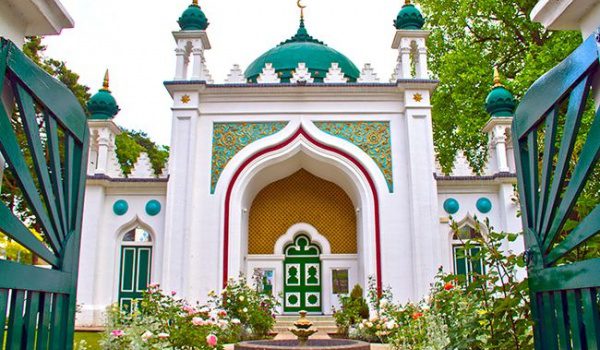
Shah Jahan Mosque in Woking, England/www.islaminbritishstone.co.uk
This essay is part of the #MyMosqueMyStory Friday series
By Julie Siddiqi
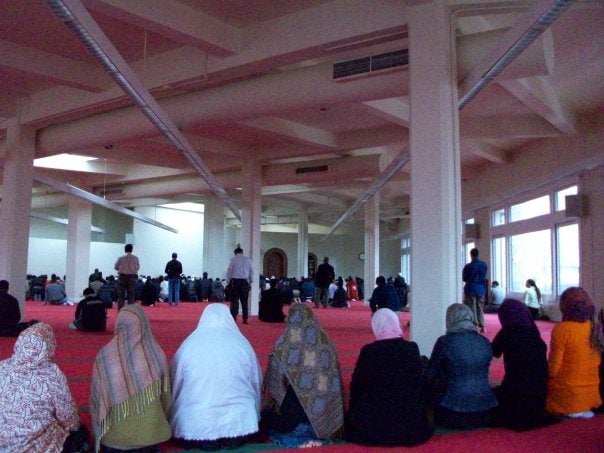
Just before this Ramadan started, I attended a talk at my local mosque called ‘Preparation for Ramadan.’ The speaker does regular sessions at that mosque and it said ‘men and women welcome’ so I decided to go. Women were upstairs, men downstairs. There were four women there, sitting upstairs in a space that can probably take around 500 if necessary. When it came time to asking questions the speaker forgot that the women may have a question and once reminded said that we had run out of time. Mmmm.
I didn’t feel I wasted my time; I picked up some good tips and reminders and met up with a couple of friends I hadn’t seen for a while. Nice. As good as it could have been? Far from it. Status quo in that mosque? Sadly, yes. Four of us could have easily sat in the men’s hall. I have raised it with the speaker and his supporters since then who I know in some ways have tried to change things over the years, but to no avail; the committee are completely stuck in their ways.
Basically the same committee of 5/6 (old) men who have been there pretty much since it was built. No women. No younger people at all. An all too common story? As I said in my ‘feedback’ – imagine as a man not being able to see the teacher, not knowing who else was at the session, not being able to raise your hand and ask a question and in some cases not even being able to hear properly. Would you still go to any teaching sessions / congregational prayers at all? Have our brothers collectively understood and felt that ‘pain’ with us and then really, truly acted upon it? I honestly don’t think they have.
***
This year, 2015, I celebrate being a Muslim for twenty years. It has made me reflect and look back quite a bit.
My first ever Ramadan in 1995, I lived at home with my parents and my local mosque was in Woking. The first purpose-built mosque in the UK dating back to 1889. A wonderful building that literally took my breath away the first time I saw it because it is so pretty to look at but also I felt it was ‘home’. That year, I will never forget my Tarawih experience. The best one I have ever had in terms of my focus, connection with God, awareness of the magnitude of the Month and lots more that hit me all at once as a new convert. Amazing!
In that year there were no other women praying in that place during Ramadan. The original 1889 mosque itself is too small for large congregations so they have hall(s) built to accommodate large groups. At that time there was no ‘women’s hall’; only one for the men. Being a ‘new’ Muslim and someone there obviously feeling obliged to help and assist me, they accommodated me behind a small screen at the back of the men’s hall. Perfect for me and yes, it was an amazing experience and I am ever grateful for the person who enabled that to happen.
I pop into that same mosque now and again and, last year, I was there for an event to mark the contribution of Muslims during the great world wars. The hall used for that event’s speeches and exhibition was the women’s hall. After the event, before I left to go home, I wanted to pray. I decided the most obvious and unobtrusive to the event would be to stand at the back of the men’s hall. Different to my 1995 experience, I could feel eyes on me, I could hear murmurings. I found it difficult to focus and absolutely was not made to feel it was my home. Afterwards, one of the people I was with said to me ‘did you hear what those men were saying about you?’.
I am an optimist, I do try to look on the bright side; I do try and focus on what is working and how things are moving in the right direction, and yes, I absolutely respect the first generation for their efforts and sacrifice to start things from scratch here in the way they did. But sometimes it’s hard to maintain that optimism. Twenty years ago I was refused entry to other mosques that did not have a space for women to pray. It left me in tears. Six months ago, it happened to me again on a Friday in Birmingham. And yes, it has happened countless times in between. More of the Mosques in the UK, anecdotally, have no space for women to pray at all.
***
I have been in synagogues and other places this Ramadan and throughout the year and have been made to feel more welcome, more valued, more wanted than I do in many mosques – controversial, maybe, for some that I say that. I went back for Iftar in the same synagogue again this year as part of ‘The Big Iftar’ programme and felt totally at home. I was welcomed by name, people remembered me from last year, the volunteers had spent all day preparing amazing, fresh, lovely food for us. Men and women, young and old, mingled and chatted. We had short reflections and reminders, some shared scriptural learning and then the most wonderful adhan by Sultan, a young Muslim brother, at Maghrib time. Space had been made for us all to pray, our Jewish and other friends watched with great interest. A wonderful, friendly, simple, un-pretentious, faith inspired atmosphere, as it should be.
In my local mosque that I mentioned earlier, I go in and straight upstairs from the side entrance. I pray, I may meet some ladies I know, talk to some ladies I don’t know and then I leave. The Imam and I and other brothers in the congregation have no connection, no interaction, no conversation. The women have no say whatsoever in the running of the place. Yes, we have a ‘space’ and it happens to be a nice, large, light, airy space, but sometimes I think so what, if we feel so disconnected?
I feel detached, unwelcome sometimes and my prayers can become functional rather than part of the bigger picture in that place. I would never be able to easily get to the Imam and speak to him about anything. I’m more likely to see him driving up the road or at the checkout in Tesco than I am in the mosque!
Being a Muslim twenty years I see some changes, I feel inspired by many things, and am left wondering: where things will be in another twenty years?
Julie Siddiqi is a community activist involved in many grassroots initiatives for the past twenty years since converting to Islam. She is National Co-ordinator for The Big Iftar and is Founder of Sadaqa Day, which started in March 2005. She was previously the Executive Director of The Islamic Society of Britain. She is happily married with four children.
Previous Post

August 12, 2015
Is Hijab Glamor Kryptonite?
Next Post
August 21, 2015 Questioning the Mosque
Browse Our Archives
Select a Category #BlackLivesMatter #MyMosqueMyStory #ZoulSoul American Hijabi in Europe Black History Month Ertugrul Hindtrospectives Linksies Mawlid Pop Culture Trans Atlantic Relations Uncategorized
Select a Month February 2018 December 2017 February 2017 January 2017 December 2016 November 2016 September 2016 August 2016 July 2016 February 2016 January 2016 December 2015 November 2015 September 2015 August 2015 July 2015 June 2015 April 2015 February 2015 January 2015 December 2014 November 2014 August 2014 June 2014 May 2014 April 2014 March 2014 February 2014 January 2014 December 2013 November 2013 September 2013 August 2013 July 2013 June 2013 May 2013 April 2013 March 2013 December 2012 November 2012 August 2012 July 2012 June 2012 May 2012 April 2012 March 2012 February 2012 October 2010 September 2010
Follow Us!
TAKE THE
Religious Wisdom Quiz
What Christian group follows the "Three Self Principle" in church governance?
Select your answer to see how you score.
Quakers Orthodox Christians Chinese Protestant Churches Seventh-day Adventists
Related posts from Hindtrospectives
Religion and Culture in a Caribbean Mosque
A Mosque The Prophet Would Recognize
TRENDING AT PATHEOS Muslim

25 Years Later: How Much Has Changed for...
As we approach the 25th anniversary of September 11th, I’ve found myself...

Podcast: Third Spaces & The Rise of Yemeni...
In the latest episode of The Artistic Foodies Podcast, hosts Abbas...

HalalFest Picks: Best 60 Halal Spots for Super...
Back in 2016, I came up with a list of 29...

Unity Is America’s Strength — Division Is Its...
by Hidayatullah Ahsan When Valentina Gomez, a Republican candidate for Congress in...

Zohran Mamdani and New York’s Fight Against Islamophobia
This past June, against all odds, Zohran Mamdani won the Democratic primary...

What the Fourth of July Means to a...
As we mark another Fourth of July, millions of Americans will celebrate...
view all Muslim blogs
Ad-Free & Subscriber Log-In Subscription Support
- About Us
- 2026 Calendar
- Videos
- Podcasts
- Library of World Religions
- Faith In Media Tracker
- Advertise With Us
- Write for Us
- Privacy Policy
- Terms of Service
- Do Not Sell My Data
- Contact Us
- Radiant Digital
- Manage Newsletter Subscriptions
- Unsubscribe From Notifications
- Sitemap
Copyright 2008-2026, Patheos. All rights reserved.
Subscription Support Ad-Free & Subscriber Log-In
Follow Patheos