
BuddhistCatholicContemplativeEvangelicalGeneral ChristianHinduJewishLatter-day SaintMuslimNew VisionsProgressive Christian
Beliefs
- Buddhist
- Catholic
- Contemplative
- Evangelical
- General Christian
- Hindu
- Jewish
- Latter-day Saint
- More Voices
- Muslim
- New Visions
- Pagan
- Progressive Christian
Topics
- Religion News
- Food and Religion
- Sports and Religion
- Religious Art
- Religious Music and Entertainment
- Religious Events
- History and Religion
- Style and Religion
- Politics and Religion
- Women in Religion
- Recreation Outdoors and Religion
- Business Finance and Religion
- Careers Workplace and Religion
- Education and Religion
- Family Parenting and Religion
- Health Fitness and Religion
- Home and Religion
- Relationships and Religion
- Technology and Religion
- Travel and Religion
Columnists
- Buddhist Columnists
- Business Finance and Religion Columnists
- Careers Workplace and Religion Columnists
- Catholic Columnists
- Contemplative Columnists
- Education and Religion Columnists
- Evangelists Columnists
- Family Parenting and Religion Columnists
- General Christian Columnists
- Health Fitness and Religion Columnists
- Hindu Columnists
- History and Religion Columnists
- Home and Religion Columnists
- Jewish Columnists
- More Voices Columnists
- Latter Day Columnists
- Muslim Columnists
- New Visions Columnists
- Nonreligious Columnists
- Pagan Columnists
- Politics and Religion Columnists
- Progressive Columnists
- Recreation Outdoors and Religion Columnists
- Relationships and Religion Columnists
- Religion News Columnists
- Religious Art Columnists
- Religious Events Columnists
- Religious Music and Entertainment Columnists
- Sports and Religion Columnists
- Style and Religion Columnists
- Technology and Religion Columnists
- Travel and Religion Columnists
- Women in Religion Columnists
Resource Library
- 2026 Calendar
- Library of World Religions
- The 100 Most Holy Places on Earth
- Patheos Answers
- Podcasts
- Videos
- Faith Leaders Database
- Anglican Episcopalian
- Bahai
- Baptist
- Buddhism
- Christianity
- Confucianism
- Eastern Orthodoxy
- Hinduism
- Holiness and Pentecostal
- ISKCON
- Islam
- Judaism
- Lutheran
- Methodist
- The Church of Jesus Christ of Latter-day Saints
- New Age
- Paganism
- Presbytarian and Reformed
- Protestantism
- Religion Behind the Scenes
- Roman Catholic
- Scientology
- Shia Islam
- Sikhism
- Sufism
- Sunni Islam
- Taoism
- Zen
- See all religions
Research Tools
 Ad-Free & Subscriber Log-In Subscription Support
Ad-Free & Subscriber Log-In Subscription Support
Follow Patheos 

- Trending:
- Forgiveness
- |
- Marriage
- |
- Consciousness
- |
- Death Penalty
- |
- Election
- |
- Halloween
 Hindtrospectives
- Home
- Muslim
- Is Hijab Glamor Kryptonite?
Is Hijab Glamor Kryptonite?
Last updated on: August 13, 2015 at 1:28 pm by Hind Makki
Is Hijab Glamor Kryptonite? 2015-08-13T13:28:12-06:00 Hind Makki
Patheos Explore the world's faith through different perspectives on religion and spirituality! Patheos has the views of the prevalent religions and spiritualities of the world.
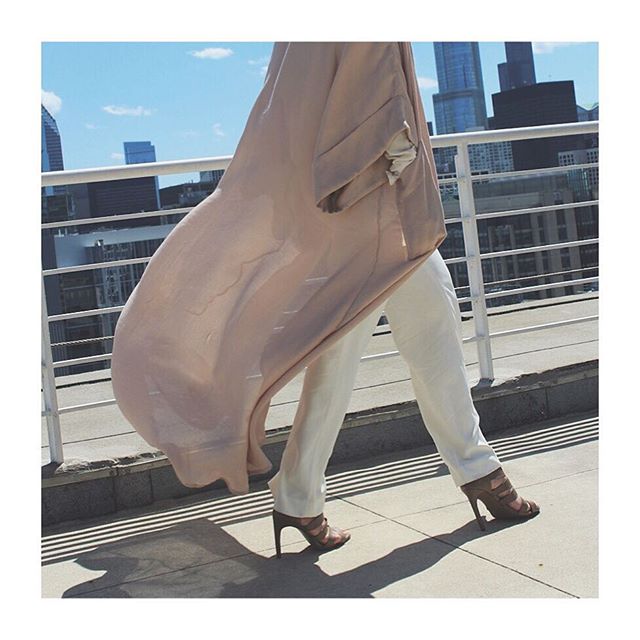
Haus of Blush
A few years ago, one of my friends left her family and friends to work in a Gulf Arab state. A hijabi Muslim woman with a Moroccan name, she had found it exceedingly difficult to secure long-term employment in Belgium, where she was born and raised. My friend had remained perennially underemployed in spite of her educational background, cosmopolitan outlook, and fluency in multiple languages. So she decided to take the plunge and migrate to the Middle East, where she immediately found suitable employment.
After she moved there, I asked how her experience had been in the Gulf – I was curious to see if she felt more culturally “at home” in the Middle East than she had in Europe. Of course, the socio-political culture of the Gulf states is very different than what can be found in Morocco and other countries in North Africa, but I wondered whether living in a Muslim country might be less emotionally exhausting for a professional hijabi woman than it is in the West.
Her response surprised me.
“It’s hard to have a social life because people don’t know where to place you: You are Muslim, but you are not Arab [enough]. The locals already have their social circle and you are too foreign for them. You are Western, but Muslim, so you don’t “party” like your colleagues do. A few times I went to hang out with my [Western] colleagues at a restaurant, and was turned away at the door because of my hijab*.*”
At this point, my friend started chuckling at the irony of finding herself being too culturally Western to fit in socially in the Middle East after being told all her life that she was too Muslim to fit in socially in Europe, but I was still hung up on the being turned away at the door of new restaurants and hip clubs because of her hijab.
Apparently, discriminating against hijabi women is a thing in certain upscale establishments throughout the Middle East.
Recently, this Middle East practice of discriminating against hijabis at resorts and other upscale places has been unveiled after a number of Egyptian women revealed that they are being turned away from resorts because of their Islamic attire. This raised a ruckus in the Arabic-language internets, who began debating whether private institutions can discriminate against hijabis whose vibe isn’t desired at swanky establishments. Many argued that a private institution has the right to choose who may enter, but as the Egyptian Minister of Tourism mentioned during an interview to announce that all restaurants and tourism facilities who turn hijabis away will be shut down, it’s a strange position to take in a region where the vast majority of women wear hijab.
But the bid to keep hijabis out of certain spaces doesn’t surprise me. This is because these establishments have a certain image they want to project – modern, swanky, glamorous – and often offer alcohol to their clientele. There are two major assumptions made here: 1) that hijab is glamor kryptonite and 2) that hijabi women Hulk out when they see someone consuming alcohol.
Now, my own assumption is that if a hijabi is choosing to enter a fancy restaurant where she knows alcohol will be served, she will …not freak out when that alcohol is served. She probably will just order the kiddie drink and enjoy her night out sober (I’m personally a fan of Shirley Temples and virgin Hurricanes). No, the real problem these restaurant and club owners have is that they believe if a hijabi woman is allowed entry, she will instantly frump out a formerly fabulous establishment. She would kill your brand’s cool-factor and none of the “right” people will ever return.
Post-colonial attitudes throughout the Middle East have typically connected hijab with pre-modern, impoverished, and backward cultures and unveiling was the first step to upward mobility. Incidentally, this is one of the reasons why some analysts have been so confounded by the rising popularity of hijab in the 70s and 80s: why would so many educated, professional young women actually choose to wear hijab, when their mothers and grandmothers often chose not to? In fact, in many Middle Eastern societies, the hijab has often been much more intimately connected to class, politics, and upward mobility than to religious faith.
Today, many Muslim women don’t see a contradiction where so many others do and hijabi fashion bloggers are some of the most well-known Muslim women on the internets. Politics, hijabs and economics are interesting subjects to dissect and analyze, but sometimes all a glamjabi wants is to dress up and hang out at the new hip joint in town. So don’t worry, cafe owners – we don’t have special powers to frump your hip brand. Now, how’s about that pina colada mocktail?
Previous Post

August 7, 2015
How a Mosque Can Welcome Women
Next Post
August 14, 2015 Mosque Status Quo
Browse Our Archives
Select a Category #BlackLivesMatter #MyMosqueMyStory #ZoulSoul American Hijabi in Europe Black History Month Ertugrul Hindtrospectives Linksies Mawlid Pop Culture Trans Atlantic Relations Uncategorized
Select a Month February 2018 December 2017 February 2017 January 2017 December 2016 November 2016 September 2016 August 2016 July 2016 February 2016 January 2016 December 2015 November 2015 September 2015 August 2015 July 2015 June 2015 April 2015 February 2015 January 2015 December 2014 November 2014 August 2014 June 2014 May 2014 April 2014 March 2014 February 2014 January 2014 December 2013 November 2013 September 2013 August 2013 July 2013 June 2013 May 2013 April 2013 March 2013 December 2012 November 2012 August 2012 July 2012 June 2012 May 2012 April 2012 March 2012 February 2012 October 2010 September 2010
Follow Us!
TAKE THE
Religious Wisdom Quiz
Who was known for his great strength and long hair?
Select your answer to see how you score.
Elijah Peter David Samson
Related posts from Hindtrospectives

Ertugrul - Your Muslim friend's new Bey

Mawlid 2017: Muslim Praise-Songs from around the World

Ethnicity, Skin, and Language: My Sudanese Identity

TRENDING AT PATHEOS Muslim

25 Years Later: How Much Has Changed for...
As we approach the 25th anniversary of September 11th, I’ve found myself...

Podcast: Third Spaces & The Rise of Yemeni...
In the latest episode of The Artistic Foodies Podcast, hosts Abbas...

HalalFest Picks: Best 60 Halal Spots for Super...
Back in 2016, I came up with a list of 29...

Unity Is America’s Strength — Division Is Its...
by Hidayatullah Ahsan When Valentina Gomez, a Republican candidate for Congress in...

Zohran Mamdani and New York’s Fight Against Islamophobia
This past June, against all odds, Zohran Mamdani won the Democratic primary...

What the Fourth of July Means to a...
As we mark another Fourth of July, millions of Americans will celebrate...
view all Muslim blogs
Ad-Free & Subscriber Log-In Subscription Support
- About Us
- 2026 Calendar
- Videos
- Podcasts
- Library of World Religions
- Faith In Media Tracker
- Advertise With Us
- Write for Us
- Privacy Policy
- Terms of Service
- Do Not Sell My Data
- Contact Us
- Radiant Digital
- Manage Newsletter Subscriptions
- Unsubscribe From Notifications
- Sitemap
Copyright 2008-2026, Patheos. All rights reserved.
Subscription Support Ad-Free & Subscriber Log-In
Follow Patheos