
BuddhistCatholicContemplativeEvangelicalGeneral ChristianHinduJewishLatter-day SaintMuslimNew VisionsProgressive Christian
Beliefs
- Buddhist
- Catholic
- Contemplative
- Evangelical
- General Christian
- Hindu
- Jewish
- Latter-day Saint
- More Voices
- Muslim
- New Visions
- Pagan
- Progressive Christian
Topics
- Religion News
- Food and Religion
- Sports and Religion
- Religious Art
- Religious Music and Entertainment
- Religious Events
- History and Religion
- Style and Religion
- Politics and Religion
- Women in Religion
- Recreation Outdoors and Religion
- Business Finance and Religion
- Careers Workplace and Religion
- Education and Religion
- Family Parenting and Religion
- Health Fitness and Religion
- Home and Religion
- Relationships and Religion
- Technology and Religion
- Travel and Religion
Columnists
- Buddhist Columnists
- Business Finance and Religion Columnists
- Careers Workplace and Religion Columnists
- Catholic Columnists
- Contemplative Columnists
- Education and Religion Columnists
- Evangelists Columnists
- Family Parenting and Religion Columnists
- General Christian Columnists
- Health Fitness and Religion Columnists
- Hindu Columnists
- History and Religion Columnists
- Home and Religion Columnists
- Jewish Columnists
- More Voices Columnists
- Latter Day Columnists
- Muslim Columnists
- New Visions Columnists
- Nonreligious Columnists
- Pagan Columnists
- Politics and Religion Columnists
- Progressive Columnists
- Recreation Outdoors and Religion Columnists
- Relationships and Religion Columnists
- Religion News Columnists
- Religious Art Columnists
- Religious Events Columnists
- Religious Music and Entertainment Columnists
- Sports and Religion Columnists
- Style and Religion Columnists
- Technology and Religion Columnists
- Travel and Religion Columnists
- Women in Religion Columnists
Resource Library
- 2026 Calendar
- Library of World Religions
- The 100 Most Holy Places on Earth
- Patheos Answers
- Podcasts
- Videos
- Faith Leaders Database
- Anglican Episcopalian
- Bahai
- Baptist
- Buddhism
- Christianity
- Confucianism
- Eastern Orthodoxy
- Hinduism
- Holiness and Pentecostal
- ISKCON
- Islam
- Judaism
- Lutheran
- Methodist
- The Church of Jesus Christ of Latter-day Saints
- New Age
- Paganism
- Presbytarian and Reformed
- Protestantism
- Religion Behind the Scenes
- Roman Catholic
- Scientology
- Shia Islam
- Sikhism
- Sufism
- Sunni Islam
- Taoism
- Zen
- See all religions
Research Tools
 Ad-Free & Subscriber Log-In Subscription Support
Ad-Free & Subscriber Log-In Subscription Support
Follow Patheos 

- Trending:
- Forgiveness
- |
- Marriage
- |
- Consciousness
- |
- Death Penalty
- |
- Election
- |
- Halloween
 Hindtrospectives
- Home
- Muslim
- Taraweeh Through the Times
Taraweeh Through the Times
Last updated on: October 17, 2016 at 10:11 pm by Hind Makki
Taraweeh Through the Times 2016-10-17T22:11:59-06:00 Hind Makki
Patheos Explore the world's faith through different perspectives on religion and spirituality! Patheos has the views of the prevalent religions and spiritualities of the world.
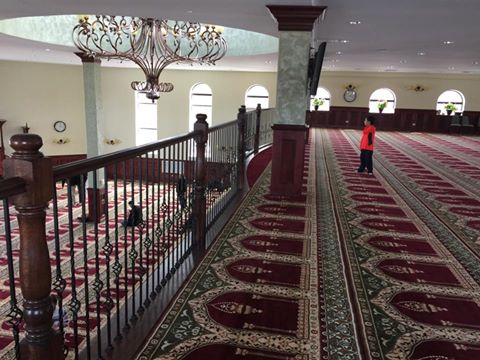
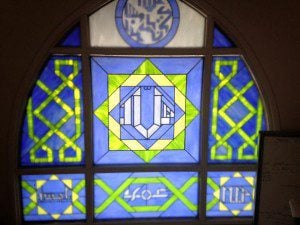
Albanian American Cultural Center in Illinois
This is Day 17 of Hindtrospectives’ #MyMosqueMyStory series for Ramadan 2015
By Kinza Khan
One of my favorite parts of Ramadan is attending Taraweeh prayers – the nightly prayers in which the Imam recites the Quran every night in order to complete it by the end of the month. I’m not sure why this is my favorite part – maybe it’s because it reminds me of celebrating Ramadan as a child since I would go with my dad every night during Ramadan. Or maybe it’s because the community congregates and there is a spiritual bond between those who pray together. It could also be because the Quran recitation is so beautiful, especially when the Imam recites it so melodically. Listening to it automatically creates a sense of calmness – I don’t think it’s possible to be in a state of anger while listening to a beautiful Quran recitation. It might also be because Taraweeh is very unique to Ramadan: there are other days on which we can fast and even break fast with others, but Taraweeh only occurs during Ramadan. Taraweeh prayers always inspire me, whether it’s to tweet funny instances under #ThoughtsDuringTaraweeh tweets or to reflect and write.
When I miss Ramadan, my mind immediately goes to missing Taraweeh prayers. The mosques where I pray Taraweeh prayers every Ramadan each create a place in my heart and contribute to my overall Ramadan experience and, with that, my Ramadan nostalgia.
One mosque and community I miss every Ramadan is the one I attended as a student at the University of Illinois at Urbana-Champaign. The Imam was Egyptian and had a wonderful Quran recitation. But that’s not the only reason it was dear to me: The masjid community made students, who were essentially just temporary residents, feel as if in a second home. They invited us to Iftar every single evening, giving many students an opportunity to meet and form friendships. We used the masjid space for potlucks and gatherings, and many of us lived in the shabby apartments near it, making it easier to go at night and maybe even for the early morning Fajr prayer sometimes. Non-Muslim neighbors probably thought we were in some strange cult.
This masjid also had no divider between the men and the women. Everyone prayed in one large prayer area. Upon doing some research, I learned that back in the Prophet’s (pbuh) day, there was no separation between men and women: the structure of the mosque would be, from front to back respectively, men, boys, hermaphrodites, girls, and women. This layout makes the most sense to me, and allows me to feel connected to everyone in the prayer area including the imam, rather than just some women and children.
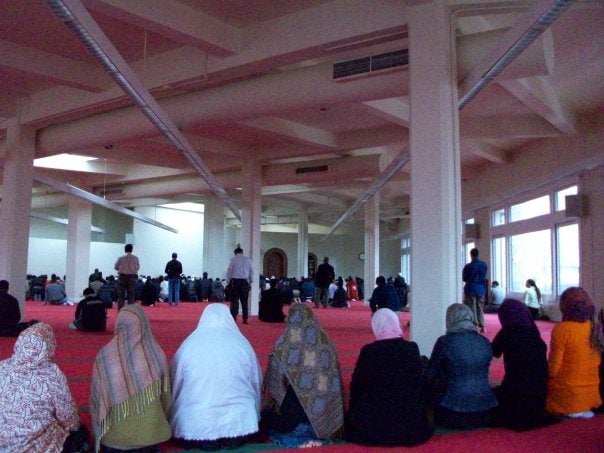
This is my first Ramadan in Schaumburg – a suburb Northwest of Chicago – to which I moved after getting married. It was very different from the many mosques I’d been to. Women are on the top floor and can view the imam and main prayer area, which I personally prefer because it’s hard to focus when you can’t see. Most attendees are Pakistani and Indian families who seem like they’ve been there a long time – it makes sense since it’s an older, developed suburb.
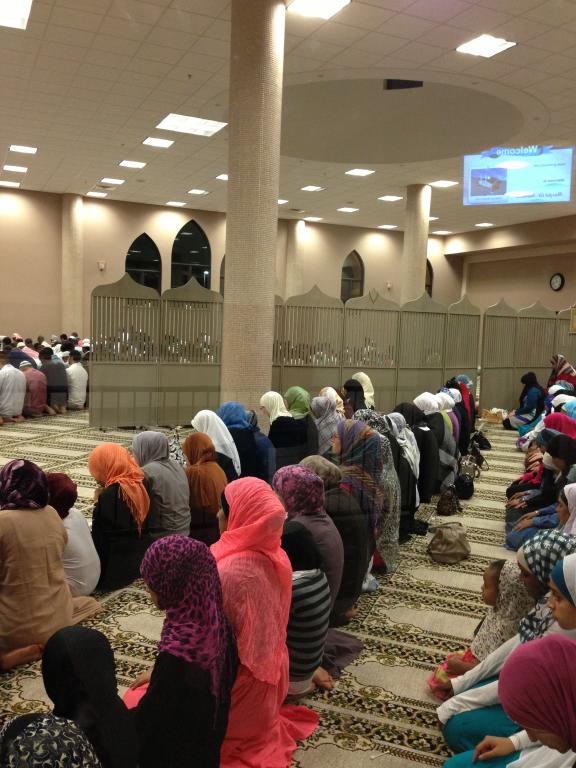
Taraweeh prayers in Grand Rapids, MI/Delal Pektas
I’ve had only a few experiences there and, attempting to have a positive and forgiving attitude in Ramadan, I took them as humbling experiences. These experiences consisted often of girls my age (or even younger) being rude, unwelcoming, and cliquey. On more than one occasion, I asked someone if I could sit somewhere or if there was some space, to which a girl rudely replied, “I guess” and turned away. I know not to judge a mosque by only a couple attendees, because even my previous masjids had their fair share of “mean girls.” The difference was, the “mean girls” cliques back in my old mosques wouldn’t even bother with me.
In my previous mosque at home, people knew who I was. Not to sound like I’m bragging, but somehow this did help. I didn’t realize it made a difference until I got to this mosque and noticed the stark contrast in treatment. Back in my old mosque in Naperville where my parents lived, there were many more youth and I knew most of them. They knew me: they knew who my parents were and often our parents were friends with each other; they knew that if the girls were talking loudly in the back while we were praying, I would likely be that person who goes to ask them to be quiet or move to a different area; they knew I was older than I looked and that I was a lawyer who was always trying to give the younger school advice, career advice, and even marriage advice (which was often more venting than advice). Some people from my old community even told me that I intimidated them – I’m not sure why, but to be honest I didn’t mind it.
All of this didn’t become apparent to me until I came to this new mosque and realized that not knowing me may make a difference in the way people acted towards me. It shouldn’t be the case at all, but unfortunately it may be the reality. These were only a couple experiences, but they were my first impressions. My husband didn’t seem to have much interaction with anyone in the men’s side positive or negative. I’m not sure if this was a gender thing, an age thing, a “newcomer” thing, or whether it was just an isolated experience. It made me realize how much a masjid’s atmosphere and its people impact its welcoming nature, and how much it changes the Taraweeh experience.
I had two choices on how to react: either I would be turned off from this mosque and stop attending or I would continue to attend and just deal. But I also realize that to change a game you have to join it, so the best option was probably stay and be more welcoming towards others in the mosque, at least to compensate for the premature mean girls clan or maybe even “lead by example.” It’s too easy to isolate oneself from the community upon a negative experience, and it occurs too often. In my opinion, it only makes the situation worse. In a mosque, a safe space, the default standard needs to be treat everyone with the utmost respect and this standard needs to be fostered in its culture. One way we can do that as individuals is not to leave a mosque or write a huge rant on Facebook the second things get rough, but rather become part of the community with an aim to change it. Masjid announcements can and should also include announcements reminding people to welcome the newcomers and meet people they haven’t met before – with all the announcements on their list already, I’m sure they can squeeze this in somewhere in between fundraising and telling us the proper way to double park. Our communities are our responsibilities, and the only way to keep the spirit of Taraweeh alive and to keep our communities thriving is to, at the least, do our part.
Kinza is a young lawyer in Chicago. She is passionate about civil rights, child welfare, and international human rights. Her Twitter handle is @KinzaK89
Previous Post

July 4, 2015
Mosque: Story of My Country
Next Post
July 5, 2015 From a Woman's Eye
Browse Our Archives
Select a Category #BlackLivesMatter #MyMosqueMyStory #ZoulSoul American Hijabi in Europe Black History Month Ertugrul Hindtrospectives Linksies Mawlid Pop Culture Trans Atlantic Relations Uncategorized
Select a Month February 2018 December 2017 February 2017 January 2017 December 2016 November 2016 September 2016 August 2016 July 2016 February 2016 January 2016 December 2015 November 2015 September 2015 August 2015 July 2015 June 2015 April 2015 February 2015 January 2015 December 2014 November 2014 August 2014 June 2014 May 2014 April 2014 March 2014 February 2014 January 2014 December 2013 November 2013 September 2013 August 2013 July 2013 June 2013 May 2013 April 2013 March 2013 December 2012 November 2012 August 2012 July 2012 June 2012 May 2012 April 2012 March 2012 February 2012 October 2010 September 2010
Follow Us!
TAKE THE
Religious Wisdom Quiz
What was the rainbow a sign of in the flood story?
Select your answer to see how you score.
War Famine Danger God's promise
Related posts from Hindtrospectives
Religion and Culture in a Caribbean Mosque
A Mosque The Prophet Would Recognize
TRENDING AT PATHEOS Muslim

25 Years Later: How Much Has Changed for...
As we approach the 25th anniversary of September 11th, I’ve found myself...

Podcast: Third Spaces & The Rise of Yemeni...
In the latest episode of The Artistic Foodies Podcast, hosts Abbas...

HalalFest Picks: Best 60 Halal Spots for Super...
Back in 2016, I came up with a list of 29...

Unity Is America’s Strength — Division Is Its...
by Hidayatullah Ahsan When Valentina Gomez, a Republican candidate for Congress in...

Zohran Mamdani and New York’s Fight Against Islamophobia
This past June, against all odds, Zohran Mamdani won the Democratic primary...

What the Fourth of July Means to a...
As we mark another Fourth of July, millions of Americans will celebrate...
view all Muslim blogs
Ad-Free & Subscriber Log-In Subscription Support
- About Us
- 2026 Calendar
- Videos
- Podcasts
- Library of World Religions
- Faith In Media Tracker
- Advertise With Us
- Write for Us
- Privacy Policy
- Terms of Service
- Do Not Sell My Data
- Contact Us
- Radiant Digital
- Manage Newsletter Subscriptions
- Unsubscribe From Notifications
- Sitemap
Copyright 2008-2026, Patheos. All rights reserved.
Subscription Support Ad-Free & Subscriber Log-In
Follow Patheos