
BuddhistCatholicContemplativeEvangelicalGeneral ChristianHinduJewishLatter-day SaintMuslimNew VisionsProgressive Christian
Beliefs
- Buddhist
- Catholic
- Contemplative
- Evangelical
- General Christian
- Hindu
- Jewish
- Latter-day Saint
- More Voices
- Muslim
- New Visions
- Pagan
- Progressive Christian
Topics
- Religion News
- Food and Religion
- Sports and Religion
- Religious Art
- Religious Music and Entertainment
- Religious Events
- History and Religion
- Style and Religion
- Politics and Religion
- Women in Religion
- Recreation Outdoors and Religion
- Business Finance and Religion
- Careers Workplace and Religion
- Education and Religion
- Family Parenting and Religion
- Health Fitness and Religion
- Home and Religion
- Relationships and Religion
- Technology and Religion
- Travel and Religion
Columnists
- Buddhist Columnists
- Business Finance and Religion Columnists
- Careers Workplace and Religion Columnists
- Catholic Columnists
- Contemplative Columnists
- Education and Religion Columnists
- Evangelists Columnists
- Family Parenting and Religion Columnists
- General Christian Columnists
- Health Fitness and Religion Columnists
- Hindu Columnists
- History and Religion Columnists
- Home and Religion Columnists
- Jewish Columnists
- More Voices Columnists
- Latter Day Columnists
- Muslim Columnists
- New Visions Columnists
- Nonreligious Columnists
- Pagan Columnists
- Politics and Religion Columnists
- Progressive Columnists
- Recreation Outdoors and Religion Columnists
- Relationships and Religion Columnists
- Religion News Columnists
- Religious Art Columnists
- Religious Events Columnists
- Religious Music and Entertainment Columnists
- Sports and Religion Columnists
- Style and Religion Columnists
- Technology and Religion Columnists
- Travel and Religion Columnists
- Women in Religion Columnists
Resource Library
- 2026 Calendar
- Library of World Religions
- The 100 Most Holy Places on Earth
- Patheos Answers
- Podcasts
- Videos
- Faith Leaders Database
- Anglican Episcopalian
- Bahai
- Baptist
- Buddhism
- Christianity
- Confucianism
- Eastern Orthodoxy
- Hinduism
- Holiness and Pentecostal
- ISKCON
- Islam
- Judaism
- Lutheran
- Methodist
- The Church of Jesus Christ of Latter-day Saints
- New Age
- Paganism
- Presbytarian and Reformed
- Protestantism
- Religion Behind the Scenes
- Roman Catholic
- Scientology
- Shia Islam
- Sikhism
- Sufism
- Sunni Islam
- Taoism
- Zen
- See all religions
Research Tools
 Ad-Free & Subscriber Log-In Subscription Support
Ad-Free & Subscriber Log-In Subscription Support
Follow Patheos 

- Trending:
- Forgiveness
- |
- Marriage
- |
- Consciousness
- |
- Death Penalty
- |
- Election
- |
- Halloween
 Hindtrospectives
- Home
- Muslim
- Digital Duas and Real World Action #BringBackOurGirls
Digital Duas and Real World Action #BringBackOurGirls
Last updated on: May 7, 2014 at 4:54 pm by Hind Makki
Digital Duas and Real World Action #BringBackOurGirls 2014-05-07T16:54:19-06:00 Hind Makki
Patheos Explore the world's faith through different perspectives on religion and spirituality! Patheos has the views of the prevalent religions and spiritualities of the world.
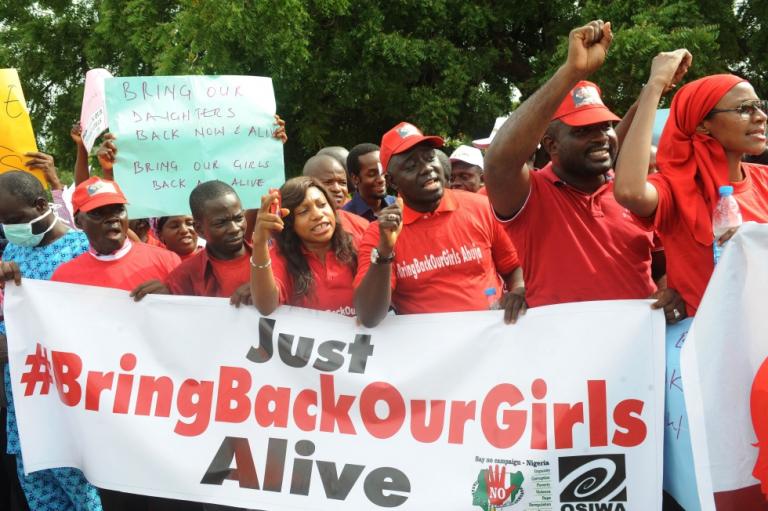 This week has seen an uptick in activism – social and on the ground – and awareness raising of the situation of nearly 300 school girls who were abducted by the Nigerian terrorist group Boko Haram last month. Protests have been planned in capitols around the world, a hashtag campaign #BringOurGirlsBack has trended on Twitter, and I’m beginning to see articles and photos in the mainstream press depicting the nature of this tragedy (though some of the framing has been problematic).
Muslim leaders, lay and religious alike, are speaking out. Major American Muslim organizations have condemned the abductions and called for the release of the girls back to there families. There’s a push to dedicate this Friday’s khutbah to the plight of these girls. Al-Azhar University, the premier global Sunni religious institution demanded the release of the kidnapped girls. On Wednesday, New York-based American Imam Khalid Latif chided his fellow Muslims for loud outrage over the British Happy Muslims video, the Mipsterz hoopla and Islamophobic Danish cartoons – all of which are essentially debates surrounding representation by and of Muslims – while remaining largely silent, until now, about the kidnapping and selling of girls by a militia which are actual crimes against these girls and their families, not to mention, against the objectives of Islamic law, whose primary goals can be boiled down to the protection of the sanctity of life, human dignity and property.
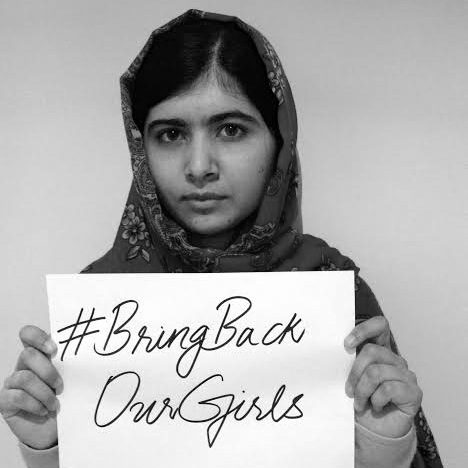 I’m relieved that the plight of these girls has gotten on the radar of activists and people of faith around the world. In a larger sense, the protest rallies, the hashtag activism, the op-eds and khutbah campaigns are symbolize that. But I’m still not sure what concrete action to actually call for. Digital duas – the selfies with supportive messages, hashtag campaigns, social media awareness raising – can be powerful symbols for those of us who believe in God. It shows the parents of these girls, other Nigerians, the government of Nigeria and Boko Haram that there’s a swell of people around the world who do indeed care about the fate of these girls; that they are not invisible. Digital duas can help those of us living outside of Nigeria – insulated from the complicated political/military structures there – feel like we are tangibly making a difference. Even if that difference means we are calling for people outside of Nigeria to pray for the release of the girls, for those of us with means to donate money to organizations that support survivors of sexual assault and for political leaders to understand that we want them to Do Something.
But, what action on the ground are we calling for? It seems to me that there are only two viable ways to rescue these girls: backdoor negotiation or military action. So, what then? Do we ask a government that has so far shown that it cannot (or will not) deal a military death blow to Boko Haram to negotiate with the terrorists for the release of hundreds of kidnapped underage girls? Do we support Western offers to send military assistance to the Nigerian government to perhaps find an armed solution? Are drone strikes a viable option in this situation? Should they be? Do outsiders have the right to have their voices be listened to on equal footing as the girls’ families by a government seemingly paralyzed by, or numb to, the antics of domestic terror group? Or does the external pressure give further moral ammunition and clout to the girls’ families when dealing with their government? Is this an appropriate time and place for African Union forces to be given a strong mandate to deal with Boko Haram?
It is unclear to me what action must be taken on the ground to secure the safe release of these girls, though I’m afraid that military action is increasingly becoming the only option. What is clear to me is that Muslims living outside of Nigeria must continue our digital duas for the safe return of the girls, our unequivocal condemnations of their abduction and our universal rejection of the religious authority made by Boko Haram. This terrorist group must be stripped of any kind of religious legitimacy by Muslims everywhere. And citizens of the world everywhere, of every nationality and religion, must continue to speak out and protest in solidarity, so that both the Abuja government and Boko Haram know that the world is watching and the girls’ families know that we have not forsaken them.
Previous Post

April 30, 2014
Remosquing: Imams, Our Expectations and Their Salaries
Next Post
May 12, 2014 Are Millennial Muslims Doomed To Become Unmosqued?
Browse Our Archives
Select a Category #BlackLivesMatter #MyMosqueMyStory #ZoulSoul American Hijabi in Europe Black History Month Ertugrul Hindtrospectives Linksies Mawlid Pop Culture Trans Atlantic Relations Uncategorized
Select a Month February 2018 December 2017 February 2017 January 2017 December 2016 November 2016 September 2016 August 2016 July 2016 February 2016 January 2016 December 2015 November 2015 September 2015 August 2015 July 2015 June 2015 April 2015 February 2015 January 2015 December 2014 November 2014 August 2014 June 2014 May 2014 April 2014 March 2014 February 2014 January 2014 December 2013 November 2013 September 2013 August 2013 July 2013 June 2013 May 2013 April 2013 March 2013 December 2012 November 2012 August 2012 July 2012 June 2012 May 2012 April 2012 March 2012 February 2012 October 2010 September 2010
Follow Us!
TAKE THE
Religious Wisdom Quiz
What does Proverbs say about hard work?
Select your answer to see how you score.
Diligence brings profit Sleep always Lazy people win It is pointless
Related posts from Hindtrospectives

Ertugrul - Your Muslim friend's new Bey
Mawlid 2017: Muslim Praise-Songs from around the World
Ethnicity, Skin, and Language: My Sudanese Identity

TRENDING AT PATHEOS Muslim

25 Years Later: How Much Has Changed for...
As we approach the 25th anniversary of September 11th, I’ve found myself...

Podcast: Third Spaces & The Rise of Yemeni...
In the latest episode of The Artistic Foodies Podcast, hosts Abbas...

HalalFest Picks: Best 60 Halal Spots for Super...
Back in 2016, I came up with a list of 29...

Unity Is America’s Strength — Division Is Its...
by Hidayatullah Ahsan When Valentina Gomez, a Republican candidate for Congress in...

Zohran Mamdani and New York’s Fight Against Islamophobia
This past June, against all odds, Zohran Mamdani won the Democratic primary...

What the Fourth of July Means to a...
As we mark another Fourth of July, millions of Americans will celebrate...
view all Muslim blogs
Ad-Free & Subscriber Log-In Subscription Support
- About Us
- 2026 Calendar
- Videos
- Podcasts
- Library of World Religions
- Faith In Media Tracker
- Advertise With Us
- Write for Us
- Privacy Policy
- Terms of Service
- Do Not Sell My Data
- Contact Us
- Radiant Digital
- Manage Newsletter Subscriptions
- Unsubscribe From Notifications
- Sitemap
Copyright 2008-2026, Patheos. All rights reserved.
Subscription Support Ad-Free & Subscriber Log-In
Follow Patheos