
BuddhistCatholicContemplativeEvangelicalGeneral ChristianHinduJewishLatter-day SaintMuslimNew VisionsProgressive Christian
Beliefs
- Buddhist
- Catholic
- Contemplative
- Evangelical
- General Christian
- Hindu
- Jewish
- Latter-day Saint
- More Voices
- Muslim
- New Visions
- Pagan
- Progressive Christian
Topics
- Religion News
- Food and Religion
- Sports and Religion
- Religious Art
- Religious Music and Entertainment
- Religious Events
- History and Religion
- Style and Religion
- Politics and Religion
- Women in Religion
- Recreation Outdoors and Religion
- Business Finance and Religion
- Careers Workplace and Religion
- Education and Religion
- Family Parenting and Religion
- Health Fitness and Religion
- Home and Religion
- Relationships and Religion
- Technology and Religion
- Travel and Religion
Columnists
- Buddhist Columnists
- Business Finance and Religion Columnists
- Careers Workplace and Religion Columnists
- Catholic Columnists
- Contemplative Columnists
- Education and Religion Columnists
- Evangelists Columnists
- Family Parenting and Religion Columnists
- General Christian Columnists
- Health Fitness and Religion Columnists
- Hindu Columnists
- History and Religion Columnists
- Home and Religion Columnists
- Jewish Columnists
- More Voices Columnists
- Latter Day Columnists
- Muslim Columnists
- New Visions Columnists
- Nonreligious Columnists
- Pagan Columnists
- Politics and Religion Columnists
- Progressive Columnists
- Recreation Outdoors and Religion Columnists
- Relationships and Religion Columnists
- Religion News Columnists
- Religious Art Columnists
- Religious Events Columnists
- Religious Music and Entertainment Columnists
- Sports and Religion Columnists
- Style and Religion Columnists
- Technology and Religion Columnists
- Travel and Religion Columnists
- Women in Religion Columnists
Resource Library
- 2026 Calendar
- Library of World Religions
- The 100 Most Holy Places on Earth
- Patheos Answers
- Podcasts
- Videos
- Faith Leaders Database
- Anglican Episcopalian
- Bahai
- Baptist
- Buddhism
- Christianity
- Confucianism
- Eastern Orthodoxy
- Hinduism
- Holiness and Pentecostal
- ISKCON
- Islam
- Judaism
- Lutheran
- Methodist
- The Church of Jesus Christ of Latter-day Saints
- New Age
- Paganism
- Presbytarian and Reformed
- Protestantism
- Religion Behind the Scenes
- Roman Catholic
- Scientology
- Shia Islam
- Sikhism
- Sufism
- Sunni Islam
- Taoism
- Zen
- See all religions
Research Tools
 Ad-Free & Subscriber Log-In Subscription Support
Ad-Free & Subscriber Log-In Subscription Support
Follow Patheos 

- Trending:
- Forgiveness
- |
- Marriage
- |
- Consciousness
- |
- Death Penalty
- |
- Election
- |
- Halloween
 Hindtrospectives
- Home
- Muslim
- As American as Bean Pie: Muslims & Black History Month
As American as Bean Pie: Muslims & Black History Month
Last updated on: February 19, 2014 at 6:49 pm by Hind Makki
As American as Bean Pie: Muslims & Black History Month 2014-02-19T18:49:01-07:00 Hind Makki
Patheos Explore the world's faith through different perspectives on religion and spirituality! Patheos has the views of the prevalent religions and spiritualities of the world.
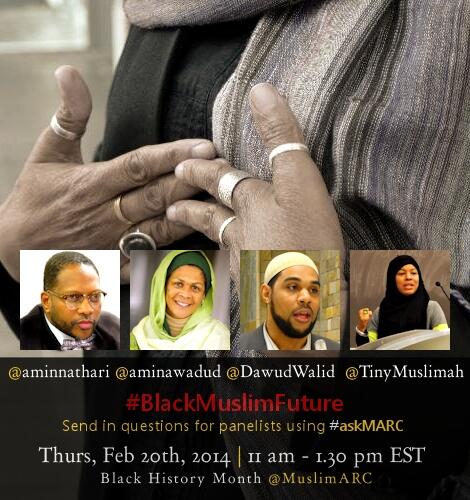 I was asked to share my thoughts for a Huffington Post Religion piece that came out this week, on the diverse spiritualities of African Americans. It’s an engaging piece and I was honored to share my thoughts for it. I identify as black, African and American, so I don’t feel completely out of place sharing my perspectives. However. While America’s diverse black Muslim voices are equally authentic and immigrant-origin black Muslims share experiences of racism and prejudice with our African American sisters and brothers, our histories, cultures and overall experiences are divergent. Thus, I believe that there should have been an African American Muslim voice included in this series. And in fact, I did suggest to them to interview fabulady and Muslim ARC co-founder, Philadelphia academic, Margari Hill. On my Facebook wall , I apologized because it might appear that this was yet another example of an immigrant-origin Muslim talking about Islam – especially egregious because of the topic is literally about African American experiences!
The other part of the problem is illuminated in some of the comments. Islam is still seen as a foreign religion to America. That all Muslims are of immigrant-origin or are recent converts. This is obviously not the case, since Islam has been present in the US since the beginning of the West African slave trade and many Muslim practices even survived the brutality of the Middle Passage and centuries of slavery. As Imam Abdullah Antepli writes in a recent article, “the Muslim black American experience is an authentic and truly homegrown reality and an essential part of black history in this country.” In fact, the nationally renowned Atlanta Masjid of Al-Islam’s congregation boasts 7 generations of Muslims!
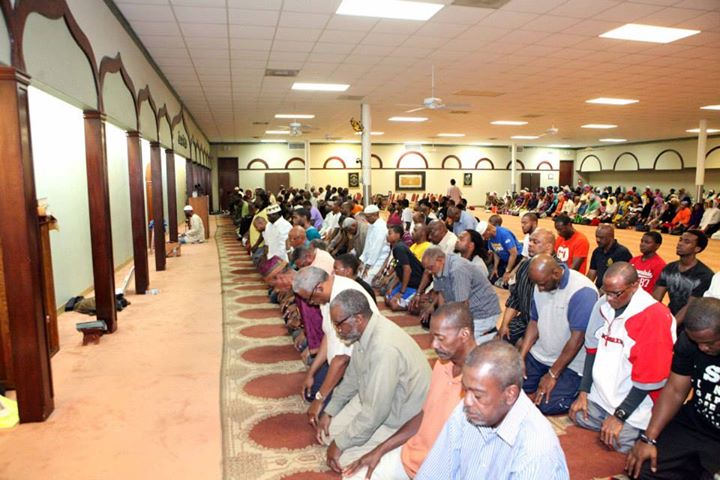
Photo copyright: Atlanta Masjid of al-Islam
If it sounds like I’m ungrateful for being featured on a national website, please know that I’m not. I genuinely believe that my experiences are authentically black, African and American. And since I always say that the 3 biggest challenges facing American Muslims are misogyny, racism & sectarianism, I’m glad I had a platform to share some of my ideas, especially since I believe they reached out to me due to my work with Muslim ARC. The journalist actually asked me more questions than appeared in the article, so I’ll take the liberty and share them in full here:
I was born into a family of devout, practicing Muslims. My parents immigrated to the US from Sudan in the late 70s. My family in Sudan has been Muslim for generations (Islam first came to Sudan in 650 AD) and after my parents came to the US, they wanted their daughters to be connected to Muslim communities here. As children, we were surrounded by a diverse group of Muslims – mainly Arabs; African Americans recently out of the Nation of Islam movement; South Asians; Turks; and a smattering of Caucasian Americans. We developed close relationships with other families through the mosque and my sister and I attended an Islamic high school.
I consider myself to be an observant, practicing Muslim today and have now found a spiritual community in Chicago that is multi-racial and multi-generational – both of which are important to me. But in my estimation, racism, misogyny and sectarianism are the three biggest challenges facing American Muslims today. So, I’ve been working with various individuals, institutions and groups across the country to address these challenges, using different platforms, including social media, community workshops and research studies.
Though African Americans account for roughly 1/3rd of the Muslim community, their voices are typically never heard on national platforms. African Americans are not viewed as normative American Muslims – not by the media, not by many in the interfaith world and not by many immigrant-origin Muslims. Yet, all American Muslims are proud of the legacy of African American Muslim luminaries such as Malcolm X, Muhammad Ali and Kareem Abdul-Jabbar, to mention a few. Many American Muslims – of all backgrounds – are aware of the deep legacy of African American Islam, which began from slavery times. Up to a quarter of the stolen, enslaved Africans who survived the Middle Passage practiced Islam. Many Muslims are aware of this historical legacy, as well as the cultural and political importance of contemporary African American Islam.
However, there are conflicts sometimes: historically, African American Muslims vote Democrat, live in urban areas and are plugged into grassroots community activism. Many African American Muslims find Islam to be a spiritual liberation from the racial oppression that has historically described America’s relationship with her black citizens. On the other hand, many immigrant-origin Muslims tend to vote Republican (well, they did in large numbers pre-9/11; the PATRIOT Act and subsequent tightening of our civil liberties and the wars abroad, and Guantanamo, etc, have reduced the GOP’s appeal massively), live in the suburbs and are busy building community centers that cater to the specific needs of their own cultural base. They didn’t necessarily view religion as a counter to America’s historically race-based oppression – though that is changing, as American-born Muslims of immigrant backgrounds are connecting post-9/11 experiences of Islamophobia to experiences of racial oppression suffered by African Americans, Latinos, and others.
American Muslims are the most racially diverse religious group in the US and the most ethnically, racially and religiously diverse Muslim community on the planet. And we are still figuring out what it means to be American and Muslim in a post-9/11 world. Building community relationships with each other across racial (and sectarian) lines is still a struggle. I’ve been working with mosques and other Muslim institutions to reimagine how we can build more inclusive communities, especially as it relates to racial diversity and convert care.
I have always lived at the intersection of being black (though not African American) and the child of Muslim immigrants from Africa. It’s a peculiar space to occupy – to identify fully as black, African and American – but not African American. I came to realize that there are some huge gulfs that need to be bridged and that challenging internal racism – especially anti-black racism – is critical if Muslims are to remain true to the teachings of our faith and become successful as a community in the US. We need to be able to talk honestly about the challenges plaguing our community. So, the organizers of Muslim ARC decided to launch a series of hashtag conversations during Black History Month, using Twitter as a platform, to begin to address what it means to be black and Muslim.
Reading the comments and participating in the conversation, I was overwhelmed by the reactions to the hashtag. The sheer number of responses – and the fact that the hashtag conversation is continuing, over 24 hours after we launched it – underscores the critical nature of this conversation. #BeingBlackAndMuslim also shows how valuable “Black Twitter” is; social media is often an excellent place for marginalized voices to be heard – and Black Muslim Twitter is as fervent and vocal as our other Black sisters and brothers.
So that’s that! Please join Muslim Arc this week as we hold a Twitter talk, using the hashtag #BlackMuslimFuture, with experts of African American Islam on Feb. 20 between 10 AM – 12:30 PM CST and encourage your imams and khateebs to participate in our Khutbah Campaign with a sermon Friday, Feb. 21, on challenging anti-black racism with our communities. Let’s keep the conversation going!
Previous Post

February 14, 2014
Being Black and Muslim
Next Post
March 11, 2014 The Adab of #MuslimMaleAllies
Browse Our Archives
Select a Category #BlackLivesMatter #MyMosqueMyStory #ZoulSoul American Hijabi in Europe Black History Month Ertugrul Hindtrospectives Linksies Mawlid Pop Culture Trans Atlantic Relations Uncategorized
Select a Month February 2018 December 2017 February 2017 January 2017 December 2016 November 2016 September 2016 August 2016 July 2016 February 2016 January 2016 December 2015 November 2015 September 2015 August 2015 July 2015 June 2015 April 2015 February 2015 January 2015 December 2014 November 2014 August 2014 June 2014 May 2014 April 2014 March 2014 February 2014 January 2014 December 2013 November 2013 September 2013 August 2013 July 2013 June 2013 May 2013 April 2013 March 2013 December 2012 November 2012 August 2012 July 2012 June 2012 May 2012 April 2012 March 2012 February 2012 October 2010 September 2010
Follow Us!
TAKE THE
Religious Wisdom Quiz
What sound did God send to confuse Philistines when Israel was under attack?
Select your answer to see how you score.
Horses Earthquake Thunder Singing
Related posts from Hindtrospectives

Ertugrul - Your Muslim friend's new Bey
Mawlid 2017: Muslim Praise-Songs from around the World
Ethnicity, Skin, and Language: My Sudanese Identity
TRENDING AT PATHEOS Muslim

25 Years Later: How Much Has Changed for...
As we approach the 25th anniversary of September 11th, I’ve found myself...

Podcast: Third Spaces & The Rise of Yemeni...
In the latest episode of The Artistic Foodies Podcast, hosts Abbas...

HalalFest Picks: Best 60 Halal Spots for Super...
Back in 2016, I came up with a list of 29...

Unity Is America’s Strength — Division Is Its...
by Hidayatullah Ahsan When Valentina Gomez, a Republican candidate for Congress in...

Zohran Mamdani and New York’s Fight Against Islamophobia
This past June, against all odds, Zohran Mamdani won the Democratic primary...

What the Fourth of July Means to a...
As we mark another Fourth of July, millions of Americans will celebrate...
view all Muslim blogs
Ad-Free & Subscriber Log-In Subscription Support
- About Us
- 2026 Calendar
- Videos
- Podcasts
- Library of World Religions
- Faith In Media Tracker
- Advertise With Us
- Write for Us
- Privacy Policy
- Terms of Service
- Do Not Sell My Data
- Contact Us
- Radiant Digital
- Manage Newsletter Subscriptions
- Unsubscribe From Notifications
- Sitemap
Copyright 2008-2026, Patheos. All rights reserved.
Subscription Support Ad-Free & Subscriber Log-In
Follow Patheos