
BuddhistCatholicContemplativeEvangelicalGeneral ChristianHinduJewishLatter-day SaintMuslimNew VisionsProgressive Christian
Beliefs
- Buddhist
- Catholic
- Contemplative
- Evangelical
- General Christian
- Hindu
- Jewish
- Latter-day Saint
- More Voices
- Muslim
- New Visions
- Pagan
- Progressive Christian
Topics
- Religion News
- Food and Religion
- Sports and Religion
- Religious Art
- Religious Music and Entertainment
- Religious Events
- History and Religion
- Style and Religion
- Politics and Religion
- Women in Religion
- Recreation Outdoors and Religion
- Business Finance and Religion
- Careers Workplace and Religion
- Education and Religion
- Family Parenting and Religion
- Health Fitness and Religion
- Home and Religion
- Relationships and Religion
- Technology and Religion
- Travel and Religion
Columnists
- Buddhist Columnists
- Business Finance and Religion Columnists
- Careers Workplace and Religion Columnists
- Catholic Columnists
- Contemplative Columnists
- Education and Religion Columnists
- Evangelists Columnists
- Family Parenting and Religion Columnists
- General Christian Columnists
- Health Fitness and Religion Columnists
- Hindu Columnists
- History and Religion Columnists
- Home and Religion Columnists
- Jewish Columnists
- More Voices Columnists
- Latter Day Columnists
- Muslim Columnists
- New Visions Columnists
- Nonreligious Columnists
- Pagan Columnists
- Politics and Religion Columnists
- Progressive Columnists
- Recreation Outdoors and Religion Columnists
- Relationships and Religion Columnists
- Religion News Columnists
- Religious Art Columnists
- Religious Events Columnists
- Religious Music and Entertainment Columnists
- Sports and Religion Columnists
- Style and Religion Columnists
- Technology and Religion Columnists
- Travel and Religion Columnists
- Women in Religion Columnists
Resource Library
- 2026 Calendar
- Library of World Religions
- The 100 Most Holy Places on Earth
- Patheos Answers
- Podcasts
- Videos
- Faith Leaders Database
- Anglican Episcopalian
- Bahai
- Baptist
- Buddhism
- Christianity
- Confucianism
- Eastern Orthodoxy
- Hinduism
- Holiness and Pentecostal
- ISKCON
- Islam
- Judaism
- Lutheran
- Methodist
- The Church of Jesus Christ of Latter-day Saints
- New Age
- Paganism
- Presbytarian and Reformed
- Protestantism
- Religion Behind the Scenes
- Roman Catholic
- Scientology
- Shia Islam
- Sikhism
- Sufism
- Sunni Islam
- Taoism
- Zen
- See all religions
Research Tools
 Ad-Free & Subscriber Log-In Subscription Support
Ad-Free & Subscriber Log-In Subscription Support
Follow Patheos 

- Trending:
- Forgiveness
- |
- Marriage
- |
- Consciousness
- |
- Death Penalty
- |
- Election
- |
- Halloween
 Hindtrospectives
- Home
- Muslim
- Immigration, Interfaith and the Autobahn
Immigration, Interfaith and the Autobahn
Last updated on: September 17, 2013 at 12:53 pm by Hind Makki
Immigration, Interfaith and the Autobahn 2013-09-17T12:53:56-06:00 Hind Makki
Patheos Explore the world's faith through different perspectives on religion and spirituality! Patheos has the views of the prevalent religions and spiritualities of the world.
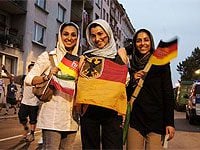 I recently participated in an interfaith panel with some of Chicago’s most distinguished religious leaders. We discussed the local context of religious diversity in America, especially as it relates to fighting crime and strengthening communities. Our audience was a small group of visiting Germans: a couple of law enforcement types, three Muslim leaders, and a couple of interfaith/intercultural folks.
At the end of the conversation, one of the German cops said that when he’d seen the title of our discussion he thought – as a secularist and atheist – that he’d be bored. Instead, he really enjoyed the discussion, not least because he realized that America’s religious leaders/activists are in fact civically-minded citizens. He bemoaned the fact that (from his perspective) that German Muslims are not similarly civically engaged. That their imams are brought from abroad and that the Muslim community isn’t “progressive” about secularism. That they seem insular and unwilling to adapt to their new surroundings.
Unfortunately, we didn’t have enough time to delve into his comment, but suffice to say, I find this view problematic. Earlier in the evening, one of the hosts mentioned that unlike in the US, children born to immigrants in Germany are not immediately granted citizenship. Further, I know from my conversations with German Muslim friends that even if they are granted citizenship, they are still not socially considered German – even though many of their families have lived there for generations.
There has been a rise in racist attacks in Germany in recent years, including the horrifying stabbing murder – in a courtroom while she was testifying against a man who’d verbally assaulted her for wearing hijab – of a young, pregnant mother, Marwa Sherbini. Two years ago, the country was shocked to learn of a neo-Nazi terror cell, which had infiltrated certain elements of the country’s secret services. This far right group had facilitated the murder of 10 people – including a policewoman and others mainly of Turkish origin. They committed over a dozen robberies and were responsible for at least two bomb attacks between 2000 and 2007. For years, law enforcement had not looked into the possibility of neo-Nazis being behind the murders and instead blamed the Turkish victims, suggesting that they were part of a drug-smuggling mafia operation.
Criminals exist on all sides and should be dealt with within the law. The state and it’s law enforcement appendages need to keep an eye out for both violent religious fundamentalists and racist right-wing extremists. Civic-minded citizens, religious groups, local communities and the media can and should do their part to assist the government in rooting out violent criminals and challenging their views. Immigrants and their children [and their grandchildren] must be socially accepted into the fabric of their society by the larger population. It’s not enough to celebrate an immigrant filmmaker here or a soccer player of Muslim origins there. There must be space for immigrants, people of color and people of faith in the public narrative of pluralistic societies. And, it’s critical to build the interfaith and intercultural relationships necessary on the ground before national tragedies occur, so that immigrant communities are not solely in the public narrative as it relates to crime or terrorism.
In the US, our particular understanding of the separation of religion and state has made the US one of the most welcoming destinations to immigrants of all faith backgrounds. Still, American Muslim and other religious communities are not unique in our civic-mindedness. People everywhere share many common values: they want their children to live in safe and comfortable environment, they care about their country’s economic health and they are typically willing to work with others to make that happen. Pluralism is a two-way street in diverse societies; both immigrants and indigenous groups must do their part and work together to develop healthy, diverse societies.
Previous Post

September 4, 2013
Femen Unveiled
Next Post
November 6, 2013 Living at the Intersection of Race, Religion & the Remote Control
Browse Our Archives
Select a Category #BlackLivesMatter #MyMosqueMyStory #ZoulSoul American Hijabi in Europe Black History Month Ertugrul Hindtrospectives Linksies Mawlid Pop Culture Trans Atlantic Relations Uncategorized
Select a Month February 2018 December 2017 February 2017 January 2017 December 2016 November 2016 September 2016 August 2016 July 2016 February 2016 January 2016 December 2015 November 2015 September 2015 August 2015 July 2015 June 2015 April 2015 February 2015 January 2015 December 2014 November 2014 August 2014 June 2014 May 2014 April 2014 March 2014 February 2014 January 2014 December 2013 November 2013 September 2013 August 2013 July 2013 June 2013 May 2013 April 2013 March 2013 December 2012 November 2012 August 2012 July 2012 June 2012 May 2012 April 2012 March 2012 February 2012 October 2010 September 2010
Follow Us!
TAKE THE
Religious Wisdom Quiz
Who prepared Jesus' body for burial?
Select your answer to see how you score.
Roman Centurions Joseph of Arimathea Peter, James, and John Mary the Mother of Jesus
Related posts from Hindtrospectives

Ertugrul - Your Muslim friend's new Bey
Mawlid 2017: Muslim Praise-Songs from around the World
Ethnicity, Skin, and Language: My Sudanese Identity
TRENDING AT PATHEOS Muslim

25 Years Later: How Much Has Changed for...
As we approach the 25th anniversary of September 11th, I’ve found myself...

Podcast: Third Spaces & The Rise of Yemeni...
In the latest episode of The Artistic Foodies Podcast, hosts Abbas...

HalalFest Picks: Best 60 Halal Spots for Super...
Back in 2016, I came up with a list of 29...

Unity Is America’s Strength — Division Is Its...
by Hidayatullah Ahsan When Valentina Gomez, a Republican candidate for Congress in...

Zohran Mamdani and New York’s Fight Against Islamophobia
This past June, against all odds, Zohran Mamdani won the Democratic primary...

What the Fourth of July Means to a...
As we mark another Fourth of July, millions of Americans will celebrate...
view all Muslim blogs
Ad-Free & Subscriber Log-In Subscription Support
- About Us
- 2026 Calendar
- Videos
- Podcasts
- Library of World Religions
- Faith In Media Tracker
- Advertise With Us
- Write for Us
- Privacy Policy
- Terms of Service
- Do Not Sell My Data
- Contact Us
- Radiant Digital
- Manage Newsletter Subscriptions
- Unsubscribe From Notifications
- Sitemap
Copyright 2008-2026, Patheos. All rights reserved.
Subscription Support Ad-Free & Subscriber Log-In
Follow Patheos