
BuddhistCatholicContemplativeEvangelicalGeneral ChristianHinduJewishLatter-day SaintMuslimNew VisionsProgressive Christian
Beliefs
- Buddhist
- Catholic
- Contemplative
- Evangelical
- General Christian
- Hindu
- Jewish
- Latter-day Saint
- More Voices
- Muslim
- New Visions
- Pagan
- Progressive Christian
Topics
- Religion News
- Food and Religion
- Sports and Religion
- Religious Art
- Religious Music and Entertainment
- Religious Events
- History and Religion
- Style and Religion
- Politics and Religion
- Women in Religion
- Recreation Outdoors and Religion
- Business Finance and Religion
- Careers Workplace and Religion
- Education and Religion
- Family Parenting and Religion
- Health Fitness and Religion
- Home and Religion
- Relationships and Religion
- Technology and Religion
- Travel and Religion
Columnists
- Buddhist Columnists
- Business Finance and Religion Columnists
- Careers Workplace and Religion Columnists
- Catholic Columnists
- Contemplative Columnists
- Education and Religion Columnists
- Evangelists Columnists
- Family Parenting and Religion Columnists
- General Christian Columnists
- Health Fitness and Religion Columnists
- Hindu Columnists
- History and Religion Columnists
- Home and Religion Columnists
- Jewish Columnists
- More Voices Columnists
- Latter Day Columnists
- Muslim Columnists
- New Visions Columnists
- Nonreligious Columnists
- Pagan Columnists
- Politics and Religion Columnists
- Progressive Columnists
- Recreation Outdoors and Religion Columnists
- Relationships and Religion Columnists
- Religion News Columnists
- Religious Art Columnists
- Religious Events Columnists
- Religious Music and Entertainment Columnists
- Sports and Religion Columnists
- Style and Religion Columnists
- Technology and Religion Columnists
- Travel and Religion Columnists
- Women in Religion Columnists
Resource Library
- 2026 Calendar
- Library of World Religions
- The 100 Most Holy Places on Earth
- Patheos Answers
- Podcasts
- Videos
- Faith Leaders Database
- Anglican Episcopalian
- Bahai
- Baptist
- Buddhism
- Christianity
- Confucianism
- Eastern Orthodoxy
- Hinduism
- Holiness and Pentecostal
- ISKCON
- Islam
- Judaism
- Lutheran
- Methodist
- The Church of Jesus Christ of Latter-day Saints
- New Age
- Paganism
- Presbytarian and Reformed
- Protestantism
- Religion Behind the Scenes
- Roman Catholic
- Scientology
- Shia Islam
- Sikhism
- Sufism
- Sunni Islam
- Taoism
- Zen
- See all religions
Research Tools
 Ad-Free & Subscriber Log-In Subscription Support
Follow Patheos 

- Trending:
- Advent
- |
- Forgiveness
- |
- Thanksgiving
- |
- Election
- |
- Seasonal Holidays
- |
- Marriage

- Home
- Catholic
- Politics and Religion
- Justice First, Charity Beyond It: Serving The Poor Well
Justice First, Charity Beyond It: Serving The Poor Well
Last updated on: October 8, 2026 at 3:59 am by Henry Karlson
Justice First, Charity Beyond It: Serving The Poor Well 2026-10-08T03:59:52-05:00 Henry Karlson
Patheos Explore the world's faith through different perspectives on religion and spirituality! Patheos has the views of the prevalent religions and spiritualities of the world.

Pope St. Gregory the Great points out the way the poor are to be directed differs from the way the rich are to be admonished, for the poor are to be given encouragement while the rich are to be told of the demands their wealth places upon them. Nheyob: Pope St. Gregory the Great / Wikimedia Commons

It still amazes me how often a Christian, even after reading the words of Scripture, after reading the Gospels, after reading countless Biblical commentaries and theological treatises, after exploring the teachings of the saints, would want to find ways to ignore what they have been told and condemn the poor, denying them their basic needs. They might claim they are doing so as a way to affirm the agency of the poor, suggesting that the poor need to find a way out of the situation for themselves without relying upon others, but this is just an excuse they give to ignore the expectations justice places on society. These Christians want to suggest the poor are at fault so that they can ignore only their own responsibility to the poor. This leads them to also ignore the complex situation surrounding poverty and how systemic structures of sin, reinforced by those in positions of power, make sure most of the poor can’t get out of their poverty. Thus, such Christians find every excuse to ignore the ones who, in this context, have the ability to do something, that is the rich and powerful, by putting all the responsibility on those who have little to no ability to do something, that is, the poor themselves.
Sadly, many try to evade their responsibility to the poor by ridiculing those who are telling them to take care of them by suggesting the messengers would have them believe the poor are automatically holy. Yes, the poor have freedom; yes, they are persons with an agency of their own. This is why they can be sinners like the rest of us. Few, if any, ever suggests that just because someone is poor, they are holy. So, why do people seem to make this argument? For me, it seems, it is the first step to suggest the exact opposite, that the poor have done some wrong, some sin, which keeps them in their poverty. And from this, they likewise suggest, the rich are the ones who are holy, and their wealth is proof of God’s blessings upon them. That is, the line of thought ends of leading to the false ideology of the so-called Prosperity Gospel, a teaching that utterly contradicts Scripture and the way Jesus engaged the poor. Once this falsehood is treated as true, it is easy for Christians to excuse themselves from taking care of the poor. It is just another way to put the responsibility on the poor, and not on those who have the means to help the poor.
Everyone, every life, has dignity, and that dignity comes with rights which must not be denied anyone, rights which include the right to food, shelter and clothing. Sadly, this is what ends up being denied to the poor when they are judged and told their poverty is their own fault, whether it is due to some sin, or simply because they are lazy. For, whatever reason which is offered, the conclusion is the same: the poor deserve nothing. As Pope Leo XIV made it clear, we need to reject this framework surrounding wealth and poverty; we not to stop acting like only those who are materially successful are deserving to have their basic needs being met:
The poor are not there by chance or by blind and cruel fate. Nor, for most of them, is poverty a choice. Yet, there are those who still presume to make this claim, thus revealing their own blindness and cruelty. Of course, among the poor there are also those who do not want to work, perhaps because their ancestors, who worked all their lives, died poor. However, there are so many others — men and women — who nonetheless work from dawn to dusk, perhaps collecting scraps or the like, even though they know that their hard work will only help them to scrape by, but never really improve their lives. Nor can it be said that most of the poor are such because they do not “deserve” otherwise, as maintained by that specious view of meritocracy that sees only the successful as “deserving.” [1]
From a theological perspective, I find the notion that the poor alone are responsible for their condition, and so are alone responsible for getting themselves out of it, troubling, because it would lead us to suggest, spiritually, the same must be true. That is, we would end up believing the teachings of the Pelagian heresy. We are all spiritually poor; indeed, we can even say, unlike with all those who are materially poor, we have contributed to our own spiritual poverty due to our sins. If the over-arching ideology being used to deny help to those materially poor ideology is correct, why should we get any help? We are not deserving of it, right? But God shows us this is not the way. God is love, and God shares the bounty of God’s spiritual wealth with us, that is, grace, so that we do not have to remain spiritually impoverished. God, likewise, wants us to learn from this, that is, to imitate the mercy we have received. We are to share what we have with each other, taking care of each other, loving each other; and with such love, we give more than just material help to those in need. We are to do what we can to make people happy, giving material aid if it is needed and we can, but even if we do that, we must not presume that is all we should give; we are to give out of the bounty of our heart, out of a voluntary charity which transcends giving out material needs to those who do not have them:
This is what “making the poor happy” means: rescuing them from their anonymous solitude, giving back to them a name and face, prompting them to be open to a new awareness of themselves and their dignity. To do all that, we must love them. A poor person is not happy just because he is given shelter, fed, and care for, but also — and most importantly – because he feels loved and given consideration. Without that quality of a relationship, a home for the elderly can be a sad place, so sad it may kill.[2]
Giving people what they need, making sure their basic rights are protected by society, are acts related to the virtue of justice. We must not confuse this with charity, for charity engages others with love, and not just out of a simple duty to make sure their basic needs are met. While justice is not the same as charity, charity, if it is true to itself, will not deny justice. It will not try to create situations in order to give to people in material need. That would be like finding someone on the street and beating them up so that we can show them kindness by taking them to the doctor to get medical attention. Those who deny what justice expects, those who say the poor should only be given what others voluntarily give to them of charity, are doing the exact same thing as the person who beats up someone on the street; they want to pretend to be charitable by giving a little help to someone who they harmed. This is something which must be repeated, due to the way many confuse justice with charity. We are to make sure the poor are taken care of, and have their material needs met; but we are also expected to give them of our hearts, to show kindness and compassion, instead of berating them and making them feel bad for their need:
We must, then, open our hearts to all the poor and to all those who are victims of disasters from whatever cause, for the commandment enjoins us to rejoice with those who rejoice and weep for those who weep. Kindness is the gift we must, as human beings, proffer our fellow humans whatever the cause of their plight: widowhood, orphanhood, exile from homeland, savagery of tyrants, callousness of magistrates, ruthlessness of tax collectors, brutality of bandits, rapacity of thieves, confiscation or shipwreck. All alike deserve our pity and look to our hands just as we look to the hands of God whenever we are in need of something.[3]
What I keep hearing from others is excuse after excuse as to why we don’t need to do this. I keep hearing from my fellow Christians that we should just ignore the demands of justice, for by doing so, we make room for charity. Anyone who truly cares about others does not want them to suffer, and would not cause someone to suffer in order to be given an opportunity to make themselves look nice. It’s false piety. But, without much surprise, I keep finding those who deny such justice to the poor also love to claim themselves as being pro-life; it makes me wonder, do they, in some way, think so little of the poor? Do they see them as sub-human, or even dead? For, how can they be pro-life, and yet deny the poor their human dignity?
Similarly, when I point to the expectations of justice, I am told, I am only giving half of the picture. I keep being told that the poor have responsibilities, and because I am not telling them to fulfill their obligations, I am somehow wrong when I tell the rich and powerful to help take care of those in need. Once again, when I see this argument given, I see it is done by equivocation. They are right in saying the poor have agency, and with it, responsibilities, but those responsibilities do not undermine the expectations justice has for the rich and powerful, indeed, the expectations justice has for society in regards how the poor are to be helped. The poor are to be holy, like everyone is holy; they are to do what they can to better themselves, but they can’t do that if society keeps pushing them down, if they continue to be oppressed by the rich and powerful, especially if the rich and powerful create the conditions which limit the means the poor have to get out of their poverty. If the poor are expected to fend for themselves, to obtain what should be theirs by right, they will not be able to better themselves, as their focus will be mere survival, and so, in reality, their agency is undermined by those who deny them their proper footing in the world.
Would those who criticize the way I speak about justice criticize Jesus? For, I speak on the needs for the poor, and the expectations placed upon the rich and powerful, following what Jesus said. If they would read the Gospels, they would see that he criticizes the rich for their abuses, and speaks on behalf of the needs of the poor without telling them that they have responsibilities they must fulfill if they want their basic needs, their human rights, met. This has been picked up by the church, which is why St. Gregory the Great could state:
Differently to be admonished are the poor and the rich: for to the former we ought to offer the solace of comfort against tribulation, but in the latter to induce fear as against elation. For to the poor one it is said by the Lord through the prophet, Fear not, for you shall not be confounded. And not long after, soothing her, He says, O you poor little one, tossed with tempest. And again He comforts her, saying, I have chosen you in the furnace of poverty.[4]
Time and time again, it seems me that many of my critics feel the opposite is the way things should be; they want to comfort the rich, saying they are God’s chosen. They praise the rich, while, every time the plight of the poor is brought up, they find a way to denigrate the poor as a way to justify ignoring the demands of justice. When I read some telling me that they agree with the saints, after I show them what the saints say, and then see them say something which is the exact opposite of what I quoted, I can’t but feel like gaslighting is also involved. For, when I quote the saints telling us not to judge the poor for their poverty, but to see their need and respond to it, how can they say they agree with that when they want us to admonish the poor by telling them they are at fault for their poverty and must find a way out of it themselves? It’s absurd! Justice does not say the rich can just give as they want; justice say those who have the means must help those who do not have their basic needs being met. What is voluntary is charity, and to be sure, charity, when properly engaged, will have us transcend the mere expectations of justice; when justice is not being met, charity will encourage us to fulfill those expectations, which is why it can be an act of charity to give alms to the poor, but it is why, if alms are not needed, there is still plenty of room to be charitable.
Yes, the poor can also be told to be charitable, to be virtuous; but, once again, when we say this, we must not use false notions of charity, expecting the poor to give what they don’t have. What they can give is the gift of themselves, that is, of their love; sometimes, that might mean even giving of their limited material means, but it can also mean they pray for those in need:
Therefore, since we have no reason to excuse ourselves, the man to whom God has given more than he needs should redeem his sins out of his superfluity. If a man is unable to redeem captives or feed and clothe the poor, he should not harbor in his heart hatred for anyone. Not only should he not fail to return evil for evil, but he should love his enemies and not cease to pray for them.[5]
When talking about justice, when making sure the human dignity of everyone is upheld, and with it, their basic rights are defended, rights which include the right to food, shelter, and clothing, we must not allow ourselves to be diverted by secondary questions which seek to undermine the affirmation of those rights. I feel this is exactly what people to the demands of justice are doing when they want to talk about what is expected from the poor. They keep putting the blame on the poor to justify the expectations placed upon them, and the rest of society; they ignore poverty is especially created in and through various structures which guide and direct society that are founded in and with sin; for poverty to be addressed, those structure must be confronted and overturned, and those who defend those structures must be resisted. It is this mentality, this desire to focus on those who are poor and blame them, causing us to deny them our presence and love, which Pope Leo XIV says much be changed, lest we find, our hearts grow colder and society that much more consumed by the structures of sin:
A concrete commitment to the poor must also be accompanied by a change in mentality that can have an impact at the cultural level. In fact, the illusion of happiness derived from a comfortable life pushes many people towards a vision of life centered on the accumulation of wealth and social success at all costs, even at the expense of others and by taking advantage of unjust social ideals and political-economic systems that favor the strongest. Thus, in a world where the poor are increasingly numerous, we paradoxically see the growth of a wealthy elite, living in a bubble of comfort and luxury, almost in another world compared to ordinary people. This means that a culture still persists — sometimes well disguised — that discards others without even realizing it and tolerates with indifference that millions of people die of hunger or survive in conditions unfit for human beings. A few years ago, the photo of a lifeless child lying on a Mediterranean beach caused an uproar; unfortunately, apart from some momentary outcry, similar events are becoming increasingly irrelevant and seen as marginal news items.[6]
I find far too many Christians with cold, cruel hearts, who not only deny the poor their necessities, but seem to find some pleasure and joy when the poor and needy are mistreated, whether it is poor migrants being mistreated or killed by ICE, or when some homeless person is jailed because they dared to sleep on a public bench. They might laugh now, but they should heed Jesus before it is too late: “”Woe to you that laugh now, for you shall mourn and weep” (Lk. 6:25b RSV). For, as Jesus told us, when it comes to the time of judgement, how we treat the least among us, the poor, the downtrodden, those who are persecuted, will affect the outcome of our eschatological judgment:
On the day of evil God will be present to free the one who frees the poor person from evils. God will hear crying out in distress the one who has heard the poor person when he was crying out. The one who enabled the poor person to have good days will not see the day of evil. But the one who comes to judgment without a poor person as his advocate will see the day of evil. [7]
[1] Pope Leo XIV, Dilexi te. Vatican translation. ¶14.
[2] Éloi Leclerc, Song of Silence: The Journey of Saint Jeanne Jugan. Trans. Claire Trocmé (Boston: Pauline Books & Media, 2002), 69.
[3] St. Gregory of Nazianzus. Select Orations. Trans. Martha Vinson (Washington, DC: CUA Press, 2003), 42-3 [Oration 14].
[4] St. Gregory the Great, Pastoral Rule. Trans. James Barmby, DD in NPNF2(12): 25.
[5] St. Caesarius of Arles, Sermons Volume I (1-80). Trans. Mary Magdeleine Mueller, OSF (New York: Fathers of the Church, 1956), 162 [Sermon 32].
[6] Pope Leo XIV, Dilexi te, ¶11.
[7] St. Peter Chrysologus, Selected Sermons. Volume 2. Trans. William B Palardy (Washington, DC: CUA Press, 2004),68 [Sermon 14].
* This Is Another Post From My Personal (Informal) Reflections And Speculations Series
Stay in touch! Like A Little Bit of Nothing on Facebook.
If you liked what you read, please consider sharing it with your friends and family!
N.B.: While I read comments to moderate them, I rarely respond to them. If I don’t respond to your comment directly, don’t assume I am unthankful for it. I appreciate it. But I want readers to feel free to ask questions, and hopefully, dialogue with each other. I have shared what I wanted to say, though some responses will get a brief reply by me, or, if I find it interesting and something I can engage fully, as the foundation for another post. I have had many posts inspired or improved upon thanks to my readers.
Progressive Christian
Politics and Religion
Previous Post

October 6, 2026
Our True Enemy Is Sin
Next Post
October 11, 2026 The Incarnation And The Christian Use Of Images
Recent Comments
"Making theology a way of life requires a holistic approach. Propositions, doctrines, books, professors, lectures, ..."
Theology As A Way of Life, ..."
"First things first is the easiest way forward. "If someone is bleeding profusely, we must ..."
Why We Must Embrace Empathy, Sympathy ..."
"Gosh, did that hit the spot. I have been having great anxiety lately. And I ..."
Rejecting Doom: Christian Hope And Human ..."
"Justice and peace are two sides of the same coin. Where there is justice, there ..."
Justice First, Charity Beyond It: Serving ..."
Browse Our Archives
Select a Category Abortion Abraham abuse Aesthetics AI Aliens Ambrose Ancestors and Everything Andrew Angels Animals Anne Anthony Antisemitism apologetics Apophatic Apostle John Aquinas Artificial Intelligence Asanga Ascension Asceticism Assumption Atheism Attachment Augustine Authority Avarice Balthasar Baptism Beauty Biden birthright citizenship Bishops Black History Books Buddhism Bulgakov Byzantine Calendar C.S. Lewis Calcidius Catholic Catholicism Catholicism Celibacy Charity Chastity children Chrismation Christ Christmas Christology Church Climate Change Common Good Communion Confession Confirmation Conscience Constantine conventions conversion councils Covid Creation Cross Dead Death Death Penalty Debate Deception Demagogues Demons Desert Monks Desert Mothers Desire destruction development Dialogue Dignity Dionsyius Dionysius Discipline Diversity Division Doctor Who doctrine dogma Dormition Dualism Easter Easter Series Ecumenical Councils Ecumenism Education Election Empathy Environment Error Eschatology eschaton Eternity Ethics Eucharist Evangelism Eve Evil evolution Faeries Faith Fear femininity Ficino Florence Florensky Folktale Fools Forgiveness Freedom Future gender Gentile Gentiles Glory Gnostic God gods Good Samaritan Goodness Gospel Government Grace Great Fast Guns Halloween Hate healing Health Heaven Hell Hellenism Heresy Hierarchy Hildegard Hinduism History Holiness Holy Spirit Holy Week Hope Horror Human rights humanity Humility hypocrisy ICE icon icons Identification Identity Idol II Nicea Immigration incarnation Individualism Informal Reflections Inklings Intention Inter-Religious Interfaith Internet Interpretation Intrinsic evil Irenaeus Islam Israel Jacob Jerome Jesus Jews John Chrysostom John of Damascus John the Baptist Joseph Judaism justice Justification kenosis Kindnesss Kingdom of God Kingdom of Heaven Law Law of Moses Lazarus Leaf by Niggle Lent Lenten Reflection Liberation Theology Lies Life Listen Literature Liturgy locutions Logic Logos Love Marriage Martyrs Mary Mass Maximos The Confessor Meanness Meditation Mercy Middle Path Migrants Mind Miracles Miriam Morals Moses Movies Music Muslims Myths Names Nationalism Native Americans New Year Nicea Nicholas Nothing Novatian Obedience Occam's Razor Ordination Origen Original Sin Orthodox orthopraxis Pagans Palamas Palm Sunday Paradise Paschaltide Paul Peace Pentecost person Peter piety PKD Plato pluralism Plurality Poem Poetry Poiltics Politics Poor Pope Pope Francis Pope Leo XIV Post Office Prayer Pride Pro-life Prodigal Son propaganda Prophecy Prophets Providence Putin Racism Reading Reason Reflection Refugees Relationships Religion Religion Series Religious Liberty Repent Republicans Rest Resurrection Rich Rites Russia Sacraments Saints Salvation Salvian Santa Science Scripture Self-Giving Sexuality Sibyl Sick Silence Sin Singlehood Social Justice Society Sodom Solovyov Speculations Spiritual Reflection St. Cyril of Alexandria St. Justin Martyr Suffering Sunday of the Paralytic Man Sunday of the Samaritan Woman Superhero Supreme Court Teaching Technology Thanksgiving The Father the Universe Theological Reflection Theology Theosis Theotokos Thomas Timaeus Time Tolerenace Tolkien Tradition Transfiguration Trinity Trump Truth Uncategorized Unity Universities USCCB Vainglory Value Vatican II Vegetarian Vices Violence Virtue Vocations War Water Welcome Wisdom Womanhood Women Work World View Worship Writing Zacchaeus
Select a Month November 2026 October 2026 September 2026 August 2026 July 2026 June 2026 May 2026 April 2026 March 2026 February 2026 January 2026 December 2025 November 2025 October 2025 September 2025 August 2025 July 2025 June 2025 May 2025 April 2025 March 2025 February 2025 January 2025 December 2024 November 2024 October 2024 September 2024 August 2024 July 2024 June 2024 May 2024 April 2024 March 2024 February 2024 January 2024 December 2023 November 2023 October 2023 September 2023 August 2023 July 2023 June 2023 May 2023 April 2023 March 2023 February 2023 January 2023 December 2022 November 2022 October 2022 September 2022 August 2022 July 2022 June 2022 May 2022 April 2022 March 2022 February 2022 January 2022 December 2021 November 2021 October 2021 September 2021 August 2021 July 2021 June 2021 May 2021 April 2021 March 2021 February 2021 January 2021 December 2020 November 2020 October 2020 September 2020 August 2020 July 2020 June 2020 May 2020 April 2020 March 2020 February 2020 January 2020 December 2019 November 2019 October 2019 September 2019 August 2019 July 2019 June 2019 May 2019 April 2019 March 2019 February 2019 January 2019 December 2018 November 2018 October 2018 September 2018 August 2018 July 2018 June 2018 May 2018 April 2018 March 2018 February 2018 January 2018 December 2017 November 2017 October 2017 September 2017 August 2017 July 2017 June 2017 May 2017 April 2017 March 2017 February 2017 January 2017 December 2016 November 2016 October 2016 September 2016 August 2016 July 2016 June 2016 May 2016 April 2016 March 2016 February 2016
Follow Us!
TAKE THE
Religious Wisdom Quiz
I am stone tablets written by the finger of God, given on a mountain shrouded in smoke. What am I?
Select your answer to see how you score.
God's covenant Ark of the Covenant The Ten Commandments The law of Moses
Related posts from A Little Bit of Nothing
Why We Must Embrace Empathy, Sympathy And Compassion
How Tradition Points Away From The Death Penalty
Glory Is Found In Christ, Not False Piety
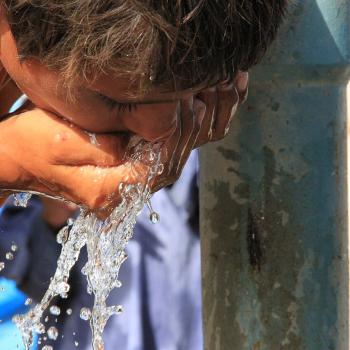
Why Clean Water Is a Moral Obligation For...
TRENDING AT PATHEOS Catholic

If Baptism Washes Away Sin, Why Do Catholics...
The seven sacraments stand as the foundation of Catholic ecclesial life. The...

Far from promoting indifference, inaction, or quietism, Paul consistently tells us to...

The Power of Setting a Good Example
Remember last August when the Chicago White Sox hosted a "Pope Hat...

Theology As A Way of Life, Not Mere...
I enjoy the study of dogmatic and systematic theology. I like studying...

A Catholic Critique of Biblical Unitarianism
If the statistics are to be believed, Unitarianism is rising worldwide. Although...

How Grandma Tourism Helps Grandparents Live Their Vocation
Grandma, The New Travel Influencer What started as a nostalgia-inspired social media...
view all Catholic blogs
What Are Your Thoughts?leave a comment
Ad-Free & Subscriber Log-In Subscription Support
- About Us
- 2026 Calendar
- Videos
- Podcasts
- Library of World Religions
- Faith In Media Tracker
- Advertise With Us
- Write for Us
- Privacy Policy
- Terms of Service
- Do Not Sell My Data
- Contact Us
- Radiant Digital
- Manage Newsletter Subscriptions
- Unsubscribe From Notifications
- Sitemap
Copyright 2008-2026, Patheos. All rights reserved.
Subscription Support Ad-Free & Subscriber Log-In
Follow Patheos