
BuddhistCatholicContemplativeEvangelicalGeneral ChristianHinduJewishLatter-day SaintMuslimNew VisionsProgressive Christian
Beliefs
- Buddhist
- Catholic
- Contemplative
- Evangelical
- General Christian
- Hindu
- Jewish
- Latter-day Saint
- More Voices
- Muslim
- New Visions
- Pagan
- Progressive Christian
Topics
- Religion News
- Food and Religion
- Sports and Religion
- Religious Art
- Religious Music and Entertainment
- Religious Events
- History and Religion
- Style and Religion
- Politics and Religion
- Women in Religion
- Recreation Outdoors and Religion
- Business Finance and Religion
- Careers Workplace and Religion
- Education and Religion
- Family Parenting and Religion
- Health Fitness and Religion
- Home and Religion
- Relationships and Religion
- Technology and Religion
- Travel and Religion
Columnists
- Buddhist Columnists
- Business Finance and Religion Columnists
- Careers Workplace and Religion Columnists
- Catholic Columnists
- Contemplative Columnists
- Education and Religion Columnists
- Evangelists Columnists
- Family Parenting and Religion Columnists
- General Christian Columnists
- Health Fitness and Religion Columnists
- Hindu Columnists
- History and Religion Columnists
- Home and Religion Columnists
- Jewish Columnists
- More Voices Columnists
- Latter Day Columnists
- Muslim Columnists
- New Visions Columnists
- Nonreligious Columnists
- Pagan Columnists
- Politics and Religion Columnists
- Progressive Columnists
- Recreation Outdoors and Religion Columnists
- Relationships and Religion Columnists
- Religion News Columnists
- Religious Art Columnists
- Religious Events Columnists
- Religious Music and Entertainment Columnists
- Sports and Religion Columnists
- Style and Religion Columnists
- Technology and Religion Columnists
- Travel and Religion Columnists
- Women in Religion Columnists
Resource Library
- 2026 Calendar
- Library of World Religions
- The 100 Most Holy Places on Earth
- Patheos Answers
- Podcasts
- Videos
- Faith Leaders Database
- Anglican Episcopalian
- Bahai
- Baptist
- Buddhism
- Christianity
- Confucianism
- Eastern Orthodoxy
- Hinduism
- Holiness and Pentecostal
- ISKCON
- Islam
- Judaism
- Lutheran
- Methodist
- The Church of Jesus Christ of Latter-day Saints
- New Age
- Paganism
- Presbytarian and Reformed
- Protestantism
- Religion Behind the Scenes
- Roman Catholic
- Scientology
- Shia Islam
- Sikhism
- Sufism
- Sunni Islam
- Taoism
- Zen
- See all religions
Research Tools
 Ad-Free & Subscriber Log-In Subscription Support
Follow Patheos 

- Trending:
- Advent
- |
- Forgiveness
- |
- Thanksgiving
- |
- Election
- |
- Seasonal Holidays
- |
- Marriage

- Home
- Catholic
- Amma Sarah And Gender Essentialism
Amma Sarah And Gender Essentialism
Last updated on: March 19, 2019 at 3:05 am by Henry Karlson
Amma Sarah And Gender Essentialism 2019-03-19T03:05:21-05:00 Henry Karlson
Patheos Explore the world's faith through different perspectives on religion and spirituality! Patheos has the views of the prevalent religions and spiritualities of the world.

Woman Sign
Source: no attribution/ pixabay
We know little about Amma Sarah; she is a saint of the church, whose feast is celebrated on July 13. It seems that she was born in a wealthy Christian family in the 5th century, but found herself through her education and innate desires, attracted to the ascetic life.[1] Her desire was to become pure at heart so that she could be united with God; this led her to a long struggle against the desires of the flesh, “lust” and “fornication,” for thirteen years. To do so, she became a hermit, residing next to a section of the Nile. She lived by herself for sixty years, though connected to the nearby monastic community “in the desert of Pelusium.”[2]
The fact that we have few saying from her, or other women in the desert, shows to us the difficulty many women had being accepted in the desert community. And this manifests itself in some of the sayings we have of Sarah, where we see her challenging men and their gender essentialism. Society creates roles for men and women which are often then essentialized, an essentialization which then society reaffirms by forcing men and women to keep to those roles and not be anything other than expected of them. In Sarah’s time and place, as with many other times and places, men were thought of as being strong while women were thought of being weak. This, then, became a part of the way people spoke about men and women, so that someone was said to be manly if they were strongly, and womanly if they were weak and feeble. Amma Sarah, encountering such disdain for women, was able to use the words of men against themselves, not because she accepted the nature men gave to the genders, but rather, to demonstrate their error by a creative reductio ad absurdum.
Thus, one time, in her old age, Amma Sarah was greeted by, and then treated rudely by, two old anchorites:
Another time, two old men, great anchorites, came to the district of Pelusia to visit her [Amma Sarah -ed]. When they arrived one said to the other, ‘Let us humiliate this old woman.’ So they said to her, ‘Be careful not to become conceited thinking to yourself: “Look how anchorites are coming to see me, a mere woman.”’ But Amma Sarah said to them, ‘According to nature I am a woman, but not according to my thoughts.’[3]
Gender discrimination, indeed, gender abuse, found itself within the Egyptian desert; two old men, thinking themselves great, thought they could and would embarrass the elder Sarah just because she was an old woman. Is this the fruit of a holy life? Is this what they learned in the desert? Clearly, it would have been better if they had stayed in the city and led a secular life instead of pretending to search for and gain some level of holiness if they then thought it was fine to go out and abuse an elderly woman. Yet, it is clear that they thought so highly of themselves, they led their pride lead them astray, thinking they had the right, like so many men do, to abuse a woman. Even if there is nothing sexual about their attack, it comes from, and is of the same kind of fault as is had with sexual abuse of women, where the point is that those who abuse others think their power and authority give them a right to manhandle anyone they want.
Amma Sarah took the abuse in stride; she demonstrated herself to be their superior. They might have looked at her and saw her as a woman, assuming all kinds of degraded ideas about her because of her gender; she dismissed their gender essentialism by telling them that she was not a woman in her thoughts, that is, though she was by nature a woman, that nature did not mean at all what the old men thought it meant. Their thoughts which they imputed upon her and upon men and women were false. She did not think of herself as a woman according to the way women were routinely designated by the men of her day. She knew that in Christ, gender was not to be treated with such ideologies, for as Paul had said, in Christ there is neither male nor female (cf. Gal. 3:28). She transcended their gender ideology. Likewise, in a saying which seems to be connected with this story, she further indicated that what they assumed to be a man, she was, while what they assumed to be a woman, she found to be their lot: “She also said to the brothers, ‘It is I whom am a man, you who are women.’”[4]
Sarah did not think gender essentialism fit the Christian ideal, especially for those who lived in the desert, seeking union with Christ. Long before modern thought looked into and examined the ideological problems which lay behind gender essentialism, Amma Sarah repudiated it by turning it in on itself to those who would use it against her. She was a man – that is, she was whatever was assumed to be essential to man, while her critics, those who came to embarrass her, demonstrated the weakness of their spiritual life, and could be said to be all that they thought women were to be. When we try to essentialize genders, we limit people, and we will be able to find people who do not fit their assumed genders because of it: Amma Sarah, in his crafty reductio ad absurdum, showed that those who try to essentialize nature to denigrate others will find themselves the ones who are denigrated and will not fit the “gender” they claim to be.[5] She was, in a way, pointing out how Christians by nature are “transgender” in that they must follow Paul, denying the essentialism of gender, allowing man and woman alike to transcend the cultural imputations placed upon gender: this is not to deny the distinction or value of a person is connected with the gender, whatever it is, but what is important is that their nature lies in a way beyond all such essentialism. [6]
It is, of course, important to realize she did not have such a bad relationship with all the monks in the desert. Many lived their lives properly, and treated her with the respect she gave to them. Thus, we read from her sayings once when she gave out a basket of fruit for a group of monks who came to visit her. They took out of it the old, bad fruit, leaving her the good to have for herself, to which she recognized the hospitality and charity which is meant to be had by those who are to be honored with the title of monks.[7] While the desert community did not leave out of it the errors of the world, and there were a great number of sinners who joined the community to glorify themselves, the true spirit of the desert shines through with the greats, with those like Amma Sarah, who knew themselves in Christ and so did not let the world and its impositions hinder them in their walk with God.
[1] See Laura Swan, The Forgotten Desert Mothers (New York: Paulist Press, 2001), 35-7.
[2] Ibid., 35. Benedicta Ward, however, thought she lived by herself, without joining any particular community. “However, an exception to this pattern of withdrawal suggests that a change of dress was neither universal nor fundamental: amma Sarah lived alone by the Nile for sixty years without wearing male attire or joining a convent of nuns.” Benedicta Ward, Harlots of the Desert (Kalamazoo, MI: Cistercian Publications, 1987), 62.
[3] Sayings of the Desert Fathers. Trans. Benedicta Ward (Kalamazoo, MI: Cistercian Publications, 1984), 230 [Saying 4].
[4] Sayings of the Desert Fathers, 230 [Saying 9].
[5] As Laura Swan indicated, at the time Sarah lived, women were seen as irrational and material beings, while men were seen as rational and spiritual, indeed, otherworldly in principle. See Swan, The Forgotten Desert Mothers, 39.
[6] This is highlighted in the way many women ascetics are praised for being “manly,” with some of them even taking on and living out lives as men in monastic communities. They did not find themselves trapped by their gender: they rose above all the expectations placed upon them, becoming holy saints in the process.
[7] See Sayings of the Desert Fathers, 230 [Saying 8].
Stay in touch! Like A Little Bit of Nothing on Facebook
Previous Post
March 18, 2019
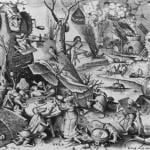
Gluttony
Next Post

March 20, 2019 Robbing By The Cradle: Paying For Babies at the Expense of Retirement
Browse Our Archives
Select a Category Abortion Abraham abuse Aesthetics AI Aliens Ambrose Ancestors and Everything Andrew Angels Animals Anne Anthony Antisemitism apologetics Apophatic Apostle John Aquinas Artificial Intelligence Asanga Ascension Asceticism Assumption Atheism Attachment Augustine Authority Avarice Balthasar Baptism Beauty Biden birthright citizenship Bishops Black History Books Buddhism Bulgakov Byzantine Calendar C.S. Lewis Calcidius Catholic Catholicism Catholicism Celibacy Charity Chastity children Chrismation Christ Christmas Christology Church Climate Change Common Good Communion Confession Confirmation Conscience Constantine conventions conversion councils Covid Creation Cross Dead Death Death Penalty Debate Deception Demagogues Demons Desert Monks Desert Mothers Desire destruction development Dialogue Dignity Dionsyius Dionysius Discipline Diversity Division Doctor Who doctrine dogma Dormition Dualism Easter Easter Series Ecumenical Councils Ecumenism Education Election Empathy Environment Error Eschatology eschaton Eternity Ethics Eucharist Evangelism Eve Evil evolution Faeries Faith Fear femininity Ficino Florence Florensky Folktale Fools Forgiveness Freedom Future gender Gentile Gentiles Glory Gnostic God gods Good Samaritan Goodness Gospel Government Grace Great Fast Guns Halloween Hate healing Health Heaven Hell Hellenism Heresy Hierarchy Hildegard Hinduism History Holiness Holy Spirit Holy Week Hope Horror Human rights humanity Humility hypocrisy ICE icon icons Identification Identity Idol II Nicea Immigration incarnation Individualism Informal Reflections Inklings Intention Inter-Religious Interfaith Internet Interpretation Intrinsic evil Irenaeus Islam Israel Jacob Jerome Jesus Jews John Chrysostom John of Damascus John the Baptist Joseph Judaism justice Justification kenosis Kindnesss Kingdom of God Kingdom of Heaven Law Law of Moses Lazarus Leaf by Niggle Lent Lenten Reflection Liberation Theology Lies Life Listen Literature Liturgy locutions Logic Logos Love Marriage Martyrs Mary Mass Maximos The Confessor Meanness Meditation Mercy Middle Path Migrants Mind Miracles Miriam Morals Moses Movies Music Muslims Myths Names Nationalism Native Americans New Year Nicea Nicholas Nothing Novatian Obedience Occam's Razor Ordination Origen Original Sin Orthodox orthopraxis Pagans Palamas Palm Sunday Paradise Paschaltide Paul Peace Pentecost person Peter piety PKD Plato pluralism Plurality Poem Poetry Poiltics Politics Poor Pope Pope Francis Pope Leo XIV Post Office Prayer Pride Pro-life Prodigal Son propaganda Prophecy Prophets Providence Putin Racism Reading Reason Reflection Refugees Relationships Religion Religion Series Religious Liberty Repent Republicans Rest Resurrection Rich Rites Russia Sacraments Saints Salvation Salvian Santa Science Scripture Self-Giving Sexuality Sibyl Sick Silence Sin Singlehood Social Justice Society Sodom Solovyov Speculations Spiritual Reflection St. Cyril of Alexandria St. Justin Martyr Suffering Sunday of the Paralytic Man Sunday of the Samaritan Woman Superhero Supreme Court Teaching Technology Thanksgiving The Father the Universe Theological Reflection Theology Theosis Theotokos Thomas Timaeus Time Tolerenace Tolkien Tradition Transfiguration Trinity Trump Truth Uncategorized Unity Universities USCCB Vainglory Value Vatican II Vegetarian Vices Violence Virtue Vocations War Water Welcome Wisdom Womanhood Women Work World View Worship Writing Zacchaeus
Select a Month November 2026 October 2026 September 2026 August 2026 July 2026 June 2026 May 2026 April 2026 March 2026 February 2026 January 2026 December 2025 November 2025 October 2025 September 2025 August 2025 July 2025 June 2025 May 2025 April 2025 March 2025 February 2025 January 2025 December 2024 November 2024 October 2024 September 2024 August 2024 July 2024 June 2024 May 2024 April 2024 March 2024 February 2024 January 2024 December 2023 November 2023 October 2023 September 2023 August 2023 July 2023 June 2023 May 2023 April 2023 March 2023 February 2023 January 2023 December 2022 November 2022 October 2022 September 2022 August 2022 July 2022 June 2022 May 2022 April 2022 March 2022 February 2022 January 2022 December 2021 November 2021 October 2021 September 2021 August 2021 July 2021 June 2021 May 2021 April 2021 March 2021 February 2021 January 2021 December 2020 November 2020 October 2020 September 2020 August 2020 July 2020 June 2020 May 2020 April 2020 March 2020 February 2020 January 2020 December 2019 November 2019 October 2019 September 2019 August 2019 July 2019 June 2019 May 2019 April 2019 March 2019 February 2019 January 2019 December 2018 November 2018 October 2018 September 2018 August 2018 July 2018 June 2018 May 2018 April 2018 March 2018 February 2018 January 2018 December 2017 November 2017 October 2017 September 2017 August 2017 July 2017 June 2017 May 2017 April 2017 March 2017 February 2017 January 2017 December 2016 November 2016 October 2016 September 2016 August 2016 July 2016 June 2016 May 2016 April 2016 March 2016 February 2016
Follow Us!
TAKE THE
Religious Wisdom Quiz
Which disciple betrayed Jesus for 30 pieces of sliver?
Select your answer to see how you score.
Andrew Peter Judas Mary Magdalene
Related posts from A Little Bit of Nothing
We Will Struggle Against Temptation Until Our Last...

The Illusion Of Perfection And The Path To...

How Discretion Guides Us Away From Extremes

Toxic Masculinity And The Distortion Of God’s Image
TRENDING AT PATHEOS Catholic

How Discretion Guides Us Away From Extremes
Prudence is an important virtue for all of us. While we should...

Bad Survey Questions Distort Eucharistic Theology
It seems to be the newest thing: someone conducts a bad survey...

If Baptism Washes Away Sin, Why Do Catholics...
The seven sacraments stand as the foundation of Catholic ecclesial life. The...

The Power of Setting a Good Example
Remember last August when the Chicago White Sox hosted a "Pope Hat...

A Catholic Critique of Biblical Unitarianism
If the statistics are to be believed, Unitarianism is rising worldwide. Although...

How Grandma Tourism Helps Grandparents Live Their Vocation
Grandma, The New Travel Influencer What started as a nostalgia-inspired social media...
view all Catholic blogs
Ad-Free & Subscriber Log-In Subscription Support
- About Us
- 2026 Calendar
- Videos
- Podcasts
- Library of World Religions
- Faith In Media Tracker
- Advertise With Us
- Write for Us
- Privacy Policy
- Terms of Service
- Do Not Sell My Data
- Contact Us
- Radiant Digital
- Manage Newsletter Subscriptions
- Unsubscribe From Notifications
- Sitemap
Copyright 2008-2026, Patheos, part of the Radiant Digital network of media brands. All rights reserved.
Subscription Support Ad-Free & Subscriber Log-In
Follow Patheos