
BuddhistCatholicContemplativeEvangelicalGeneral ChristianHinduJewishLatter-day SaintMuslimNew VisionsProgressive Christian
Beliefs
- Buddhist
- Catholic
- Contemplative
- Evangelical
- General Christian
- Hindu
- Jewish
- Latter-day Saint
- More Voices
- Muslim
- New Visions
- Pagan
- Progressive Christian
Topics
- Religion News
- Food and Religion
- Sports and Religion
- Religious Art
- Religious Music and Entertainment
- Religious Events
- History and Religion
- Style and Religion
- Politics and Religion
- Women in Religion
- Recreation Outdoors and Religion
- Business Finance and Religion
- Careers Workplace and Religion
- Education and Religion
- Family Parenting and Religion
- Health Fitness and Religion
- Home and Religion
- Relationships and Religion
- Technology and Religion
- Travel and Religion
Columnists
- Buddhist Columnists
- Business Finance and Religion Columnists
- Careers Workplace and Religion Columnists
- Catholic Columnists
- Contemplative Columnists
- Education and Religion Columnists
- Evangelists Columnists
- Family Parenting and Religion Columnists
- General Christian Columnists
- Health Fitness and Religion Columnists
- Hindu Columnists
- History and Religion Columnists
- Home and Religion Columnists
- Jewish Columnists
- More Voices Columnists
- Latter Day Columnists
- Muslim Columnists
- New Visions Columnists
- Nonreligious Columnists
- Pagan Columnists
- Politics and Religion Columnists
- Progressive Columnists
- Recreation Outdoors and Religion Columnists
- Relationships and Religion Columnists
- Religion News Columnists
- Religious Art Columnists
- Religious Events Columnists
- Religious Music and Entertainment Columnists
- Sports and Religion Columnists
- Style and Religion Columnists
- Technology and Religion Columnists
- Travel and Religion Columnists
- Women in Religion Columnists
Resource Library
- 2026 Calendar
- Library of World Religions
- The 100 Most Holy Places on Earth
- Patheos Answers
- Podcasts
- Videos
- Faith Leaders Database
- Anglican Episcopalian
- Bahai
- Baptist
- Buddhism
- Christianity
- Confucianism
- Eastern Orthodoxy
- Hinduism
- Holiness and Pentecostal
- ISKCON
- Islam
- Judaism
- Lutheran
- Methodist
- The Church of Jesus Christ of Latter-day Saints
- New Age
- Paganism
- Presbytarian and Reformed
- Protestantism
- Religion Behind the Scenes
- Roman Catholic
- Scientology
- Shia Islam
- Sikhism
- Sufism
- Sunni Islam
- Taoism
- Zen
- See all religions
Research Tools
 Ad-Free & Subscriber Log-In Subscription Support
Follow Patheos 

- Trending:
- Advent
- |
- Forgiveness
- |
- Thanksgiving
- |
- Election
- |
- Seasonal Holidays
- |
- Marriage

- Home
- Catholic
- To Overcome False Conceptions of God, Feminine Images of God Must Be Recognized As Valid
To Overcome False Conceptions of God, Feminine Images of God Must Be Recognized As Valid
Last updated on: October 9, 2017 at 11:16 am by Henry Karlson
To Overcome False Conceptions of God, Feminine Images of God Must Be Recognized As Valid 2017-10-09T11:16:11-05:00 Henry Karlson
Patheos Explore the world's faith through different perspectives on religion and spirituality! Patheos has the views of the prevalent religions and spiritualities of the world.
 Upon reading Holy Scripture, many, seeing that God is often referenced with masculine pronouns as well as described with masculine images (Father, Son), end up thinking masculinity somehow better represents the divine nature than femininity. This makes them decry any and all use of feminine representations for God: if God intended us to be able to use feminine pronouns and terms like Mother, Daughter, or Sister for God, Scripture would have already done so.[1] Needless to say, ignoring the way language has historically employed masculine pronouns for unknown subjects who could be feminine, indicating that it does not actually entail gender itself, this argument reads Scripture too literally, ignoring that God uses metaphoric language to represent the divine nature. We must not overly literalize the imagery in Scripture because it leads to all kinds of erroneous beliefs, like the Divine nature possesses bodily features because of the way the way God is often anthropomorphically described in various Scriptural texts (such as having a finger: cf. Deut. 9:10; Lk. 11:20). God, however has no body, for God is Spirit (cf. Jn. 4:24); bodily images for God, such as sitting on a throne, possessing a right and left hand, are all figurative, representing aspects of the activity of God in relation to us.
For God being a spirit without a body, God does not have a gender. We must not confuse gender-related speech in Scripture as indicating God is of a particular gender. As the Catechism of the Catholic Church specifically states, following holy tradition, God is neither male nor female:
In no way is God in man’s image. He is neither man nor woman. God is pure spirit in which there is no place for the difference between the sexes. But the respective “perfections” of man and woman reflect something of the infinite perfection of God: those of a mother and those of a father and husband. [2]
God is neither man nor woman, male or female; we might see God referenced with all kinds of masculine imagery, but this must not be overly literalized, making us think God is male, or at least thinking God is better represented by males than females. God transcends genders, but yet in the divinity, we find the foundation for those genders. While God is neither male nor female, God created both male and female to equally represent the divine nature, that is, to be in the image of God: “So God created man in his own image, in the image of God he created him; male and female he created them” (Gen. 1:27 RSV). Both the perfections of women as well as those of men can be used to represent the greatness of God. Nonetheless, we must keep in mind that when we use such analogies, what God is infinitely transcends what we can grasp through them, so that we can and should keep in place the apophatic “no” next to our words so we do not end up making God in the image of some created thing.
Both women and men, therefore, find themselves in the image of God, and so feminine and masculine representations of God are possible so long as we remember God is without gender. We are so familiar with the use of masculine imagery for God that this is often forgotten, and it is easy to step over the line and assume God is best, if not only to be represented by, masculine imagery. This is why if and when we read someone using feminine imagery, or even feminine pronouns, for God, we find all kinds of ways to undermine such use: some, for example, will rightfully say they are metaphoric while not saying the same for masculine imagery, ending up, therefore, discounting the feminine genius and the proper relationship between women and God. Masculinity is not properly given its complement in God, and this then, allows for abuse of women, to consider them inferior to men, because they are not exactly seen to be in the image of God. Only by treating feminine and masculine images of God as equals can we keep the genders treated equally; if we undermine one or the other gender by radically denouncing it while affirming the other, we have turned one gender into something which is less than the other in value and so undermine the unity of human nature.
For this reason, when we find Scripture using feminine, motherly images for the divine nature, or if when we read some major theological commentary which uses a feminine image to represent something about God, we must take note and accept their full significance in relation to our knowledge and understanding of God. We must not worry about the quantity of such images, but the quality and the theological implications which come out of them, for they prove that God transcends gender and can be considered and imagined with qualities from either gender. Indeed, since we are not accustomed to looking to such feminine representations of God, it is more important to take note of them when they are used for they help make sure we stop thinking of God in human form and rather see how humanity comes out of and imagines God. That is, we will move outside of making God in the image of man and instead, see how humanity, male and female alike, is in the image of God while God still transcends all that we find imagined of him in humanity.
Perhaps one of the fundamental feminine images for God is that as mother. God reveals God is not just father, but mother, as God indicates a motherly relationship with Israel, such as when we read in Isaiah, “For a long time I have held my peace, I have kept still and restrained myself; now I will cry out like a woman in travail, I will gasp and pant” (Isa. 42:14 RSV). Israel, God’s chosen, be it the historical Israel or the spiritual Israel, is a labor of love for God; yet, the process of birthing Israel is like the process women experience in giving birth in general: God understands labor pains, for God is the one who gives birth to all of God’s children: “You were unmindful of the Rock that begot you, and you forgot the God who gave you birth” (Deut. 32:18 RSV).
God is also known to be represented by and establish as Holy Wisdom, Hagia Sophia. God’s wisdom is personified as feminine, indicating once again that the nature of God is able to be represented by the feminine itself. To see it is not a mere personification without connection to the nature and activity of God, we read how Wisdom knows all things:
With thee is wisdom, who knows thy works and was present when thou didst make the world, and who understand what is pleasing in thy sight and what is right according to thy commandments. Send her forth from the holy heavens, and from the throne of thy glory send her, that she may be with me and toil, and that I may learn what is pleasing to thee. For she knows and understands all things, and she will guide me wisely in my actions and guard me with her glory (Wis. 9:9-11 RSV).
Tradition, therefore, is able to see the motherly aspects of Wisdom, and see it related to God and not some secondary entity apart from God; therefore, as Wisdom, Julian of Norwich references God as a loving Mother:
And so in our making, God almighty is our loving Father, and God all wisdom is our loving Mother, with the love and goodness of the Holy Spirit, which is all one God, one Lord. [3]
Christ, being of the nature of God, therefore points to himself as Wisdom, and in doing so, takes up the motherly image of Wisdom for himself, showing that in his divinity he is more than masculine, but also feminine:
The Son of man has come eating and drinking; and you say, `Behold, a glutton and a drunkard, a friend of tax collectors and sinners!’ Yet wisdom is justified by all her children” (Lk. 7:34-5 RSV).
It is in this spirit, as a mother, Jesus looked upon Jerusalem, reflecting the motherly relationship between God and Israel established above from Isaiah:
O Jerusalem, Jerusalem, killing the prophets and stoning those who are sent to you! How often would I have gathered your children together as a hen gathers her brood under her wings, and you would not! (Lk. 13:34 RSV).
Julian, therefore, picking up these allusion, understood how Jesus, as Wisdom, was our true Mother, not only as the one who gave us being, but also in our second birth when we are born again:
And so Jesus is our true Mother in nature by our first creation, and he is our true Mother in grace by his taking on our created nature. All the lovely works and all the sweet loving offices of beloved motherhood are appropriated to the second person, for in him we have this godly will, whole and safe forever, both in nature and in grace, from his own goodness proper to him.[4]
The greatest example of Jesus’ motherly love for us is found in the eucharist. With the association between blood and milk long established and understood by the ancients, a mother is seen to give of her very life’s blood to her children as she feeds them her breastmilk. Likewise Jesus, in giving us the eucharist, gives us his very life’s blood so that we can feed as a child with its mother; this is picked up several times in tradition, such as when St. Clement of Alexandria wrote:
The Word is everything to His little ones, both father and mother, educator and nurse. ‘Eat My Flesh,’ He says, ‘and drink My blood.’ He is himself the nourishment that He gives. He believers up His own flesh and pours out His own blood. There is nothing lacking His children, that they may grow. [5]
St. John Chrysostom similarly said:
There are often mothers that after the travail of birth send out their children to other women as nurses; but He endures not to do this, but Himself feeds us with His own blood, and by all means entwines us with Himself.[6]
It is not just Christ in relation to the eucharist, but God in relation to his giving us grace in any fashion, can be seen as motherly, as St. Teresa of Avila would be able show:
For form those divine breasts where it seems God is always sustaining the soul there flow streams of milk bringing forth comfort to all the people of the castle. [7]
The images of Jesus as mother hen and as the mother who feeds her young finds themselves brought together by St. Anselm, in the middle of his prayer to St. Paul, in which Anselm presents a prayer to Jesus as our mother:
And you, Jesus, are you not also a mother?
Are you not the mother who, like a hen,
gathers her chickens under her wings?
Truly, Lord, you are a mother;
for both they who are in labour
and they who are brought forth
are accepted by you.
You have died more than they, that they may labour to bear.
It is by your death that they have been born,
for if you had not been in labour,
you could not have borne death;
and if you had not died, you would not have brought forth.
For, longing to bear sons into life,
you tasted death,
and by dying you begot them.
You did this in your own self,
your servants by your command and help.
You as the author, they as the ministers.
So you, Lord God, are the great mother.[8]
Jesus, then, who is seen on earth incarnate as a man, and truly a human male, nonetheless transcends the masculine gender in his divinity and is able to be seen in and represented by the feminine side. Even his human form is able to be seen in a motherly way as he gives of himself as our food. St. Clement of Alexandria, indeed, was able to suggest the incarnation was in part to allow God to be seen as our mother because it is out of love God reveals himself not to be merely masculine but also feminine. The Father, indeed, births the Son out of such love, showing how the Father in the generation of the Son is not just seen as human father but also taking on the qualities of a human mother:
For what further need has God of the mysteries of love? And then thou shalt look into the bosom of the Father, whom God the only-begotten Son alone hath declared. And God Himself is love; and out of love to us became feminine. In His ineffable essence He is Father; in His compassion to us He became Mother. The Father by loving became feminine: and the great proof of this is He whom He begot of Himself; and the fruit brought forth by love is love.[9]
The Holy Spirit, within tradition, is often presented as feminine us well, especially in Syriac texts in which the Holy Spirit is clearly spoken of in feminine form. [10]The Father, Son and Holy Spirit, all three, are able to be seen as represented by the feminine; Christ, being incarnate as a human male, would be the one we least expect to employ such language and yet it remains and is fundamental to understanding his greater work, such as when he gives of himself in the eucharist: it is truly a motherly duty to give us flesh and blood to eat and thrive and to grow in wisdom and knowledge in our union with him. It is as motherly Wisdom Jesus came to guide and direct us, like the mother hen watching over her children. Israel, God’s chosen, always needs such maternal attention, as the children of God, in growing to spiritual maturity, often find themselves wandering astray and in need of Jesus to tend to them with motherly care until they have attained the rightful portion of God’s wisdom in themselves.
God loves us and rejoices in being both father and mother to us, let alone our spiritual spouse: “And so I saw that God rejoices that he is our Father, and God rejoices that He is our Mother, and God rejoices that He is our true spouse, and that our soul is his beloved wife.”[11] God is all these things, and yet transcends them; our idea of God must incorporate them together, while keeping in mind God still transcends what we understand and comprehend. Sergius Bulgakov, with his Sophiology which also explored how masculine and feminine notions could be appropriated to the Logos and Holy Spirit, nonetheless expressed this point when he wrote:
These male and female principles in which is imprinted the image of the Divine Sophia, of prototypical humanity, are the differentiation and unity – expressed in the language of creaturely being—of the Logos and the Holy Spirit in Sophia. Of course, here we must set aside the specific qualities of the male and female principles according to which they exist in the creaturely world in the images of the male and female genders. One must instead understand them as images of one and the same spiritual principle, Sophia, in the fullness of its self-revelation, in the image of the Second and Third hypostases. [12]
Thus, the genders exist, and in part are willed to exist, so that a single-sided notion of God is not promoted, leading to heretical notions when a particular image is lost or abandoned:
Man and woman have been created, which is to say, willed by God: on the one hand, in perfect equality as human persons; on the other, in their respective beings as man and woman. “Being man” or “being woman” is a reality which is good and willed by God: man and woman possess an inalienable dignity which comes to them immediately from God their Creator. Man and woman are both with one and the same dignity “in the image of God”. In their “being-man” and “being-woman”, they reflect the Creator’s wisdom and goodness.[13]
Both men and women, male and female, equally represent God and God is therefore equally able to be referenced by either gender. We have become over-accustomed to masculine notions of God; it is time we truly come to accept and appropriate the feminine, for in doing so, we will find all kinds of creeping heresies will be able to be rooted out, just as Caroline Bynum understood medieval society was able to do with their own appropriation of femininity unto God:
In the spiritual writers from Anselm to Julian, we find three basic stereotypes of the female or the other: the female is generative (the foetus is made of her very matter) and sacrificial in her generation (birth pangs); the female is loving and tender (a mother cannot help loving her own child); the female is nurturing (she feeds the child with her own bodily fluid). This threefold concept of the female parent seems to have been particularly appropriate to convert the new theological concerns, more appropriate in fact than the image of the male parent if we understand certain details of medieval theories of physiology.[14]
Wisdom, which is God, therefore requires us to follow the example of the Trinity, to understand that duality and oneness of humanity in the genders and nature can help us also understand the duality and unity of the revealing arms of the Father in the Son and Holy Spirit:
The Divine Sophia is the eternal Humanity, the heavenly proto-image of creaturely humanity. As a consequence, this humanity too is both dual and one on the basis of the inseparability and inconfusibility of the two Divine hypostases; and it is the case that the unity and the duality are equally true. [15]
The whole of humanity represents and imagines God; without one or the other gender, that imagining would be imperfect and incomplete, unholistic and therefore capable of leading people further astray. We must always keep the feminine with the masculine, recognizing the truth of the Eternal Feminine as the counter to misappropriated notions of God which look to masculinity alone.
[Image=Icon of Sophia, photograph of personal icon by Henry Karlson]
[1] This sola Scriptura argument, like all such arguments, ends up being self-contradictory, since Scripture is not intended to be read in such a fashion. Likewise, it is recognized that in early Syriac literature, the Holy Spirit is often referenced in the feminine, not masculine, case, even in Scriptural translations. This is not to say the Holy Spirit is feminine (though it certainly can and is imagined with femininity); rather, it points out that the gender-applications in these texts mean something other than they do in modern English with its understanding and use of inclusive language.
[2] Catechism of the Catholic Church ¶370 (Vatican Translation).
[3] Julian of Norwich, Showings. Trans. Edmund Colledge, OSA and James Walsh, SJ (New York: Paulist Press,1978), 293 [Longer text, c58].
[4] Julian of Norwich, Showings, 296-7 [c.59].
[5] St. Clement of Alexandria, Christ the Educator. Trans. Simon P. Wood (New York: Fathers of the Church, Inc., 1954), 40.
[6] St. John Chrysostom, Homilies on Matthew in NPNF1(10):495 [Homily 82.5].
[7] St. Teresa of Avila, The Interior Castle in The Collected Works of St. Teresa of Avila. Trans. Kieran Kavanaugh, OCD and Otilio Rodrigues OCD (Washington, DC: ICS Publications, 1980), 435 [VII:2.6].
[8] St. Anselm, “Prayer to St Paul” in The Prayers and Meditations of Saint Anselm. Trans. Benedicta Ward (London: Penguin Books, 1973), 153-4.
[9] St. Clement of Alexandria, “Who is the Rich Man That Shall Be Saved?” in ANF(2):601. The Tome of St. Leo the Great, likewise, talks about the eternal birth or birthing of the Son, which is not to be understood in a human fashion but in a divine way. This helps remind us that the Arians, in trying to understand the term “begotten” for the Son in a purely human fashion erred in part because they over-literalized the word without realizing it serves for an analogy for what is found in the Divine Nature.
[10] To keep this as short as possible, such images will not be specifically examined here. While one text has already been offered in note 1 above, the following will provide even further reference points to those interested in the way the Holy Spirit is often represented in feminine form in various patristic sources: http://www.hts.org.za/index.php/HTS/article/view/3225/html
[11] Julian of Norwich, Showings, 279 [c.52].
[12] Sergius Bulgakov, The Comforter. Trans. Boris Jakim (Grand Rapids, MI: William B Eerdmans Publishing Company, 2004), 186.
[13] Catechism of the Catholic Church ¶369 (Vatican Translation).
[14] Caroline Walker Bynum, Jesus as Mother: Studies in the Spirituality of the High Middle Ages (Berkley: University of California Press, 1982), 131-2.
[15] Sergius Bulgakov, The Comforter, 186.
Stay in touch! Like A Little Bit of Nothing on Facebook
Previous Post
October 2, 2017
Dionysius and the Transcendent Truth of God
Next Post
October 5, 2017 Of Questions There Can Be No End
Browse Our Archives
Select a Category Abortion Abraham abuse Aesthetics AI Aliens Ambrose Ancestors and Everything Andrew Angels Animals Anne Anthony Antisemitism apologetics Apophatic Apostle John Aquinas Artificial Intelligence Asanga Ascension Asceticism Assumption Atheism Attachment Augustine Authority Avarice Balthasar Baptism Beauty Biden birthright citizenship Bishops Black History Books Buddhism Bulgakov Byzantine Calendar C.S. Lewis Calcidius Catholic Catholicism Catholicism Celibacy Charity Chastity children Chrismation Christ Christmas Christology Church Climate Change Common Good Communion Confession Confirmation Conscience Constantine conventions conversion councils Covid Creation Cross Dead Death Death Penalty Debate Deception Demagogues Demons Desert Monks Desert Mothers Desire destruction development Dialogue Dignity Dionsyius Dionysius Discipline Diversity Division Doctor Who doctrine dogma Dormition Dualism Easter Easter Series Ecumenical Councils Ecumenism Education Election Empathy Environment Error Eschatology eschaton Eternity Ethics Eucharist Evangelism Eve Evil evolution Faeries Faith Fear femininity Ficino Florence Florensky Folktale Fools Forgiveness Freedom Future gender Gentile Gentiles Glory Gnostic God gods Good Samaritan Goodness Gospel Government Grace Great Fast Guns Halloween Hate healing Health Heaven Hell Hellenism Heresy Hierarchy Hildegard Hinduism History Holiness Holy Spirit Holy Week Hope Horror Human rights humanity Humility hypocrisy ICE icon icons Identification Identity Idol II Nicea Immigration incarnation Individualism Informal Reflections Inklings Intention Inter-Religious Interfaith Internet Interpretation Intrinsic evil Irenaeus Islam Israel Jacob Jerome Jesus Jews John Chrysostom John of Damascus John the Baptist Joseph Judaism justice Justification kenosis Kindnesss Kingdom of God Kingdom of Heaven Law Law of Moses Lazarus Leaf by Niggle Lent Lenten Reflection Liberation Theology Lies Life Listen Literature Liturgy locutions Logic Logos Love Marriage Martyrs Mary Mass Maximos The Confessor Meanness Meditation Mercy Middle Path Migrants Mind Miracles Miriam Morals Moses Movies Music Muslims Myths Names Nationalism Native Americans New Year Nicea Nicholas Nothing Novatian Obedience Occam's Razor Ordination Origen Original Sin Orthodox orthopraxis Pagans Palamas Palm Sunday Paradise Paschaltide Paul Peace Pentecost person Peter piety PKD Plato pluralism Plurality Poem Poetry Poiltics Politics Poor Pope Pope Francis Pope Leo XIV Post Office Prayer Pride Pro-life Prodigal Son propaganda Prophecy Prophets Providence Putin Racism Reading Reason Reflection Refugees Relationships Religion Religion Series Religious Liberty Repent Republicans Rest Resurrection Rich Rites Russia Sacraments Saints Salvation Salvian Santa Science Scripture Self-Giving Sexuality Sibyl Sick Silence Sin Singlehood Social Justice Society Sodom Solovyov Speculations Spiritual Reflection St. Cyril of Alexandria St. Justin Martyr Suffering Sunday of the Paralytic Man Sunday of the Samaritan Woman Superhero Supreme Court Teaching Technology Thanksgiving The Father the Universe Theological Reflection Theology Theosis Theotokos Thomas Timaeus Time Tolerenace Tolkien Tradition Transfiguration Trinity Trump Truth Uncategorized Unity Universities USCCB Vainglory Value Vatican II Vegetarian Vices Violence Virtue Vocations War Water Welcome Wisdom Womanhood Women Work World View Worship Writing Zacchaeus
Select a Month November 2026 October 2026 September 2026 August 2026 July 2026 June 2026 May 2026 April 2026 March 2026 February 2026 January 2026 December 2025 November 2025 October 2025 September 2025 August 2025 July 2025 June 2025 May 2025 April 2025 March 2025 February 2025 January 2025 December 2024 November 2024 October 2024 September 2024 August 2024 July 2024 June 2024 May 2024 April 2024 March 2024 February 2024 January 2024 December 2023 November 2023 October 2023 September 2023 August 2023 July 2023 June 2023 May 2023 April 2023 March 2023 February 2023 January 2023 December 2022 November 2022 October 2022 September 2022 August 2022 July 2022 June 2022 May 2022 April 2022 March 2022 February 2022 January 2022 December 2021 November 2021 October 2021 September 2021 August 2021 July 2021 June 2021 May 2021 April 2021 March 2021 February 2021 January 2021 December 2020 November 2020 October 2020 September 2020 August 2020 July 2020 June 2020 May 2020 April 2020 March 2020 February 2020 January 2020 December 2019 November 2019 October 2019 September 2019 August 2019 July 2019 June 2019 May 2019 April 2019 March 2019 February 2019 January 2019 December 2018 November 2018 October 2018 September 2018 August 2018 July 2018 June 2018 May 2018 April 2018 March 2018 February 2018 January 2018 December 2017 November 2017 October 2017 September 2017 August 2017 July 2017 June 2017 May 2017 April 2017 March 2017 February 2017 January 2017 December 2016 November 2016 October 2016 September 2016 August 2016 July 2016 June 2016 May 2016 April 2016 March 2016 February 2016
Follow Us!
TAKE THE
Religious Wisdom Quiz
Who was the Ethiopian eunuch reading when Philip approached his chariot?
Select your answer to see how you score.
The Psalms The book of Moses Isaiah the prophet Jeremiah the prophet
Related posts from A Little Bit of Nothing
Bad Survey Questions Distort Eucharistic Theology
The Good Samaritan Shows Us The Way
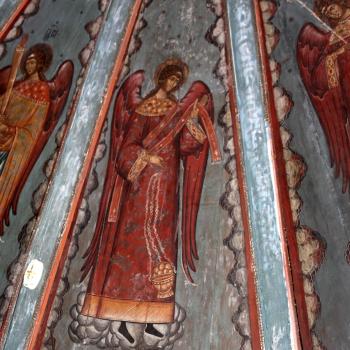
Angels, Humanity, And The Call To Humble Service
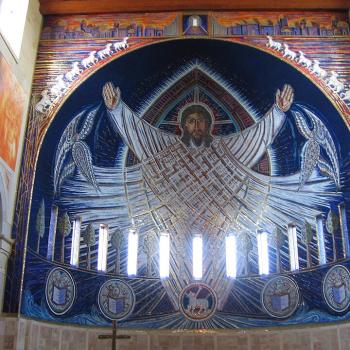
Christ’s Two Natures And The Mystery Of Human...
TRENDING AT PATHEOS Catholic

How Discretion Guides Us Away From Extremes
Prudence is an important virtue for all of us. While we should...

Bad Survey Questions Distort Eucharistic Theology
It seems to be the newest thing: someone conducts a bad survey...

If Baptism Washes Away Sin, Why Do Catholics...
The seven sacraments stand as the foundation of Catholic ecclesial life. The...

The Power of Setting a Good Example
Remember last August when the Chicago White Sox hosted a "Pope Hat...

A Catholic Critique of Biblical Unitarianism
If the statistics are to be believed, Unitarianism is rising worldwide. Although...

How Grandma Tourism Helps Grandparents Live Their Vocation
Grandma, The New Travel Influencer What started as a nostalgia-inspired social media...
view all Catholic blogs
Ad-Free & Subscriber Log-In Subscription Support
- About Us
- 2026 Calendar
- Videos
- Podcasts
- Library of World Religions
- Faith In Media Tracker
- Advertise With Us
- Write for Us
- Privacy Policy
- Terms of Service
- Do Not Sell My Data
- Contact Us
- Radiant Digital
- Manage Newsletter Subscriptions
- Unsubscribe From Notifications
- Sitemap
Copyright 2008-2026, Patheos, part of the Radiant Digital network of media brands. All rights reserved.
Subscription Support Ad-Free & Subscriber Log-In
Follow Patheos