
BuddhistCatholicContemplativeEvangelicalGeneral ChristianHinduJewishLatter-day SaintMuslimNew VisionsProgressive Christian
Beliefs
- Buddhist
- Catholic
- Contemplative
- Evangelical
- General Christian
- Hindu
- Jewish
- Latter-day Saint
- More Voices
- Muslim
- New Visions
- Pagan
- Progressive Christian
Topics
- Religion News
- Food and Religion
- Sports and Religion
- Religious Art
- Religious Music and Entertainment
- Religious Events
- History and Religion
- Style and Religion
- Politics and Religion
- Women in Religion
- Recreation Outdoors and Religion
- Business Finance and Religion
- Careers Workplace and Religion
- Education and Religion
- Family Parenting and Religion
- Health Fitness and Religion
- Home and Religion
- Relationships and Religion
- Technology and Religion
- Travel and Religion
Columnists
- Buddhist Columnists
- Business Finance and Religion Columnists
- Careers Workplace and Religion Columnists
- Catholic Columnists
- Contemplative Columnists
- Education and Religion Columnists
- Evangelists Columnists
- Family Parenting and Religion Columnists
- General Christian Columnists
- Health Fitness and Religion Columnists
- Hindu Columnists
- History and Religion Columnists
- Home and Religion Columnists
- Jewish Columnists
- More Voices Columnists
- Latter Day Columnists
- Muslim Columnists
- New Visions Columnists
- Nonreligious Columnists
- Pagan Columnists
- Politics and Religion Columnists
- Progressive Columnists
- Recreation Outdoors and Religion Columnists
- Relationships and Religion Columnists
- Religion News Columnists
- Religious Art Columnists
- Religious Events Columnists
- Religious Music and Entertainment Columnists
- Sports and Religion Columnists
- Style and Religion Columnists
- Technology and Religion Columnists
- Travel and Religion Columnists
- Women in Religion Columnists
Resource Library
- 2026 Calendar
- Library of World Religions
- The 100 Most Holy Places on Earth
- Patheos Answers
- Podcasts
- Videos
- Faith Leaders Database
- Anglican Episcopalian
- Bahai
- Baptist
- Buddhism
- Christianity
- Confucianism
- Eastern Orthodoxy
- Hinduism
- Holiness and Pentecostal
- ISKCON
- Islam
- Judaism
- Lutheran
- Methodist
- The Church of Jesus Christ of Latter-day Saints
- New Age
- Paganism
- Presbytarian and Reformed
- Protestantism
- Religion Behind the Scenes
- Roman Catholic
- Scientology
- Shia Islam
- Sikhism
- Sufism
- Sunni Islam
- Taoism
- Zen
- See all religions
Research Tools
 Ad-Free & Subscriber Log-In Subscription Support
Ad-Free & Subscriber Log-In Subscription Support
Follow Patheos 

- Trending:
- Forgiveness
- |
- Marriage
- |
- Consciousness
- |
- Death Penalty
- |
- Election
- |
- Halloween
 Hellbound
- Home
- Progressive Christian
- There is no B/13
There is no B/13
Last updated on: October 22, 2014 at 4:32 pm by Kevin Miller
There is no B/13 2014-10-22T16:32:54-06:00 Kevin Miller
Patheos Explore the world's faith through different perspectives on religion and spirituality! Patheos has the views of the prevalent religions and spiritualities of the world.
Yesterday I got into a bit of an altercation with a student during a lecture on screenwriting. I was teaching about how the protagonist’s journey from one way of seeing the world to a completely different way of looking at the world essentially structures the plot of the entire movie. She wasn’t necessarily arguing with that, but the real world implications of this insight clearly unsettled her.
A quote by Wayne Dyer helps to sum up my approach to deconstructing this character change process: “If you change the way you look at things, the things you look at change.” That’s why protagonists have to go on adventures; it’s the only way they can change the way they look at the world. They are caught in an unhealthy system of beliefs, which is giving rise to a dysfunctional set of behaviors. If something doesn’t change soon, our hero is doomed.
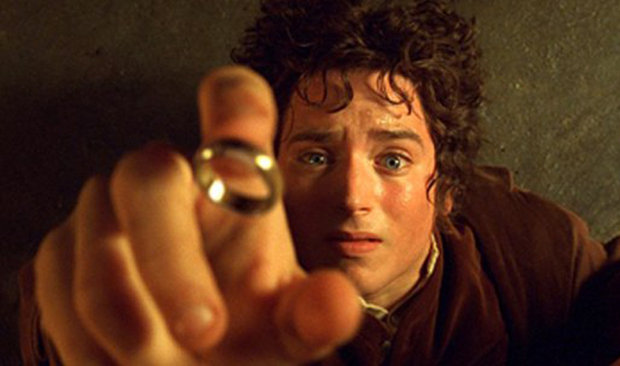 Oftentimes, this transformation process involves the hero leaving his or her “ordinary world” and going off on an adventure in the wilderness (e.g. Frodo’s journey in The Lord of the Rings). At other times, a new dynamic crashes into the protagonist’s ordinary world (e.g. the zombie outbreak in The Walking Dead), disrupts the social order, and forces the protagonist to reconsider not only his worldview but also the strategies he has employed thus far to get through life.
To help illustrate this worldview deconstruction process, I use the “B or 13” optical illusion. I start by priming half the class with a stream of random letters and the other half with a stream of random numbers. Then I show them this symbol and asked them what it is.

Those primed with letters tend to say it’s a B, and the others say it’s a 13. Once I have their answers, I explain how, in the real world, we can be primed to see something a certain way without even realizing it. Then I show them this.

And this.

I explain that, like priming, context also plays a huge role in how we assign meaning to objects and experiences, usually without us being aware of it. In a story, we typically have two characters–a protagonist and an antagonist–who have been primed in different ways and have experienced different contexts that lead them to insist that something is either one or the other. “It’s a B!” “No, it’s a 13!” No matter what interpretation they choose, they’re usually willing to kill for it, or die for it.
Then I show my students this.
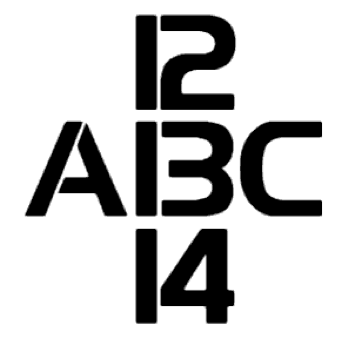 This reveals that the symbol is both a B and a 13 at the same time. In terms of character transformation, this is a key revelation. Once the protagonist gains a better understanding of the antagonist’s context and priming, the antagonist’s way of looking at things becomes clear. And, lo and behold, it’s not clearly wrong. It’s just… different. But now the protagonist is confused. He can see a B and a 13 at the same time, and both ways of interpreting the symbol seem equally valid. What’s a good hero to do?
To mess things up further, I do this.

Then this.

And this.

Suddenly, we realize it’s neither a B nor a 13. It’s merely a straight line and a bumpy line. To put it in terms Keanu Reeves can understand, “There is no B/13.”
Whoa.
Take away the priming and the context, and we realize this symbol has no inherent meaning at all. The only meaning it has is what we assign to it. And here the protagonist and the antagonist were both ready to kill–or die–for their belief, when it was merely a matter of interpretation.
In truth, the protagonist and the antagonist are both partly right, but they are also partly wrong. Their mistake was to latch onto part of the truth and mistake it for the whole. Worse, they failed to see that no matter what aspect of the truth they championed, it was a truth entirely of their own making. An interpretation. They imposed meaning on the symbol, not the other way around. The hero’s journey into the wilderness or the new dynamic that disrupts the hero’s world is what makes this shift in perspective possible. They changed the way they looked at things, and the things they looked at changed.
This is a terribly unsettling moment for any protagonist. Prior to this revelation, which tends to come about 75% of the way into a film during a stage called “the ordeal,” the protagonist thought she had only two choices, defend B at all costs or risk becoming a 13. Now it’s not even both/and; it’s neither/nor. For a brief moment, the protagonist has a clean slate, because she realizes she can assign any meaning to the symbol she wants, if she chooses to assign any meaning at all. And hopefully, once she does assign a meaning, she won’t become a slave to it, because she’ll realize that while priming and context can reveal things, but they can also conceal things. If the context shifts again, who knows what other possibilities might open up? This is why protagonists often go away sadder but wiser. They’ve learned a valuable lesson, but it came at a terrible price due to their unwillingness to surrender something that seemed so self-evident to them that they could’t fathom how anyone could see it any other way.
This realization can be just as unsettling for us as it is for characters in stories. In terms of the aforementioned altercation with one of my students, she kept asking why we have to assign any meaning to the symbol at all. Why can’t we just leave it there? Her concern was that the moment we assign meaning, we have conflict.
I get her point, but the problem is, we are meaning-seeking creatures. We can’t live with ambiguity for long. We can’t just walk away from something like the Bible, for example, and say it doesn’t mean anything at all. The solution, then, is not to refrain from assigning meaning but to realize that no matter what meaning we assign, that’s exactly what we are doing, and that meaning will always be the product of priming and context. Merely an interpretation. As influences shift, so will our perspective. We run into problems when we try to deny this shift is happening and seek to hold fast to an interpretation as if it were an inherent quality of the object rather than something we essentially made up. This is precisely the mistake every protagonist makes at the beginning of a story. Unless they can break free from this rigid approach to life, not only will they suffer, their entire world could be destroyed.
Could the stakes in the real world be any higher? I don’t think so. So keep that in mind the next time you’re caught up in a B/13 debate. It’s not either/or. It’s not even both/and. It’s neither. And it’s both. At the same time.
See why my students get mad at me sometimes?
Previous Post

October 19, 2014
The tyranny of the "reading list"
Next Post
October 23, 2014 Why "terrorists" are suddenly attacking Canada
Browse Our Archives
Select a Category Books environment Film Hell non-violence Philosophy Theology Uncategorized
Select a Month June 2016 May 2016 February 2015 January 2015 December 2014 November 2014 October 2014 September 2014 August 2014 July 2014 June 2014 May 2014 April 2014 March 2014 February 2014 January 2014 December 2013 November 2013 October 2013 September 2013 August 2013 July 2013 June 2013 May 2013 April 2013 March 2013 February 2013 January 2013 December 2012 October 2012 September 2012 August 2012
Follow Us!
TAKE THE
Religious Wisdom Quiz
What does Proverbs say about "a soft answer"?
Select your answer to see how you score.
It brings riches It brings rain It turns away wrath It makes a fool wise
Related posts from Hellbound

You go ahead and keep feeling; I'll do...

Why we love "The Walking Dead"
Just because something hurts doesn't mean it's the...

Why so many white evangelical Christians are incompetent...
TRENDING AT PATHEOS Progressive Christian

Why Christians Have a Sacred Duty to Vote:...
The Bible offers strong support for the sacred duty to vote. Here...

What Being a Modern-Day Apostle Means to Me
In my last column, I discussed the ins and outs of modern-day...

Did Ancient China Once Worship the God of...
Across human history, a common thread weaves through the origins of the...

Love Your Neighbor – Including Earth-Kin: Lev. 19,...
God’s command to love your neighbor means acting in an ethical and...

Lead a Church Study of “Jesus and Lao...
Guest writer Jack Thomas (The Irreverent Reverend) reflects on leading his church...

Principles for Understanding the Apostolic Ministry Today
Whenever people discover that my formal ministry title is "apostle," as in...
view all Progressive Christian blogs
Ad-Free & Subscriber Log-In Subscription Support
- About Us
- 2026 Calendar
- Videos
- Podcasts
- Library of World Religions
- Faith In Media Tracker
- Advertise With Us
- Write for Us
- Privacy Policy
- Terms of Service
- Do Not Sell My Data
- Contact Us
- Radiant Digital
- Manage Newsletter Subscriptions
- Unsubscribe From Notifications
- Sitemap
Copyright 2008-2026, Patheos. All rights reserved.
Subscription Support Ad-Free & Subscriber Log-In
Follow Patheos