
BuddhistCatholicContemplativeEvangelicalGeneral ChristianHinduJewishLatter-day SaintMuslimNew VisionsProgressive Christian
Beliefs
- Buddhist
- Catholic
- Contemplative
- Evangelical
- General Christian
- Hindu
- Jewish
- Latter-day Saint
- More Voices
- Muslim
- New Visions
- Pagan
- Progressive Christian
Topics
- Religion News
- Food and Religion
- Sports and Religion
- Religious Art
- Religious Music and Entertainment
- Religious Events
- History and Religion
- Style and Religion
- Politics and Religion
- Women in Religion
- Recreation Outdoors and Religion
- Business Finance and Religion
- Careers Workplace and Religion
- Education and Religion
- Family Parenting and Religion
- Health Fitness and Religion
- Home and Religion
- Relationships and Religion
- Technology and Religion
- Travel and Religion
Columnists
- Buddhist Columnists
- Business Finance and Religion Columnists
- Careers Workplace and Religion Columnists
- Catholic Columnists
- Contemplative Columnists
- Education and Religion Columnists
- Evangelists Columnists
- Family Parenting and Religion Columnists
- General Christian Columnists
- Health Fitness and Religion Columnists
- Hindu Columnists
- History and Religion Columnists
- Home and Religion Columnists
- Jewish Columnists
- More Voices Columnists
- Latter Day Columnists
- Muslim Columnists
- New Visions Columnists
- Nonreligious Columnists
- Pagan Columnists
- Politics and Religion Columnists
- Progressive Columnists
- Recreation Outdoors and Religion Columnists
- Relationships and Religion Columnists
- Religion News Columnists
- Religious Art Columnists
- Religious Events Columnists
- Religious Music and Entertainment Columnists
- Sports and Religion Columnists
- Style and Religion Columnists
- Technology and Religion Columnists
- Travel and Religion Columnists
- Women in Religion Columnists
Resource Library
- 2026 Calendar
- Library of World Religions
- The 100 Most Holy Places on Earth
- Patheos Answers
- Podcasts
- Videos
- Faith Leaders Database
- Anglican Episcopalian
- Bahai
- Baptist
- Buddhism
- Christianity
- Confucianism
- Eastern Orthodoxy
- Hinduism
- Holiness and Pentecostal
- ISKCON
- Islam
- Judaism
- Lutheran
- Methodist
- The Church of Jesus Christ of Latter-day Saints
- New Age
- Paganism
- Presbytarian and Reformed
- Protestantism
- Religion Behind the Scenes
- Roman Catholic
- Scientology
- Shia Islam
- Sikhism
- Sufism
- Sunni Islam
- Taoism
- Zen
- See all religions
Research Tools
 Ad-Free & Subscriber Log-In Subscription Support
Ad-Free & Subscriber Log-In Subscription Support
Follow Patheos 

- Trending:
- Forgiveness
- |
- Marriage
- |
- Consciousness
- |
- Death Penalty
- |
- Election
- |
- Halloween
 Hellbound
- Home
- Progressive Christian
- How to criticize bad ideas
How to criticize bad ideas
Last updated on: October 10, 2014 at 11:03 am by Kevin Miller
How to criticize bad ideas 2014-10-10T11:03:18-06:00 Kevin Miller
Patheos Explore the world's faith through different perspectives on religion and spirituality! Patheos has the views of the prevalent religions and spiritualities of the world.
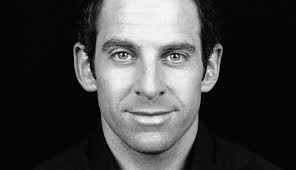 “We have to be able to criticize bad ideas–and Islam is the motherlode of bad ideas.” While no rational person would disagree with the first half of Sam Harris’ statement, his depiction of Islam as a veritable gold mine of fatuous propositions nearly prompted Ben Affleck to go Batman on him during a recent episode of Real Time with Bill Maher. Other commentators have been quick to pounce on Harris, calling him a bigot, racist, and all sorts of other nasty words.
In a written defence of his statement, Harris said,
But imagine that the year is 1970, and I said: “Communism is the Mother lode of bad ideas.” How reasonable would it be to attack me as a “racist” or as someone who harbors an irrational hatred of Russians, Ukrainians, Chinese, etc. This is precisely the situation I am in. My criticism of Islam is a criticism of beliefs and their consequences—but my fellow liberals reflexively view it as an expression of intolerance toward people.”
Harris claims to be able to do something his critics cannot–separate bad ideas from the people who hold them. You might look at it as his own version of “hate the sin, love the sinner.” The problem is, the minute he criticizes the “sin,” people assume he is criticizing the sinner as well, because no one holds a belief–especially a religious belief–at a distance. Over time, these beliefs become so fused with our identity that it’s nearly impossible to separate proposition from person. That leads me to point number one: Harris’ protests to the contrary, it’s impossible to criticize ideas without also criticizing the people who hold them. This doesn’t make you a racist or a bigot; but you can count on people inferring from your critique of their beliefs that you somehow considering those who hold them to be intellectually inferior in some way. Otherwise what’s so clear to you would also be clear to them.
For example, imagine if Affleck had been able to keep his cool long enough to counter with, “What if I said atheism is the motherlode of bad ideas?” I’m sure both Harris and Maher would have been quick to say, “Name one.” Then they would have countered Affleck’s argument and any counter-arguments he offered. That’s because for people like Harris and Maher, atheism–or, as they might put it, a rational approach to the world based on verifiable facts–isn’t just an abstract idea they admire; it’s the very foundation of their identity.
Harris and Maher might have appended their argument by pointing out that although there may be some bad atheists out there, atheism or rationalism as a philosophical system is effectively neutral. I’m sure we all feel similarly about our chosen belief system. In it’s pure, untainted form, it’s inherently good. But there’s always the possibility some bad actors will purposefully or unwittingly subvert it toward some destructive end. This leads to point number two: Be careful to distinguish between an idea or belief in its abstract form and a particular or localized interpretation of an idea.
At the same time, it seems like we have to agree that bad ideas do exist. Some ideas simply aren’t worth considering, never mind defending, because, as Harris points out, beliefs have consequences. This should be pretty straightforward.
 For example, genocide of any race is simply a bad idea. Right? I happen to think so. In fact, this seems perfectly obvious to me. But for some reason it wasn’t perfectly obvious to the Hutus during the Rwandan genocide. What seemed perfectly obvious to them was that if they didn’t kill the Tutsis, the Tutsis would kill them. In their minds, proceeding with genocide wasn’t a bad idea at all; it was their only hope of survival.
This leads me to my third thought on how to criticize bad ideas: Don’t assume everyone agrees on what the bad ideas are. This is an aspect of what Jonathan Haidt calls moral dumbfounding, our tendency to experience moral intuitions as moral facts. If we aren’t willing to empathize with the holders of these bad ideas, to seek to understand the thought process that led them to this belief, we have little hope of leading them away from it.
It should go without saying that when we offer criticism, we need to get our facts straight. As Harris points out in his written response to his dustup with Affleck, you can’t base your beliefs on anecdotal experiences alone. You need to step back and take in the broader picture. We all have our biases and emotional commitments. Statistics can go a long ways towards tempering the distorting effect of our personal preferences. That’s why I recommended in a recent post that people read this Pew study on Islamic beliefs about Sharia. Some of the findings may alarm you, but they will also surprise you.
When offering criticism, we also need to be precise. Are we criticizing Islam as a whole? Certain Islamic beliefs? Particular practices inspired by those beliefs? Certain interpretations or interpreters of those beliefs? Localized instantiations of those beliefs? Clarifying exactly what we are criticizing not only raises the possibility that our opponents might actually listen to us, it also helps us get beyond our gut moral intuitions and dial down to what really bothers us about a particular belief.
Finally, perhaps the most important lesson to take away from the Affleck/Maher/Harris showdown is avoid inflammatory statements and gross generalizations. Calling Harris a racist or a bigot is just as unlikely to get him to change his views as it is to call Islam the motherlode of bad ideas. Such language is self-justifying (and self-satisfying), but all it leads to is deeper entrenchment, as we witnessed in real time on Real Time.
WHAT IF YOU FIND YOURSELF ON THE RECEIVING END OF SUCH CRITICISM?
1. Listen. Make sure you actually hear what the criticism is before you respond to it. Listen particularly for the “criticism behind the criticism.” What is really motivating your critic? Are they truly responding to the idea itself or is something else at work? Are any of their points valid? If not, why?
2. Check your motives. Why is this particular idea or belief so important to you? What benefits does it provide? What fears does it alleviate? How have you integrated this belief into your identity? What do you have to lose if you surrender the belief? How might that be distorting your refusal to let it go? If you’re really honest, what sort of fruit is this belief producing in your life and in the world around you? If you didn’t already privilege the idea or belief in your head, would you feel as strongly about it?
3. Be willing to admit you are wrong. This is a toughie, especially if you’ve just blown your top on national TV. But most people (politicians excluded) regard the ability to change your mind in the face of compelling evidence as a virtue. The same goes for the ability to apologize and seek forgiveness from those you have have hurt.
I’m probably not telling you anything you don’t already know, but as the old Sufi proverb goes, “You can only learn what you already know.” The problem is, in the heat of the moment, we tend to forget what we know. So a little reminder now and again never hurts.
Next Post

October 14, 2014 Why having everyone agree with you would be the worst thing ever
Browse Our Archives
Select a Category Books environment Film Hell non-violence Philosophy Theology Uncategorized
Select a Month June 2016 May 2016 February 2015 January 2015 December 2014 November 2014 October 2014 September 2014 August 2014 July 2014 June 2014 May 2014 April 2014 March 2014 February 2014 January 2014 December 2013 November 2013 October 2013 September 2013 August 2013 July 2013 June 2013 May 2013 April 2013 March 2013 February 2013 January 2013 December 2012 October 2012 September 2012 August 2012
Follow Us!
TAKE THE
Religious Wisdom Quiz
Who betrayed David to Absalom, offering counsel that was not followed?
Select your answer to see how you score.
Zadok Ahithophel Joab Abiathar
Related posts from Hellbound

You go ahead and keep feeling; I'll do...

When goods don't cross borders, armies will

Who is really naive--those who think violence can...

Why "terrorists" are suddenly attacking Canada
TRENDING AT PATHEOS Progressive Christian

Why Christians Have a Sacred Duty to Vote:...
The Bible offers strong support for the sacred duty to vote. Here...

What Being a Modern-Day Apostle Means to Me
In my last column, I discussed the ins and outs of modern-day...

Did Ancient China Once Worship the God of...
Across human history, a common thread weaves through the origins of the...

Love Your Neighbor – Including Earth-Kin: Lev. 19,...
God’s command to love your neighbor means acting in an ethical and...

Lead a Church Study of “Jesus and Lao...
Guest writer Jack Thomas (The Irreverent Reverend) reflects on leading his church...

Principles for Understanding the Apostolic Ministry Today
Whenever people discover that my formal ministry title is "apostle," as in...
view all Progressive Christian blogs
Ad-Free & Subscriber Log-In Subscription Support
- About Us
- 2026 Calendar
- Videos
- Podcasts
- Library of World Religions
- Faith In Media Tracker
- Advertise With Us
- Write for Us
- Privacy Policy
- Terms of Service
- Do Not Sell My Data
- Contact Us
- Radiant Digital
- Manage Newsletter Subscriptions
- Unsubscribe From Notifications
- Sitemap
Copyright 2008-2026, Patheos. All rights reserved.
Subscription Support Ad-Free & Subscriber Log-In
Follow Patheos