
BuddhistCatholicContemplativeEvangelicalGeneral ChristianHinduJewishLatter-day SaintMuslimNew VisionsProgressive Christian
Beliefs
- Buddhist
- Catholic
- Contemplative
- Evangelical
- General Christian
- Hindu
- Jewish
- Latter-day Saint
- More Voices
- Muslim
- New Visions
- Pagan
- Progressive Christian
Topics
- Religion News
- Food and Religion
- Sports and Religion
- Religious Art
- Religious Music and Entertainment
- Religious Events
- History and Religion
- Style and Religion
- Politics and Religion
- Women in Religion
- Recreation Outdoors and Religion
- Business Finance and Religion
- Careers Workplace and Religion
- Education and Religion
- Family Parenting and Religion
- Health Fitness and Religion
- Home and Religion
- Relationships and Religion
- Technology and Religion
- Travel and Religion
Columnists
- Buddhist Columnists
- Business Finance and Religion Columnists
- Careers Workplace and Religion Columnists
- Catholic Columnists
- Contemplative Columnists
- Education and Religion Columnists
- Evangelists Columnists
- Family Parenting and Religion Columnists
- General Christian Columnists
- Health Fitness and Religion Columnists
- Hindu Columnists
- History and Religion Columnists
- Home and Religion Columnists
- Jewish Columnists
- More Voices Columnists
- Latter Day Columnists
- Muslim Columnists
- New Visions Columnists
- Nonreligious Columnists
- Pagan Columnists
- Politics and Religion Columnists
- Progressive Columnists
- Recreation Outdoors and Religion Columnists
- Relationships and Religion Columnists
- Religion News Columnists
- Religious Art Columnists
- Religious Events Columnists
- Religious Music and Entertainment Columnists
- Sports and Religion Columnists
- Style and Religion Columnists
- Technology and Religion Columnists
- Travel and Religion Columnists
- Women in Religion Columnists
Resource Library
- 2026 Calendar
- Library of World Religions
- The 100 Most Holy Places on Earth
- Patheos Answers
- Podcasts
- Videos
- Faith Leaders Database
- Anglican Episcopalian
- Bahai
- Baptist
- Buddhism
- Christianity
- Confucianism
- Eastern Orthodoxy
- Hinduism
- Holiness and Pentecostal
- ISKCON
- Islam
- Judaism
- Lutheran
- Methodist
- The Church of Jesus Christ of Latter-day Saints
- New Age
- Paganism
- Presbytarian and Reformed
- Protestantism
- Religion Behind the Scenes
- Roman Catholic
- Scientology
- Shia Islam
- Sikhism
- Sufism
- Sunni Islam
- Taoism
- Zen
- See all religions
Research Tools
 Ad-Free & Subscriber Log-In Subscription Support
Ad-Free & Subscriber Log-In Subscription Support
Follow Patheos 

- Trending:
- Forgiveness
- |
- Marriage
- |
- Consciousness
- |
- Death Penalty
- |
- Election
- |
- Halloween
 Hellbound
- Home
- Progressive Christian
- Have you fallen for the myth of pure evil?
Have you fallen for the myth of pure evil?
Last updated on: September 30, 2014 at 10:16 am by Kevin Miller
Have you fallen for the myth of pure evil? 2014-09-30T10:16:13-06:00 Kevin Miller
Patheos Explore the world's faith through different perspectives on religion and spirituality! Patheos has the views of the prevalent religions and spiritualities of the world.
 In his book Evil, psychologist Roy Baumeister busts what he calls the myth of pure evil, the idea that evil is,
the intentional and gratuitous infliction of harm for its own sake, perpetrated by a villain who is malevolent to the bone, inflicted on a victim who is innocent and good.
We see depictions of this sort of evil all the time in horror films, fairytales, news coverage and statements by global political leaders who are seeking to justify yet another dalliance in a foreign country.
Despite its ubiquity and its effectiveness at glazing over the eyes of the masses, according to Baumeister and experimental psychologist Steven Pinker, author of The Better Angels of Our Nature, this depiction of evil is a myth, because,
when seen through psychological spectacles, evil in fact is perpetrated by people who are mostly ordinary, and who respond to their circumstances, including provocations by the victim, in ways they feel are reasonable and just.
In other words, while we tend to view the evil we commit as necessary, limited, preventative, preemptive, even compassionate–if done on behalf of victims–we portray the evil our enemies commit as barbaric, excessive, indiscriminate and unprovoked. Meanwhile, our enemies feel exactly the same way about the evil they commit and vice versa. Hence, nearly every conflict essentially boils down to competing victim narratives, with each side seeking to justify its “virtuous” actions in the face of the enemy’s obvious villainy.
The problem with the myth of pure evil, according to Pinker and Baumeister, is that it “bedevils our attempts to understand real evil.” If we see evil as an inherent quality of particular individuals or people groups, rather than a self-justifying tendency toward self-preservation inherent to all human beings, we become blind to the horrors we commit every day for the sake of the good.
Oftentimes, our blindness is merely that, an inability to see the true motives of our actions. At other times, those in power play to this tendency by employing tactics specifically designed to reduce the cognitive dissonance we experience when confronted with the full scope of the “necessary” evils we commit.
These tactics include euphemisms like “collateral damage,” “incontinent ordnance” or “surgical strike.” Gradualism–a slow, steady immersion into a type of behavior that would be considered abhorrent if engaged in immediately–is also effective. First we send in military advisors. Then we launch air strikes. Then we put boots on the ground, all the while expressing angst and regret about the need to escalate our involvement. Then there’s diffusion of responsibility. We don’t go it alone, for fear of being scapegoated once the true extent of our violence becomes known. Therefore, we form coalitions, at least on paper, ostensibly so we can share the credit and the burden of responsibility for keeping the world safe, but primarily so we can share the blame after the fact when the true motives for this conflict (which are almost always a far cry from the stated motives) become known.
A fourth tactic is distancing, restricting ourselves to a long-distance, push button war in order to reduce psychological trauma. As Pinker says,
It’s safe to say that the pilot of the Enola Gay who dropped the atomic bomb over Hiroshima would not have agreed to immolate a hundred thousand people with a flamethrower one at a time.
Whether the pilot was willing or not, the effects of his actions were the same. This is why we often find the tactics of our enemies so shocking. They seem to have no psychological need for distancing, which is terrifying, and perhaps the only true difference between us and them.
The final tactic is to derogate or demonize the target, which is where the myth of pure evil comes in.
The myth of pure evil derives most of its power from another fallacy–the myth of the autonomous individual, a.k.a. the myth of free will. The alternative is not fatalism or pure determinism, as many believe. Rather, to take a page out of the book of family systems therapy, a more accurate way to understand the causality of human behavior is to view individuals as the product of systems. In this view, sick people are the product of sick systems rather than isolated repositories of wickedness. Those whom we label as pure evil are merely those most susceptible to whatever dysfunction has beset the system. Unable to bear up under the stress, they act out in ways that are unthinkable and horrifying. When confronted with such behavior, instead of seeking to understand what is truly causing it–and the role we may have played in the individual’s dysfunction–we tend to point the finger and then isolate or eliminate the individual or group as if they were a cancerous tumor (i.e. “the cancer of violent extremism”) rather than a signal that our body’s entire immune system has turned against itself.
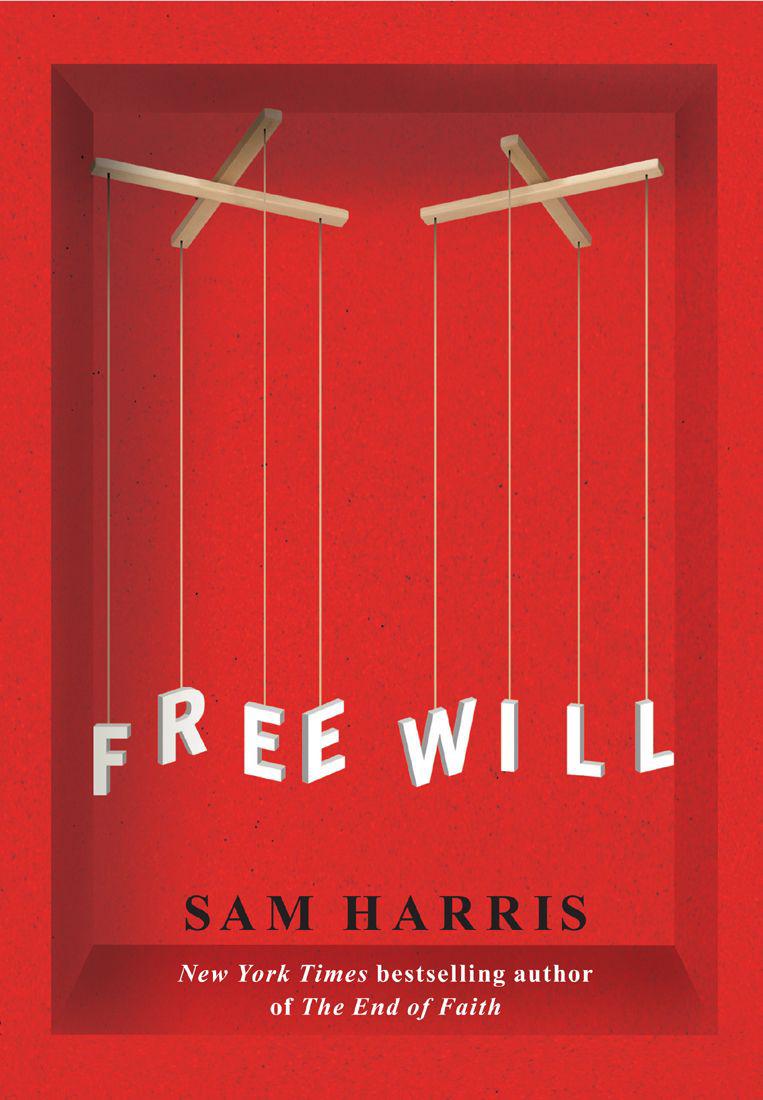 Neuroscientist and philosopher Sam Harris articulates a similar view of causality in his book Free Will.
The idea that we as conscious beings are deeply responsible for the character of our own minds is just impossible to map onto reality. And if we want to be guided by reality–rather than the fantasy life of our ancestors–I think our views on this topic have to change.
Some of you might think this sounds very depressing. This seems to take something away from us. And it’s true. It takes away an egocentric view of life. But I think this can be liberating. We are not truly separate; we are linked to each other. And to our past and to history. We are part of system, and, therefore, what we do matters.
You can’t take credit for your talents, but it really matters if you use them. You can’t really be blamed for your weaknesses and your failings, but it matters if you correct them. Pride and shame don’t make a lot of sense in the final analysis. But they were no fun anyway. These are isolating emotions. What does make sense are things like compassion and love: caring about well-being makes sense; trying to maximize your well-being and the well-being of others makes sense… All of that still makes sense without free will.
As much as I side with Harris on this one, I don’t think think many of us really want to abandon the myth of pure evil (or the myth of free will for that matter) even in the face of evidence that so clearly contradicts it. These myths are simply doing too much work in the world–politically, tactically and emotionally. However, as long as we persist within the reality distortion field that the myth of pure evil creates, we will continue to run aground on the rocks of reality–and be led astray by those who would use our blindness in this area for their own ends. One day we will wake up and realize our quixotic quest to vanquish the chimera of pure evil has brought us toe to toe with real evil, the face of which will be no further away than the closest mirror.
Previous Post

September 25, 2014
Am I smarter than President Obama? I don't think so...
Next Post
October 1, 2014 Obviously, air strikes fix everything
Browse Our Archives
Select a Category Books environment Film Hell non-violence Philosophy Theology Uncategorized
Select a Month June 2016 May 2016 February 2015 January 2015 December 2014 November 2014 October 2014 September 2014 August 2014 July 2014 June 2014 May 2014 April 2014 March 2014 February 2014 January 2014 December 2013 November 2013 October 2013 September 2013 August 2013 July 2013 June 2013 May 2013 April 2013 March 2013 February 2013 January 2013 December 2012 October 2012 September 2012 August 2012
Follow Us!
TAKE THE
Religious Wisdom Quiz
What does Proverbs 22:6 say about training a child?
Select your answer to see how you score.
Train up a child in the way he should go, and when he is old he will not depart from it. Teach a child discipline, and he will live in wisdom. Children should be seen and not heard. Guide the young, and they will not stumble.
Related posts from Hellbound

You go ahead and keep feeling; I'll do...

When goods don't cross borders, armies will

Who is really naive--those who think violence can...

Why "terrorists" are suddenly attacking Canada
TRENDING AT PATHEOS Progressive Christian

Why Christians Have a Sacred Duty to Vote:...
The Bible offers strong support for the sacred duty to vote. Here...

What Being a Modern-Day Apostle Means to Me
In my last column, I discussed the ins and outs of modern-day...

Did Ancient China Once Worship the God of...
Across human history, a common thread weaves through the origins of the...

Love Your Neighbor – Including Earth-Kin: Lev. 19,...
God’s command to love your neighbor means acting in an ethical and...

Lead a Church Study of “Jesus and Lao...
Guest writer Jack Thomas (The Irreverent Reverend) reflects on leading his church...

Principles for Understanding the Apostolic Ministry Today
Whenever people discover that my formal ministry title is "apostle," as in...
view all Progressive Christian blogs
Ad-Free & Subscriber Log-In Subscription Support
- About Us
- 2026 Calendar
- Videos
- Podcasts
- Library of World Religions
- Faith In Media Tracker
- Advertise With Us
- Write for Us
- Privacy Policy
- Terms of Service
- Do Not Sell My Data
- Contact Us
- Radiant Digital
- Manage Newsletter Subscriptions
- Unsubscribe From Notifications
- Sitemap
Copyright 2008-2026, Patheos. All rights reserved.
Subscription Support Ad-Free & Subscriber Log-In
Follow Patheos