
BuddhistCatholicContemplativeEvangelicalGeneral ChristianHinduJewishLatter-day SaintMuslimNew VisionsProgressive Christian
Beliefs
- Buddhist
- Catholic
- Contemplative
- Evangelical
- General Christian
- Hindu
- Jewish
- Latter-day Saint
- More Voices
- Muslim
- New Visions
- Pagan
- Progressive Christian
Topics
- Religion News
- Food and Religion
- Sports and Religion
- Religious Art
- Religious Music and Entertainment
- Religious Events
- History and Religion
- Style and Religion
- Politics and Religion
- Women in Religion
- Recreation Outdoors and Religion
- Business Finance and Religion
- Careers Workplace and Religion
- Education and Religion
- Family Parenting and Religion
- Health Fitness and Religion
- Home and Religion
- Relationships and Religion
- Technology and Religion
- Travel and Religion
Columnists
- Buddhist Columnists
- Business Finance and Religion Columnists
- Careers Workplace and Religion Columnists
- Catholic Columnists
- Contemplative Columnists
- Education and Religion Columnists
- Evangelists Columnists
- Family Parenting and Religion Columnists
- General Christian Columnists
- Health Fitness and Religion Columnists
- Hindu Columnists
- History and Religion Columnists
- Home and Religion Columnists
- Jewish Columnists
- More Voices Columnists
- Latter Day Columnists
- Muslim Columnists
- New Visions Columnists
- Nonreligious Columnists
- Pagan Columnists
- Politics and Religion Columnists
- Progressive Columnists
- Recreation Outdoors and Religion Columnists
- Relationships and Religion Columnists
- Religion News Columnists
- Religious Art Columnists
- Religious Events Columnists
- Religious Music and Entertainment Columnists
- Sports and Religion Columnists
- Style and Religion Columnists
- Technology and Religion Columnists
- Travel and Religion Columnists
- Women in Religion Columnists
Resource Library
- 2026 Calendar
- Library of World Religions
- The 100 Most Holy Places on Earth
- Patheos Answers
- Podcasts
- Videos
- Faith Leaders Database
- Anglican Episcopalian
- Bahai
- Baptist
- Buddhism
- Christianity
- Confucianism
- Eastern Orthodoxy
- Hinduism
- Holiness and Pentecostal
- ISKCON
- Islam
- Judaism
- Lutheran
- Methodist
- The Church of Jesus Christ of Latter-day Saints
- New Age
- Paganism
- Presbytarian and Reformed
- Protestantism
- Religion Behind the Scenes
- Roman Catholic
- Scientology
- Shia Islam
- Sikhism
- Sufism
- Sunni Islam
- Taoism
- Zen
- See all religions
Research Tools
 Ad-Free & Subscriber Log-In Subscription Support
Ad-Free & Subscriber Log-In Subscription Support
Follow Patheos 

- Trending:
- Forgiveness
- |
- Marriage
- |
- Consciousness
- |
- Death Penalty
- |
- Election
- |
- Halloween
 Hellbound
- Home
- Progressive Christian
- Moral outrage and other ways to “win” arguments
Moral outrage and other ways to “win” arguments
Last updated on: March 4, 2014 at 7:27 am by Kevin Miller
Moral outrage and other ways to “win” arguments 2014-03-04T07:27:36-07:00 Kevin Miller
Patheos Explore the world's faith through different perspectives on religion and spirituality! Patheos has the views of the prevalent religions and spiritualities of the world.
 If you’d like to read a fascinating critique of penal substitutionary atonement theory, I heartily recommend you read through Michael Hardin’s comments on this recent post by Scot McKnight. However, if you’d like to observe some commonly employed tactics used to avoid substantive critique of one’s position, I invite you to read Scot’s post, itself. Not that I’m accusing Scot of any sort of nefarious activity. I think most of these techniques are employed subconsciously in an understandable and all too natural effort to self-justify.
Tactic 1: Moral outrage
“How dare you call penal substitutionary atonement (PSA) divine child abuse!” These aren’t Scot’s words exactly, but they sum up the sentiment of his objection to critics of PSA. This is a common technique used to distract people from the real issue. If I express outrage at your analogy, I can deftly avoid dealing with the underlying critique is was employed to illustrate. Unfortunately, this is a red herring and does nothing to advance the argument.
This is a good word of warning to those who are seeking to advance a serious critique of an entrenched argument, though. Choose your analogies wisely, lest you run afoul of Poe’s law. I’ve long believed that he or she who builds the best metaphor wins. However, metaphors can just as easily do you in if not used properly.
Tactic 2: Don’t caricature me!
This technique is related to Tactic 1. Accuse critics of criticizing a caricature of your theory rather than the theory itself. This implies that the critique doesn’t need to be taken seriously, and that those who have launched the critique are not serious scholars. They haven’t taken the time to truly understand PSA, for example, otherwise they would concede to the obvious logic inherent in such a view.
Tactic 3: Let me define my position on my own terms
Underlying this tactic is the belief that if I merely express myself clearly enough, my critics’ disagreements will melt away. Behind this belief is an assumption similar to Tactic 2, that my critics either haven’t done their homework or, worse, are incapable of grasping the clear logic of my position.
What those who employ this tactic fail to realize is any attempt to define one’s position on one’s own terms will be automatically self-justifying. It’s like a criminal insisting we allow him or her to define his or her actions according to the criminal’s own twisted, self-justifying logic–when it’s that very logic that is the point of contention. The fact is, no matter how clearly proponents of PSA articulate their theory, there’s no way such a definition will ever satisfy their critics. It will merely serve to sharpen the divide, because it will make the mutually incompatible logic of sacrifice vs. self-sacrifice all the more clear. It’s also to miss the entire point of the debate entirely, because the terms PSA proponents are using to define themselves, God, the crucifixion, etc. are the very problem under discussion.
This is a great example of the moral dumbfounding process that often takes place where two mutually incompatible paradigms bump up against each other. There’s always a stage of mutual incomprehension, because unless we are truly empathetic–willing to step into the shoes of another and view the world through his or her eyes–we really have no choice but to dismiss those with whom we disagree as intellectually or morally defective/inferior (or possibly a combination of the two). Otherwise they would grasp immediately what is so clear to “the rest of us.”
Furthermore, I should add that we all want to define the debate on our own terms, because those terms favor us. So I think that’s often what we are seeking as a meta-project, to be the ones who define the terms of the entire debate.
Tactic 4: You’re merely conceding to what’s fashionable rather than what’s true
This is a tired tactic employed not only in Scot’s post but also in a recent Christianity Today article critiquing Donald Miller, Rob Bell and Brian McLaren. In Scot’s case, he notes that it became fashionable about a decade ago for critics to refer to PSA as a form of divine child abuse. Therefore, it is implied that those who repeat this rhetoric are merely going with the flow rather than thinking critically or acting based on their conscience. Also implied is that such critics are more interested in being fashionable–being viewed as free-thinking, liberal, etc.–than seeking truth. I would call this a “ground-softening” ad hominem tactic used to cast doubts on a critic’s motives prior to launching into a more substantive critique of his or her argument.
Again, let me emphasize that I don’t see Scot employing these tactics in an underhanded way. Resorting to such neutralizing tactics is a natural response when one’s pet theory is threatened. Unfortunately, rarely can such disputes be resolved through rational debate, because as Jonathan Haidt argues convincingly in The Righteous Mind, reason is typically employed not to find truth but to bolster and propagate what one already believes. As I teach in my screenwriting classes, movie after movie illustrates that the only thing that can truly change our minds is some sort of corrective emotional experience. (Picture the prodigal son pining away for pig food.) To put it in Kuhnian terms, only when our pet theory accumulates a preponderance of anomalies do we enter a crisis of belief that allows us to consider that perhaps a paradigm shift is in order.
As a side note, here are three other common neutralizing tactics that don’t show up in Scot’s post but do show up in several other places:
Tactic 5: Retreat into mystery
This is perhaps another way of saying, “We’ll have to agree to disagree on this one.” We recognize that neither of us can prove our case beyond a reasonable doubt. Therefore, we will have to declare a truce. Stated more forcefully, one might argue that some questions are beyond human comprehension, therefore the debate can go no further. Stated even more forcefully, one might argue that our critics’ obsessive need to explain everything is a form of psychosis or neurosis. This is another version of an ad hominem attack that casts aspersions on our critics. They crave certainty where it cannot be found, because rather than the product of a lively, inquisitive mind, their desire for truth is merely a byproduct of some sort of cognitive or affective malfunction.
Tactic 6: Majority rules
This is perhaps one of the most common tactics we see in theological or scientific debates when defenders of the status quo are seeking to discredit a minority position. Their critics can’t possibly be right, because there are so few of them. What those who employ this tactic fail to grasp is that every majority position started out as a minority position. For example, Jesus and his disciples represented a minority position within Judaism. Does that mean they were wrong? Their critics, who represented the status quo, certainly thought so.
Tactic 7: Chronological snobbery
“Your critique can’t possibly be correct or else someone would have seen it before. Who are you to think you’re smarter than scholar X, Y, Z, to stand against the tide of history?”
Chronological snobbery is a term coined by C. S. Lewis and Own Barfield to defend against the tendency to dismiss older ideas, such as religion, as inherently inferior to more recent ideas, such as science. However, I would contend that chronological snobbery is a two-way street. It’s just as irrational to venerate an idea because it’s old as it is to regard new ideas with suspicion. As my friend Ron Dart likes to say, “Every reading of a text reveals some things and conceals others.” I would say the same thing about every point in history. Every set of historical circumstances makes some things very clear while concealing others. The trick is to not fall so in love what what our current set of circumstances reveals that we forget what they are concealing. That’s why we should always approach theological issues in particular with a “long lens” that takes in the depth and breadth of history. However, we should never be a slave to history or to a particular theological position even it was first articulated by the fathers and mothers of the church. Every theological position is a product of a particular set of historical circumstances that offered both strengths and limitations, just as our own place in history does today.
Tactic 8: Overwhelming evidence
This is another way of avoiding the substance of your critic’s argument by trotting out a veritable mountain of evidence in favor of your position. For example, “Jesus talks about hell more than anyone else in the Bible. Therefore hell must exist.” In other words, how could you possibly deny the existence of hell in the face of not only a preponderance of evidence but evidence from the highest authority imaginable? The only people who would do that could only be described as ignorant, stupid, wicked or insane (to paraphrase Richard Dawkins’ re: those who doubt evolution). There are two problems with this sort of argument. First, our philosophical or theological paradigms determine what does and does not count as evidence. Therefore, what looks like a mountain of evidence for you, e.g. an astrologer, isn’t even a molehill for me, because my paradigm doesn’t even allow your evidence in the door. Like tactic 3, this technique misses the point of the debate entirely, b/c what is under dispute is not the amount of evidence but the most appropriate paradigm through which to interpret the evidence. Which brings me to the second problem with this tactic: The “overwhelming evidence” tactic is often a byproduct of “mistaking the map for the territory” fallacy. I don’t care how many times Jesus talked about hell (for the record, he never talked about hell, at least not in the gospels, but he did have plenty to say about Gehenna), the only question that matters is, how should we interpret what he said?
Of course, I can’t end this post without mentioning one final tactic:
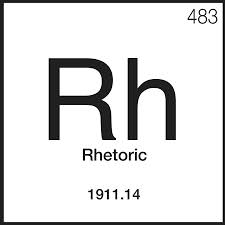
Tactic 9: Dissecting our opponent’s rhetoric as a way of avoiding the substance of his or her critique.
I think the title of this one speaks for itself. I just thought I should beat my own critics to the punch before they accuse me of using it!
penal substitutionary atonement
Previous Post

February 22, 2014
For the record, I am NOT Kevin A. Miller
Browse Our Archives
Select a Category Books environment Film Hell non-violence Philosophy Theology Uncategorized
Select a Month June 2016 May 2016 February 2015 January 2015 December 2014 November 2014 October 2014 September 2014 August 2014 July 2014 June 2014 May 2014 April 2014 March 2014 February 2014 January 2014 December 2013 November 2013 October 2013 September 2013 August 2013 July 2013 June 2013 May 2013 April 2013 March 2013 February 2013 January 2013 December 2012 October 2012 September 2012 August 2012
Follow Us!
TAKE THE
Religious Wisdom Quiz
Who interpreted Nebuchadnezzar's dream of a statue of gold, silver, bronze, iron, and clay?
Select your answer to see how you score.
Obadiah Ezekiel Hosea Daniel
Related posts from Hellbound

You go ahead and keep feeling; I'll do...

Why we love "The Walking Dead"
Just because something hurts doesn't mean it's the...

Why so many white evangelical Christians are incompetent...
TRENDING AT PATHEOS Progressive Christian

Why Christians Have a Sacred Duty to Vote:...
The Bible offers strong support for the sacred duty to vote. Here...

What Being a Modern-Day Apostle Means to Me
In my last column, I discussed the ins and outs of modern-day...

Did Ancient China Once Worship the God of...
Across human history, a common thread weaves through the origins of the...

Love Your Neighbor – Including Earth-Kin: Lev. 19,...
God’s command to love your neighbor means acting in an ethical and...

Lead a Church Study of “Jesus and Lao...
Guest writer Jack Thomas (The Irreverent Reverend) reflects on leading his church...

Principles for Understanding the Apostolic Ministry Today
Whenever people discover that my formal ministry title is "apostle," as in...
view all Progressive Christian blogs
Ad-Free & Subscriber Log-In Subscription Support
- About Us
- 2026 Calendar
- Videos
- Podcasts
- Library of World Religions
- Faith In Media Tracker
- Advertise With Us
- Write for Us
- Privacy Policy
- Terms of Service
- Do Not Sell My Data
- Contact Us
- Radiant Digital
- Manage Newsletter Subscriptions
- Unsubscribe From Notifications
- Sitemap
Copyright 2008-2026, Patheos. All rights reserved.
Subscription Support Ad-Free & Subscriber Log-In
Follow Patheos