
BuddhistCatholicContemplativeEvangelicalGeneral ChristianHinduJewishLatter-day SaintMuslimNew VisionsProgressive Christian
Beliefs
- Buddhist
- Catholic
- Contemplative
- Evangelical
- General Christian
- Hindu
- Jewish
- Latter-day Saint
- More Voices
- Muslim
- New Visions
- Pagan
- Progressive Christian
Topics
- Religion News
- Food and Religion
- Sports and Religion
- Religious Art
- Religious Music and Entertainment
- Religious Events
- History and Religion
- Style and Religion
- Politics and Religion
- Women in Religion
- Recreation Outdoors and Religion
- Business Finance and Religion
- Careers Workplace and Religion
- Education and Religion
- Family Parenting and Religion
- Health Fitness and Religion
- Home and Religion
- Relationships and Religion
- Technology and Religion
- Travel and Religion
Columnists
- Buddhist Columnists
- Business Finance and Religion Columnists
- Careers Workplace and Religion Columnists
- Catholic Columnists
- Contemplative Columnists
- Education and Religion Columnists
- Evangelists Columnists
- Family Parenting and Religion Columnists
- General Christian Columnists
- Health Fitness and Religion Columnists
- Hindu Columnists
- History and Religion Columnists
- Home and Religion Columnists
- Jewish Columnists
- More Voices Columnists
- Latter Day Columnists
- Muslim Columnists
- New Visions Columnists
- Nonreligious Columnists
- Pagan Columnists
- Politics and Religion Columnists
- Progressive Columnists
- Recreation Outdoors and Religion Columnists
- Relationships and Religion Columnists
- Religion News Columnists
- Religious Art Columnists
- Religious Events Columnists
- Religious Music and Entertainment Columnists
- Sports and Religion Columnists
- Style and Religion Columnists
- Technology and Religion Columnists
- Travel and Religion Columnists
- Women in Religion Columnists
Resource Library
- 2026 Calendar
- Library of World Religions
- The 100 Most Holy Places on Earth
- Patheos Answers
- Podcasts
- Videos
- Faith Leaders Database
- Anglican Episcopalian
- Bahai
- Baptist
- Buddhism
- Christianity
- Confucianism
- Eastern Orthodoxy
- Hinduism
- Holiness and Pentecostal
- ISKCON
- Islam
- Judaism
- Lutheran
- Methodist
- The Church of Jesus Christ of Latter-day Saints
- New Age
- Paganism
- Presbytarian and Reformed
- Protestantism
- Religion Behind the Scenes
- Roman Catholic
- Scientology
- Shia Islam
- Sikhism
- Sufism
- Sunni Islam
- Taoism
- Zen
- See all religions
Research Tools
 Ad-Free & Subscriber Log-In Subscription Support
Ad-Free & Subscriber Log-In Subscription Support
Follow Patheos 

- Trending:
- Forgiveness
- |
- Marriage
- |
- Consciousness
- |
- Death Penalty
- |
- Election
- |
- Halloween
 Hellbound
- Home
- Progressive Christian
- A momentary lapse of reason?
A momentary lapse of reason?
Last updated on: February 23, 2014 at 12:21 am by Kevin Miller
A momentary lapse of reason? 2014-02-23T00:21:42-07:00 Kevin Miller
Patheos Explore the world's faith through different perspectives on religion and spirituality! Patheos has the views of the prevalent religions and spiritualities of the world.
 I’ve been following with great interest Sam Harris’s extended exchanges with his critics. First it was Daniel Dennet, who wrote a lengthy and scathing critique of Harris’s book Free Will, calling it a “veritable museum of mistakes.”
I am grateful to Harris for saying, so boldly and clearly, what less outgoing scientists are thinking but keeping to themselves. I have always suspected that many who hold this hard determinist view are making these mistakes, but we mustn’t put words in people’s mouths, and now Harris has done us a great service by articulating the points explicitly, and the chorus of approval he has received from scientists goes a long way to confirming that they have been making these mistakes all along. Wolfgang Pauli’s famous dismissal of another physicist’s work as “not even wrong” reminds us of the value of crystallizing an ambient cloud of hunches into something that can be shown to be wrong. Correcting widespread misunderstanding is usually the work of many hands, and Harris has made a significant contribution.
Not to be outdone, Harris wrote his own blistering critique of Dennett’s piece, during which he lamented the sad state of intellectual discourse:
In recent years, I have spent so much time debating scientists, philosophers, and other scholars that I’ve begun to doubt whether any smart person retains the ability to change his mind. This is one of the great scandals of intellectual life: The virtues of rational discourse are everywhere espoused, and yet witnessing someone relinquish a cherished opinion in real time is about as common as seeing a supernova explode overhead. The perpetual stalemate one encounters in public debates is annoying because it is so clearly the product of motivated reasoning, self-deception, and other failures of rationality—and yet we’ve grown to expect it on every topic, no matter how intelligent and well-intentioned the participants. I hope you and I don’t give our readers further cause for cynicism on this front.
Unfortunately, your review of my book doesn’t offer many reasons for optimism.
To help demonstrate his own open-mindedness, Harris launched the Moral Landscape Challenge, in which he pledged to pay $10,000 to anyone who submits an essay so logically compelling that it makes him renounce his views on science’s ability to determine morality (which he defines as “the well-being of conscious creatures”).
Now social psychologist Jonathan Haidt (The Righteous Mind)has stepped up to the plate and issued The Righteous Mind Challenge, in which he has offered to pay Sam Harris $10,000 if anyone actually does succeed in changing his mind about morality. Haidt thinks it’s a pretty safe bet Harris won’t change his mind, based in part on Haidt’s own theories about moral psychology as well as a statistical analysis of “certainty” words found in Harris’s books.
Harris issued a sneering response to Haidt’s challenge, in which he scoffed at Haidt’s methodology and then presented an example of his willingness to reconsider his views on important issues, such as America’s use of covert operations. It appears Harris is having a change of heart based upon repeated viewings of Jeremy Scahill’s documentary Dirty Wars. (Cahill’s book had a profound influence on me as well.)
What I find interesting in all of this is how easy it is to fall prey to very thing we are critiquing while we are critiquing it. I offer two quotes from Haidt’s article on Harris as a case in point. Here’s the first quote:
Individuals can’t be trusted to reason well when passions come into play, yet good reasoning can sometimes emerge from groups. This is why science works so well. Scientists suffer from the confirmation bias like everybody else, but the genius of science as an institution is that it incentivizes scientists to disconfirm each others’ ideas, and it creates a community within which a reasoned consensus eventually emerges.
I’ve heard this argument many times before. Science is essentially infallible, because even though an individual scientist can be wrong, we can count on his or her peers to uncover his or her error and get things back on course. It sounds great. The problem is, this system depends on all scientists functioning as dispassionate observers. Peer review is sort of like democracy in this regard. It’s only as good as its citizens.
However, as a moral psychologist, Haidt should be more aware than anyone that scientists are anything but dispassionate observers. They are susceptible to all sorts of temptations–grant money, position, prestige, fear of looking foolish, etc. Furthermore, fear of ridicule and hope of gain can just as easily distort entire systems. Groups are just as susceptible to confirmation bias as individuals. Peers can help hold individuals in check, yes, but what if the entire system is biased in a given direction?
For example, perhaps astrologers have their own peer review system that incentivizes astrologers to disconfirm each others’ ideas. Does that mean astrology is essentially a self-correcting system from which we can expect a reasoned consensus to emerge? Only the stars know…
Haidt goes on to say,
I agree with Harris that the historical shift away from revealed religion as the basis of society and toward democracy, individual rights, reason, and science as foundations of moral and political authority has been overwhelmingly good for people in Western societies. I am not anti-reason. I am also not anti-religion. I am opposed to dogmatism. I am skeptical of each person’s individual powers of reasoning, and I’m even more skeptical of the reasoning of groups of activists, hyper-partisans, and other righteous reformers who would remake society according to their own reasoned (or revealed) vision.
So, right after he affirms his confidence in science as an institution, Haidt expresses his skepticism about the reasoning capacity of other types of institutions, clearly assuming that scientific institutions could never be activist, hyper-partisan or self-righteously seeking to remake society in their image. But given the history of science–which is riddled with activists, hyper-partisans and self-righteous social engineers seeking to conform society to their vision of the good–how could he possibly arrive at such a conclusion?
It seems to me that Haidt merely winds up proving his own point, that “individuals can’t be trusted to reason well when passions come into play.” I agree with him, but I think he places far too much confidence in groups (at least his preferred groups), because groups are just as likely as individuals to have their reasoning capacity clouded by passion.
Furthermore, I think he’s too hard on Harris, whom he accuses of placing too much confidence in his powers of reason to “determine the worth of a thing, the truth of an opinion or the propriety of an action” (to quote Michael Oakeshott, whom Haidt quotes in his article contra Harris). As Haidt admits at the end of his piece, he is relying just as strongly on the same tool in his critique of Harris–right after he reminds us to be reasonable about reason and it’s limitations.
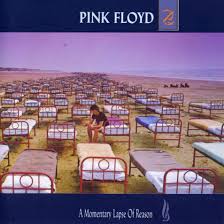
And look at that, I’ve just used the same tool to deconstruct Haidt’s argument. I don’t know where that leaves us, except perhaps to a better understanding of why so many people turned to Pink Floyd–and hallucinogenic drugs–in the 1970s.
Previous Post

February 16, 2014
Walter Wink's memoir "Just Jesus" is definitely worth the read
Next Post
February 22, 2014 For the record, I am NOT Kevin A. Miller
Browse Our Archives
Select a Category Books environment Film Hell non-violence Philosophy Theology Uncategorized
Select a Month June 2016 May 2016 February 2015 January 2015 December 2014 November 2014 October 2014 September 2014 August 2014 July 2014 June 2014 May 2014 April 2014 March 2014 February 2014 January 2014 December 2013 November 2013 October 2013 September 2013 August 2013 July 2013 June 2013 May 2013 April 2013 March 2013 February 2013 January 2013 December 2012 October 2012 September 2012 August 2012
Follow Us!
TAKE THE
Religious Wisdom Quiz
What principle about debt is found in Proverbs?
Select your answer to see how you score.
Ignore money Debt is always good The borrower is slave to the lender Never lend
Related posts from Hellbound

You go ahead and keep feeling; I'll do...

When goods don't cross borders, armies will

Who is really naive--those who think violence can...

Why "terrorists" are suddenly attacking Canada
TRENDING AT PATHEOS Progressive Christian

Why Christians Have a Sacred Duty to Vote:...
The Bible offers strong support for the sacred duty to vote. Here...

What Being a Modern-Day Apostle Means to Me
In my last column, I discussed the ins and outs of modern-day...

Did Ancient China Once Worship the God of...
Across human history, a common thread weaves through the origins of the...

Love Your Neighbor – Including Earth-Kin: Lev. 19,...
God’s command to love your neighbor means acting in an ethical and...

Lead a Church Study of “Jesus and Lao...
Guest writer Jack Thomas (The Irreverent Reverend) reflects on leading his church...

Principles for Understanding the Apostolic Ministry Today
Whenever people discover that my formal ministry title is "apostle," as in...
view all Progressive Christian blogs
Ad-Free & Subscriber Log-In Subscription Support
- About Us
- 2026 Calendar
- Videos
- Podcasts
- Library of World Religions
- Faith In Media Tracker
- Advertise With Us
- Write for Us
- Privacy Policy
- Terms of Service
- Do Not Sell My Data
- Contact Us
- Radiant Digital
- Manage Newsletter Subscriptions
- Unsubscribe From Notifications
- Sitemap
Copyright 2008-2026, Patheos. All rights reserved.
Subscription Support Ad-Free & Subscriber Log-In
Follow Patheos