
BuddhistCatholicContemplativeEvangelicalGeneral ChristianHinduJewishLatter-day SaintMuslimNew VisionsProgressive Christian
Beliefs
- Buddhist
- Catholic
- Contemplative
- Evangelical
- General Christian
- Hindu
- Jewish
- Latter-day Saint
- More Voices
- Muslim
- New Visions
- Pagan
- Progressive Christian
Topics
- Religion News
- Food and Religion
- Sports and Religion
- Religious Art
- Religious Music and Entertainment
- Religious Events
- History and Religion
- Style and Religion
- Politics and Religion
- Women in Religion
- Recreation Outdoors and Religion
- Business Finance and Religion
- Careers Workplace and Religion
- Education and Religion
- Family Parenting and Religion
- Health Fitness and Religion
- Home and Religion
- Relationships and Religion
- Technology and Religion
- Travel and Religion
Columnists
- Buddhist Columnists
- Business Finance and Religion Columnists
- Careers Workplace and Religion Columnists
- Catholic Columnists
- Contemplative Columnists
- Education and Religion Columnists
- Evangelists Columnists
- Family Parenting and Religion Columnists
- General Christian Columnists
- Health Fitness and Religion Columnists
- Hindu Columnists
- History and Religion Columnists
- Home and Religion Columnists
- Jewish Columnists
- More Voices Columnists
- Latter Day Columnists
- Muslim Columnists
- New Visions Columnists
- Nonreligious Columnists
- Pagan Columnists
- Politics and Religion Columnists
- Progressive Columnists
- Recreation Outdoors and Religion Columnists
- Relationships and Religion Columnists
- Religion News Columnists
- Religious Art Columnists
- Religious Events Columnists
- Religious Music and Entertainment Columnists
- Sports and Religion Columnists
- Style and Religion Columnists
- Technology and Religion Columnists
- Travel and Religion Columnists
- Women in Religion Columnists
Resource Library
- 2026 Calendar
- Library of World Religions
- The 100 Most Holy Places on Earth
- Patheos Answers
- Podcasts
- Videos
- Faith Leaders Database
- Anglican Episcopalian
- Bahai
- Baptist
- Buddhism
- Christianity
- Confucianism
- Eastern Orthodoxy
- Hinduism
- Holiness and Pentecostal
- ISKCON
- Islam
- Judaism
- Lutheran
- Methodist
- The Church of Jesus Christ of Latter-day Saints
- New Age
- Paganism
- Presbytarian and Reformed
- Protestantism
- Religion Behind the Scenes
- Roman Catholic
- Scientology
- Shia Islam
- Sikhism
- Sufism
- Sunni Islam
- Taoism
- Zen
- See all religions
Research Tools
 Ad-Free & Subscriber Log-In Subscription Support
Ad-Free & Subscriber Log-In Subscription Support
Follow Patheos 

- Trending:
- Forgiveness
- |
- Marriage
- |
- Consciousness
- |
- Death Penalty
- |
- Election
- |
- Halloween
 Hellbound
- Home
- Progressive Christian
- Everyone likes to give notes–but no one likes to get them
Everyone likes to give notes–but no one likes to get them
Last updated on: January 15, 2014 at 8:13 pm by Kevin Miller
Everyone likes to give notes–but no one likes to get them 2014-01-15T20:13:23-07:00 Kevin Miller
Patheos Explore the world's faith through different perspectives on religion and spirituality! Patheos has the views of the prevalent religions and spiritualities of the world.
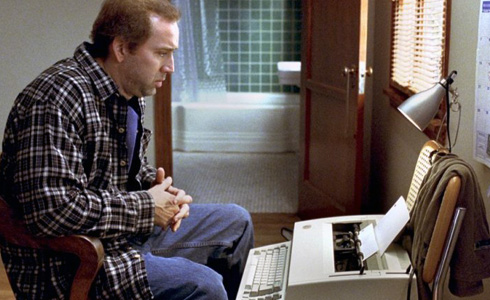 I’ve spent most of the last 10 years working as a screenwriter. And as anyone in the film industry knows, when it comes to “above the line” talent (those who are responsible for the creative direction of a film), screenwriters consistently rank at the bottom.
On a typical film set, the director is king, the actors are the prima donnas, the producer(s) are the generals and lieutenants, and the screenwriters–if they’re even allowed on set–are the hapless schmucks who are expected to spin straw into gold at a moment’s notice and, if not, are replaced just as quickly by some other schmuck who can.
Thankfully, that has not been my experience. That is due in part to the sort of films on which I work. Documentaries pretty much require a writer to be present at all stages of the filmmaking process, from pre-production to principal photography to post, making them far more difficult to fire. I have also enjoyed a close working relationship with my directors on the few dramatic feature film and short film projects I have written or co-written. I have only been fired once, and even then I still received sole screenwriting credit for the film.
That said, no matter what kind of film I’m working on, I’m forever receiving notes from people–written or verbal suggestions/demands re: how to improve the script. As I like to point out (half-jokingly), few people would dare to tell a director or actor how to do his or her job, but EVERYONE thinks they know how to write.
Therefore, as a screenwriter, one 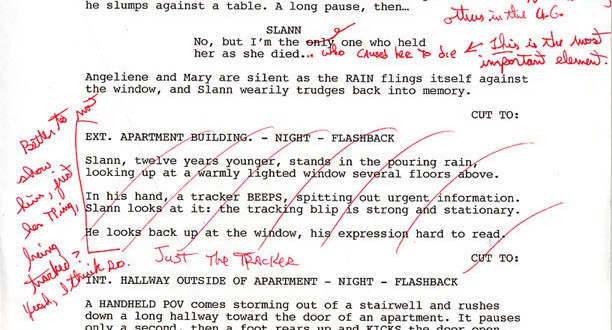 of the key skills I have had to develop over the years is how to receive notes in such a way that damages neither the project nor my relationships with the other people on the creative team. This is easier said than done. Seeing as we artistic types tend to pour our heart and soul into everything we do, when someone informs us our best isn’t good enough, we tend to take it personally. The note-giver isn’t just criticizing my work; he/she is criticizing me.
You’d think this would get easier as time goes on, but it actually becomes more difficult. Sure, my skin has thickened up considerably. However, seeing as I have been at this for some time, surely I should be getting better at this by now, and my first draft should be much closer to the mark. In times like these, it’s wise to reflect on the immortal words of Ernest Hemingway, who said, “The first draft of anything is shit.”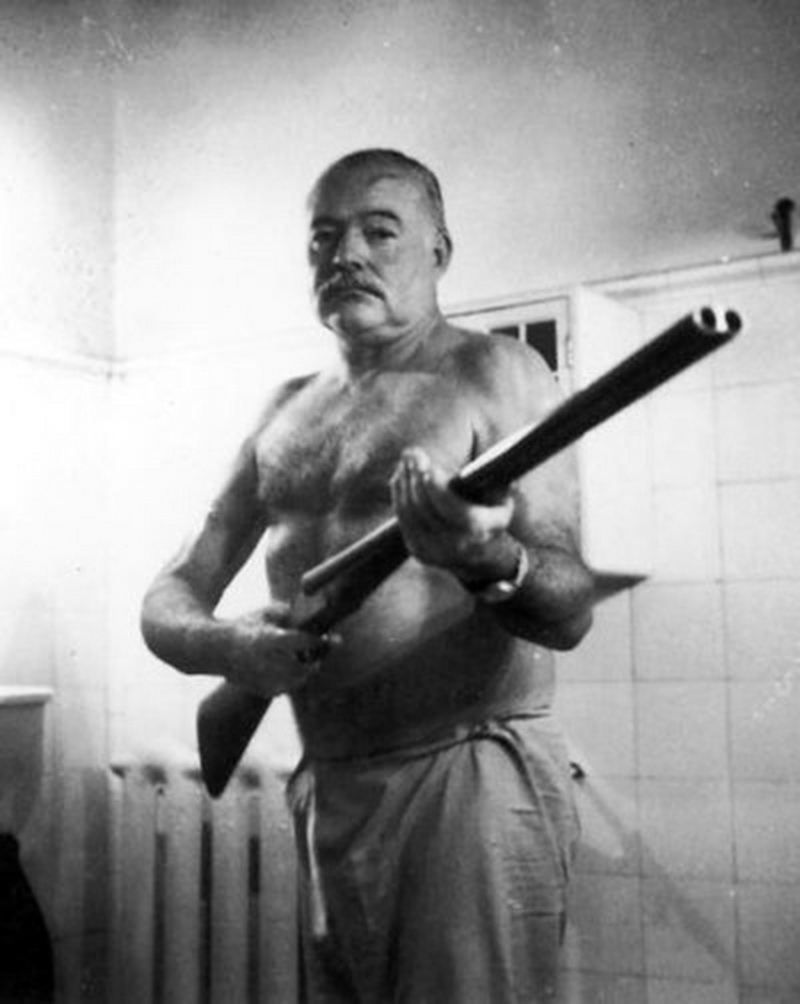
Once I get over my initial hissy fit that whatever I have produced is anything less than perfect, I’m in a better place to sort the wheat from the chaff. This involves separating valid critiques from ignorant asides.
You see, a screenwriter labors for months, even years, on a script, poring over possibilities, exploring dead ends and rabbit trails, revising and refining constantly until we finally settle upon a particular course of action, which represents only a fraction of the options available. Meanwhile, our critics devote maybe an hour or two to reading the script or watching a cut and then tossing out a few thoughts, having no idea how much work has gone into the presentation before them. As a result, it’s only natural to scoff at their obvious ignorance. Do they really think we are so stupid as to miss something so obvious? Do they seriously think we haven’t tried that already? Who do they think they are, anyway?
Sorry, still in hissy fit mode.
My point is, just because someone proposes a stupid solution doesn’t mean they haven’t identified a valid problem.
Especially if numerous note-givers keep tripping over the same section of your script. You will resist these critics at first, arguing against them and perhaps ridiculing them behind their back (or maybe even to their face). You will also make little attempts at change, trying desperately to address the problems without altering anything substantial. But a little voice inside will begin to whisper. And try as you might, you won’t be able to shut it up. That’s because the voice knows. You know it, too, but you’re still too invested in the current draft to admit it. You know the script needs significant changes, perhaps a page one rewrite, but you put so much work into the current version that you can’t imagine what it will take to undo it. Remember: in a well written script, there are no such things as throwaway scenes or story beats. A well written script is irreducibly complex. Change or take away even one part, and the entire thing ceases to function.
If you remain in this state of emotional paralysis, the project–or at least your part in it–is pretty much over. Bring in the next schmuck! The only way to have a career in this business is to pick yourself up, rub some dirt on your wounds, and get back out there. More often than not, I have discovered that once I overcome my initial resistance (a.k.a “fear”), the requested changes aren’t nearly as earth-shattering as I first thought. Lo and behold, often, they actually make the project better–way better than I could have made it on my own.
Which brings me to my main point: Like thin-skinned screenwriters, none of us like to be told our theology is anything less than perfect, but we rarely hesitate to give such notes to others (either publicly or in private). The question is, how can we become better at receiving notes? How can we improve at discerning valid critiques from ignorant solutions? How can we become better at moving beyond the hissy fit and listening to that little voice inside that knows? And how can we gain the courage to adopt not just a few minor changes to our thinking but entertain the idea of wholesale change?
I don’t have a magic solution, except to say that no one can control the creative process–which, if we are honest, is a pretty accurate description of how we form our theology. Therefore, we need patience–and humility. It’s only natural to resist notes, to assume we have everything nailed down. But unless you want to be some schmuck who gets booted off the set, accept that your current draft is probably shit and rework it accordingly. It won’t just be different; it will almost certainly be better.
Previous Post

January 10, 2014
Avoiding the Halo effect
Next Post
January 16, 2014 A few thoughts on avoiding extremes
Browse Our Archives
Select a Category Books environment Film Hell non-violence Philosophy Theology Uncategorized
Select a Month June 2016 May 2016 February 2015 January 2015 December 2014 November 2014 October 2014 September 2014 August 2014 July 2014 June 2014 May 2014 April 2014 March 2014 February 2014 January 2014 December 2013 November 2013 October 2013 September 2013 August 2013 July 2013 June 2013 May 2013 April 2013 March 2013 February 2013 January 2013 December 2012 October 2012 September 2012 August 2012
Follow Us!
TAKE THE
Religious Wisdom Quiz
Who wrote many of the Psalms?
Select your answer to see how you score.
Solomon Paul David Moses
Related posts from Hellbound

The Conjuring 2: An example of why movies...

Why we love "The Walking Dead"

Check out a new documentary I wrote and...

Just because something hurts doesn't mean it's the...
TRENDING AT PATHEOS Progressive Christian

Why Christians Have a Sacred Duty to Vote:...
The Bible offers strong support for the sacred duty to vote. Here...

What Being a Modern-Day Apostle Means to Me
In my last column, I discussed the ins and outs of modern-day...

Did Ancient China Once Worship the God of...
Across human history, a common thread weaves through the origins of the...

Love Your Neighbor – Including Earth-Kin: Lev. 19,...
God’s command to love your neighbor means acting in an ethical and...

Lead a Church Study of “Jesus and Lao...
Guest writer Jack Thomas (The Irreverent Reverend) reflects on leading his church...

Principles for Understanding the Apostolic Ministry Today
Whenever people discover that my formal ministry title is "apostle," as in...
view all Progressive Christian blogs
Ad-Free & Subscriber Log-In Subscription Support
- About Us
- 2026 Calendar
- Videos
- Podcasts
- Library of World Religions
- Faith In Media Tracker
- Advertise With Us
- Write for Us
- Privacy Policy
- Terms of Service
- Do Not Sell My Data
- Contact Us
- Radiant Digital
- Manage Newsletter Subscriptions
- Unsubscribe From Notifications
- Sitemap
Copyright 2008-2026, Patheos. All rights reserved.
Subscription Support Ad-Free & Subscriber Log-In
Follow Patheos