
BuddhistCatholicContemplativeEvangelicalGeneral ChristianHinduJewishLatter-day SaintMuslimNew VisionsProgressive Christian
Beliefs
- Buddhist
- Catholic
- Contemplative
- Evangelical
- General Christian
- Hindu
- Jewish
- Latter-day Saint
- More Voices
- Muslim
- New Visions
- Pagan
- Progressive Christian
Topics
- Religion News
- Food and Religion
- Sports and Religion
- Religious Art
- Religious Music and Entertainment
- Religious Events
- History and Religion
- Style and Religion
- Politics and Religion
- Women in Religion
- Recreation Outdoors and Religion
- Business Finance and Religion
- Careers Workplace and Religion
- Education and Religion
- Family Parenting and Religion
- Health Fitness and Religion
- Home and Religion
- Relationships and Religion
- Technology and Religion
- Travel and Religion
Columnists
- Buddhist Columnists
- Business Finance and Religion Columnists
- Careers Workplace and Religion Columnists
- Catholic Columnists
- Contemplative Columnists
- Education and Religion Columnists
- Evangelists Columnists
- Family Parenting and Religion Columnists
- General Christian Columnists
- Health Fitness and Religion Columnists
- Hindu Columnists
- History and Religion Columnists
- Home and Religion Columnists
- Jewish Columnists
- More Voices Columnists
- Latter Day Columnists
- Muslim Columnists
- New Visions Columnists
- Nonreligious Columnists
- Pagan Columnists
- Politics and Religion Columnists
- Progressive Columnists
- Recreation Outdoors and Religion Columnists
- Relationships and Religion Columnists
- Religion News Columnists
- Religious Art Columnists
- Religious Events Columnists
- Religious Music and Entertainment Columnists
- Sports and Religion Columnists
- Style and Religion Columnists
- Technology and Religion Columnists
- Travel and Religion Columnists
- Women in Religion Columnists
Resource Library
- 2026 Calendar
- Library of World Religions
- The 100 Most Holy Places on Earth
- Patheos Answers
- Podcasts
- Videos
- Faith Leaders Database
- Anglican Episcopalian
- Bahai
- Baptist
- Buddhism
- Christianity
- Confucianism
- Eastern Orthodoxy
- Hinduism
- Holiness and Pentecostal
- ISKCON
- Islam
- Judaism
- Lutheran
- Methodist
- The Church of Jesus Christ of Latter-day Saints
- New Age
- Paganism
- Presbytarian and Reformed
- Protestantism
- Religion Behind the Scenes
- Roman Catholic
- Scientology
- Shia Islam
- Sikhism
- Sufism
- Sunni Islam
- Taoism
- Zen
- See all religions
Research Tools
 Ad-Free & Subscriber Log-In Subscription Support
Ad-Free & Subscriber Log-In Subscription Support
Follow Patheos 

- Trending:
- Forgiveness
- |
- Marriage
- |
- Consciousness
- |
- Death Penalty
- |
- Election
- |
- Halloween
 Hellbound
- Home
- Progressive Christian
- Guest Post: A Christological Perspective on the Wesleyan Quadrilateral
Guest Post: A Christological Perspective on the Wesleyan Quadrilateral
Last updated on: June 27, 2013 at 9:16 am by Kevin Miller
Guest Post: A Christological Perspective on the Wesleyan Quadrilateral 2013-06-27T09:16:56-06:00 Kevin Miller
Patheos Explore the world's faith through different perspectives on religion and spirituality! Patheos has the views of the prevalent religions and spiritualities of the world.
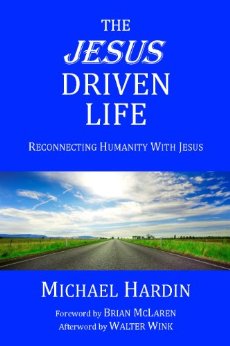 I’ve spent a fair bit of time on this blog talking about belief formation, particularly within the framework of the Wesleyan Quadrilateral, which outlines four different potential sources of theological conclusions–Scripture, Tradition, Reason and Experience. In a recent email exchange, Michael Hardin, author of The Jesus Driven Life and co-founder of Preaching Peace, offered a Christological perspective on this discussion and has been kind enough to allow me to re-post it here:
How is Jesus known? The short and simple answer is that He is made known to us by the Holy Spirit. In the language of Karl Barth, God reveals God’s self. However, we also have a frame of reference, we have four stories about Jesus we call Gospels. So whatever the Holy Spirit says about Jesus must comport with what we find there. It is also the case that Jesus is known when we gather as a community; in worship we discern his presence among us. Finally, there is the scholarly work that has been done on Jesus otherwise known as “The Historical Jesus.”
In the 18th century John Wesley was credited with using four different sources to do theology: Scripture, reason, tradition and experience. So draw a square and place each on these terms in each of the four corners. Now each of these categories needs to be defined. What is reason? Experience? What part of the tradition shall we recognize as authoritative? And do we all agree on what constitutes the biblical canon? Each of these has been discussed and debated from the early church to the present. What I would like to do is to “christologize” them, that is make each Jesus centered. So take your square and next to each one write:
Scripture = The Textual Jesus
Reason = “The Historical Jesus”
Tradition = “The Ecclesial Jesus”
Experience = “The Risen Jesus”
The chronological order of these for the early church was experience, tradition, scripture, reason. They are not necessarily our chronological frame. We may come to Jesus through any one the four corners and it is Jesus we encounter. But if we remain in one corner to the exclusion of the others we will not know Jesus fully for He is manifested not just in our experience, not just in our tradition, not just in the Bible and not just in our academic discourse about him. He is known best when all four are engaged.
First, The Risen Jesus. This is our personal experience of the presence of Jesus in our lives by the gift of the Holy Spirit.
Second, the Ecclesial Jesus. This is Jesus as we may know him through the teaching of others who have gone before us and especially as we gather together as the Body of Jesus (Christ) today. This recognizes that no understanding of Jesus is just private but is interpersonal or inter-relational.
Third, the Textual Jesus. This is the recognition that each of the four gospels paints a different portrait of Jesus, that the writers of the gospels have a theological agenda when they write, that we may discern that agenda and that we may learn from it how they understood Jesus.
Fourth, “The Historical Jesus.” You will note that this last is in quotes because the so-called “historical Jesus’ is a creation of academic imagination. It is the attempt to try and discern who Jesus was in the context of his culture and environment and which sayings of his can be considered historically credible or authentic. The quotation marks indicate the changing nature of this Jesus. As we learn more about second Temple Judaism and the various groups and worldviews and theologies of his time so also we see Jesus differently.
Each of these is necessary for us to come to a well rounded and more complete view of Jesus. No one alone suffices. Not even two or three suffice. Some would say that we do not need “the Historical Jesus” but the problem here is that the Jesus they end up speaking about loses his humanity and connection to a particular space and time. This is a form of Christian Gnosticism. Some scholars, on the other hand, would virtually tell us that anything but the “Historical Jesus” is baloney and so they miss out on the fact that Jesus is known beyond just the intellect. Some [so-called] “historical Jesus” portraits are just as suspect as those who would just claim one or two of the sides of the square.
All four together are necessary and can function as a control on the other three at any given time. How then do we know Jesus? In worship together, in study together, in reflection together and in reasoning together. We know Him together as His Body. Those who would focus on one extreme or another will never know the beauty, the reality, the joy that is Jesus, Lord of all creation, reconciler of all creation and redeemer of all creation.
Previous Post

June 24, 2013
New "Hellbound?" Q&A screening booked for the UK
Next Post
June 28, 2013 Sacrifice, self-sacrifice and Mr. Spock
Browse Our Archives
Select a Category Books environment Film Hell non-violence Philosophy Theology Uncategorized
Select a Month June 2016 May 2016 February 2015 January 2015 December 2014 November 2014 October 2014 September 2014 August 2014 July 2014 June 2014 May 2014 April 2014 March 2014 February 2014 January 2014 December 2013 November 2013 October 2013 September 2013 August 2013 July 2013 June 2013 May 2013 April 2013 March 2013 February 2013 January 2013 December 2012 October 2012 September 2012 August 2012
Follow Us!
TAKE THE
Religious Wisdom Quiz
What did Satan claim was the reason for Job’s faithfulness?
Select your answer to see how you score.
That God had blessed him with wealth and protection That Job was a prophet That Job was unaware of suffering That Job had personally seen God
Related posts from Hellbound

God is non-violent? All I can say is,...
Moral outrage and other ways to "win" arguments

Two (make that three) mistakes fundamentalists make
Christian fundamentalism--another gospel? Guest post by Michael Hardin
TRENDING AT PATHEOS Progressive Christian

Why Christians Have a Sacred Duty to Vote:...
The Bible offers strong support for the sacred duty to vote. Here...

What Being a Modern-Day Apostle Means to Me
In my last column, I discussed the ins and outs of modern-day...

Did Ancient China Once Worship the God of...
Across human history, a common thread weaves through the origins of the...

Love Your Neighbor – Including Earth-Kin: Lev. 19,...
God’s command to love your neighbor means acting in an ethical and...

Lead a Church Study of “Jesus and Lao...
Guest writer Jack Thomas (The Irreverent Reverend) reflects on leading his church...

Principles for Understanding the Apostolic Ministry Today
Whenever people discover that my formal ministry title is "apostle," as in...
view all Progressive Christian blogs
Ad-Free & Subscriber Log-In Subscription Support
- About Us
- 2026 Calendar
- Videos
- Podcasts
- Library of World Religions
- Faith In Media Tracker
- Advertise With Us
- Write for Us
- Privacy Policy
- Terms of Service
- Do Not Sell My Data
- Contact Us
- Radiant Digital
- Manage Newsletter Subscriptions
- Unsubscribe From Notifications
- Sitemap
Copyright 2008-2026, Patheos. All rights reserved.
Subscription Support Ad-Free & Subscriber Log-In
Follow Patheos