
BuddhistCatholicContemplativeEvangelicalGeneral ChristianHinduJewishLatter-day SaintMuslimNew VisionsProgressive Christian
Beliefs
- Buddhist
- Catholic
- Contemplative
- Evangelical
- General Christian
- Hindu
- Jewish
- Latter-day Saint
- More Voices
- Muslim
- New Visions
- Pagan
- Progressive Christian
Topics
- Religion News
- Food and Religion
- Sports and Religion
- Religious Art
- Religious Music and Entertainment
- Religious Events
- History and Religion
- Style and Religion
- Politics and Religion
- Women in Religion
- Recreation Outdoors and Religion
- Business Finance and Religion
- Careers Workplace and Religion
- Education and Religion
- Family Parenting and Religion
- Health Fitness and Religion
- Home and Religion
- Relationships and Religion
- Technology and Religion
- Travel and Religion
Columnists
- Buddhist Columnists
- Business Finance and Religion Columnists
- Careers Workplace and Religion Columnists
- Catholic Columnists
- Contemplative Columnists
- Education and Religion Columnists
- Evangelists Columnists
- Family Parenting and Religion Columnists
- General Christian Columnists
- Health Fitness and Religion Columnists
- Hindu Columnists
- History and Religion Columnists
- Home and Religion Columnists
- Jewish Columnists
- More Voices Columnists
- Latter Day Columnists
- Muslim Columnists
- New Visions Columnists
- Nonreligious Columnists
- Pagan Columnists
- Politics and Religion Columnists
- Progressive Columnists
- Recreation Outdoors and Religion Columnists
- Relationships and Religion Columnists
- Religion News Columnists
- Religious Art Columnists
- Religious Events Columnists
- Religious Music and Entertainment Columnists
- Sports and Religion Columnists
- Style and Religion Columnists
- Technology and Religion Columnists
- Travel and Religion Columnists
- Women in Religion Columnists
Resource Library
- 2026 Calendar
- Library of World Religions
- The 100 Most Holy Places on Earth
- Patheos Answers
- Podcasts
- Videos
- Faith Leaders Database
- Anglican Episcopalian
- Bahai
- Baptist
- Buddhism
- Christianity
- Confucianism
- Eastern Orthodoxy
- Hinduism
- Holiness and Pentecostal
- ISKCON
- Islam
- Judaism
- Lutheran
- Methodist
- The Church of Jesus Christ of Latter-day Saints
- New Age
- Paganism
- Presbytarian and Reformed
- Protestantism
- Religion Behind the Scenes
- Roman Catholic
- Scientology
- Shia Islam
- Sikhism
- Sufism
- Sunni Islam
- Taoism
- Zen
- See all religions
Research Tools
 Ad-Free & Subscriber Log-In Subscription Support
Ad-Free & Subscriber Log-In Subscription Support
Follow Patheos 

- Trending:
- Forgiveness
- |
- Marriage
- |
- Consciousness
- |
- Death Penalty
- |
- Election
- |
- Halloween
 Hedgerow
- Home
- Evangelical
- Politics and Religion
- Cancer: Journey from dark to light
Cancer: Journey from dark to light
Last updated on: February 12, 2020 at 6:47 pm by Bethany Blankley
Cancer: Journey from dark to light 2020-02-12T18:47:25-05:00 Bethany Blankley
Patheos Explore the world's faith through different perspectives on religion and spirituality! Patheos has the views of the prevalent religions and spiritualities of the world.
The eleventh of the twelve signs of the Christian Zodiac is Cancer (June 21 – July 22).
It signifies transformation, from darkness to light, from putting off the old self and putting on the new (Eph. 4:22-24). Its modern-day symbol is a crab, but the ancient Egyptian symbol was a Scarabceus, a sacred beetle.
By way of illustration, the crab periodically sheds its shell and puts on a new one, which changes the form and shape of its body. So too, like believers and the church, through the sanctification of the Holy Spirit, they grow and change.
The beetle also undergoes a transformation, but much more so. In its first phase of life, it lives underground in complete darkness. It is “often terrified by unintelligible voices from the sunlit world above, compelled to eat and live amid filth, and with no worthier employment than to grow and wait for future changes,” Joseph Agustus Seiss explains in his lecture “The Starry Worlds,” first published in 1882.
“And so it is with the earthly church… we are slaves of toil and suffering, full of darkness, doubt, and uncertainly loaded with groveling cares, … though bearing in us the germs and beginnings of eventual glory and blessedness,” he adds.
The next phase of the beetle’s growth is the chrysalis, when it no longer eats, its senses are closed, it stops all activity and goes into a mummy condition– the middle stage in which the inner being lives but the outer being is eventually destroyed. The new beetle emerges out of the chrysalis in the last stage leaving behind the shell of its old life. It has wings and flies into the sunlit sky.
The ancient Egyptians mummified human bodies believing they too would rest in a middle state, their inner bodies would become celestial ones. The image of beetle was carved into the stones of rings, shoe-latchets, priests’ seals, and ornaments and amulets worn by nobles. Memorials for marriage, and the last mark put on their dead were shapes of beetles. Thus, this star of the Zodiac symboled darkness to light, death to resurrection, and a journey from earth to heaven, for the Egptians.
The center of the constellation is a cluster of stars referred to as “the beehive.” In Arabic and Hebrew it means Multitude, Offspring, the Young and Innumerable seed. “The same idea is expressed by Moses in connection with Issachar, to whom the Jews referred this sign, where he speaks of Issachar as being gathered into tents, called to the mountain, offering the sacrifices of righteousness..” (Deut. 33:18,19), Seiss argues. The cluster of stars, the people of Issachar, point to the home gathering of the multitudinous seed of faith in 1 Pet. 1:4-6, Seiss notes– where the faithful find eternal rest in heaven.
While the Greeks assigned the crab to the mythology of Jupiter, the Egyptians used words with Noetic roots to describe it. Cancer was called Khan, meaning resting place, and ker, meaning embraced, encircled.
Cancer quite literally means rest secured.
Its chief star is Acubens, which means the sheltering, the place of retirement, the good rest. It is the sign of the saints’ everlasting rest, Seiss points out.
Cancer’s first Decan is Ursa Minor, referred to as the lesser bear– even though the sign is not a bear. The Greeks used the sign in their mythological stories about Jupiter. Yet no traces of bears are connected to this sign in the Egyptian, Persian or Indian zodiacs.
Ursa Minor is more widely known as the Little Dipper. The star on the right, Polaris, sits opposite the two stars of Kochab.
Ursa Major, or the Big Dipper, is known by Arab astronomers as Al Naish, or Annaish, meaning, the ordered or assembled together, like a sheep fold.
Its two central stars in the cup of the dipper are Dubheh, or dubah (Dubhe), meaning a collection of domestic animals, a fold ,and Merach (Merak), the flock. The stars in the handle are Alkeid, Mizar, Aloioth, Megrez and Phad.
Seiss says we must consider looking at these constellations as two sheepfolds of flocks, not bears. Although ancient Jewish commentators suggest that the Book of Job refers to “Arcturus and his sons,” to Ash or Aish, meaning he’s referred to the seven stars of the Great Bear. (Ursa Minor has seven principle stars known as the Septentriones.)
Yet the Dendera Zodiac also points to a sheepfold, Seiss notes, “the picture of the seed of faith spoken of in the text in its twofoldness, the church of the firstborn around the the throne.”
Perhaps the most controversial Decan, is the third one, Argo.
Argo was made famous by the story of the Argonauts’ expedition to recover the Golden Fleece in Greek Mythology. Seiss makes clear what is wrong about this secular interpretation. He writes:
“Since the time of Home, and long before Homer lived, the world has been full of noise about this ship and these gods and demigods of the Argonautic Expedition. But that same world till now has been floundering about to find a key to unlock the mystery in which the story in enveloped. Many are the suggestions to explain it, but all as empty of satisfactoriness as they are beneath the importance and significance always and everywhere attached to it.
“The trouble is that men have ever persisted in trying to interpret it with reference to the affairs of ordinary human history or of some wild conceits of dreaming poets; whereas it belongs to the mystic, spiritual, and prophetic ideas frescoed on the stars, and to nothing else under heaven.
He goes on to compare the difference between the Argo Expedition and that of the life of Christ and his followers.
“It is a blessed consolation to the oft-weary toilers and travelers in this world to know that there does remain a rest for the people of God,” Seiss attests, pointing to John 14:1-3, Isaiah 25:10, Revelation 7:9-17, 3:21– promises God fulfilled to the faithful with him and heaven, and to those yet to join him.
“Let us then be encouraged,” Seiss argues pointing to the patriarchs, “to believe as they believed, to hope as they hoped, laboring and looking for entrance into the same holy rest.”
Christians can look to the Big and Little Dipper of Uras Minor and Ursa Major as the image of a sheep pen, and a shepherd with his flock. To have confidence in knowing that putting off the old, taking on the new, ends with rest in the One who saves and protects.
Previous Post
January 13, 2020
Gemini: whose brightest binary star points to Jesus the Nazarene
Next Post
January 14, 2020 Leo: The Victorious Lion of Judah
Browse Our Archives
Select a Category Christianity Islam politics Sexuality transgender Uncategorized
Select a Month January 2021 December 2020 November 2020 October 2020 September 2020 August 2020 July 2020 June 2020 May 2020 April 2020 March 2020 February 2020 January 2020 October 2019 September 2019 July 2019 May 2019 April 2019 March 2019 February 2019 January 2019 December 2018 November 2018 August 2018 July 2018 June 2018 May 2018 April 2018 March 2018 February 2018 January 2018 December 2017 November 2017 October 2017 June 2017 April 2017 March 2017 February 2017 January 2017 December 2016 October 2016 July 2016 June 2016 April 2016 February 2016 January 2016 December 2015 September 2015 August 2015 July 2015 June 2015 May 2015 April 2015 March 2015 February 2015 January 2015 November 2014 August 2014 July 2014 June 2014
Follow Us!
TAKE THE
Religious Wisdom Quiz
According to Paul, nothing in all creation can separate you from me—not death, not life, not angels or demons. What am I?
Select your answer to see how you score.
God's grace God's mercy The love of God Salvation
Related posts from Hedgerow
Biden plans to reverse abortion policies of previous...
December 29 was the 850th Anniversary of the...

Fifth Circuit Court of Appeals rules Texas and...
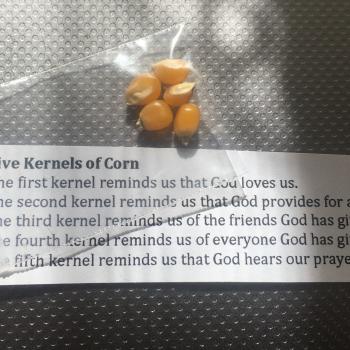
The promise of five kernels of corn [video]
TRENDING AT PATHEOS Evangelical

How the author of the world's best hymn...
I've been working with John Newton for a while now. This makes...

Long before this Lectio Divina, Psalm 130 - the song - started...

What About the Trees? Another Living Parable
After I finished writing the last article about falling leaves as a...

Why Classical Education Is a Conversation, Not a...
Come and Read: Joy in Classical Education When I was a little...

Falling Leaves: A Living Parable on Letting Go
I’ve spent the vast majority of my life in the southeast corner...

Cornell University has received a great deal of negative publicity and intense...
view all Evangelical blogs
Ad-Free & Subscriber Log-In Subscription Support
- About Us
- 2026 Calendar
- Videos
- Podcasts
- Library of World Religions
- Faith In Media Tracker
- Advertise With Us
- Write for Us
- Privacy Policy
- Terms of Service
- Do Not Sell My Data
- Contact Us
- Radiant Digital
- Manage Newsletter Subscriptions
- Unsubscribe From Notifications
- Sitemap
Copyright 2008-2026, Patheos. All rights reserved.
Subscription Support Ad-Free & Subscriber Log-In
Follow Patheos