
BuddhistCatholicContemplativeEvangelicalGeneral ChristianHinduJewishLatter-day SaintMuslimNew VisionsProgressive Christian
Beliefs
- Buddhist
- Catholic
- Contemplative
- Evangelical
- General Christian
- Hindu
- Jewish
- Latter-day Saint
- More Voices
- Muslim
- New Visions
- Pagan
- Progressive Christian
Topics
- Religion News
- Food and Religion
- Sports and Religion
- Religious Art
- Religious Music and Entertainment
- Religious Events
- History and Religion
- Style and Religion
- Politics and Religion
- Women in Religion
- Recreation Outdoors and Religion
- Business Finance and Religion
- Careers Workplace and Religion
- Education and Religion
- Family Parenting and Religion
- Health Fitness and Religion
- Home and Religion
- Relationships and Religion
- Technology and Religion
- Travel and Religion
Columnists
- Buddhist Columnists
- Business Finance and Religion Columnists
- Careers Workplace and Religion Columnists
- Catholic Columnists
- Contemplative Columnists
- Education and Religion Columnists
- Evangelists Columnists
- Family Parenting and Religion Columnists
- General Christian Columnists
- Health Fitness and Religion Columnists
- Hindu Columnists
- History and Religion Columnists
- Home and Religion Columnists
- Jewish Columnists
- More Voices Columnists
- Latter Day Columnists
- Muslim Columnists
- New Visions Columnists
- Nonreligious Columnists
- Pagan Columnists
- Politics and Religion Columnists
- Progressive Columnists
- Recreation Outdoors and Religion Columnists
- Relationships and Religion Columnists
- Religion News Columnists
- Religious Art Columnists
- Religious Events Columnists
- Religious Music and Entertainment Columnists
- Sports and Religion Columnists
- Style and Religion Columnists
- Technology and Religion Columnists
- Travel and Religion Columnists
- Women in Religion Columnists
Resource Library
- 2026 Calendar
- Library of World Religions
- The 100 Most Holy Places on Earth
- Patheos Answers
- Podcasts
- Videos
- Faith Leaders Database
- Anglican Episcopalian
- Bahai
- Baptist
- Buddhism
- Christianity
- Confucianism
- Eastern Orthodoxy
- Hinduism
- Holiness and Pentecostal
- ISKCON
- Islam
- Judaism
- Lutheran
- Methodist
- The Church of Jesus Christ of Latter-day Saints
- New Age
- Paganism
- Presbytarian and Reformed
- Protestantism
- Religion Behind the Scenes
- Roman Catholic
- Scientology
- Shia Islam
- Sikhism
- Sufism
- Sunni Islam
- Taoism
- Zen
- See all religions
Research Tools
 Ad-Free & Subscriber Log-In Subscription Support
Follow Patheos 

- Trending:
- Advent
- |
- Forgiveness
- |
- Thanksgiving
- |
- Election
- |
- Seasonal Holidays
- |
- Marriage
 Heavenly Creatures
- Home
- New Visions
- FDA bans chemicals in antibacterial soap
FDA bans chemicals in antibacterial soap
Last updated on: September 3, 2016 at 4:37 pm by Joanne Brokaw
FDA bans chemicals in antibacterial soap 2016-09-03T16:37:07-04:00 Joanne Brokaw
Patheos Explore the world's faith through different perspectives on religion and spirituality! Patheos has the views of the prevalent religions and spiritualities of the world.
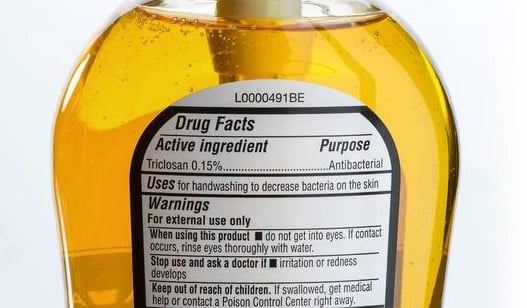
The FDA has banned a host of chemicals found in antibacterial soaps, including the two most common, triclosan and triclocarban.
When I saw the news report yesterday that the FDA has banned the use of some chemicals commonly found in antibacterial soaps, I wanted to cheer. For some time now, I’ve been an avid label reader, and have avoided – as much as humanly possible – chemicals that are suspected of disrupting hormones or are just plain toxic, both in my food and in my household products.
The FDA report echoed some of what I learned about in “Slow Death By Rubber Duck,” a great and accessible book by Canadians Rick Smith, a biologist and environmentalist, and Bruce Lourie, an environmentalist and consultant. The two sequestered themselves away for a weekend and conducted experiments on themselves, using everyday products and measuring the levels of toxins in their bodies before, during, and after their use. We’re talking toothpaste, hand soap, frying pans, carpet cleaner, things we take for granted as safe because we use them every day.
Turns out, they aren’t so safe, and Smith and Lourie made the case for the banning of a whole list of chemicals in everyday products. And some of them are on the FDA’s list, including triclosan and triclocarban, two of the most common ingredients.
These are things that can interfere with hormones and cause allergic reactions, skin irritations, and can affect breathing. They’re passed on in breast milk and found in the umbilical cord tissues, meaning mothers pass these chemicals on to their newborns. They have biocumulative effects – meaning your body stores the chemicals in your body fat and tissues; when they’re washed down the drain – or excreted in our urine – they can affect water, wildlife, and have other environmental concerns. Some are already banned in other countries.
And it’s not just antibacterial soaps you have to worry about. Triclosan, for example, shows up in products like toothpaste, too. So read labels carefully.
And don’t be fooled into thinking that a small amount of these chemicals is OK. In reality, a small amount of antibacterial products often isn’t enough to actually kill the germs, so they become resistant. Hence the rise in superbugs. So not only are they not killing germs, we’re making the whole thing worse.
I know it seems alarmist and I hear people say all the time that if these chemicals weren’t safe, the FDA wouldn’t allow them. But that’s really not true. Sometimes, we don’t know the effects of chemicals until they’ve been used for years and we see the damage. And in America, we like things inexpensive, so manufacturers are more than happy to pump out plastics and items for a dollar and other cheap crap if we’re willing to buy it, even when the research is right there in front of us and we, the consumer, chose to ignore it. (Although some companies, like Proctor and Gamble, have already eliminated triclosan from their products.)
I admit that I’m not a scientist, and I confess that this topic often overwhelms me. It’s easy to start seeing danger around every corner. But if we really care about our health – and the health of our children and grandchildren and on and on – I think we have a responsibility to educate ourselves now. If using hand soap or toothpaste or body wash disrupts your hormones or is literally changing your DNA, isn’t it worth taking time to read labels and consider which chemicals are actually necessary?
You don’t have to change everything at once. I started more than a decade ago by eliminating artificial colors and flavors, and preservatives like TBHQ, BHT, and BHA from my diet. That alone cut out most convenience foods and junk from my diet. Then I’ve started slowly moving to more natural products, starting with the products I used the most, and so I figured would have the biggest effect. It’s not easy – I started using a store brand shampoo and conditioner from a well known “all natural” grocery chain; turns out both contained parabans, which I was trying to avoid. So make sure you read the labels. Is it overwhelming? Yup. Do I use stuff I probably shouldn’t? Yup. But that doesn’t mean I give up.
Here is a list of the newly banned chemicals, so you can start reading labels and avoiding them now:
- Cloflucarban
- Fluorosalan
- Hexachlorophene
- Hexylresorcinol
- Iodine complex (ammonium ether sulfate and polyoxyethylene sorbitan monolaurate)
- Iodine complex (phosphate ester of alkylaryloxy polyethylene glycol)
- Nonylphenoxypoly (ethyleneoxy) ethanoliodine
- Poloxamer-iodine complex
- Povidone-iodine 5 to 10 percent
- Undecoylium chloride iodinecomplex
- Methylbenzethonium chloride
- Phenol (greater than 1.5 percent)
- Phenol (less than 1.5 percent) 16
- Secondary amyltricresols
- Sodium oxychlorosene
- Tribromsalan
- Triclocarban
- Triclosan
- Triple dye
If you’re at all interested in this, start by reading “Slow Death By Rubber Duck,” by Rich Smith and Bruce Lourie. It’s a few years old, but the research behind it is still valid and it’ll give you an eye opening picture of how stuff we use everyday affects our health. Plus, it’s just a really interesting read. And they have a newer book, “Toxin Toxout”, which I haven’t read yet but is on the reading list.
These websites are great resources to help you sift through everyday products to see what’s safe and what’s not, especially for things like cosmetics (do you have any idea what’s in your makeup?). Is it more expensive to use safer products? Probably. But as more and more people become aware and demand safer products, the more widespread the safer products become available, and the faster prices go down.
And for what it’s worth, I would be remiss if I didn’t mention that I’ve moved on to not just avoiding chemicals, but supporting companies that I think make a positive mark on the world. That’s why I use Everyday Shea body wash and Beautiful Curls shampoo and conditioner. Not only are they great, safe products but they give work to women in Africa and provide health care to women and children.
Isn’t it worth a few minutes and a few dollars to be healthier? It’ll pay off in the long run.
Save
Save
Save
Save
Save
Save
Save
Save
Previous Post

August 31, 2016
Dream big with "The Wishgranter" animated short film (video)
Next Post
September 6, 2016 Confessions of an office (and school) supply addict
Browse Our Archives
Select a Category Animal behavior Animal health Animal history Animal rescue Animal research Animals and entertainment Animals and fashion Animals and food Animals and military Animals and science Animals and the law Animals in the news Be Nice Project Bears Bees Bible verses Birds Books cats Celebrities Christianity Circus Critters Dogs Elephants Farm animals Featured Shelter Pet Guest blogger Holidays Humor Interviews Movies Music National News Nature Ocean mammals Paganism Politics Quotes Reader photos Recalls Reviews Science Space Supernatural Technology Television Uncategorized Uncategorized video Wildlife Zoo
Select a Month November 2016 September 2016 August 2016 July 2016 June 2016 May 2016 November 2015 May 2015 October 2014 September 2014 July 2014 May 2014 April 2014 January 2014 November 2013 October 2013 September 2013 August 2013 July 2013 April 2013 March 2013 February 2013 January 2013 December 2012 November 2012 October 2012 September 2012 August 2012 July 2012 June 2012 May 2012 April 2012 March 2012 February 2012 January 2012 December 2011 November 2011 October 2011 July 2011 June 2011
Follow Us!
TAKE THE
Religious Wisdom Quiz
Who prayed in a den of lions?
Select your answer to see how you score.
Daniel Noah David Elijah
Related posts from Heavenly Creatures

Confessions of an office (and school) supply addict
Banners, business, and God Bless America
Musing on pregnancy, abortion, and becoming a human
A rare full moon on the summer solstice
TRENDING AT PATHEOS New Visions

Did Prayer Cure His Cancer? Or Was It...
At 4 AM one morning, Joshua W. Brown’s wife awoke to a...

8 Ways a Near-Death Experience Rewires the Soul
Does Consciousness Survive Physical Death? After 50 Years of Research, Dr. Raymond...

Holy Longing: What Our Restlessness Is Telling Us
“One can find so many pains when the rain is falling.” -John...

What this is NOT about. This blog is definitely not about...

Who said the Israelites were God’s chosen? That’s right, they did. Who...

The Spirit World Is the Real World: God...
A Monk’s Wisdom on Body and Spirit I sit with Brother Martin...
view all New Visions blogs
Ad-Free & Subscriber Log-In Subscription Support
- About Us
- 2026 Calendar
- Videos
- Podcasts
- Library of World Religions
- Faith In Media Tracker
- Advertise With Us
- Write for Us
- Privacy Policy
- Terms of Service
- Do Not Sell My Data
- Contact Us
- Radiant Digital
- Manage Newsletter Subscriptions
- Unsubscribe From Notifications
- Sitemap
Copyright 2008-2026, Patheos, part of the Radiant Digital network of media brands. All rights reserved.
Subscription Support Ad-Free & Subscriber Log-In
Follow Patheos