
BuddhistCatholicContemplativeEvangelicalGeneral ChristianHinduJewishLatter-day SaintMuslimNew VisionsProgressive Christian
Beliefs
- Buddhist
- Catholic
- Contemplative
- Evangelical
- General Christian
- Hindu
- Jewish
- Latter-day Saint
- More Voices
- Muslim
- New Visions
- Pagan
- Progressive Christian
Topics
- Religion News
- Food and Religion
- Sports and Religion
- Religious Art
- Religious Music and Entertainment
- Religious Events
- History and Religion
- Style and Religion
- Politics and Religion
- Women in Religion
- Recreation Outdoors and Religion
- Business Finance and Religion
- Careers Workplace and Religion
- Education and Religion
- Family Parenting and Religion
- Health Fitness and Religion
- Home and Religion
- Relationships and Religion
- Technology and Religion
- Travel and Religion
Columnists
- Buddhist Columnists
- Business Finance and Religion Columnists
- Careers Workplace and Religion Columnists
- Catholic Columnists
- Contemplative Columnists
- Education and Religion Columnists
- Evangelists Columnists
- Family Parenting and Religion Columnists
- General Christian Columnists
- Health Fitness and Religion Columnists
- Hindu Columnists
- History and Religion Columnists
- Home and Religion Columnists
- Jewish Columnists
- More Voices Columnists
- Latter Day Columnists
- Muslim Columnists
- New Visions Columnists
- Nonreligious Columnists
- Pagan Columnists
- Politics and Religion Columnists
- Progressive Columnists
- Recreation Outdoors and Religion Columnists
- Relationships and Religion Columnists
- Religion News Columnists
- Religious Art Columnists
- Religious Events Columnists
- Religious Music and Entertainment Columnists
- Sports and Religion Columnists
- Style and Religion Columnists
- Technology and Religion Columnists
- Travel and Religion Columnists
- Women in Religion Columnists
Resource Library
- 2026 Calendar
- Library of World Religions
- The 100 Most Holy Places on Earth
- Patheos Answers
- Podcasts
- Videos
- Faith Leaders Database
- Anglican Episcopalian
- Bahai
- Baptist
- Buddhism
- Christianity
- Confucianism
- Eastern Orthodoxy
- Hinduism
- Holiness and Pentecostal
- ISKCON
- Islam
- Judaism
- Lutheran
- Methodist
- The Church of Jesus Christ of Latter-day Saints
- New Age
- Paganism
- Presbytarian and Reformed
- Protestantism
- Religion Behind the Scenes
- Roman Catholic
- Scientology
- Shia Islam
- Sikhism
- Sufism
- Sunni Islam
- Taoism
- Zen
- See all religions
Research Tools
 Ad-Free & Subscriber Log-In Subscription Support
Ad-Free & Subscriber Log-In Subscription Support
Follow Patheos 

- Trending:
- Forgiveness
- |
- Marriage
- |
- Consciousness
- |
- Death Penalty
- |
- Election
- |
- Halloween
 Heathen at Heart
- Home
- Pagan
- Stan the Stone: Northumbrian Runes
Stan the Stone: Northumbrian Runes
Last updated on: July 21, 2019 at 6:21 pm by Molly Khan
Stan the Stone: Northumbrian Runes 2019-07-21T18:21:39-05:00 Molly Khan
Patheos Explore the world's faith through different perspectives on religion and spirituality! Patheos has the views of the prevalent religions and spiritualities of the world.
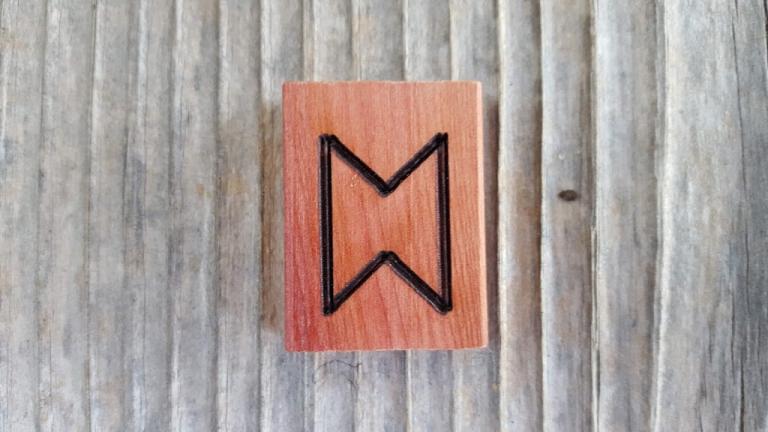
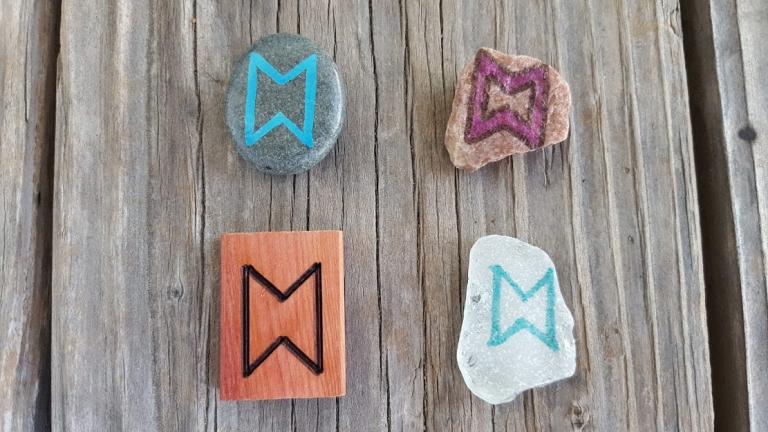
Check out my Etsy for Northumbrian Rune sets!
The Northumbrian rune today is called Stan, which translates to ‘stone’. It is the shape of two Pertho runes put together, or alternatively, an upside-down and rightside-up Ehwaz superimposed on one another. Stan is a native English word, coming from the proto-Germanic *stainaz. However, RI Page states in his An Introduction to English Runes that the Stan rune never appears engraved on a runestone. It is only found in manuscripts, which puts the date of its invention much later, post-conversion. Stan is supposed to represent the sound ‘st’ found in the word stone; it wasn’t exactly a linguistic necessity.
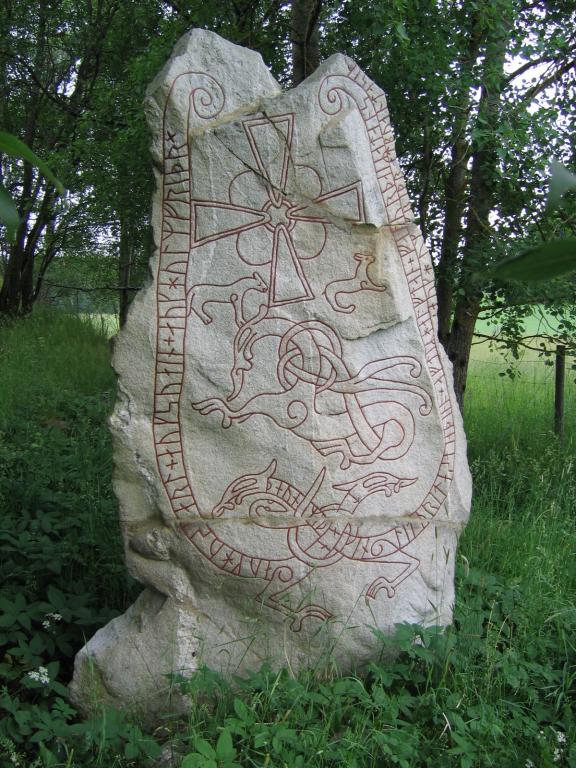
Runestone U 240, Vallentuna, photograph by Berig. Used via Creative Commons license.
Partly because its name has been in Germanic languages so long, there is lots of material for possible interpretation. A stone is a stone, and many of the things we think of today; its hardness, use as a weapon, use for building, strength and stability, are timeless and would have been ascribed to stones then as well. However, there are also some interesting historical notes that open up more options.
The first is perhaps the most obvious; a majority of our surviving record of runes are engraved onto large rocks called runestones. In this way, Stan could represent recorded knowledge. It could also represent stability and the preservation of knowledge in the face of the march of time. The runestones also represent attaining a certain level of craftmanship. Inscribing a message would be time-consuming and labor-intensive work.
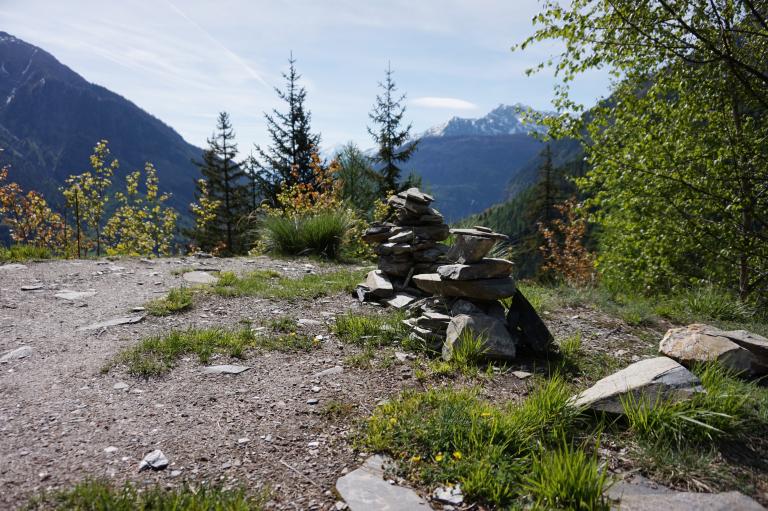
Photograph by Tiia Monto, used via Creative Commons License
Another option comes to us from the Norse word hörgr, which means an altar site, possibly made of a pile of stones. In the Poetic Edda, Freyja speaks of one of Her worshippers: “He made me a high altar of heaped-up stones: the gathered rocks have grown all bloody” (translation from Andy Orchard). The Old English cognate for this is ‘hearg’, which survives today as the word ‘harrow’. Stan could be associated with holy places and worship of the Gods and other spirits.
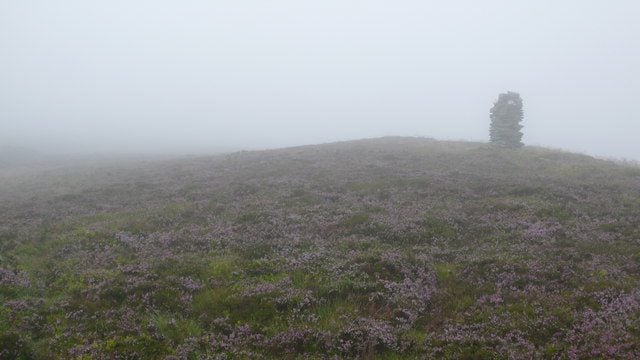
Stone cairn on Corwharn by Calum McRoberts, via Creative Commons license
I think there’s also an argument to be made for associating Stan with the ‘bones’ of a person or place; the basic structure that holds it up. I make this leap based on the story of the giant Ymir’s dismemberment which created the world. His bones are used to make the mountains and stones, the bones of the earth. Mountains are often associated with Jotuns in the Eddas, wild places that go untamed by the Gods. I might associate this rune with the Skadhi as well, who was known for Her love of the mountains. Skadhi went so far as to leave Her husband Njordh because She missed them.
Stan the Stone, with stone’s wide range of meanings and applications, is a more ambiguous rune than some others. How you choose to interpret this is, as always, up to you! Check out Gar, Calc, and Cweorth for more information on the Northumbrian runes!

About Molly Khan
Molly Khan is a Heathen and mother of five writing from the beautiful midwest prairie, primarily focused on regional cultus and the honor of gods of the natural world. A creator of many divination sets, she formerly acted as the elected Scribe for Prairie Shadow Grove, ADF. She has been Pagan for more than fifteen years, and a self-identifying Heathen for six. Check out her Etsy store SticksandStonesRunes to find runes and other ritual tools, and support inclusive Heathen writing! You can read more about the author here.
Previous Post

July 5, 2019
The Border Crisis Deserves our Action
Next Post
July 11, 2019 Impressions on the Land: Ancestral Nature Spirits
Browse Our Archives
Select a Category ADF Ancestors Books Deities Divination Festivals Heathen Historical Holidays Land Wights Magic Midwest Pagan Parenting Polytheism Prayer Runes Uncategorized Vanatru
Select a Month September 2019 August 2019 July 2019 June 2019 May 2019 April 2019 March 2019 February 2019 June 2017 March 2017 February 2017 December 2015 October 2015 September 2015 August 2015 July 2015 June 2015 May 2015
Follow Us!
TAKE THE
Religious Wisdom Quiz
What Christian group believes in "baptism by immersion only"?
Select your answer to see how you score.
Presbyterians Baptists Catholics Lutherans
Related posts from Heathen at Heart
How To Use Leaf Magic This Fall
Divination With Cranes (And Other Creatures)
A Heathen Fall Equinox Celebration
TRENDING AT PATHEOS Pagan

I was recently chatting with someone on Instagram. She asked me what...

While there are many people who share their results, the end of...

On July 23, I saw Christopher Nolan's The Odyssey which is Homer’s...

As I write this two big events have just finished up. One...

Restoring the Watershed of Divine Love
Perhaps cooperation is not something we manufacture through legislation, ideology, or moral...

Many UUs don’t pray because of bad experiences in a previous religion,...
view all Pagan blogs
Ad-Free & Subscriber Log-In Subscription Support
- About Us
- 2026 Calendar
- Videos
- Podcasts
- Library of World Religions
- Faith In Media Tracker
- Advertise With Us
- Write for Us
- Privacy Policy
- Terms of Service
- Do Not Sell My Data
- Contact Us
- Radiant Digital
- Manage Newsletter Subscriptions
- Unsubscribe From Notifications
- Sitemap
Copyright 2008-2026, Patheos. All rights reserved.
Subscription Support Ad-Free & Subscriber Log-In
Follow Patheos