
BuddhistCatholicContemplativeEvangelicalGeneral ChristianHinduJewishLatter-day SaintMuslimNew VisionsProgressive Christian
Beliefs
- Buddhist
- Catholic
- Contemplative
- Evangelical
- General Christian
- Hindu
- Jewish
- Latter-day Saint
- More Voices
- Muslim
- New Visions
- Pagan
- Progressive Christian
Topics
- Religion News
- Food and Religion
- Sports and Religion
- Religious Art
- Religious Music and Entertainment
- Religious Events
- History and Religion
- Style and Religion
- Politics and Religion
- Women in Religion
- Recreation Outdoors and Religion
- Business Finance and Religion
- Careers Workplace and Religion
- Education and Religion
- Family Parenting and Religion
- Health Fitness and Religion
- Home and Religion
- Relationships and Religion
- Technology and Religion
- Travel and Religion
Columnists
- Buddhist Columnists
- Business Finance and Religion Columnists
- Careers Workplace and Religion Columnists
- Catholic Columnists
- Contemplative Columnists
- Education and Religion Columnists
- Evangelists Columnists
- Family Parenting and Religion Columnists
- General Christian Columnists
- Health Fitness and Religion Columnists
- Hindu Columnists
- History and Religion Columnists
- Home and Religion Columnists
- Jewish Columnists
- More Voices Columnists
- Latter Day Columnists
- Muslim Columnists
- New Visions Columnists
- Nonreligious Columnists
- Pagan Columnists
- Politics and Religion Columnists
- Progressive Columnists
- Recreation Outdoors and Religion Columnists
- Relationships and Religion Columnists
- Religion News Columnists
- Religious Art Columnists
- Religious Events Columnists
- Religious Music and Entertainment Columnists
- Sports and Religion Columnists
- Style and Religion Columnists
- Technology and Religion Columnists
- Travel and Religion Columnists
- Women in Religion Columnists
Resource Library
- 2026 Calendar
- Library of World Religions
- The 100 Most Holy Places on Earth
- Patheos Answers
- Podcasts
- Videos
- Faith Leaders Database
- Anglican Episcopalian
- Bahai
- Baptist
- Buddhism
- Christianity
- Confucianism
- Eastern Orthodoxy
- Hinduism
- Holiness and Pentecostal
- ISKCON
- Islam
- Judaism
- Lutheran
- Methodist
- The Church of Jesus Christ of Latter-day Saints
- New Age
- Paganism
- Presbytarian and Reformed
- Protestantism
- Religion Behind the Scenes
- Roman Catholic
- Scientology
- Shia Islam
- Sikhism
- Sufism
- Sunni Islam
- Taoism
- Zen
- See all religions
Research Tools
 Ad-Free & Subscriber Log-In Subscription Support
Ad-Free & Subscriber Log-In Subscription Support
Follow Patheos 

- Trending:
- Forgiveness
- |
- Marriage
- |
- Consciousness
- |
- Death Penalty
- |
- Election
- |
- Halloween
 Heathen at Heart
- Home
- Pagan
- Cweorth: Northumbrian Runes
Cweorth: Northumbrian Runes
Last updated on: July 21, 2019 at 12:54 pm by Molly Khan
Cweorth: Northumbrian Runes 2019-07-19T16:09:28-05:00 Molly Khan
Patheos Explore the world's faith through different perspectives on religion and spirituality! Patheos has the views of the prevalent religions and spiritualities of the world.

You can find sets of Northumbrian runes on my Etsy!
In the rest of my Northumbrian Runes series, I’ve titled each with the most common translation of the rune. For Cweorth, I just can’t do that. The translation given on most websites refers to a fire, especially a ritual fire. It’s very possible this translation comes from Nigel Pennick’s Runic Lore and Legend: Wyrdstaves of Old Northumbria. He gives the translation as ‘ritual fire’, and posits it as an opposite of Nyd, the need fire.
There is absolutely no historical basis for this. He tries to justify it by linking Cweorth, which represents a ‘q’ sound, to the Ogham letter Ceirt, which is questionable at best. It represents a ‘q’ sound too, but also a ‘p’ sound; making it just as likely to be related to the rune Peorth. Furthermore, Ceirt’s meanings and translations also have nothing to do with fires, ritual or not.
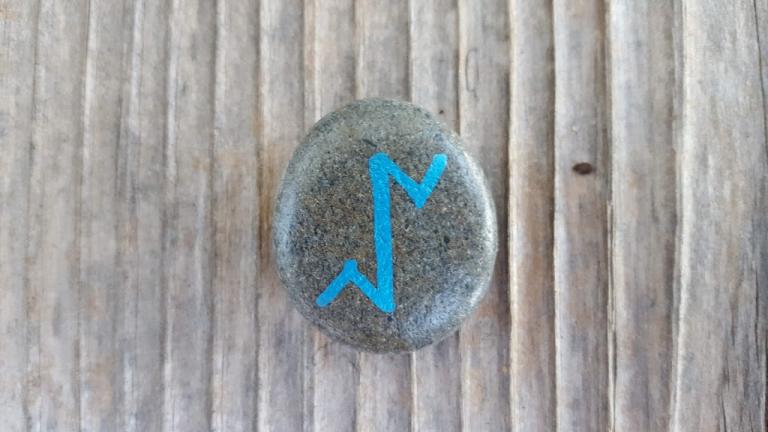 We have no translations of Cweorth; it seems to not actually be an Old English word. RI Page in his An Introduction to English Runes suggests that it was invented as a rhyme for the rune Peorth. This makes sense, he points out, as in a typical Latin alphabet text ‘p’ would immediately proceed ‘q’.
This leaves us foundering for a meaning. One could use the circumstances of the rune’s creation to build a meaning. In that case, I would link it with poetry or creativity. It could also be linked to scholarship and learning, because of its representation of a very Latin sound. Its connection with Rome could also give connotations of the foreign or exotic.
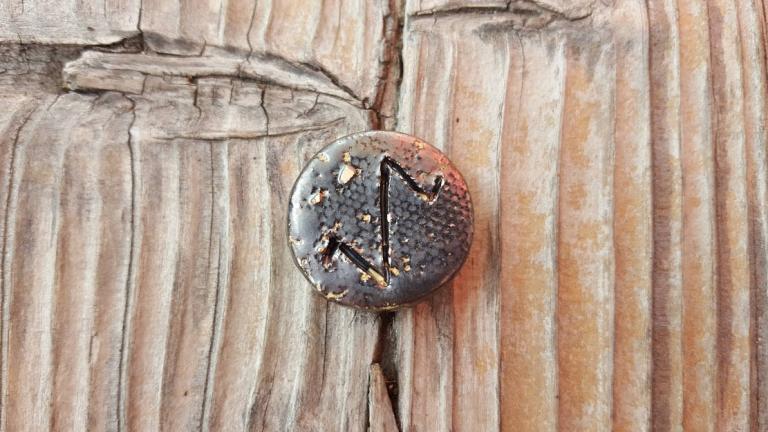 Another option is to look, as Pennick did, at the Ogham. While its true that the Ogham letter Ceirt could be translated as Peorth as easily as Cweorth, it’s not completely unreasonable to draw on its translations. Unfortunately, there’s no one true translation for Ceirt either. It is cognate with the Latin “quercus” which translates to “oak”, and also Welsh “perth” which means “bush”. One could pick either of these meanings, or could go with a generic interpretation of “plant-life”.
Perhaps our most interesting candidate is found in the Gothic alphabet. It was created in the fourth century by a priest, Ulfilas, who wanted to translate the bible into the language of the Gothic peoples. Ulfilas did purposefully avoid the use of most runic letters, but he was steeped in a Germanic society and culture. The ‘q’ sound was named either “qairna” (“millstone”) or “qairthra”. “Millstone” is an interesting interpretation, which could be associated with hard work, prosperity, and food making.
 “Qairthra” takes us down a different path. Like many ‘q’ sounds in Celtic and Germanic languages, it’s strongly associated with the ‘p’ sound, whose letter was named “pairtha”. This translates to “pear”. Written somewhere between the 7th and 12th centuries, the Auraicept na n-Éces contains a lot of information about the Ogham; it glosses the ‘q’ letter Ceirt as “apple tree”. It is possible that the ‘q’ and ‘p’ sounds had some association with fruit-bearing trees across the Germanic and Celtic world at the time.
This association with fruit-bearing trees gives us a connection with abundance, with prosperity, and with something delicious. It could also mean summer and harvest season. Interestingly, when Tacitus writes of divination tools used in the first century AD by Germanic tribes, he describes the cutting of lots specifically from a fruit-bearing tree. It’s possible this had some mystic association we’re no longer privy to.
All in all, Cweorth is largely an unknown. Whatever meaning feels right to you, stick with it and use it consistently and you should get results. If you’d like to read about the other Northumbrian runes, check out Calc, Stan, and Gar.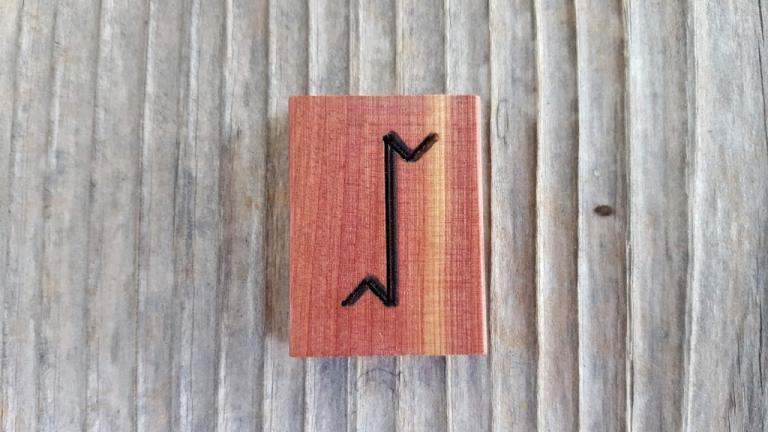

About Molly Khan
Molly Khan is a Heathen and mother of five writing from the beautiful midwest prairie, primarily focused on regional cultus and the honor of gods of the natural world. A creator of many divination sets, she formerly acted as the elected Scribe for Prairie Shadow Grove, ADF. She has been Pagan for more than fifteen years, and a self-identifying Heathen for six. Check out her Etsy store SticksandStonesRunes to find runes and other ritual tools, and support inclusive Heathen writing! You can read more about the author here.
Previous Post
July 18, 2019
The Simple Beauty of Rock Art Altars
Next Post

July 29, 2019 5 Simple Ways to Bring Lammas to Our Modern Lives
Browse Our Archives
Select a Category ADF Ancestors Books Deities Divination Festivals Heathen Historical Holidays Land Wights Magic Midwest Pagan Parenting Polytheism Prayer Runes Uncategorized Vanatru
Select a Month September 2019 August 2019 July 2019 June 2019 May 2019 April 2019 March 2019 February 2019 June 2017 March 2017 February 2017 December 2015 October 2015 September 2015 August 2015 July 2015 June 2015 May 2015
Follow Us!
TAKE THE
Religious Wisdom Quiz
What river did the Israelites cross to enter the Promised Land?
Select your answer to see how you score.
Euphrates River Nile River Tigris River Jordan River
Related posts from Heathen at Heart
How To Use Leaf Magic This Fall
Divination With Cranes (And Other Creatures)
A Heathen Fall Equinox Celebration
TRENDING AT PATHEOS Pagan

I was recently chatting with someone on Instagram. She asked me what...

While there are many people who share their results, the end of...

On July 23, I saw Christopher Nolan's The Odyssey which is Homer’s...

As I write this two big events have just finished up. One...

Restoring the Watershed of Divine Love
Perhaps cooperation is not something we manufacture through legislation, ideology, or moral...

Many UUs don’t pray because of bad experiences in a previous religion,...
view all Pagan blogs
Ad-Free & Subscriber Log-In Subscription Support
- About Us
- 2026 Calendar
- Videos
- Podcasts
- Library of World Religions
- Faith In Media Tracker
- Advertise With Us
- Write for Us
- Privacy Policy
- Terms of Service
- Do Not Sell My Data
- Contact Us
- Radiant Digital
- Manage Newsletter Subscriptions
- Unsubscribe From Notifications
- Sitemap
Copyright 2008-2026, Patheos. All rights reserved.
Subscription Support Ad-Free & Subscriber Log-In
Follow Patheos