
BuddhistCatholicContemplativeEvangelicalGeneral ChristianHinduJewishLatter-day SaintMuslimNew VisionsProgressive Christian
Beliefs
- Buddhist
- Catholic
- Contemplative
- Evangelical
- General Christian
- Hindu
- Jewish
- Latter-day Saint
- More Voices
- Muslim
- New Visions
- Pagan
- Progressive Christian
Topics
- Religion News
- Food and Religion
- Sports and Religion
- Religious Art
- Religious Music and Entertainment
- Religious Events
- History and Religion
- Style and Religion
- Politics and Religion
- Women in Religion
- Recreation Outdoors and Religion
- Business Finance and Religion
- Careers Workplace and Religion
- Education and Religion
- Family Parenting and Religion
- Health Fitness and Religion
- Home and Religion
- Relationships and Religion
- Technology and Religion
- Travel and Religion
Columnists
- Buddhist Columnists
- Business Finance and Religion Columnists
- Careers Workplace and Religion Columnists
- Catholic Columnists
- Contemplative Columnists
- Education and Religion Columnists
- Evangelists Columnists
- Family Parenting and Religion Columnists
- General Christian Columnists
- Health Fitness and Religion Columnists
- Hindu Columnists
- History and Religion Columnists
- Home and Religion Columnists
- Jewish Columnists
- More Voices Columnists
- Latter Day Columnists
- Muslim Columnists
- New Visions Columnists
- Nonreligious Columnists
- Pagan Columnists
- Politics and Religion Columnists
- Progressive Columnists
- Recreation Outdoors and Religion Columnists
- Relationships and Religion Columnists
- Religion News Columnists
- Religious Art Columnists
- Religious Events Columnists
- Religious Music and Entertainment Columnists
- Sports and Religion Columnists
- Style and Religion Columnists
- Technology and Religion Columnists
- Travel and Religion Columnists
- Women in Religion Columnists
Resource Library
- 2026 Calendar
- Library of World Religions
- The 100 Most Holy Places on Earth
- Patheos Answers
- Podcasts
- Videos
- Faith Leaders Database
- Anglican Episcopalian
- Bahai
- Baptist
- Buddhism
- Christianity
- Confucianism
- Eastern Orthodoxy
- Hinduism
- Holiness and Pentecostal
- ISKCON
- Islam
- Judaism
- Lutheran
- Methodist
- The Church of Jesus Christ of Latter-day Saints
- New Age
- Paganism
- Presbytarian and Reformed
- Protestantism
- Religion Behind the Scenes
- Roman Catholic
- Scientology
- Shia Islam
- Sikhism
- Sufism
- Sunni Islam
- Taoism
- Zen
- See all religions
Research Tools
 Ad-Free & Subscriber Log-In Subscription Support
Ad-Free & Subscriber Log-In Subscription Support
Follow Patheos 

- Trending:
- Forgiveness
- |
- Marriage
- |
- Consciousness
- |
- Death Penalty
- |
- Election
- |
- Halloween
 Heathen at Heart
- Home
- Pagan
- The Coelbren Alphabet: The Forgotten Oracle of the Welsh Bards
The Coelbren Alphabet: The Forgotten Oracle of the Welsh Bards
Last updated on: May 22, 2019 at 7:58 pm by Molly Khan
The Coelbren Alphabet: The Forgotten Oracle of the Welsh Bards 2019-05-22T19:58:46-05:00 Molly Khan
Patheos Explore the world's faith through different perspectives on religion and spirituality! Patheos has the views of the prevalent religions and spiritualities of the world.
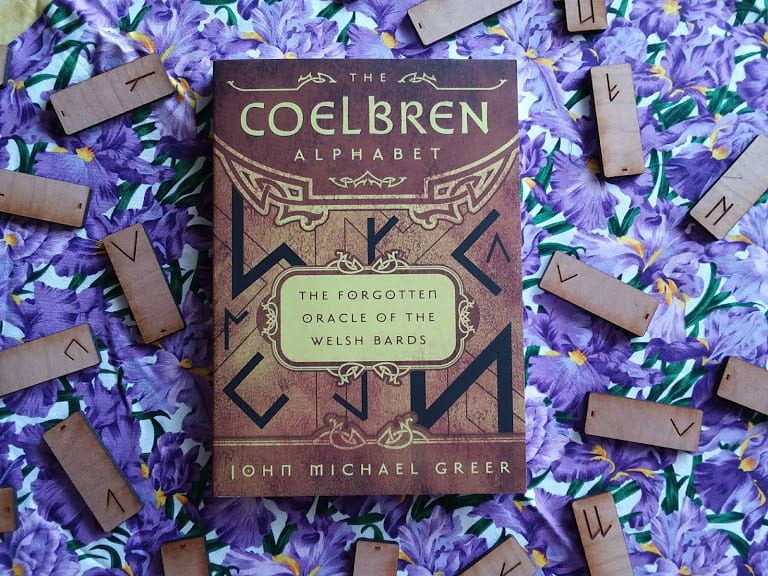 I’ve said it before and I’ll say it again; I have an obsession with divination. Something about the tactile feel of wood or stones or cards in my hand, the weight of the tools, the mysterious and occult nature of the symbols; the puzzle of finding the meanings hidden in the tilt of a piece, in the shadow falling on a symbol. These things are fascinating and beautiful to me. So whenever I come across a new way of doing this, I like to give it a try. In this spirit, a few weeks ago I picked up The Coelbren Alphabet: The Forgotten Oracle of the Welsh Bards by John Michael Greer.
To be honest, I know very little about Celtic history post-ancient times. I’ve done some study on the Ogham (check out Erynn Rowan Laurie’s Weaving Word Wisdom for a historically-informed Ogham magical and divination system). When I saw the title of the book, I rolled my eyes a bit. It seemed like the pseudo-historical claptrap that so often comes out of New Age publishers and you find for $5 in the bargain bin at the bookstore next year. But I like John Michael Greer’s writing and believe he is generally an author of honesty and integrity, so I picked it up on a lark.
 The Coelbren Alphabet
The Coelbren alphabet is a historical writing system, if by history you’re going back about 200 years. An invention of Iolo Morganwg’s, the alphabet was used by a number of Welsh bards during the resurgence of Welsh culture that accompanied Morganwg’s writings. A full third of the book is spent explaining the history of the alphabet, and I found it fascinating.
While apparently the letters have been popular knowledge among those who are interested in Welsh culture and spirituality for quite some time, Greer uncovered a text explaining the meanings of these symbols only recently. They are interesting in that the meaning for each sign is based around its sound, and the shape of the mouth when making it. Greer calls this sound symbolism, and I found it an engaging exercise as opposed to the shape-based meaning speculation I see so often with runes. The letters are simply named using their sounds as well.
The meanings account for the second third of the book, with the last third being devoted to the usual DIY instructions, how to divine, and spreads. There is an appendix focused on how to use the letters with the material in Greer’s The Celtic Golden Dawn, which is interesting enough that I might have to find that book as well.
 Practical Use
Making your own Coelbren set is easy, or there are a few available for purchase online. There are 24 letters, each with a marker at the bottom so it’s easy to tell which end is up. This is important with the Coelbren as many of the letters are upside-down versions of others.
To test these out, I drew three tiles focusing on a person in my life I’ve been having some difficulty with. My standard disclaimer about divination outside of a ritual context applies – I find it an interesting tool for stretching my brain, but I don’t take it as a message from the Gods unless I’m asking for one.
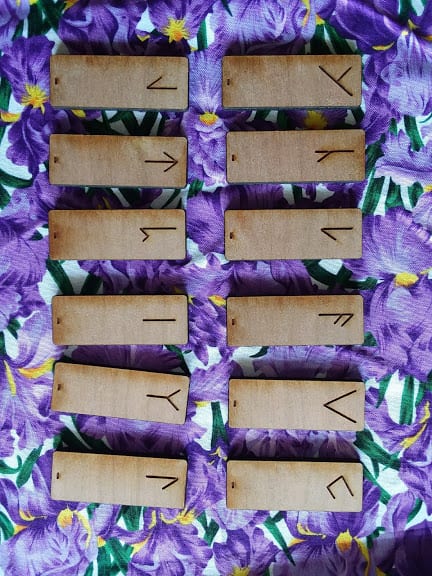 I drew the letters I, Mi, and Ffi. I means moving towards something, or continuing onwards. Mi is about the big picture, saying there’s more to a situation than meets the eye. Ffi represents making what you want happen, rather than waiting around for what you want. I see this as an opposition of two choices I have: either allow things to continue on, or make a move and change them for the better. Mi reminds me to keep the big picture in mind; whatever I chose, I’ll have to deal with it for the foreseeable future.
Overall, I found the Coelbren alphabet an interesting set to work with. The history was fascinating, though the meanings could have been flushed out a little more. I’d recommend it for anyone interested in divination, Victorian-era occult movements, or Welsh culture.
Previous Post

March 7, 2019
Easy Ways to Celebrate the Spring Equinox
Next Post

March 14, 2019 Racism Stole Heathenry's Past and Threatens our Future
Browse Our Archives
Select a Category ADF Ancestors Books Deities Divination Festivals Heathen Historical Holidays Land Wights Magic Midwest Pagan Parenting Polytheism Prayer Runes Uncategorized Vanatru
Select a Month September 2019 August 2019 July 2019 June 2019 May 2019 April 2019 March 2019 February 2019 June 2017 March 2017 February 2017 December 2015 October 2015 September 2015 August 2015 July 2015 June 2015 May 2015
Follow Us!
TAKE THE
Religious Wisdom Quiz
Who did angels visit, warning of Sodom's destruction?
Select your answer to see how you score.
Abram Noah Laban Lot
Related posts from Heathen at Heart

How To Use Leaf Magic This Fall
Divination With Cranes (And Other Creatures)

A Heathen Fall Equinox Celebration
TRENDING AT PATHEOS Pagan

I was recently chatting with someone on Instagram. She asked me what...

While there are many people who share their results, the end of...

On July 23, I saw Christopher Nolan's The Odyssey which is Homer’s...

As I write this two big events have just finished up. One...

Restoring the Watershed of Divine Love
Perhaps cooperation is not something we manufacture through legislation, ideology, or moral...

Many UUs don’t pray because of bad experiences in a previous religion,...
view all Pagan blogs
Ad-Free & Subscriber Log-In Subscription Support
- About Us
- 2026 Calendar
- Videos
- Podcasts
- Library of World Religions
- Faith In Media Tracker
- Advertise With Us
- Write for Us
- Privacy Policy
- Terms of Service
- Do Not Sell My Data
- Contact Us
- Radiant Digital
- Manage Newsletter Subscriptions
- Unsubscribe From Notifications
- Sitemap
Copyright 2008-2026, Patheos. All rights reserved.
Subscription Support Ad-Free & Subscriber Log-In
Follow Patheos