
BuddhistCatholicContemplativeEvangelicalGeneral ChristianHinduJewishLatter-day SaintMuslimNew VisionsProgressive Christian
Beliefs
- Buddhist
- Catholic
- Contemplative
- Evangelical
- General Christian
- Hindu
- Jewish
- Latter-day Saint
- More Voices
- Muslim
- New Visions
- Pagan
- Progressive Christian
Topics
- Religion News
- Food and Religion
- Sports and Religion
- Religious Art
- Religious Music and Entertainment
- Religious Events
- History and Religion
- Style and Religion
- Politics and Religion
- Women in Religion
- Recreation Outdoors and Religion
- Business Finance and Religion
- Careers Workplace and Religion
- Education and Religion
- Family Parenting and Religion
- Health Fitness and Religion
- Home and Religion
- Relationships and Religion
- Technology and Religion
- Travel and Religion
Columnists
- Buddhist Columnists
- Business Finance and Religion Columnists
- Careers Workplace and Religion Columnists
- Catholic Columnists
- Contemplative Columnists
- Education and Religion Columnists
- Evangelists Columnists
- Family Parenting and Religion Columnists
- General Christian Columnists
- Health Fitness and Religion Columnists
- Hindu Columnists
- History and Religion Columnists
- Home and Religion Columnists
- Jewish Columnists
- More Voices Columnists
- Latter Day Columnists
- Muslim Columnists
- New Visions Columnists
- Nonreligious Columnists
- Pagan Columnists
- Politics and Religion Columnists
- Progressive Columnists
- Recreation Outdoors and Religion Columnists
- Relationships and Religion Columnists
- Religion News Columnists
- Religious Art Columnists
- Religious Events Columnists
- Religious Music and Entertainment Columnists
- Sports and Religion Columnists
- Style and Religion Columnists
- Technology and Religion Columnists
- Travel and Religion Columnists
- Women in Religion Columnists
Resource Library
- 2026 Calendar
- Library of World Religions
- The 100 Most Holy Places on Earth
- Patheos Answers
- Podcasts
- Videos
- Faith Leaders Database
- Anglican Episcopalian
- Bahai
- Baptist
- Buddhism
- Christianity
- Confucianism
- Eastern Orthodoxy
- Hinduism
- Holiness and Pentecostal
- ISKCON
- Islam
- Judaism
- Lutheran
- Methodist
- The Church of Jesus Christ of Latter-day Saints
- New Age
- Paganism
- Presbytarian and Reformed
- Protestantism
- Religion Behind the Scenes
- Roman Catholic
- Scientology
- Shia Islam
- Sikhism
- Sufism
- Sunni Islam
- Taoism
- Zen
- See all religions
Research Tools
 Ad-Free & Subscriber Log-In Subscription Support
Ad-Free & Subscriber Log-In Subscription Support
Follow Patheos 

- Trending:
- Forgiveness
- |
- Marriage
- |
- Consciousness
- |
- Death Penalty
- |
- Election
- |
- Halloween
 Hearth Witch Down Under
- Home
- Pagan
- Which Moon – New Moon vs Dark Moon vs New Moon
Which Moon – New Moon vs Dark Moon vs New Moon
Last updated on: January 24, 2018 at 1:30 pm by Bekah Evie Bel
Which Moon – New Moon vs Dark Moon vs New Moon 2018-01-24T13:30:50+10:00 Bekah Evie Bel
Patheos Explore the world's faith through different perspectives on religion and spirituality! Patheos has the views of the prevalent religions and spiritualities of the world.
I have done several posts now that touch on the issue with the dark and new moon phases, but they were mostly in passing or in posts that were pretty heavy with information. So, after seeing a few threads on Facebook with people asking about when the dark moon is and when the new moon is, I thought it was prime time to do a single post dedicated to this topic specifically.
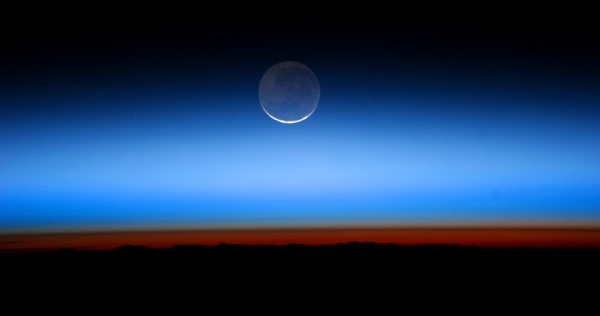
public domain via pixabay
The Pagan Moon
In Paganism, Witchcraft and even in ancient Hellenism, the dark moon is simply the moon phase where you can’t actually see the moon. The moon is right between the earth and the sun, all the suns light is shining on the face of the moon we cannot see and it looks much like a shadowy shape to us. We see no light reflecting off the moon.
Of course we can’t see it anyway, since at this time of the lunar month the moon sits below the horizon during the night, and above the horizon in the day. In this way, the dark moon is dark in two ways at once.
In Paganism, and again in ancient Hellenism, the new moon is the moon that comes directly after the dark moon. It’s the first visible waxing moon, when we can see only a tiny bit of a crescent in the sky. But again, you don’t see much of it, since it is below the horizon for the majority of the night.
So it’s that simple – Dark Moon is dark, New Moon is a tiny sliver of a crescent waxing moon.
The Moon in Astronomy
In astronomy things are bit different and this is where we get some confusion. When you look at an astronomical or calendar site online to find the new moon dates, you are actually finding the wrong dates for the Pagan new moon. In astronomy the new moon refers to the moon with 0% illumination, because 0 is considered the start rather than the end. 0% illumination means, no light on the moon, from our point of view. Or, in other words, a dark moon.
When you look at an astronomical calendar, the new moon date is actually the Pagan dark moon date. The new moon for us would then be a day or two or even three later – depending on your tradition. There is nothing called the dark moon in astronomy, and our new moon, that beginning waxing crescent, is generally not listed on your basic astronomical moon calendar.
So, it’s again simple, New Moon is dark.
The Confusion
In the bit above titled The Pagan Moon, I started off saying, “In Paganism, Witchcraft and Hellenism” the dark and new moons are. But the truth is, that’s not entirely true. Not all Pagans, or Hellenes, call the dark moon the dark moon. Many do follow the astronomical names, and the moon that is dark is called the new moon. But, then, so is the new moon, I guess.
This is especially confusing in Hellenism when someone is speaking of the Men Kata Theion days of the Deipnon and Noumenia. Deipnon on the new moon (dark moon) and Noumenia, as the name suggests, on the new moon (waxing crescent). They are both on the new moon, just, different new moons. This is why I find it much easier to call the dark moon, dark moon.
Another bit of confusion comes in when you look at Pagan calendars. You never know what dates they are using for the dark and new moons. I know myself, once upon a time, would check an astronomy calendar and consider it dark moon a couple days before the astro calendar new moon. Which was of course wrong. Any Pagan calendar is actually suspect until you can compare it to an astronomical calendar.
If your Pagan calendar has the new moon set at the same date as the astronomical new moon, and thus the dark moon is set a couple days before then – your Pagan lunar calendar is wrong. Sorry, what a waste of money.
It Gets More Confusing
Specific traditions, even within single religions as well as comparing the past to modern times creates even more confusion when it comes to figuring out the dark and new moon phases. For example, on Baring the Aegis, Elani Temperance often refers to Noumenia as falling on the day of the suspected new moon. “Suspected” can create some confusion for us, because we forget – back in ancient times, the average person wasn’t so great at mathematics and astronomy so as to know exactly when the moon would become dark. Thus, the first day of the lunar month would only be “suspected” not guaranteed.
Add to that, even though they would eventually know when the dark moon was, after observing it, they can’t really predict when they would actually see that first crescent. If the dark moon happened to be during the daylight hours, this means the new crescent would actually not be visible for another day or two at least.
Now though we have astronomical calendars at our disposal online and can find the exact date, indeed the exact time to the minute (perhaps second) for our specific regions when the astronomical new (Pagan dark) moon will occur. We can also rely on some calendars to tell us what percentage of illumination the moon will have at any given and specific time – so even if we miss seeing the first crescent moon, we know that it is there and is new and waxing. So, “suspected” isn’t really necessary to use when discussing this sort of thing anymore.
In ancient Greece they would begin the new day after sunset, not at midnight, nor even at dawn – but at sunset. So, when the sun sets on Monday night, that marks the beginning of Tuesday (not that they used our day names). Some of us still use this way of starting the religious day and this adds to the confusion. This is also why some Hellenes today will tell you to observe Deipnon the night before the dark moon actually happens – but it’s not as simple as that.
Then of course we can look outside of my own Hellenism and at Witchcraft or any other number of Pagan traditions which have their own rules. For example, Dark Moon is actually the 2 days leading up to and the day of the dark (astronomical new) moon. New moon is the first 3 or so days of the waxing crescent.
When To Observe Dark and New
Now we come to the hard part, when should we observe what? If the dark moon happens on Sunday night, after sunset, when should we observe the Deipnon? Should it begin on Saturday night and on throughout Sunday? Or should it begin on Sunday night and on through Monday? And if you don’t want to follow the new day starts at sunset method, should you do it on Sunday day and night, or Monday day and night? And what if it is dark during the day, again – do we begin the night before or the night of, or, even the night after?
The problem here is that I cannot actually answer that question – only you can based on the tradition you follow. Practicing witchcraft – go for normal times and start dark moon stuff 2 days before the actual dark moon. Hellenic rituals like the Deipnon and Noumenia, then you need to first decide if you follow the sunset new day method or not and then figure it out from there.
But, here are some examples of how things can work out.
Dark Moon (Astro new moon) at 11pm Sunday night.
Sunset New Day – begin Deipnon on Sunday at sunset, finish at sunset the next day to begin Noumenia.
Dawn New Day – Deipnon on Sunday or Monday, day and night.
Midnight New Day – Choose one of the above.
Dark Moon (astro new moon) 10am Sunday morning.
Sunset New Day – Begin Deipnon on Saturday at sunset, finish at the next sunset to begin Noumenia.
Dawn New Day – Deipnon on Sunday, day and night.
Midnight New Day – Choose one of the above (or hey, both if you want).
Dark Moon (astro new moon) 5.30pm Sunday evening, right before sunset.
This one is the most difficult, you have to choose for yourself whether you should start on Saturday night, Sunday all day, or Sunday night or something else entirely.
As you can see, it can get a bit complicated to figure it all out sometimes. To be completely honest, the easiest way to figure out when to observe or celebrate the dark moon and new moon and is to not even look at the exact time the moons will happen – only look at the date. If the astronomical new moon, our dark moon, is marked as happening on Sunday then make it Sunday, and Monday is first new waxing crescent. That is the simplest method – but it doesn’t feel right to do this for all of us. And so, we end up creating more confusion about something that should be fairly straightforward.
Sorry about that.
Previous Post

July 21, 2017
Miasma and Cleansing Self After Moving Home
Next Post

July 28, 2017 Making Your Paganism Local - Begin at Home
Browse Our Archives
Select a Category Australia Calendar, Events and Festivals General Hellenism Hellenismoz How To Lore and Myth Multimedia Pagan Blogosphere Pagan Community Pagan Parenting and Homeschooling Paganism 101 Personal Practice Religious Philosophy Resources and Material Ritual Uncategorized Witchcraft 101
Select a Month January 2018 December 2017 November 2017 October 2017 August 2017 July 2017 June 2017 May 2017 April 2017 March 2017 February 2017 January 2017 December 2016 November 2016 October 2016 September 2016 August 2016 July 2016 June 2016 May 2016 April 2016 July 2012 June 2012 May 2012 April 2012 March 2012 February 2012 January 2012 December 2011
Follow Us!
TAKE THE
Religious Wisdom Quiz
Who anointed David as king as a boy?
Select your answer to see how you score.
Saul Nathan Moses Samuel
Related posts from Hearth Witch Down Under
2018 Pagan Wallpapers and Printables

Book Review - Circle for Hekate: History and...
Hekates Deipnon - Day 30 of My Sacred...
Hades Ritual - Day 29 of My Sacred...
TRENDING AT PATHEOS Pagan

I was recently chatting with someone on Instagram. She asked me what...

While there are many people who share their results, the end of...

On July 23, I saw Christopher Nolan's The Odyssey which is Homer’s...

As I write this two big events have just finished up. One...

Restoring the Watershed of Divine Love
Perhaps cooperation is not something we manufacture through legislation, ideology, or moral...

Many UUs don’t pray because of bad experiences in a previous religion,...
view all Pagan blogs
Ad-Free & Subscriber Log-In Subscription Support
- About Us
- 2026 Calendar
- Videos
- Podcasts
- Library of World Religions
- Faith In Media Tracker
- Advertise With Us
- Write for Us
- Privacy Policy
- Terms of Service
- Do Not Sell My Data
- Contact Us
- Radiant Digital
- Manage Newsletter Subscriptions
- Unsubscribe From Notifications
- Sitemap
Copyright 2008-2026, Patheos. All rights reserved.
Subscription Support Ad-Free & Subscriber Log-In
Follow Patheos