
BuddhistCatholicContemplativeEvangelicalGeneral ChristianHinduJewishLatter-day SaintMuslimNew VisionsProgressive Christian
Beliefs
- Buddhist
- Catholic
- Contemplative
- Evangelical
- General Christian
- Hindu
- Jewish
- Latter-day Saint
- More Voices
- Muslim
- New Visions
- Pagan
- Progressive Christian
Topics
- Religion News
- Food and Religion
- Sports and Religion
- Religious Art
- Religious Music and Entertainment
- Religious Events
- History and Religion
- Style and Religion
- Politics and Religion
- Women in Religion
- Recreation Outdoors and Religion
- Business Finance and Religion
- Careers Workplace and Religion
- Education and Religion
- Family Parenting and Religion
- Health Fitness and Religion
- Home and Religion
- Relationships and Religion
- Technology and Religion
- Travel and Religion
Columnists
- Buddhist Columnists
- Business Finance and Religion Columnists
- Careers Workplace and Religion Columnists
- Catholic Columnists
- Contemplative Columnists
- Education and Religion Columnists
- Evangelists Columnists
- Family Parenting and Religion Columnists
- General Christian Columnists
- Health Fitness and Religion Columnists
- Hindu Columnists
- History and Religion Columnists
- Home and Religion Columnists
- Jewish Columnists
- More Voices Columnists
- Latter Day Columnists
- Muslim Columnists
- New Visions Columnists
- Nonreligious Columnists
- Pagan Columnists
- Politics and Religion Columnists
- Progressive Columnists
- Recreation Outdoors and Religion Columnists
- Relationships and Religion Columnists
- Religion News Columnists
- Religious Art Columnists
- Religious Events Columnists
- Religious Music and Entertainment Columnists
- Sports and Religion Columnists
- Style and Religion Columnists
- Technology and Religion Columnists
- Travel and Religion Columnists
- Women in Religion Columnists
Resource Library
- 2026 Calendar
- Library of World Religions
- The 100 Most Holy Places on Earth
- Patheos Answers
- Podcasts
- Videos
- Faith Leaders Database
- Anglican Episcopalian
- Bahai
- Baptist
- Buddhism
- Christianity
- Confucianism
- Eastern Orthodoxy
- Hinduism
- Holiness and Pentecostal
- ISKCON
- Islam
- Judaism
- Lutheran
- Methodist
- The Church of Jesus Christ of Latter-day Saints
- New Age
- Paganism
- Presbytarian and Reformed
- Protestantism
- Religion Behind the Scenes
- Roman Catholic
- Scientology
- Shia Islam
- Sikhism
- Sufism
- Sunni Islam
- Taoism
- Zen
- See all religions
Research Tools
 Ad-Free & Subscriber Log-In Subscription Support
Ad-Free & Subscriber Log-In Subscription Support
Follow Patheos 

- Trending:
- Forgiveness
- |
- Marriage
- |
- Consciousness
- |
- Death Penalty
- |
- Election
- |
- Halloween
 Hearth Witch Down Under
- Home
- Pagan
- On Comparing the Gods to Humans
On Comparing the Gods to Humans
Last updated on: January 24, 2018 at 1:30 pm by Bekah Evie Bel
On Comparing the Gods to Humans 2018-01-24T13:30:53+10:00 Bekah Evie Bel
Patheos Explore the world's faith through different perspectives on religion and spirituality! Patheos has the views of the prevalent religions and spiritualities of the world.
In some of my posts, generally those that are about the nature of the Gods, I inevitably end up comparing the Gods to humans. I will use examples of human behaviour and motives to explain how the Gods might behave, and why They behave in these ways.
But this sort of language is problematic to some people, as some have mentioned on my posts or elsewhere about my posts, but also I have seen similar comments in passing that have nothing to do with me. For many Pagans, especially Polytheists, the Gods are not human and cannot be judged by human standards or perceptions. Comparing Them to humans is simply wrong.
So, why do I use such language when discussing the nature and actions of the Gods?
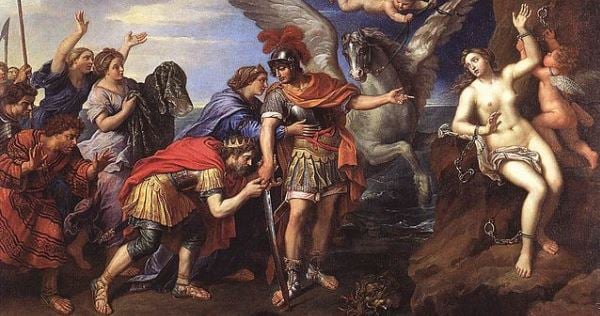
Pierre Mignard [Public domain], via Wikimedia Commons
Humans are Limited
There is no getting around this, we humans are limited in what we can see, what we can perceive and what we can understand. The best way for us to understand something is to put it into human terms – and even better, terms that match our levels of egocentricity. Pagans and Polytheists are no exception to this flaw in our nature. We see only so far, we understand only so much and the bulk of what we understand is only understood because we are able to translate it into human terms.
Consider the things we just cannot imagine. Nothingness. What comes to mind when you consider the concept of nothingness? I bet it has some kind of colour or shade to it, is it light or dark? True nothingness should have no colour, no shade, no light and no dark – because there is nothing. This is beyond our ability to comprehend.
That is not the only thing that we cannot comprehend fully, this is not the only thing that we must place certain human (or at least earthly) concepts onto in order to understand it in part.
Life is Human and Earthly, Nothing Else
Life itself is one of the things that we cannot imagine in a way that is different to our own experience of life. I read a short story by Anne McCaffrey once (more than once actually) about humans travelling to a planet, finding it covered in life but no sentient creatures. They used the planet to their own benefit, only feeling a little bad about using old and seemingly abandoned cities. The velvet fields they used as fodder for cattle.
A decade later the humans finally discovered that these plants in the velvet fields were living beings, going through various stages of life before finally awakening, fully conscious and aware – tortured, mutilated and decapitated because of our inability to recognise the existence of life if it isn’t exactly like our earthly lives. No heart, no lungs, no brain waves? Then obviously it’s not a living being, and certainly has no consciousness and as such can be used as we will.
You might think, well Pagans are different! Many Pagans are animistic and believe (know!) that everything is alive, everything has a soul – even rocks! But consider what you imagine when you think of the life these things have. Sure, you know a rock has no heartbeat, lungs or brainwaves that we can perceive – but what human ideas are we placing upon these things? When you imagine them as being able to think, are you able to conceive of thought as anything different from how we think? Are you giving them human desires, emotions, ideals and even morals?
We must treat these things with respect, honour, care etc because they are living beings. And as living beings they of course want to be honoured, respected and cared for….
Just a bit presumptive and human-centric isn’t it? Perhaps they care nothing for respect or honour or care. Do they feel emotions, and if they do, are those emotions anything we could even come close to understanding?
You can say that you have experience with these entities, but having experience with them doesn’t necessarily mean that your human perceptions have not coloured your view of these entities. What have you actually missed during these experiences because of your limited human understanding? What has your human mind showed you of these beings that isn’t actually true?
The Gods are Not Human, But We Are
And They know it. When we think of the Gods, when we envision Them and create images of Them we inevitably give Them some kind of human and/or earthly visage. Biped most of the time, human or animal faces/heads, human or animal limbs, and so on. Even the demonic looking being is still very human under the lumps and bumps and horns.
Why do we anthropomorphise the Gods like this?
It doesn’t even matter what your beliefs are in this discussion. Either the Gods are literally beings that look extremely human-like. Or They are not human-like at all and our perceptions colour what we see. Now, how our perceptions do this is a matter of debate, but the two I think are most prevalent are as follows. First, we are so incapable of accepting and understanding the true physical form of the Gods (if They have a physical form) that our minds create an image for us that blocks out the reality. Or, the Gods know our limitations and They show us what They know we are able to handle.
Not all of us see or envision the Gods in human form of course. The other way we often see Them is animistic. This is where you see Hermes as He was seen by humans so long ago – as an actual stone, or Zeus as literal lightning and of course Gaia is the Earth itself. But even this animistic view of the Gods is still very human – because we have an understanding of earthly objects and phenomena, this is what we can see.
But also, our physical bodies limit our view as well. There are colours out there that we are incapable of seeing, sounds that are beyond our ability to hear. This means, that even if the Gods are literal lightning, stone or things like that – still there is much we cannot see and as such there is much we cannot understand.
So the Human View is Necessary
When discussing the Gods, and indeed other beings that are very inhuman and rather unearthly, it is almost impossible to not place Them into little human-like boxes in order to understand Them. But doing this for the sake of discussion, dissemination or even education isn’t necessarily the same as believing They are comparable to humans.
And even if you are one of the rare birds who can imagine Them in a way that is very inhuman, that doesn’t mean very much to everyone else. Because just like I believe the Gods show Themselves to us in ways They know we can handle – so I also discuss things in ways I know most people will be able to understand. Because what is the point of talking (writing) about all of this, if no one can understand what I am talking about?
Previous Post

May 26, 2017
The Importance of Ritual in My Paganism
Next Post

June 1, 2017 My Gods are Real and Independent Beings
Browse Our Archives
Select a Category Australia Calendar, Events and Festivals General Hellenism Hellenismoz How To Lore and Myth Multimedia Pagan Blogosphere Pagan Community Pagan Parenting and Homeschooling Paganism 101 Personal Practice Religious Philosophy Resources and Material Ritual Uncategorized Witchcraft 101
Select a Month January 2018 December 2017 November 2017 October 2017 August 2017 July 2017 June 2017 May 2017 April 2017 March 2017 February 2017 January 2017 December 2016 November 2016 October 2016 September 2016 August 2016 July 2016 June 2016 May 2016 April 2016 July 2012 June 2012 May 2012 April 2012 March 2012 February 2012 January 2012 December 2011
Follow Us!
TAKE THE
Religious Wisdom Quiz
Who said, "Before Abraham was, I am"?
Select your answer to see how you score.
Peter Jesus Paul John
Related posts from Hearth Witch Down Under
2018 Pagan Wallpapers and Printables

Book Review - Circle for Hekate: History and...
Hekates Deipnon - Day 30 of My Sacred...
Hades Ritual - Day 29 of My Sacred...
TRENDING AT PATHEOS Pagan

I was recently chatting with someone on Instagram. She asked me what...

While there are many people who share their results, the end of...

On July 23, I saw Christopher Nolan's The Odyssey which is Homer’s...

As I write this two big events have just finished up. One...

Restoring the Watershed of Divine Love
Perhaps cooperation is not something we manufacture through legislation, ideology, or moral...

Many UUs don’t pray because of bad experiences in a previous religion,...
view all Pagan blogs
Ad-Free & Subscriber Log-In Subscription Support
- About Us
- 2026 Calendar
- Videos
- Podcasts
- Library of World Religions
- Faith In Media Tracker
- Advertise With Us
- Write for Us
- Privacy Policy
- Terms of Service
- Do Not Sell My Data
- Contact Us
- Radiant Digital
- Manage Newsletter Subscriptions
- Unsubscribe From Notifications
- Sitemap
Copyright 2008-2026, Patheos. All rights reserved.
Subscription Support Ad-Free & Subscriber Log-In
Follow Patheos