
BuddhistCatholicContemplativeEvangelicalGeneral ChristianHinduJewishLatter-day SaintMuslimNew VisionsProgressive Christian
Beliefs
- Buddhist
- Catholic
- Contemplative
- Evangelical
- General Christian
- Hindu
- Jewish
- Latter-day Saint
- More Voices
- Muslim
- New Visions
- Pagan
- Progressive Christian
Topics
- Religion News
- Food and Religion
- Sports and Religion
- Religious Art
- Religious Music and Entertainment
- Religious Events
- History and Religion
- Style and Religion
- Politics and Religion
- Women in Religion
- Recreation Outdoors and Religion
- Business Finance and Religion
- Careers Workplace and Religion
- Education and Religion
- Family Parenting and Religion
- Health Fitness and Religion
- Home and Religion
- Relationships and Religion
- Technology and Religion
- Travel and Religion
Columnists
- Buddhist Columnists
- Business Finance and Religion Columnists
- Careers Workplace and Religion Columnists
- Catholic Columnists
- Contemplative Columnists
- Education and Religion Columnists
- Evangelists Columnists
- Family Parenting and Religion Columnists
- General Christian Columnists
- Health Fitness and Religion Columnists
- Hindu Columnists
- History and Religion Columnists
- Home and Religion Columnists
- Jewish Columnists
- More Voices Columnists
- Latter Day Columnists
- Muslim Columnists
- New Visions Columnists
- Nonreligious Columnists
- Pagan Columnists
- Politics and Religion Columnists
- Progressive Columnists
- Recreation Outdoors and Religion Columnists
- Relationships and Religion Columnists
- Religion News Columnists
- Religious Art Columnists
- Religious Events Columnists
- Religious Music and Entertainment Columnists
- Sports and Religion Columnists
- Style and Religion Columnists
- Technology and Religion Columnists
- Travel and Religion Columnists
- Women in Religion Columnists
Resource Library
- 2026 Calendar
- Library of World Religions
- The 100 Most Holy Places on Earth
- Patheos Answers
- Podcasts
- Videos
- Faith Leaders Database
- Anglican Episcopalian
- Bahai
- Baptist
- Buddhism
- Christianity
- Confucianism
- Eastern Orthodoxy
- Hinduism
- Holiness and Pentecostal
- ISKCON
- Islam
- Judaism
- Lutheran
- Methodist
- The Church of Jesus Christ of Latter-day Saints
- New Age
- Paganism
- Presbytarian and Reformed
- Protestantism
- Religion Behind the Scenes
- Roman Catholic
- Scientology
- Shia Islam
- Sikhism
- Sufism
- Sunni Islam
- Taoism
- Zen
- See all religions
Research Tools
 Ad-Free & Subscriber Log-In Subscription Support
Ad-Free & Subscriber Log-In Subscription Support
Follow Patheos 

- Trending:
- Forgiveness
- |
- Marriage
- |
- Consciousness
- |
- Death Penalty
- |
- Election
- |
- Halloween
 Hearth Witch Down Under
- Home
- Pagan
- Ethics – Intent vs Consent
Ethics – Intent vs Consent
Last updated on: January 24, 2018 at 1:32 pm by Bekah Evie Bel
Ethics – Intent vs Consent 2018-01-24T13:32:52+10:00 Bekah Evie Bel
Patheos Explore the world's faith through different perspectives on religion and spirituality! Patheos has the views of the prevalent religions and spiritualities of the world.
I have posted about ethics before, but that was back in 2012 and sometimes it is worth re-exploring an idea. This past month or two has seen some division within the Pagan, or more specifically, the Occult community, mostly because of the hexing of Brock Turner.
I’ve noted that ethics is a tricky thing for us in the occult business. I have spoken of someone I know who would do Reiki on people whilst giving them massages – they obviously consent to the massage, but they don’t even know about the Reiki let alone consent to it. There would be some people who think this is okay, it’s a positive thing, healing, therefore there is nothing wrong with this, nothing unethical about it. A lot of us would disagree – consent is consent, to do this to someone is wrong and unethical. We don’t know what it could do. Some people have physically bad reactions to Reiki. Some people would be against it on a spiritual/religious level, to perform Reiki on them would be to taint them, make them impure in the eyes of their religion and God/s.
This can be likened to mainstream medicine. How would you feel if some doctor jabbed a needle full of medicine into you without your consent? How would you feel if you found out they were crushing up pills and putting them in your drink, so that not only do you not to consent to the medical treatment, you don’t even know it’s happening? These are violating actions, no two ways about it. We can say “for their own good” but we all know how we would feel to be on the receiving end. Reiki and other forms of “good” magic are similar – just because we think it is positive and “for their own good”, that doesn’t mean we have the right to violate them.
So ethically speaking, performing so called good magic on someone, without their consent, is not good.
But then we move on to things like hexing and cursing. In these consent goes out the window, it’s not even a minor fleeting consideration. Can you imagine it?
“Hi, would you please consent to me placing a hex on you?”
“No!”
“Oh, okay then. No hexing today friends!”
Ha! Yeh it doesn’t work that way. Asking defeats the purpose, which is to, well, violate consent. The whole point of a hex or curse is to place upon someone, something they do not want.
Positive actions require consent.
Negative actions require non-consent.
And if you ignore either rule things go a little wonky.
Things that hurt you are not always bad things, sometimes they are healing. Medicine is the best example for this really – think a burn victim having to endure the pain of having their burnt skin removed, painfully, agonisingly – but if it isn’t done, if it isn’t removed and cleaned the consequences would be way worse. The act of harm here is an act of healing. Irradiating someone would be bad in normal circumstances – but if it is done properly to defeat cancer, it is a good thing.
Conversely healing people can lead to harm. As above in the forced medicine example, it’s a violation and harms us psychologically and emotionally. But more than that, forcing a person who is in constant pain and who is dying anyway, to prolong their life because it is against your personal sensibilities to let them die, is harmful to them. Their pain is prolonged by your futile fight to save their life. Forcing healing onto them is harmful.
And it works this way in magic too.
Healing magic, if not consented to, could be considered a hex. It is magic done to someone, without their consent, possibly to their detriment, no matter our intentions. Something magically forced onto someone could be harmful and thus, technically, a curse or hex.
Harmful magic, if consented to, could conversely be considered a form of healing. It is magic done to someone with their consent, which means they want it – which would mean, in cases like Brock Turner, they recognise there is something wrong with them that needs to change – and the consequences of a hex is the way they think it would best come about and fix their problem.
We often talk about how intention matters. What we intend is the thing that matters most. If we intend good things, then it’s all good. If we intend bad things, then it’s all bad. But in the end our intentions are meaningless in the face of the power of consent.
The most well-intentioned thing can become the worst thing, if it is done to someone without their consent. While the worst intentioned thing could be the best thing, if it is done to someone with their consent.
So intent matters, sure. But consent trumps that in some cases. It’s probably a good idea to remember that before we do things on the basis of good intent. Of course, the idea of anyone actually consenting to a hex is a bit out there, but you never know!

It’s kind of like yin and yang really.
Previous Post
July 6, 2016
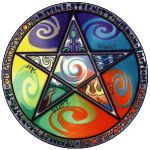
180 Degrees of Separation - The Cardinal Elements
Next Post

July 11, 2016 Animal Sacrifice in Hellenism
Browse Our Archives
Select a Category Australia Calendar, Events and Festivals General Hellenism Hellenismoz How To Lore and Myth Multimedia Pagan Blogosphere Pagan Community Pagan Parenting and Homeschooling Paganism 101 Personal Practice Religious Philosophy Resources and Material Ritual Uncategorized Witchcraft 101
Select a Month January 2018 December 2017 November 2017 October 2017 August 2017 July 2017 June 2017 May 2017 April 2017 March 2017 February 2017 January 2017 December 2016 November 2016 October 2016 September 2016 August 2016 July 2016 June 2016 May 2016 April 2016 July 2012 June 2012 May 2012 April 2012 March 2012 February 2012 January 2012 December 2011
Follow Us!
TAKE THE
Religious Wisdom Quiz
I cleansed the temple in sixteen days and celebrated Passover so joyfully that we extended it another seven days. Who am I?
Select your answer to see how you score.
Jehoshaphat Josiah Asa Hezekiah
Related posts from Hearth Witch Down Under

2018 Pagan Wallpapers and Printables

Book Review - Circle for Hekate: History and...
Hekates Deipnon - Day 30 of My Sacred...
Hades Ritual - Day 29 of My Sacred...
TRENDING AT PATHEOS Pagan

I was recently chatting with someone on Instagram. She asked me what...

While there are many people who share their results, the end of...

On July 23, I saw Christopher Nolan's The Odyssey which is Homer’s...

As I write this two big events have just finished up. One...

Restoring the Watershed of Divine Love
Perhaps cooperation is not something we manufacture through legislation, ideology, or moral...

Many UUs don’t pray because of bad experiences in a previous religion,...
view all Pagan blogs
Ad-Free & Subscriber Log-In Subscription Support
- About Us
- 2026 Calendar
- Videos
- Podcasts
- Library of World Religions
- Faith In Media Tracker
- Advertise With Us
- Write for Us
- Privacy Policy
- Terms of Service
- Do Not Sell My Data
- Contact Us
- Radiant Digital
- Manage Newsletter Subscriptions
- Unsubscribe From Notifications
- Sitemap
Copyright 2008-2026, Patheos. All rights reserved.
Subscription Support Ad-Free & Subscriber Log-In
Follow Patheos