
BuddhistCatholicContemplativeEvangelicalGeneral ChristianHinduJewishLatter-day SaintMuslimNew VisionsProgressive Christian
Beliefs
- Buddhist
- Catholic
- Contemplative
- Evangelical
- General Christian
- Hindu
- Jewish
- Latter-day Saint
- More Voices
- Muslim
- New Visions
- Pagan
- Progressive Christian
Topics
- Religion News
- Food and Religion
- Sports and Religion
- Religious Art
- Religious Music and Entertainment
- Religious Events
- History and Religion
- Style and Religion
- Politics and Religion
- Women in Religion
- Recreation Outdoors and Religion
- Business Finance and Religion
- Careers Workplace and Religion
- Education and Religion
- Family Parenting and Religion
- Health Fitness and Religion
- Home and Religion
- Relationships and Religion
- Technology and Religion
- Travel and Religion
Columnists
- Buddhist Columnists
- Business Finance and Religion Columnists
- Careers Workplace and Religion Columnists
- Catholic Columnists
- Contemplative Columnists
- Education and Religion Columnists
- Evangelists Columnists
- Family Parenting and Religion Columnists
- General Christian Columnists
- Health Fitness and Religion Columnists
- Hindu Columnists
- History and Religion Columnists
- Home and Religion Columnists
- Jewish Columnists
- More Voices Columnists
- Latter Day Columnists
- Muslim Columnists
- New Visions Columnists
- Nonreligious Columnists
- Pagan Columnists
- Politics and Religion Columnists
- Progressive Columnists
- Recreation Outdoors and Religion Columnists
- Relationships and Religion Columnists
- Religion News Columnists
- Religious Art Columnists
- Religious Events Columnists
- Religious Music and Entertainment Columnists
- Sports and Religion Columnists
- Style and Religion Columnists
- Technology and Religion Columnists
- Travel and Religion Columnists
- Women in Religion Columnists
Resource Library
- 2026 Calendar
- Library of World Religions
- The 100 Most Holy Places on Earth
- Patheos Answers
- Podcasts
- Videos
- Faith Leaders Database
- Anglican Episcopalian
- Bahai
- Baptist
- Buddhism
- Christianity
- Confucianism
- Eastern Orthodoxy
- Hinduism
- Holiness and Pentecostal
- ISKCON
- Islam
- Judaism
- Lutheran
- Methodist
- The Church of Jesus Christ of Latter-day Saints
- New Age
- Paganism
- Presbytarian and Reformed
- Protestantism
- Religion Behind the Scenes
- Roman Catholic
- Scientology
- Shia Islam
- Sikhism
- Sufism
- Sunni Islam
- Taoism
- Zen
- See all religions
Research Tools
 Ad-Free & Subscriber Log-In Subscription Support
Ad-Free & Subscriber Log-In Subscription Support
Follow Patheos 

- Trending:
- Forgiveness
- |
- Marriage
- |
- Consciousness
- |
- Death Penalty
- |
- Election
- |
- Halloween
 Hearing the Call
- Home
- Careers, Workplace and Religion
- Offering God the products of human labor
Offering God the products of human labor
Last updated on: February 16, 2014 at 9:02 pm by Theology of Work Project
Offering God the products of human labor 2014-02-16T21:02:27+00:00 Theology of Work Project
Patheos Explore the world's faith through different perspectives on religion and spirituality! Patheos has the views of the prevalent religions and spiritualities of the world.
In Numbers 4 and 7, the Lord gives detailed instructions for setting up the tent of meeting, the location of his presence with Israel. The tent of meeting requires materials produced by a wide variety of workers—fine leather, blue cloth, crimson cloth, curtains, poles and frames, plates, dishes, bowls, flagons, lamp stands, snuffers, trays, oil and vessels to hold it, a golden altar, fire pans, forks, shovels, basins and fragrant incense (Num. 4:5-15). (A similar description is found in Exodus 31:1-12; see “The Tabernacle” in Exodus and Work.)
In the course of worship the people bring into it further products of human labor, such as offerings of drink (Numbers 4:7), grain (4:16), oil (7:13), lambs and sheep (6:12), goats (7:16) and precious metals (7:25). Virtually every occupation—indeed nearly every 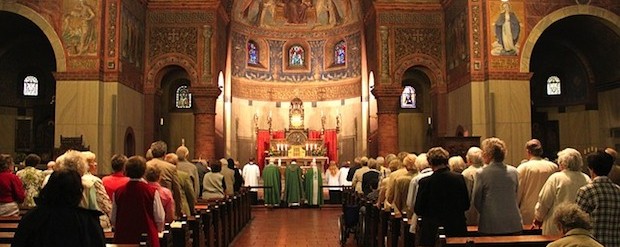 person—in Israel is needed to make it possible to worship of God in the tent of meeting.
The Levites fed their families largely with a portion of the sacrifices. These were allotted to the Levites because unlike the other tribes, they were not given land to farm (Num. 18:18-32). The Levites did not receive sacrifices because they were holy men, but because by presiding at sacrifices, they brought everyone into a holy relation with God. The people, not the Levites, were the prime beneficiaries of the sacrifices. In fact, the sacrificial system itself was a component in Israel’s food supply system. Aside from some portions burned on the altar and the Levites’ portion mentioned above, the main parts of the grain and animal offerings were designated to be eaten by those who brought them. Everyone in Israel was thus fed in part by the system. Overall, the sacrificial system did not isolate a few holy things from the rest of human production, but mediated God’s presence in the entire life and work of the nation.
Likewise today, the products and services of all God’s people are expressions of God’s power at work in human beings, or at least they should be. The New Testament develops this theme from the Old explicitly. “You are a chosen race, a royal priesthood, a holy nation, God’s own people, in order that you may proclaim the mighty acts of him who called you out of darkness into his marvelous light” (1 Peter 2:9). (Click here for more on the priesthood of all believers in 1 Peter 1:1-2:12.) All the work we do is priestly work when it proclaims God’s goodness. The items we produce—leather and cloth, dishes and plates, construction materials, lesson plans, financial forecasts, and all the rest—are priestly items. The work we do—washing clothes, growing crops, raising children and every other form of legitimate work—is priestly service to God. All of us are meant to ask, “How does my work reflect the goodness of God, make him visible to those who do not recognize him and serve his purposes in the world?” All believers, not just clergy, are descendants of the priests and Levites in Numbers, doing God’s work every day.
Adapted from Theology of Work Project. Image courtesy TOW Project.
Previous Post

December 14, 2013
Work as worship
Next Post
December 26, 2013 God's call to Moses
Browse Our Archives
Select a Category Calling Vocation
Select a Month April 2014 March 2014 February 2014 January 2014 December 2013
TAKE THE
Religious Wisdom Quiz
Who did God ask to sacrifice his only son as a test?
Select your answer to see how you score.
David Moses Abraham Jacob
Related posts from Hearing the Call

Are we called by God to our jobs?

Do all Christians share a calling?


TRENDING AT PATHEOS Careers, Workplace and Religion

St. Francis by Bill Droel Pope Leo XIV declares 2026 as “Year...

Catholics are schooled in the faith by memorizing dogmatic points and lots...

The Good News of Our Human Limitations -...
After another day of trying to meet deadlines and working on projects,...

Quiet Holy Attentiveness (podcast) with Sarah Clarkson
We know that quiet is an essential aspect of the spiritual life,...

Every Vocation Everywhere All At Once
What is a vocation? How does it endure through the years? Can...

I promise this is not going to become a Taylor Swift Studies...
view all Careers, Workplace and Religion blogs
Ad-Free & Subscriber Log-In Subscription Support
- About Us
- 2026 Calendar
- Videos
- Podcasts
- Library of World Religions
- Faith In Media Tracker
- Advertise With Us
- Write for Us
- Privacy Policy
- Terms of Service
- Do Not Sell My Data
- Contact Us
- Radiant Digital
- Manage Newsletter Subscriptions
- Unsubscribe From Notifications
- Sitemap
Copyright 2008-2026, Patheos. All rights reserved.
Subscription Support Ad-Free & Subscriber Log-In
Follow Patheos